
Title
Kendall’s Spavin Cure for Human Flesh
Author
Kendall
Image
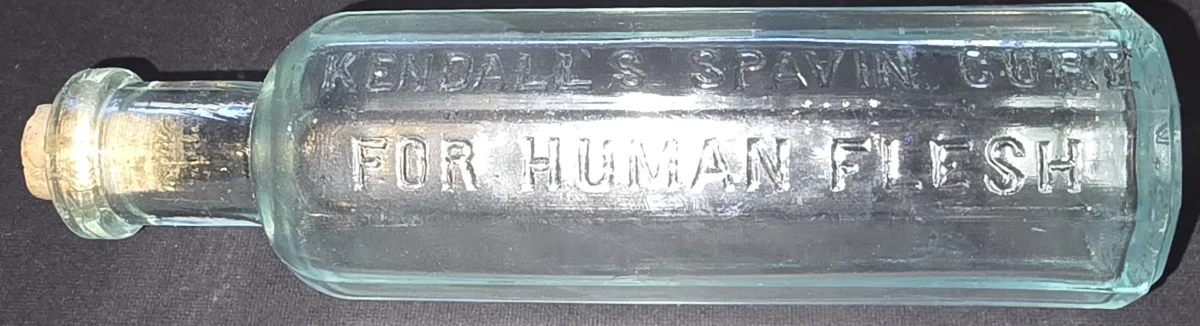
Description
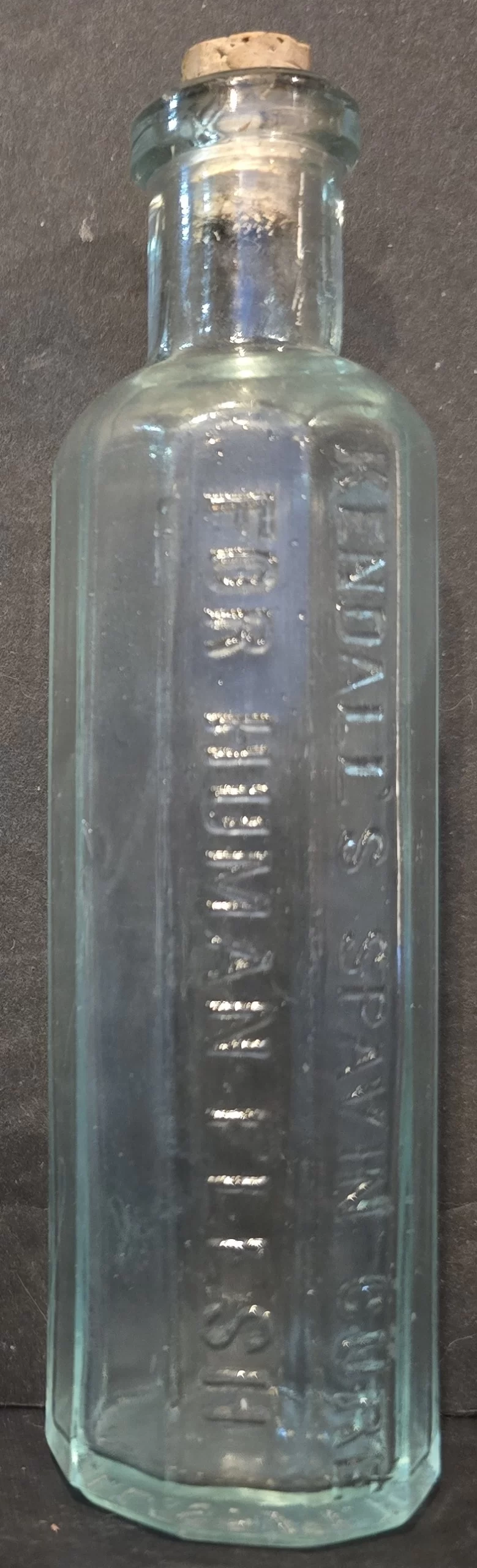
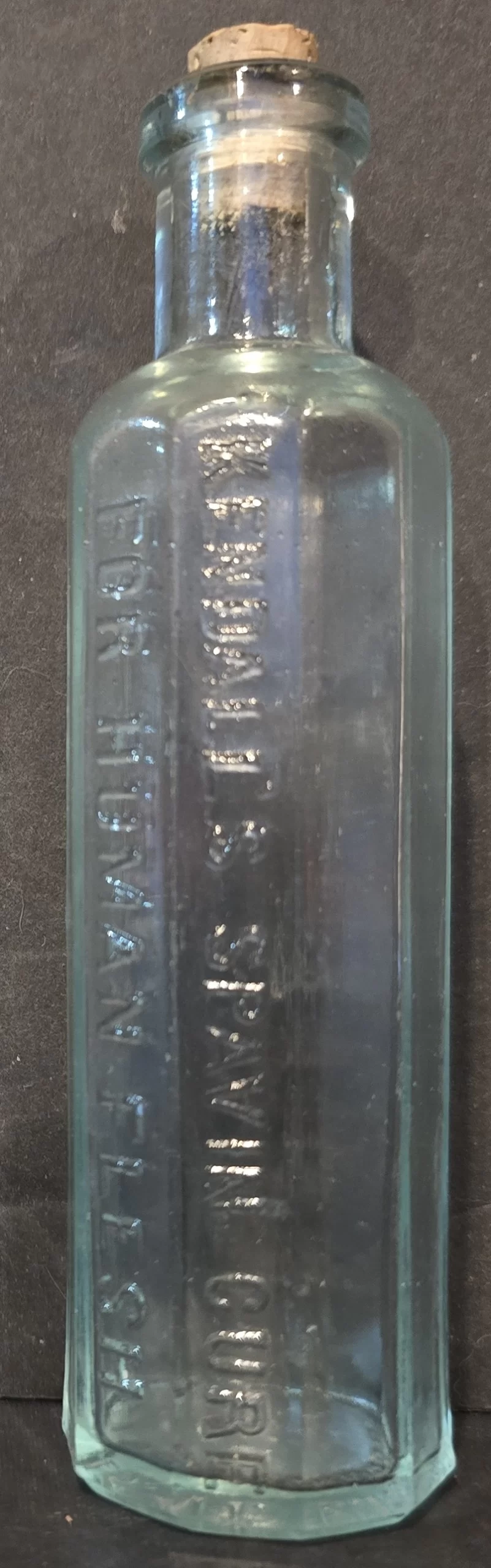
This embossed aqua glass bottle contained Kendall’s Spavin Cure, a liniment originally developed for the treatment of spavin, a degenerative arthritic condition of the horse’s hock joint. By the late nineteenth century, the preparation was explicitly marketed for human use, as indicated by the boldly embossed phrase “FOR HUMAN FLESH.”
The product was intended for external application as a counterirritant liniment, promoted for relief of arthritis, rheumatism, joint stiffness, and muscular pain in humans. Its marketing reflects a common period assumption that remedies effective for large animals could be equally—or more—effective when adapted for human ailments, particularly chronic joint disease.
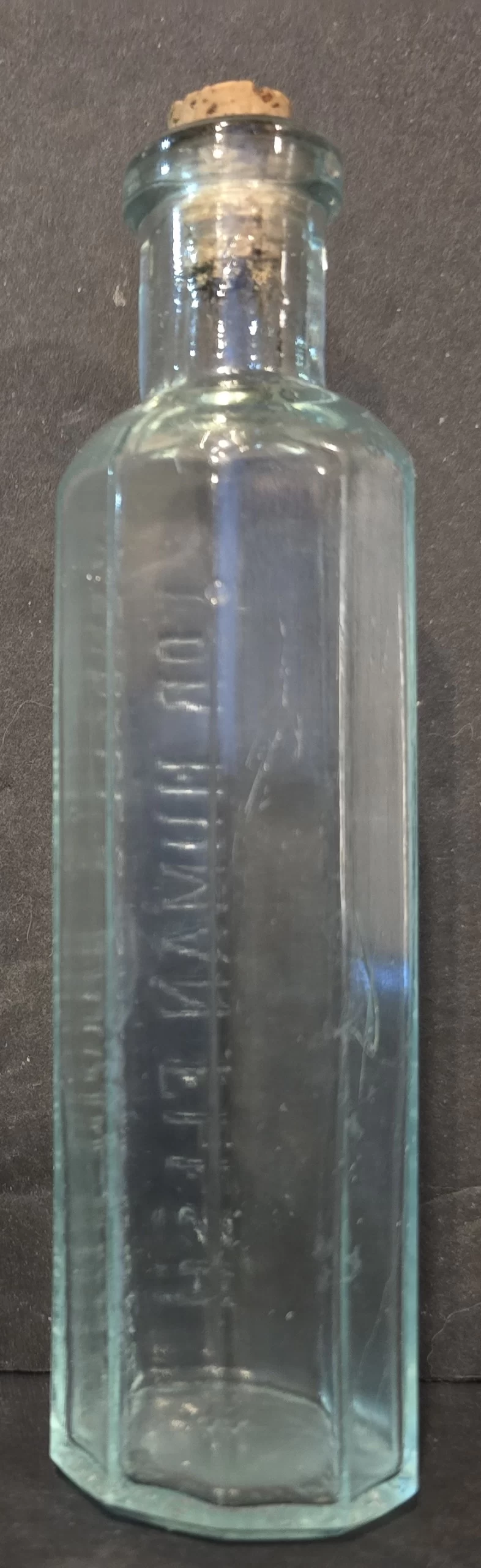
The bottle’s tall, paneled form, cork finish, and embossed labeling are consistent with late-19th to early-20th-century pharmaceutical packaging.
Condition
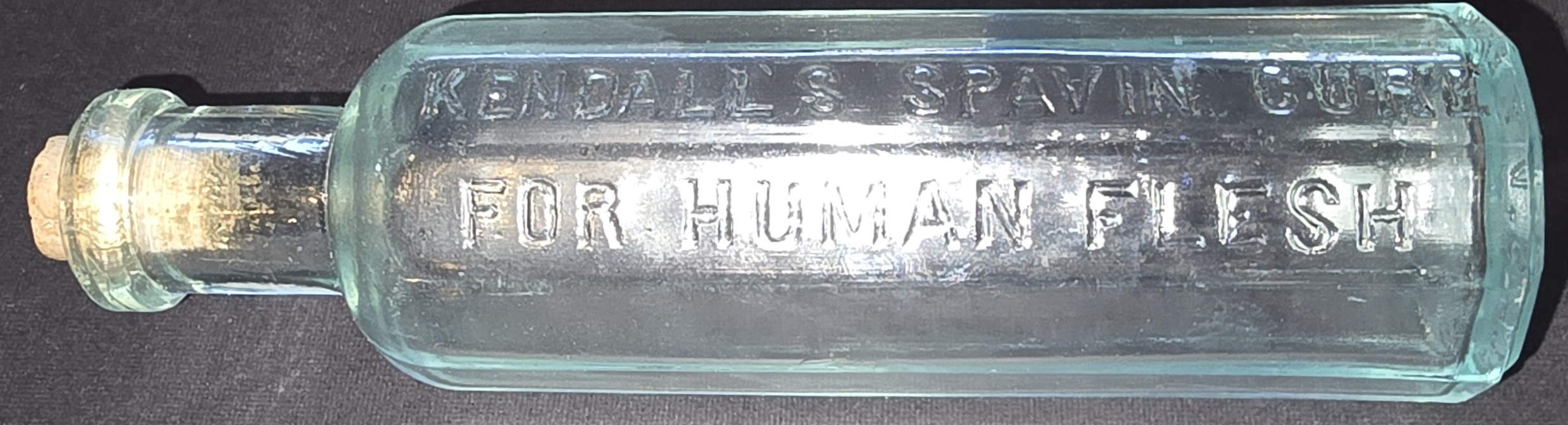
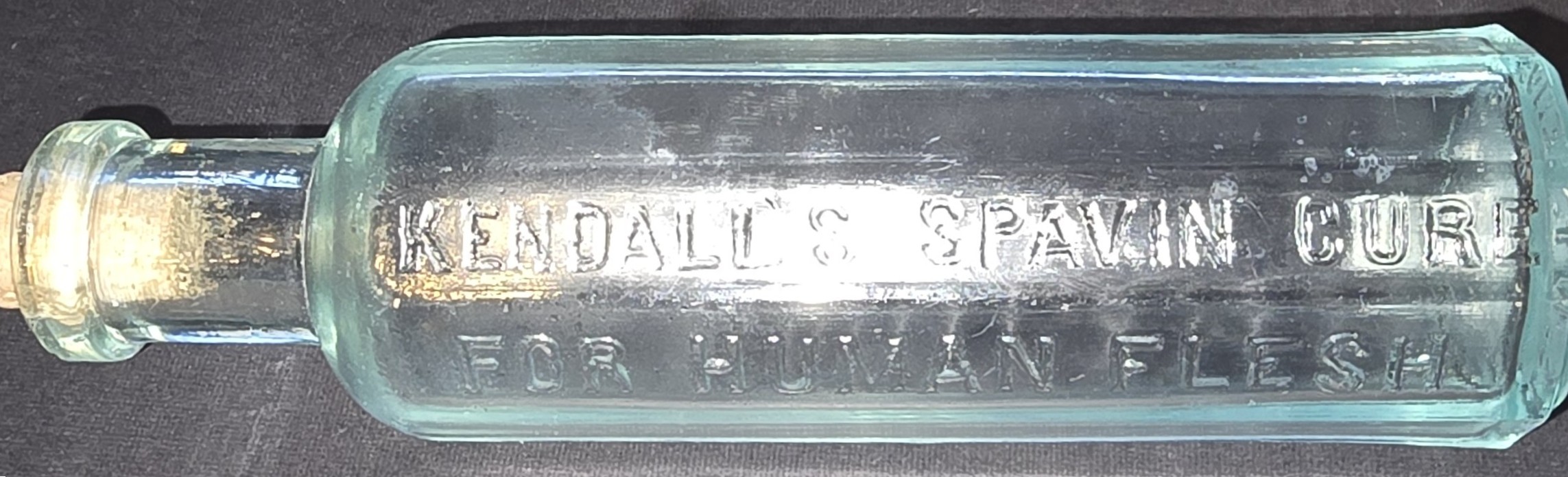
Clear aqua glass with light surface wear consistent with age. Embossing remains strong and fully legible. No cracks or chips observed. Original cork present.
Gallery
Historical context
During the late 1800s, arthritis and rheumatism were among the most common chronic complaints, with limited effective treatments available. Liniments based on alcohol, botanical extracts, and counterirritants were widely used to manage pain and stiffness. Veterinary remedies, particularly those developed for horses, were frequently adapted for human use, as horses were viewed as physiologically robust and therapeutically demanding test subjects.
Kendall’s Spavin Cure reflects this crossover market, where a veterinary arthritis treatment was repositioned as a human liniment without altering its fundamental purpose or method of use.
Curious Facts, Ephemera, and Trivia
“Spavin” refers specifically to arthritic disease of the equine hock joint, not a human condition.
The phrase “For Human Flesh” served as a marketing clarification that the liniment was intended for human use, not merely safe for incidental contact.
Counterirritant liniments worked by producing warmth and surface irritation, reducing perceived joint pain rather than addressing underlying disease.
Why it is in the Cabinet
This bottle represents the blurred boundary between veterinary and human medicine at the turn of the twentieth century. Its direct language, dual-market origin, and unapologetic therapeutic logic make it a strong example of how chronic disease was managed before modern anti-inflammatory and disease-modifying treatments.
Support Dr. Bebout’s Cabinet of Medical Curiosities
If you enjoy the history, the oddities, and the effort, help keep this cabinet open. Every little bit helps preserve and share the strange wonders of medicine's past.
Buy Me a Ko-fi ☕ Buy Me a Coffee ☕ Tip via PayPal 💵