
Title
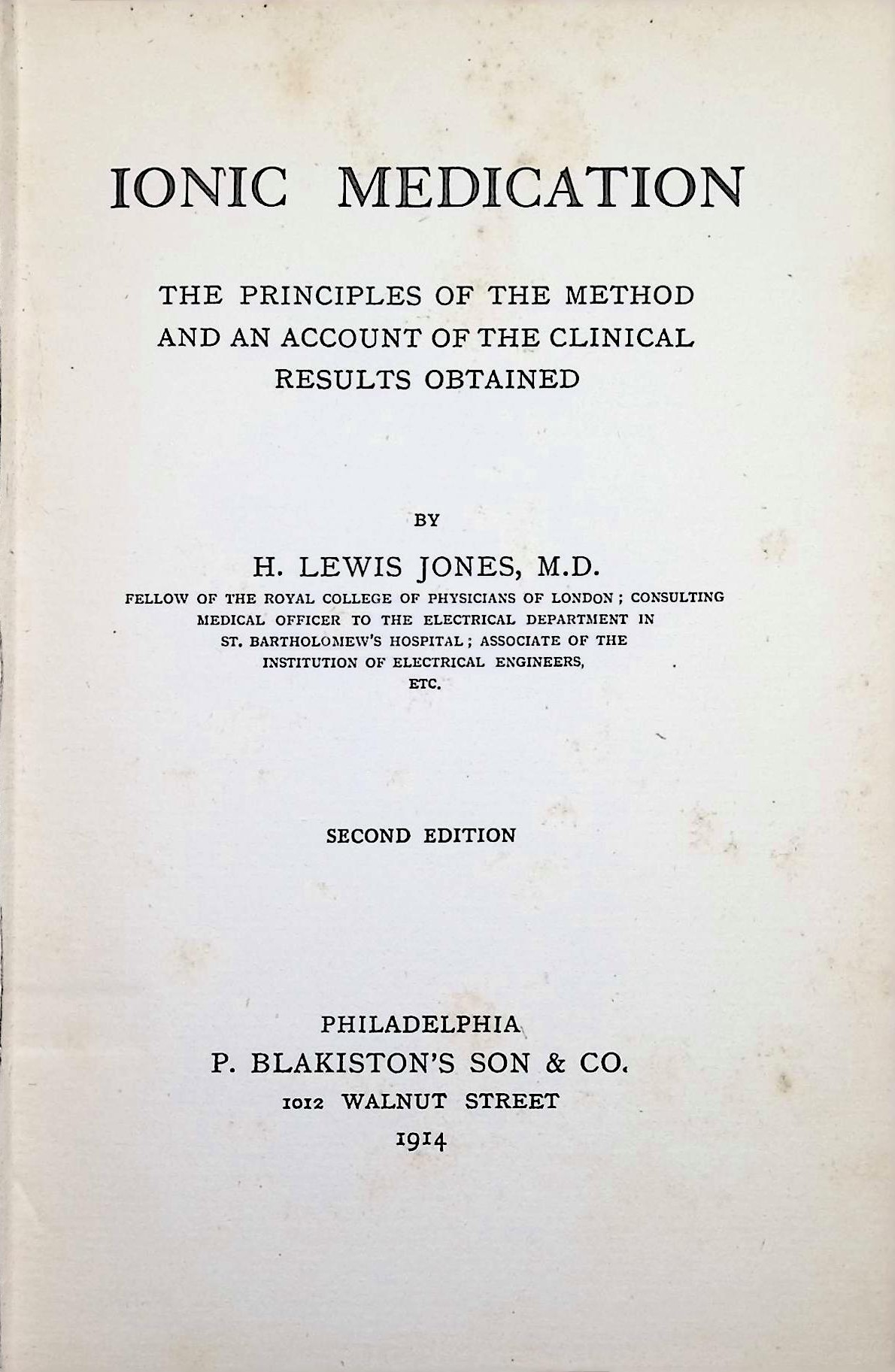
Ionic Medication
Author
H. Lewis Jones, M.D.
Image
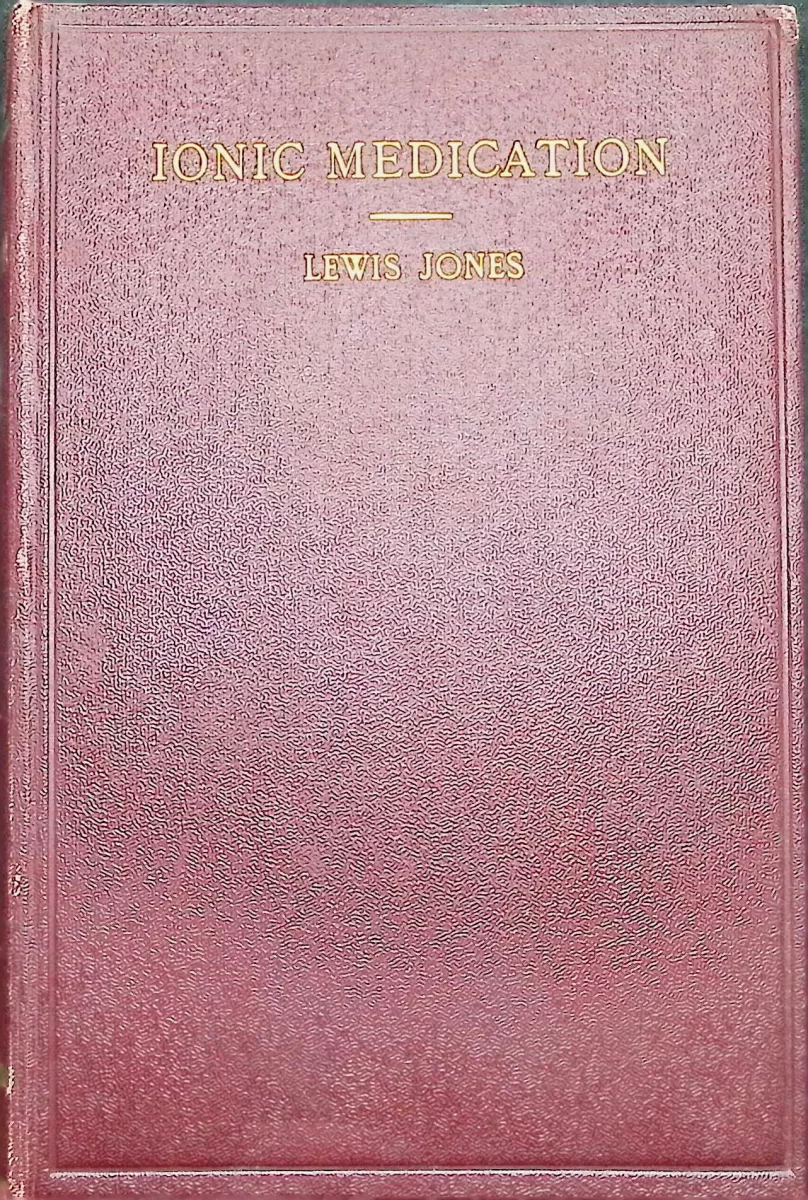
Description
Ionic Medication by Dr. H. Lewis Jones, second edition published in 1914, offers a clinical and theoretical exploration of the use of electrical currents to deliver therapeutic ions directly into human tissue — a technique now known as iontophoresis. Dr. Jones, a consulting physician to the electrical department at St. Bartholomew’s Hospital in London, was one of the early advocates for merging physics and medicine through electrotherapeutics.
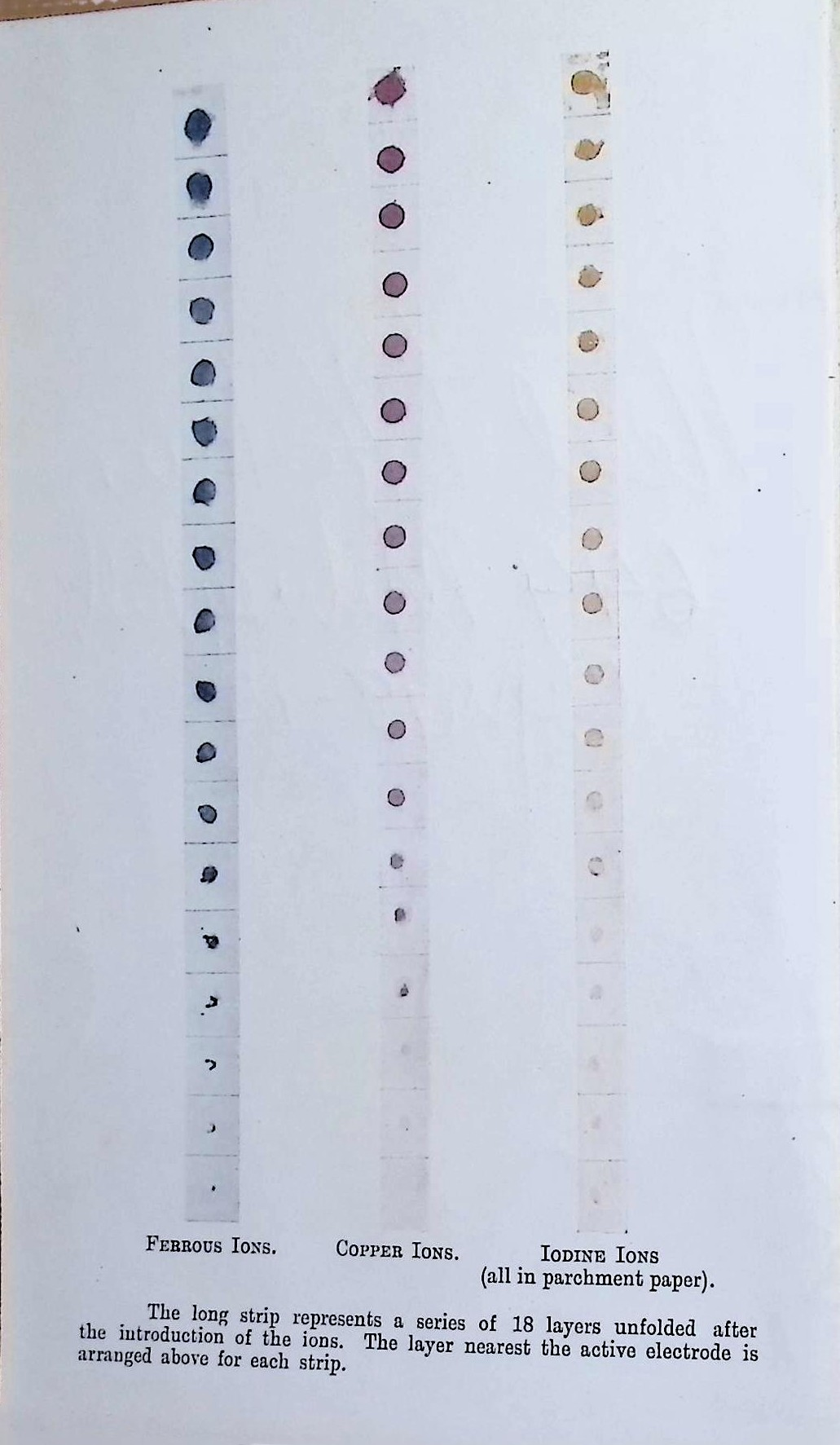
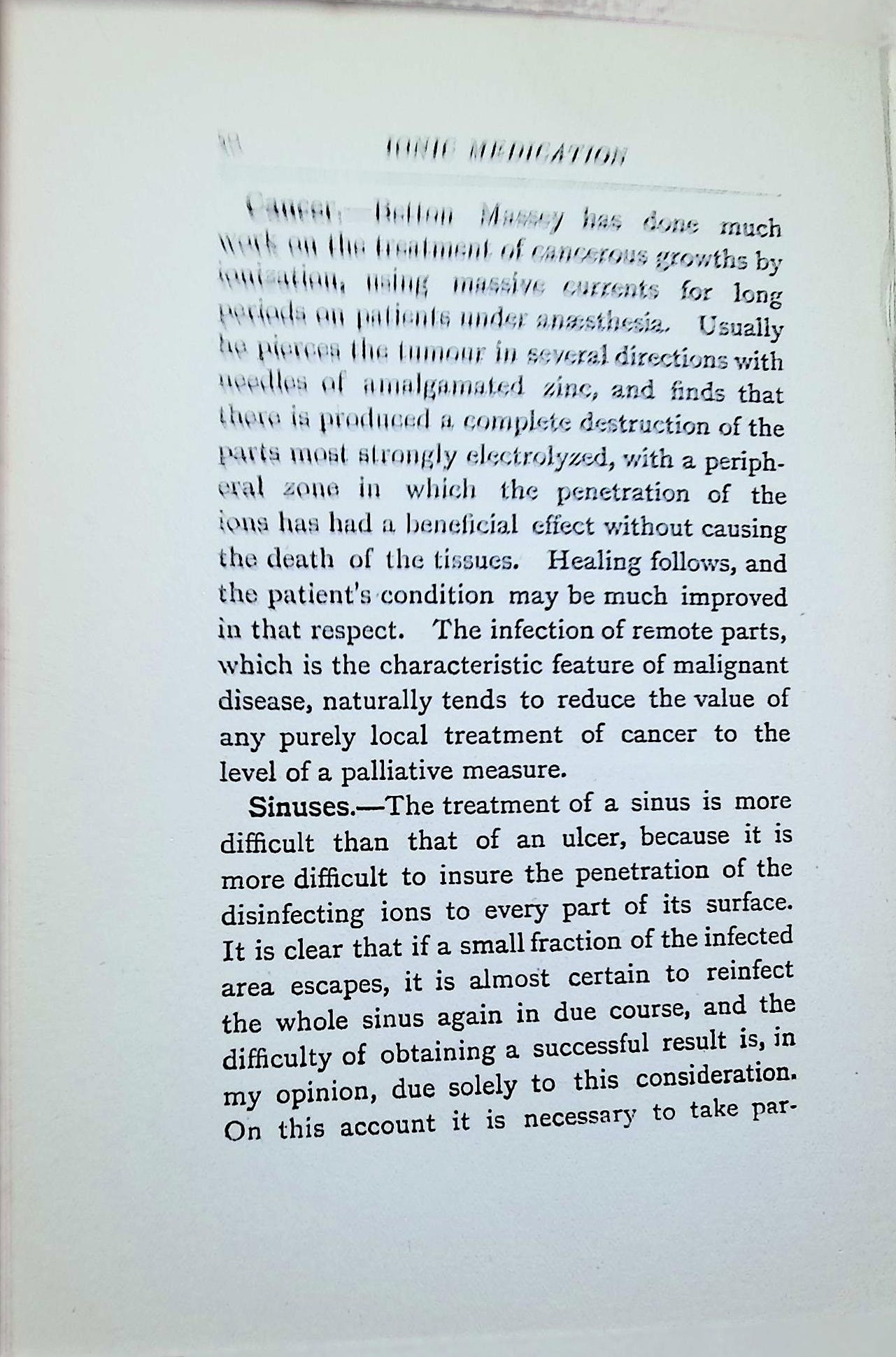
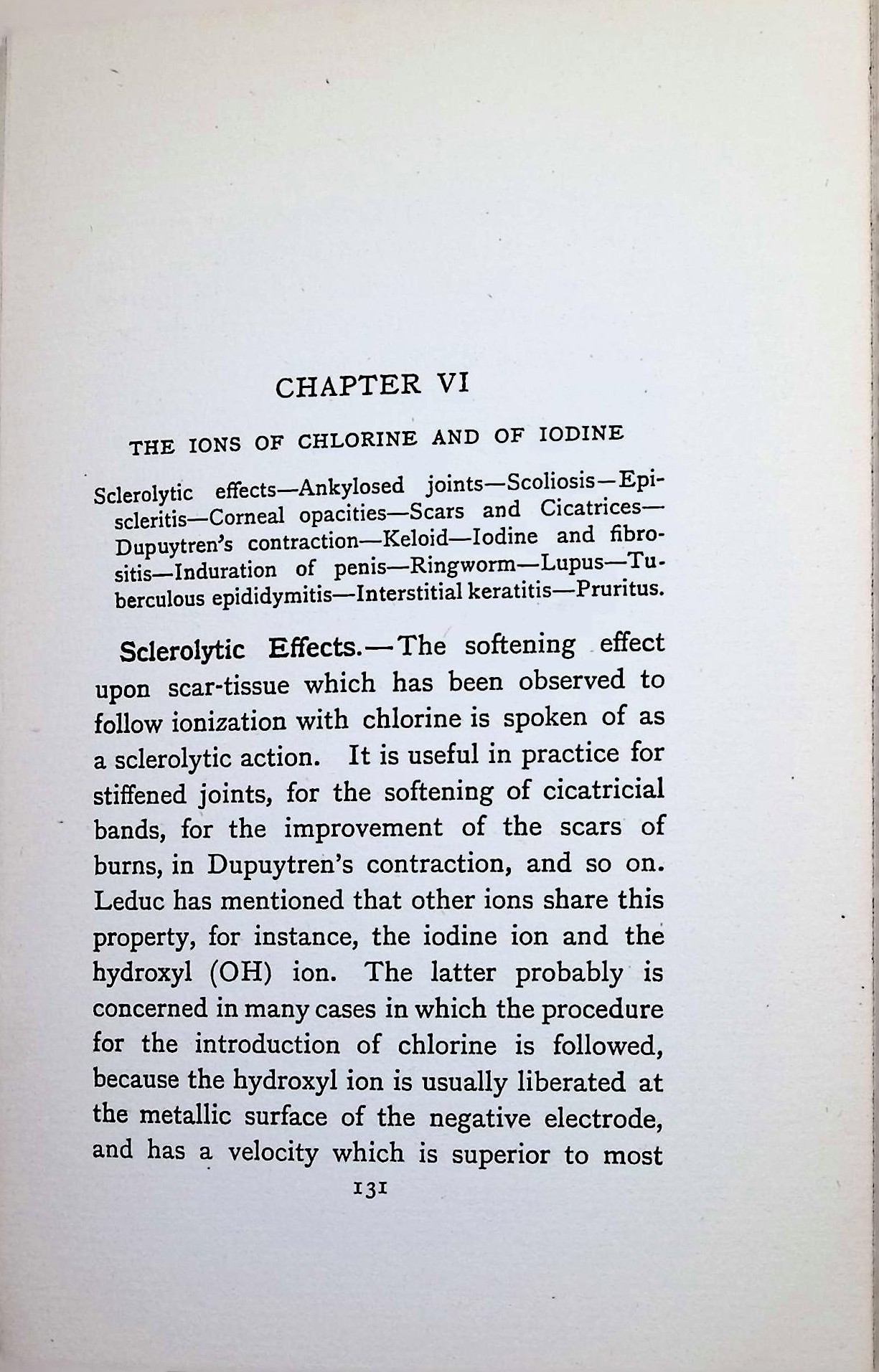
The work includes visual documentation of ion absorption in parchment strips (ferrous, copper, iodine), detailed notes on clinical applications, and case discussions addressing cancer, sinus infections, and tissue softening using chlorine, iodine, and other ions. Conditions like lupus, ringworm, tuberculosis of the testicles, and Dupuytren’s contracture are among the many treated through ionic penetration.
While modern medicine has relegated most of this work to niche dermatologic or physical therapy settings, Jones’ contributions reflect the period’s hunger for scientific precision and mechanized cures.
Condition
Deep red clothbound hardcover with gilt lettering on spine and cover. Minor wear at crown and foot of spine. Gilt remains clean and legible. Endpapers show light foxing. Textblock tight and intact. Includes full-color ion absorption chart and legible clinical illustrations. A well-preserved copy.
Gallery
Historical context
By the early 1900s, electrotherapy had grown from Victorian curiosity into an established subfield of medical practice. Ionic Medication represents one of the more scientific applications: using electrical currents to introduce charged medicinal substances directly into tissue. The method relied on advances in physics and electrolytic theory, and Jones’ work contributed to the foundation of physical medicine and rehabilitation.
While most ionic therapy today is limited to delivering lidocaine or dexamethasone for inflammation and pain, Jones’ applications — including for cancer — illustrate a wide and now-questioned scope of ambition typical of pre-antibiotic innovation.
Curious Facts, Ephemera, and Trivia
Jones recommends “massive currents” applied for extended periods under anesthesia for cancer patients, using amalgamated zinc needles to pierce tumors.
His diagram of ion penetration through parchment paper illustrates ion movement by polarity and tissue type — an early biomedical attempt at experimental visual proof.
The book treats conditions like induration of the penis, tuberculous epididymitis, and interstitial keratitis using ionic application of chlorine or iodine.
Excerpt
“The most expeditious treatment for isolated warts is ionization with a zinc needle.””
—page 83
Why it is in the Cabinet
This work captures the scientific optimism of the electrotherapeutic movement — a time when electricity was imagined as a near-universal remedy. Dr. Jones’ iontophoresis method prefigures later legitimate uses in physical therapy, but also shows how new technologies, when poorly constrained, were stretched to serve questionable clinical purposes. A vivid artifact of the boundary between medicine and experimentation.
Support Dr. Bebout’s Cabinet of Medical Curiosities
If you enjoy the history, the oddities, and the effort, help keep this cabinet open. Every little bit helps preserve and share the strange wonders of medicine's past.
Buy Me a Ko-fi ☕ Buy Me a Coffee ☕ Tip via PayPal 💵