Title
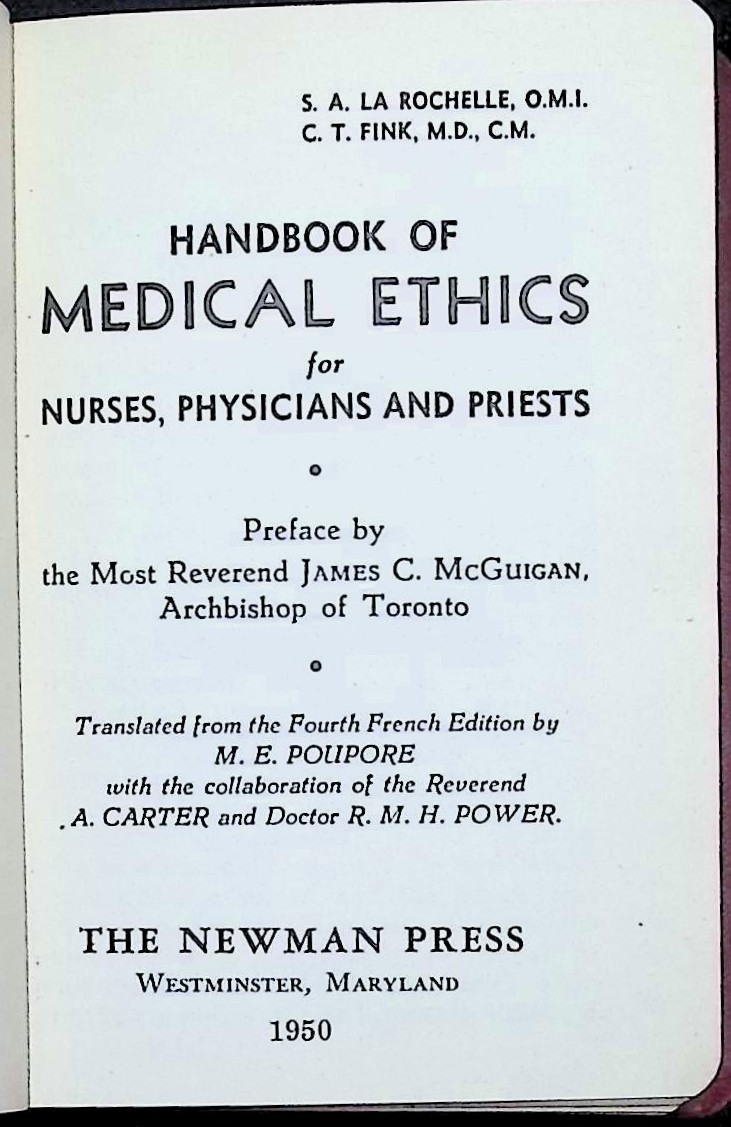
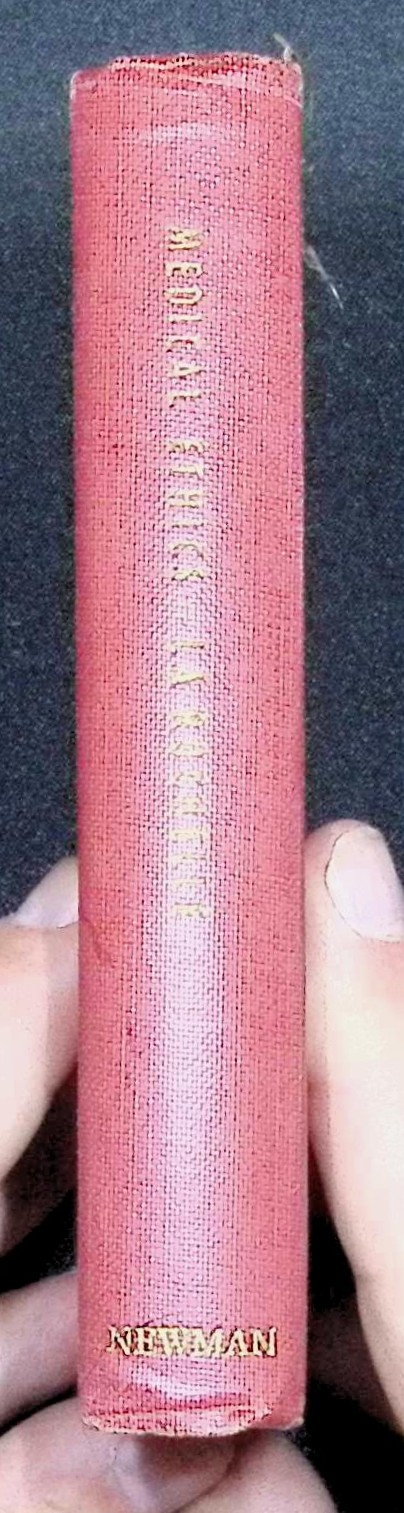
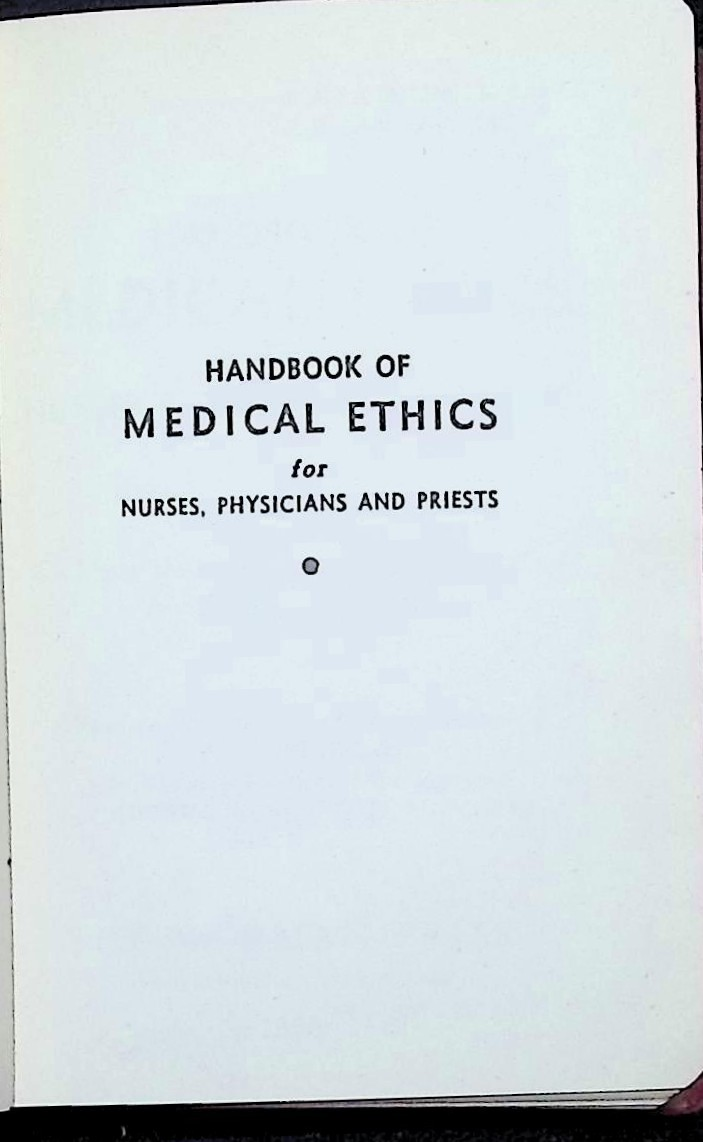
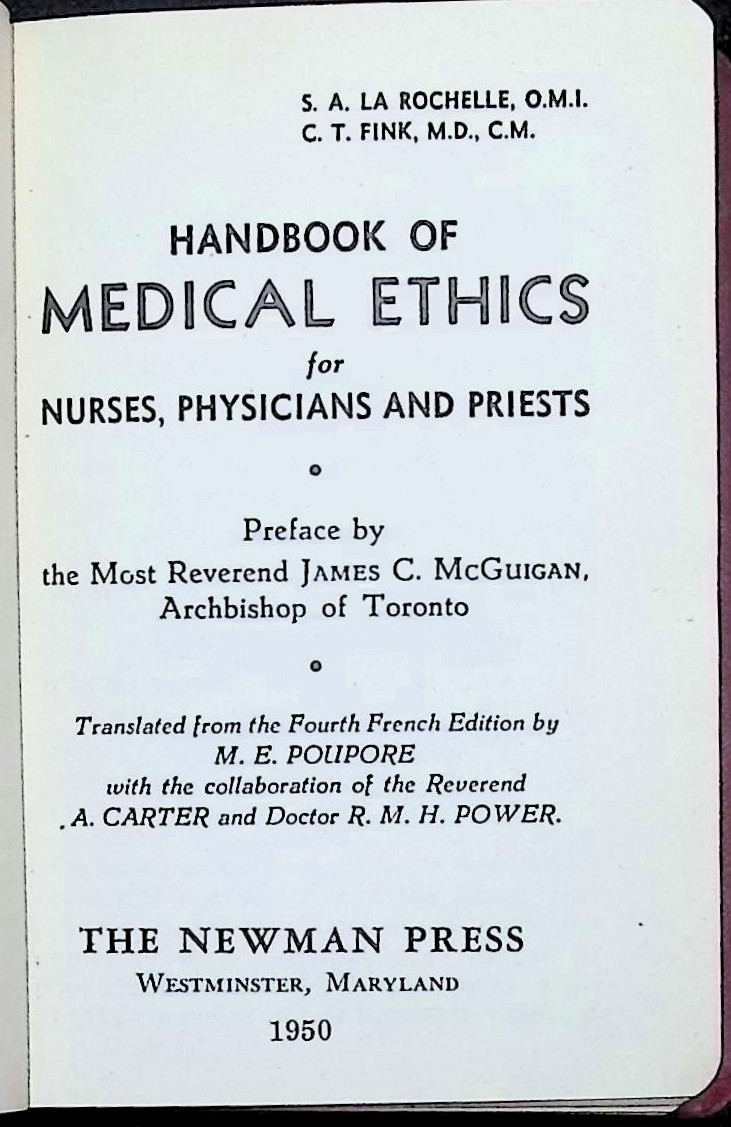
Handbook of Medical Ethics for Nurses, Physicians and Priests (1950)
Author
S. A. La Rochelle, O.M.I. and C. T. Fink, M.D., C.M.
Translated by M. E. Pouipore, with collaboration from Rev. A. Carter and Dr. R. M. H. Power
Image
Description
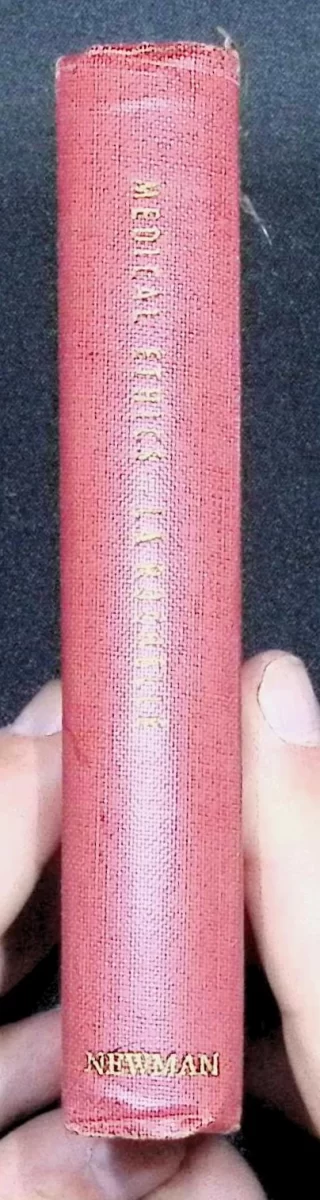
This compact 1950 handbook, published by The Newman Press of Westminster, Maryland, presents a structured guide to medical morality written for nurses, physicians, and Catholic clergy. Derived from the fourth French edition, the work synthesizes Catholic moral theology with medical practice, addressing topics ranging from indirect abortion and end-of-life decisions to sacramental considerations such as confession, baptism, and pastoral involvement in illness.
The book draws heavily on mid-20th-century Catholic ethical frameworks, presenting a moral system that attempts to balance medical necessity with doctrinal constraints. As a result, it contains numerous discussions of proportionate reasoning, indirect versus direct actions, “grave causes,” and the limits of permissible medical intervention. Its tone is prescriptive and authoritative, reflecting the era’s emphasis on hierarchical guidance for medical staff working within Catholic hospitals and mission settings.
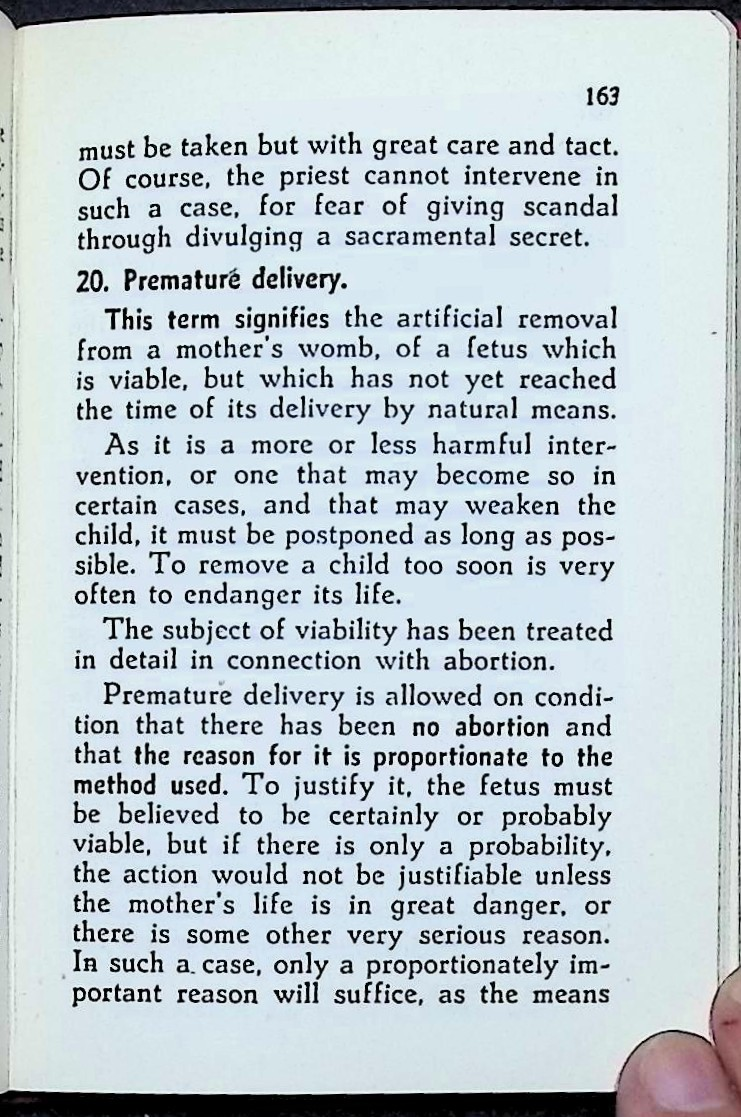
The text offers a window into post-war Catholic medical ethics at a time when religious orders staffed large portions of North American hospitals. Ethical dilemmas such as abortion, premature delivery, sacramental confession before dangerous procedures, and the spiritual obligations of healthcare workers are presented in detailed, categorical statements intended for real-world application.
Condition
Very good overall, with tight binding and intact pages. Light shelf wear to cloth boards and minor rubbing at spine ends. No major staining or tears observed. Interior pages clean and unmarked.
Gallery
Historical context
Catholic medical ethics played a major role in North American healthcare during the mid-20th century, when Catholic hospitals were widespread and often run entirely by nursing orders. Manuals such as this one served as daily reference tools for nurses and resident physicians who were expected to harmonize medical judgment with religious doctrine.
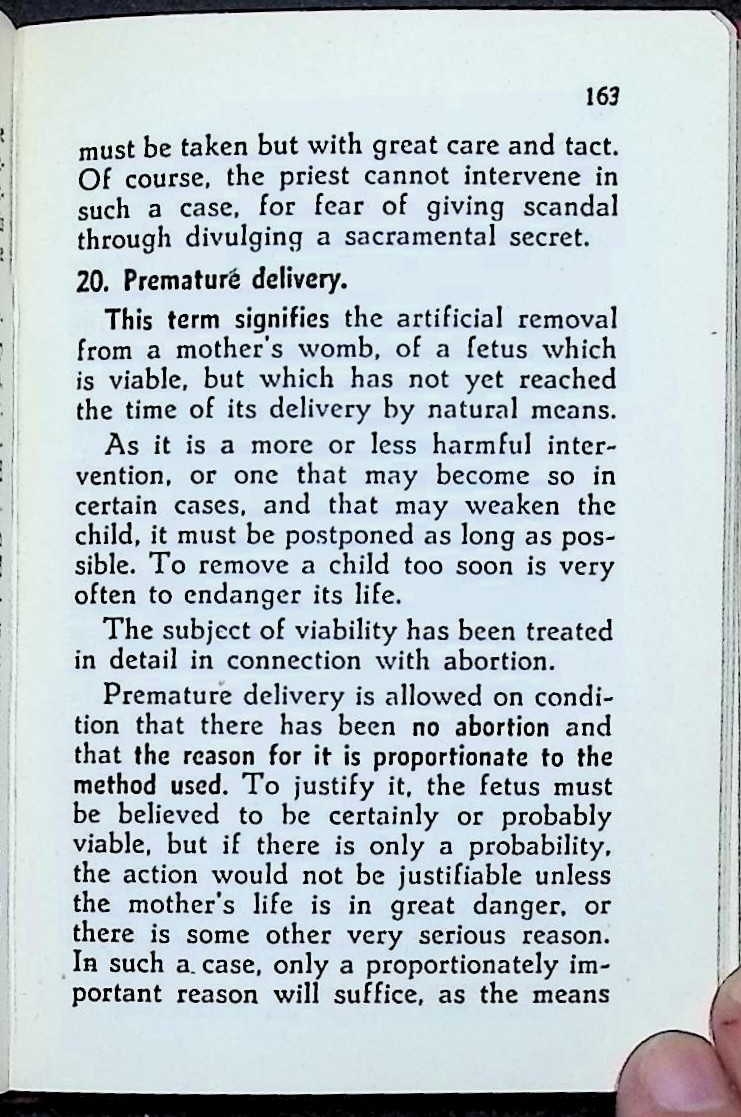
Published in 1950, the handbook reflects a period of rapidly evolving medical capability — including improved surgical techniques, antibiotic availability, and expanding obstetric interventions — alongside strict moral boundaries. The treatment of abortion, indirect therapeutic procedures, and the safeguarding of sacraments showcases a worldview deeply rooted in Thomistic moral theology, particularly the principle of double effect.
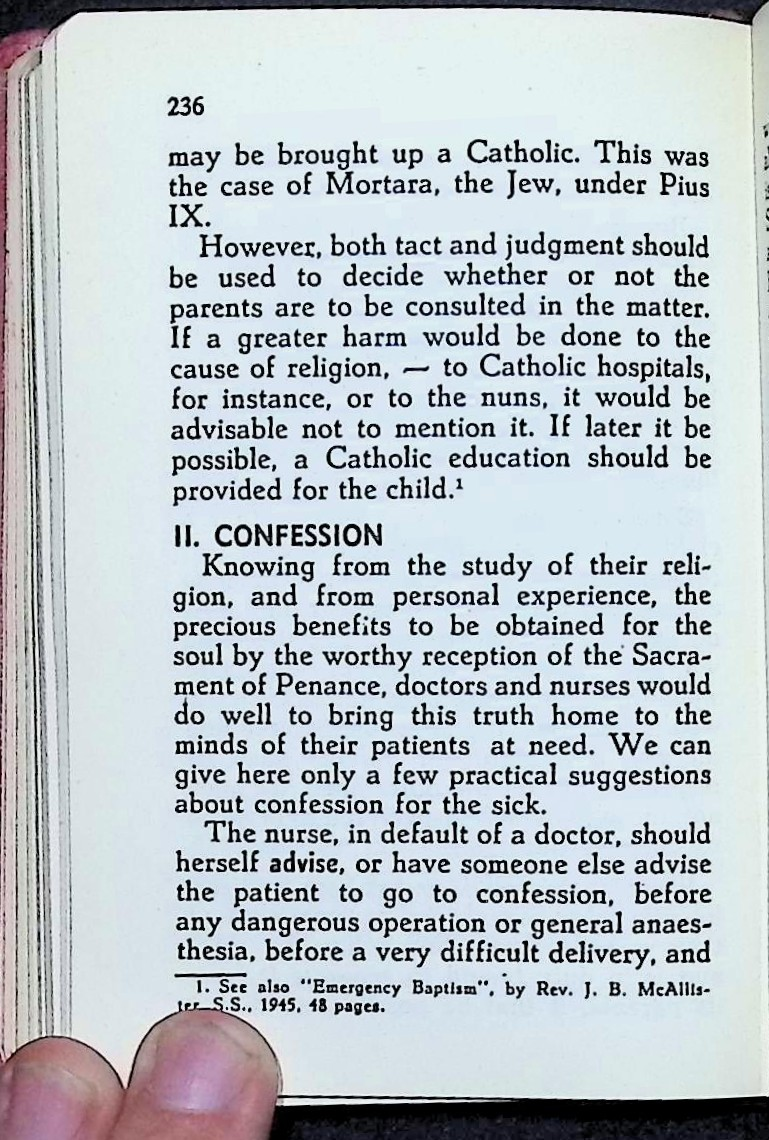
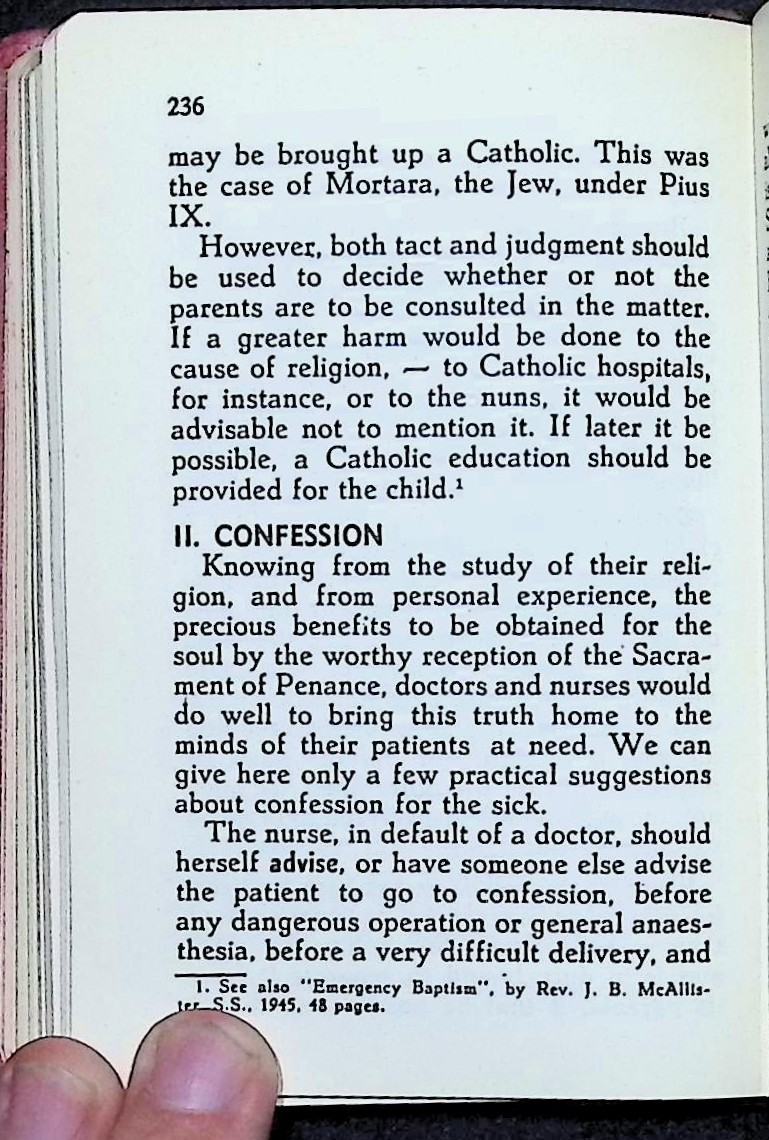
The book is also notable for its involvement of clergy and physicians working collaboratively. Its guidance on confession before surgery, emergency baptism, and the secrecy of sacramental communication illustrates the interlocking responsibilities of medical and religious personnel within Catholic institutions.
Curious Facts, Ephemera, and Trivia
Many Catholic nursing schools in the 1940s–1950s issued similar handbooks as required reading.
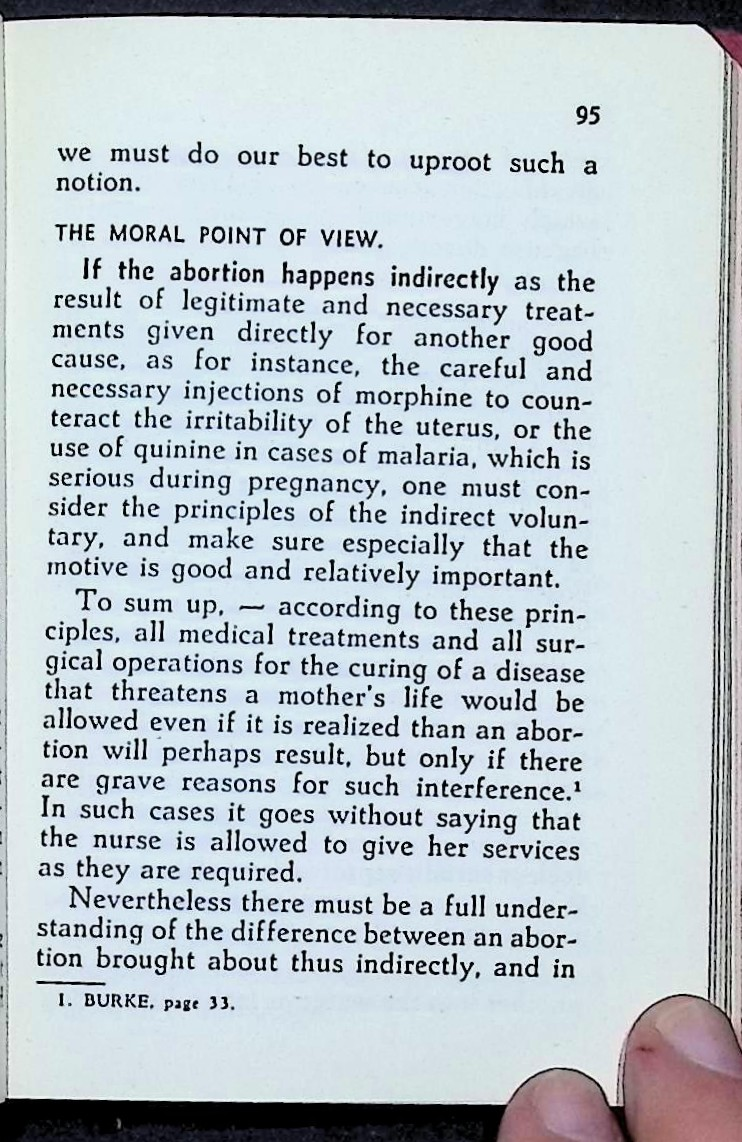
The volume repeatedly cites moral theology authorities, including Burke, reflecting its academic lineage.
Its approach to abortion and viability predates Roe v. Wade by more than two decades, offering insight into pre-legalization ethical analysis.
The book’s instructions on confession before anesthesia or a dangerous operation reflect a time when perioperative mortality was significantly higher.
The Mortara case referenced in the text was an 1858 controversy involving the forced removal of a Jewish child, used here as an ethical precedent — a striking inclusion by modern standards.
Excerpt
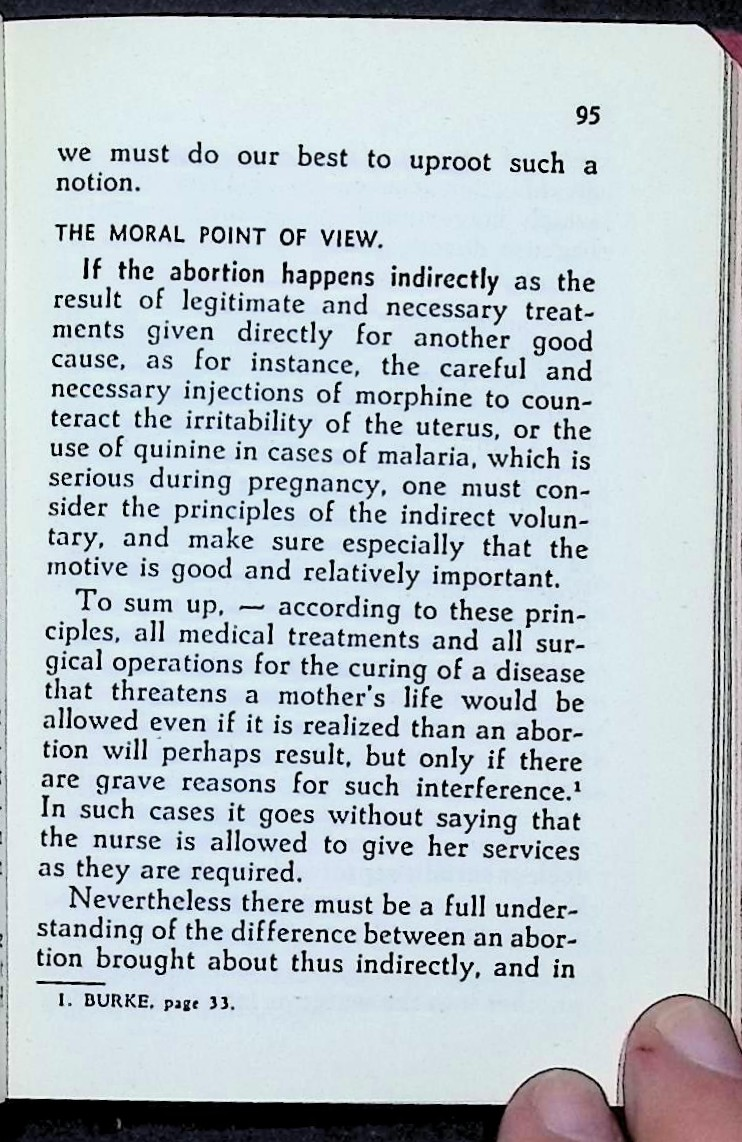
“If the abortion happens indirectly as the result of legitimate and necessary treatments given directly for another good cause… one must consider the principles of the indirect voluntary, and make sure especially that the motive is good and relatively important.”
(Page 95)
Why it is in the Cabinet
This handbook stands as a preserved snapshot of mid-20th-century medical and religious thought, capturing the intersection of clinical decision-making and moral theology. Its prescriptive tone, ethical rigidity, and extensive guidance for nurses and priests serve as a reminder of the ideological frameworks that shaped hospital care in a previous generation. It is an important cultural artifact documenting how medicine, religion, and ethics were intertwined in everyday clinical practice.
Support Dr. Bebout’s Cabinet of Medical Curiosities
If you enjoy the history, the oddities, and the effort, help keep this cabinet open. Every little bit helps preserve and share the strange wonders of medicine's past.
Buy Me a Ko-fi ☕ Buy Me a Coffee ☕ Tip via PayPal 💵