
Title
Golden X Patent Medicine Bottle
Author
Maker: Seminole Remedy Co.
Location: Louisville, Kentucky
Image
Description
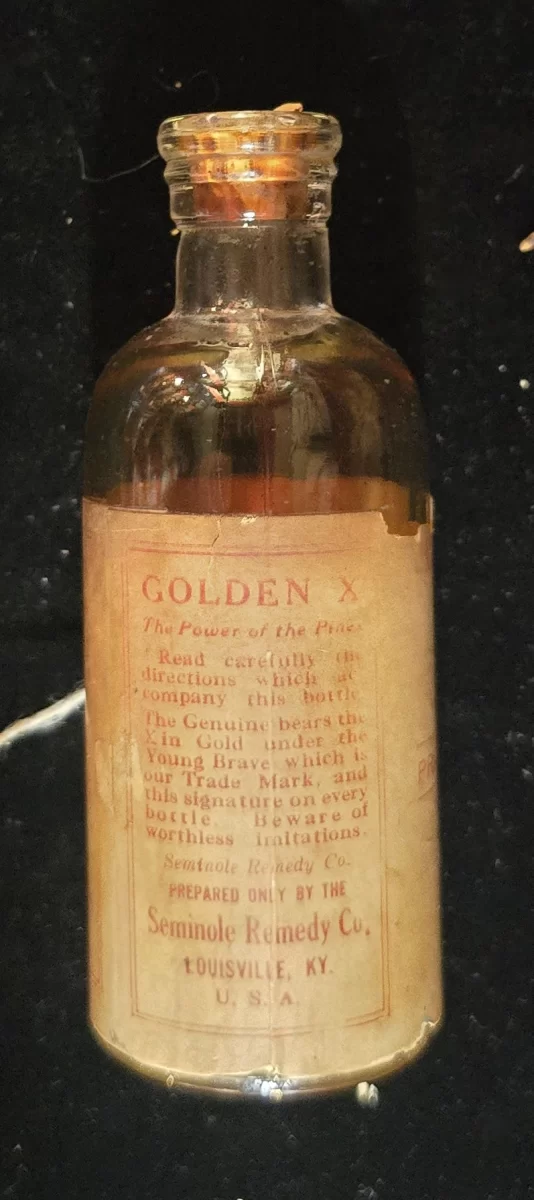
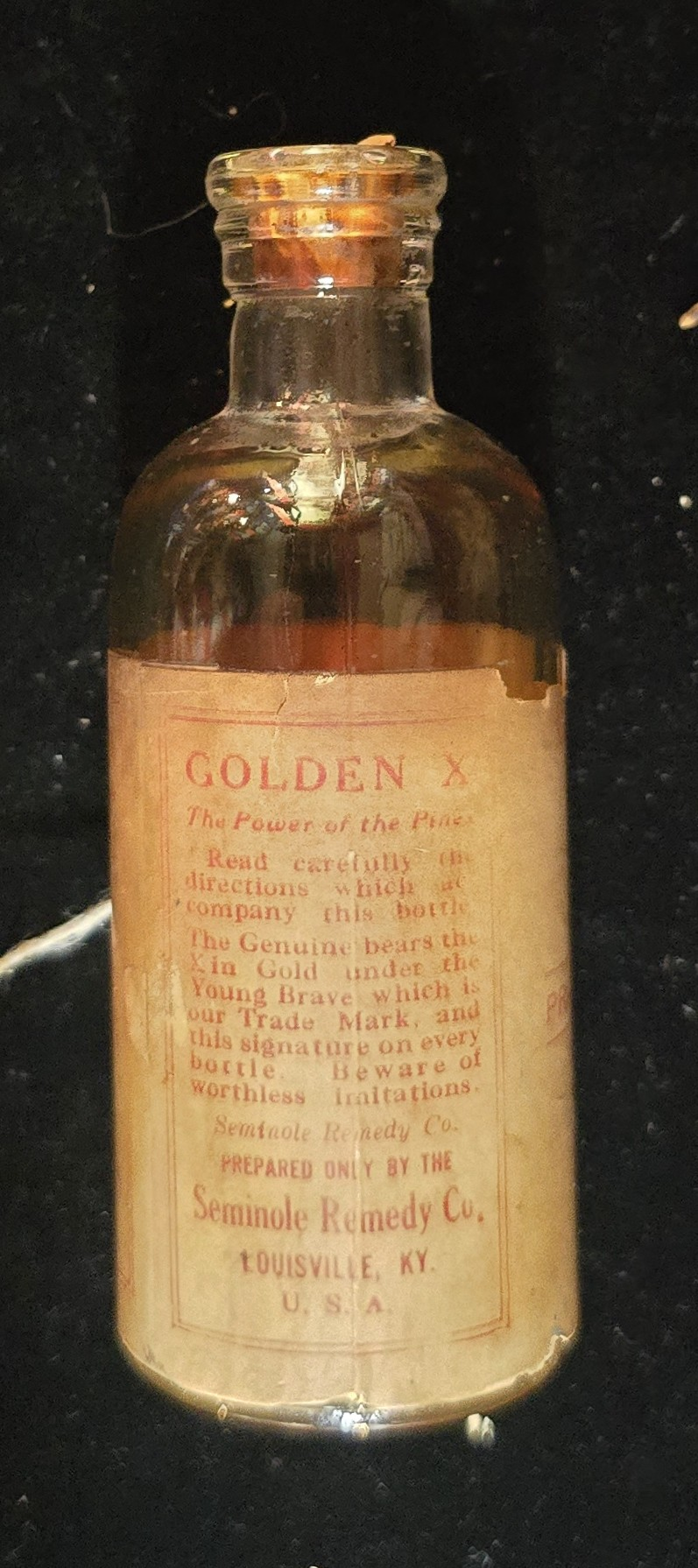
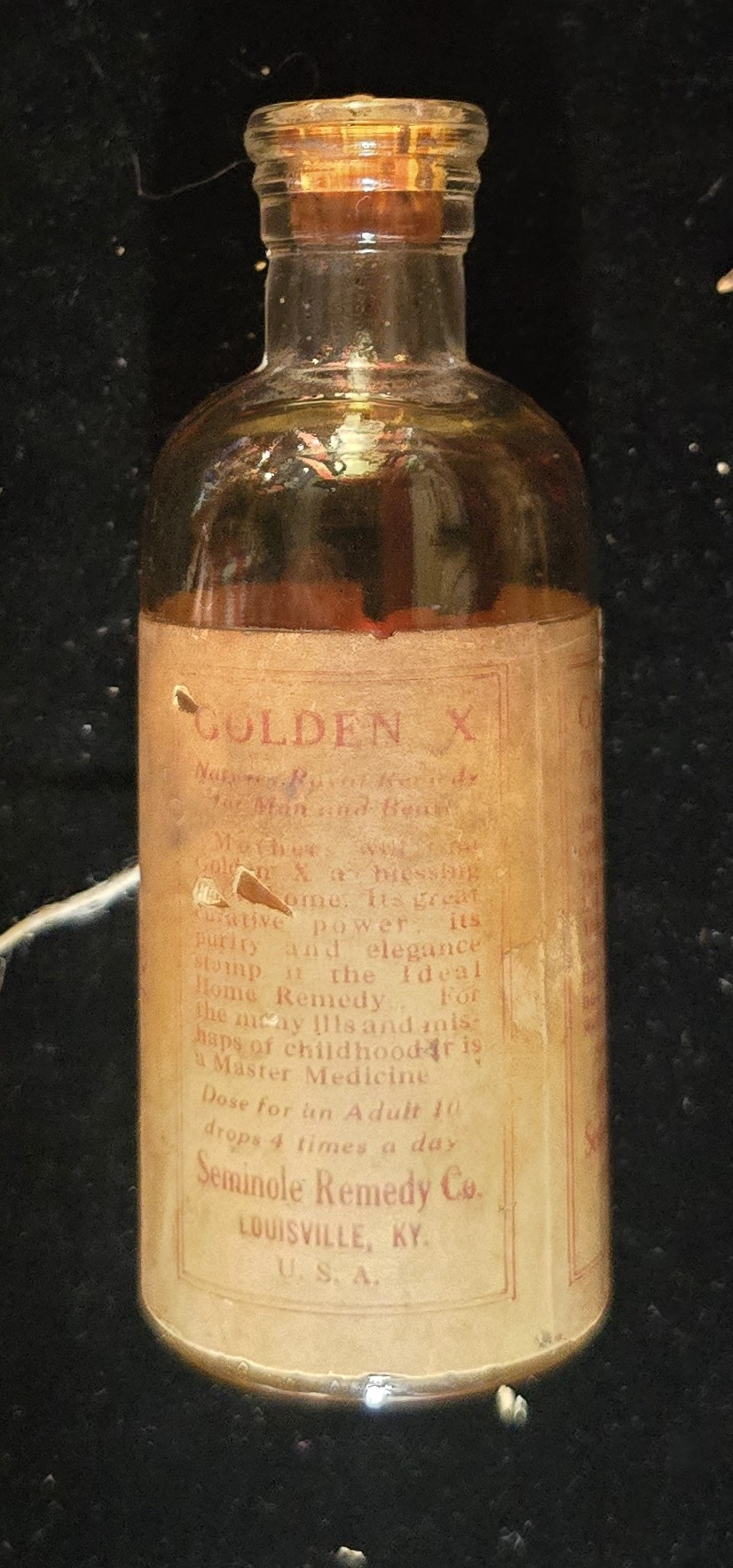
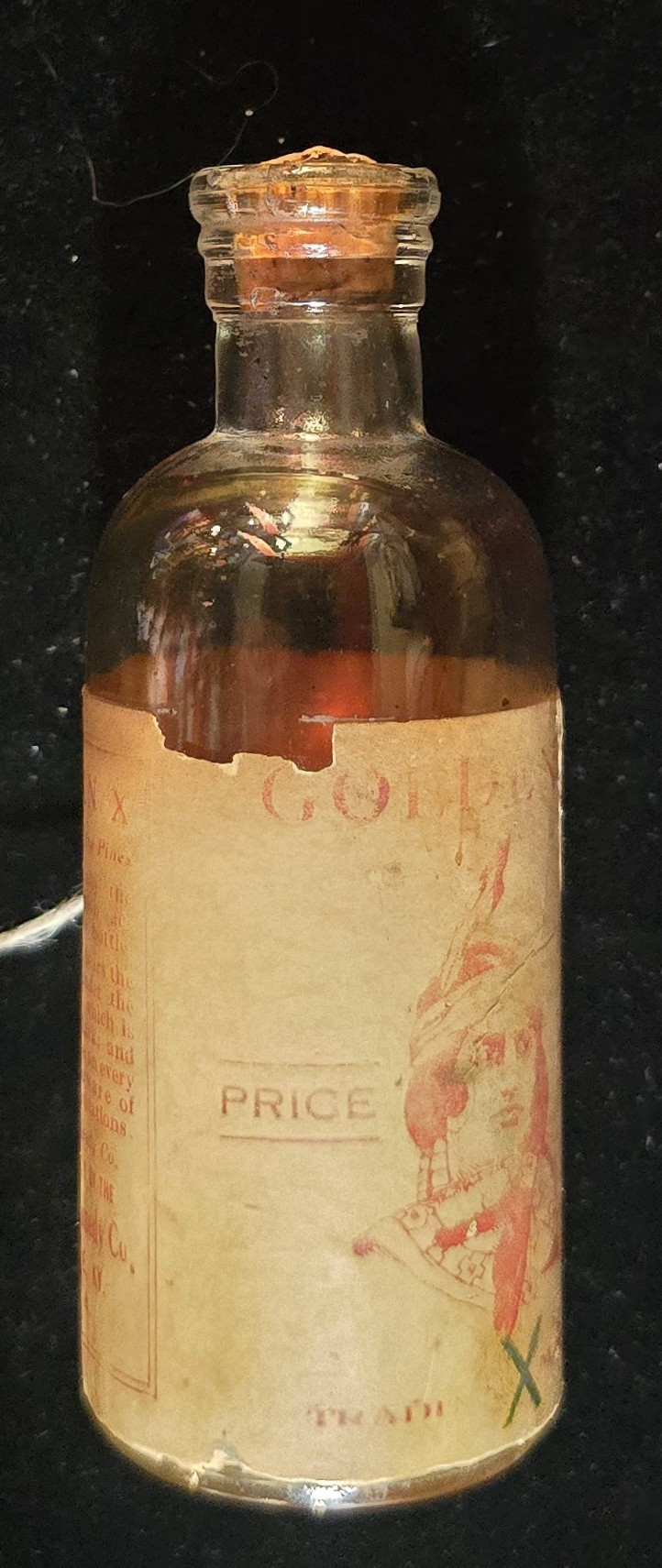
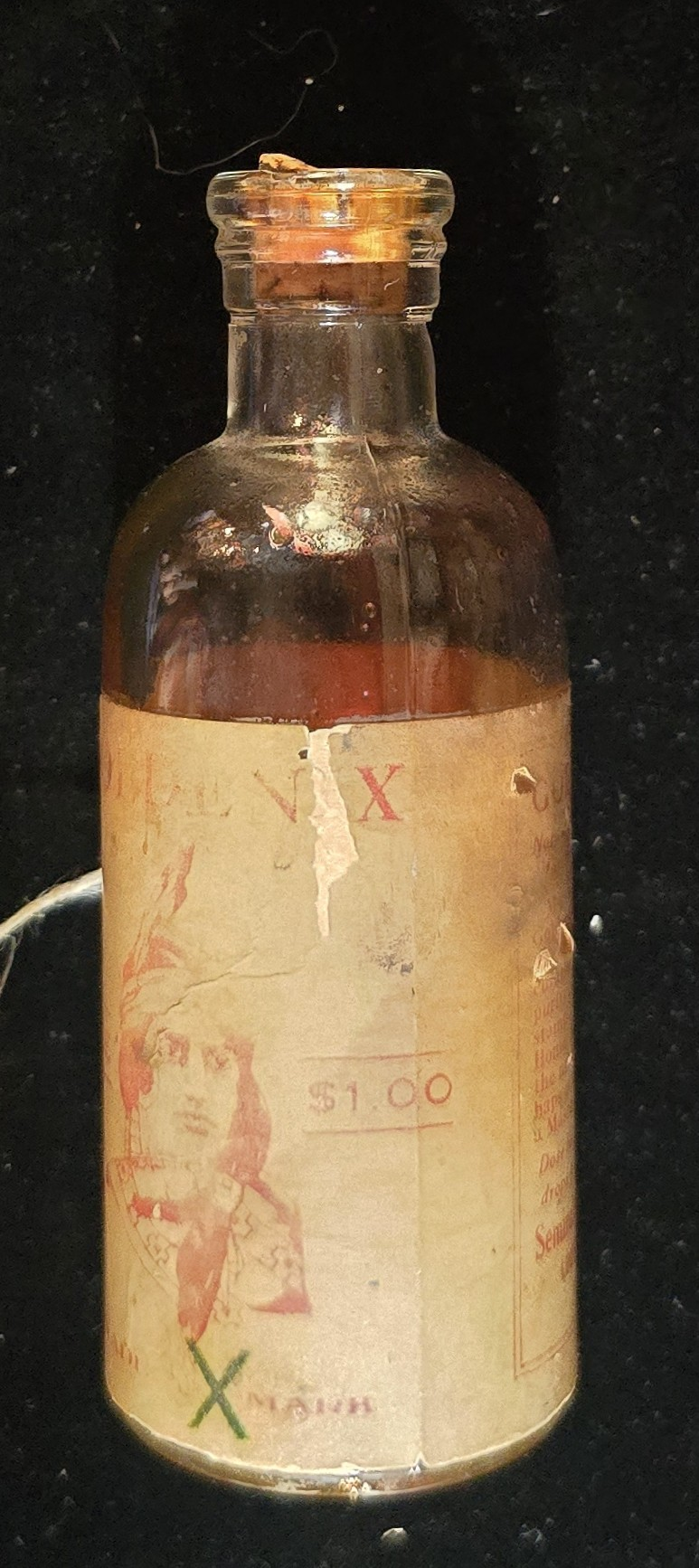
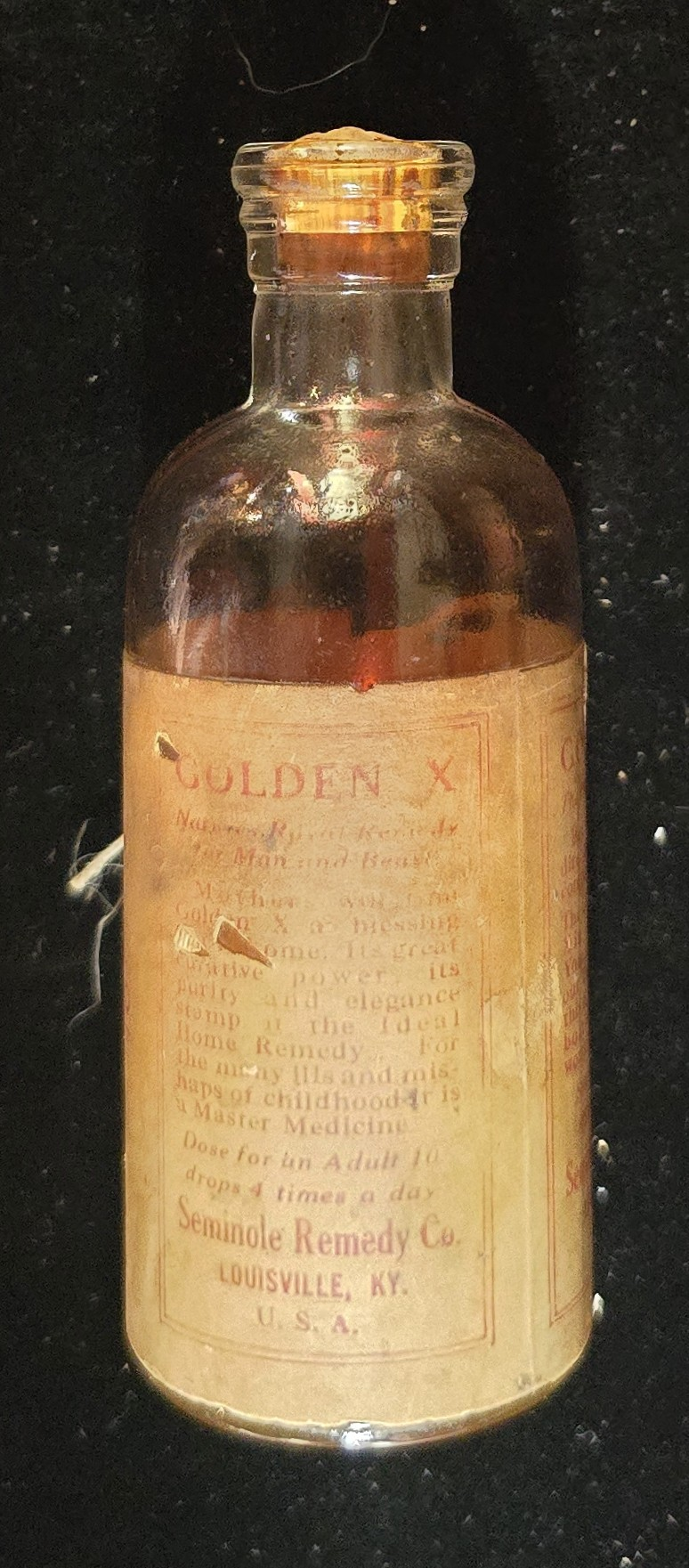
Small amber glass bottle with a worn but mostly intact label, sealed with its original cork. Labeled as “Golden X” and sold by the Seminole Remedy Co. of Louisville, KY, the bottle was marketed as a household “master medicine” and “blessing to the home.” The label features vivid red ink text and imagery, including a stylized Native American figure in feathered headdress and bold promotional phrases. Directions for use are included on the rear label, specifying adult dosages.
Condition
Glass: Excellent condition; no visible chips or cracks
Cork: Original and intact
Label: Worn with significant discoloration and areas of text loss, but primary branding and directions remain legible
Contents: Dark fluid residue present inside the bottle, suggesting partial original contents
Gallery
Historical context
“Golden X” was marketed during the pre-FDA patent medicine boom, when companies could freely advertise remedies without disclosing ingredients or proving efficacy. The Seminole Remedy Co. joined many early 20th-century firms in leveraging Native American imagery to evoke “natural” healing authority, despite having no actual connection to Indigenous medicine. This bottle reflects the medical consumerism common in over-the-counter remedy branding of the time.
Curious Facts, Ephemera, and Trivia
The “X” in Golden X likely implied strength or mystery—a common trope in the era’s marketing.
The $1.00 price tag equates to approximately $30–35 today, making it a premium remedy for the time.
The back label includes a brand protection warning, noting that genuine bottles bear a “gold-stamped Young Brave”—a subtle attempt at early trademark enforcement.
The exact ingredients of Golden X remain unknown, but many such tonics included alcohol, turpentine, opiates, or herbal narcotics.
The use of a Native American figure as brand identity echoes other patent medicines like Kickapoo Indian Sagwa and Indian Root Pills.
Excerpt
From the label:
“This wonderful medicine has proven a blessing to the home. A Master Medicine.”
And from the back:
“Directions—Adults take one teaspoonful in water, before meals and at bedtime. Dose may be repeated in acute conditions.”
Why it is in the Cabinet
This bottle is a textbook example of unregulated early American over-the-counter medicine, both in its bold marketing and opaque contents. Its use of racialized imagery to promote “natural” healing and its vague promises of curative power offer a tangible artifact of the era’s quack medicine economy. It embodies the Cabinet’s mission to preserve material traces of medical history—both its breakthroughs and its blunders.
Support Dr. Bebout’s Cabinet of Medical Curiosities
If you enjoy the history, the oddities, and the effort, help keep this cabinet open. Every little bit helps preserve and share the strange wonders of medicine's past.
Buy Me a Ko-fi ☕ Buy Me a Coffee ☕ Tip via PayPal 💵