
Title
Gold Medal Blackberry Root, Ginger, Cinnamon, Clove, Anise Compound
Author
S. Pfeiffer Manufacturing Company, St. Louis, Missouri
Image

Description
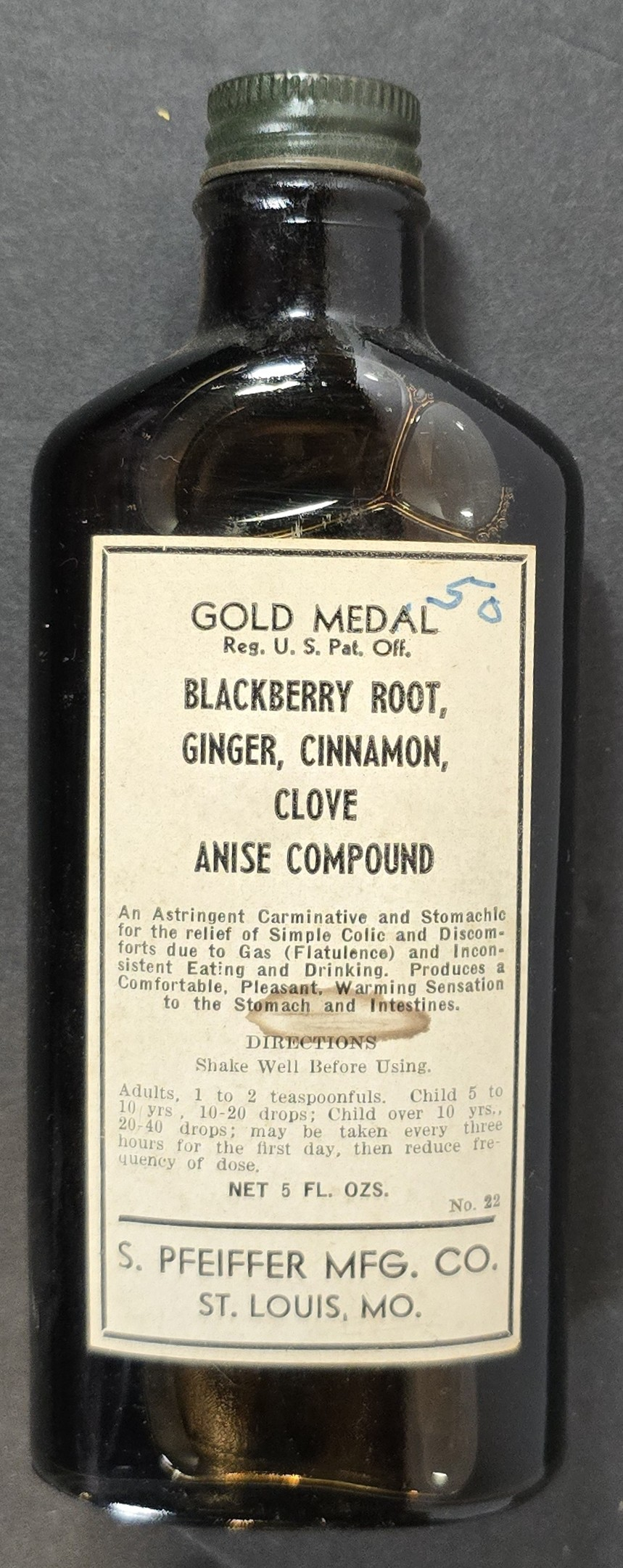
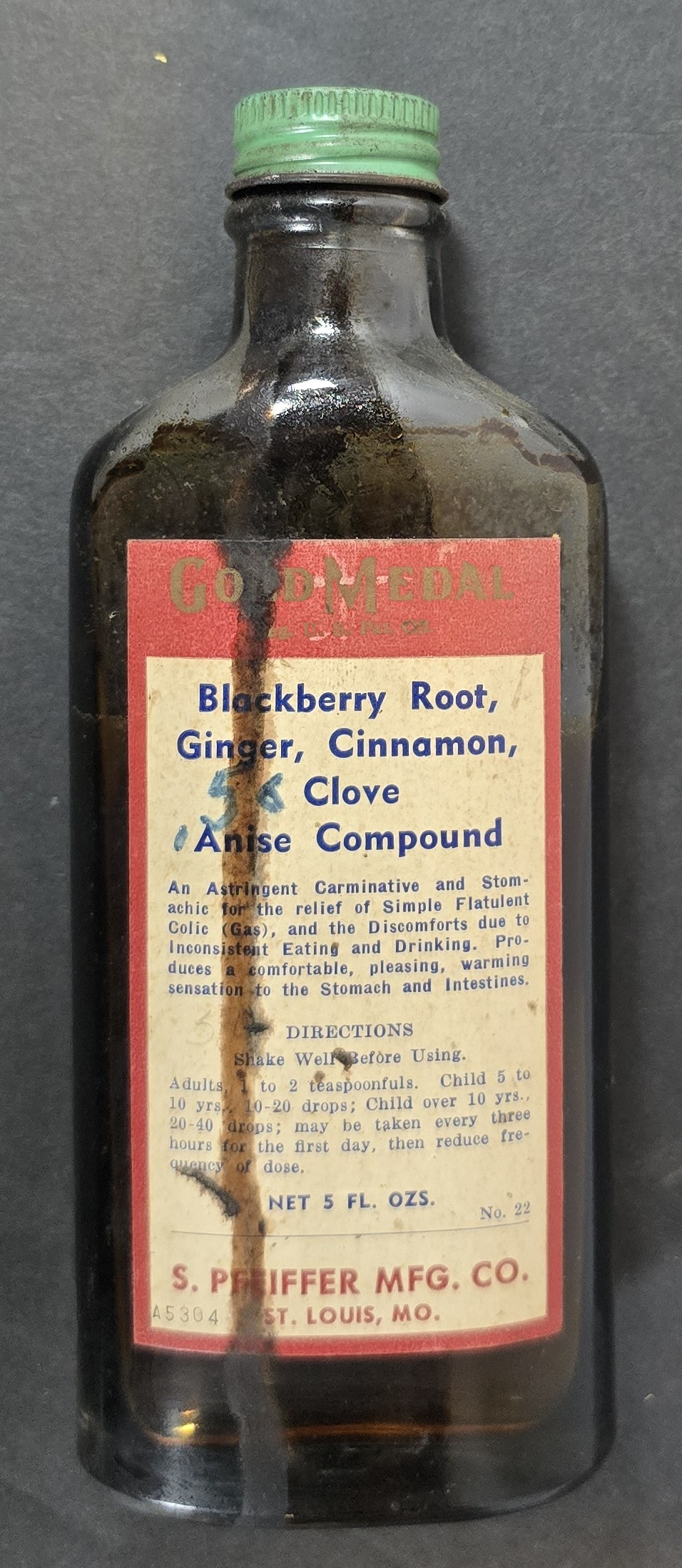
This bottle represents Gold Medal Blackberry Root, Ginger, Cinnamon, Clove, Anise Compound, a mid-20th-century American proprietary digestive preparation manufactured by S. Pfeiffer Manufacturing Company of St. Louis, Missouri.
Marketed as an astringent, carminative, and stomachic, the compound was intended for the relief of “simple colic,” gas (flatulence), and digestive discomfort attributed to inconsistent eating and drinking. The formula reflects long-standing pharmacologic traditions pairing astringent botanicals with warming aromatic spices to calm intestinal cramping while reducing gas formation.
The Cabinet example documents two known label variants of the same product, both packaged in amber, machine-made paneled bottles with screw caps and identical stated contents of 5 fluid ounces. While the formulation and use instructions remain consistent, the label designs differ in layout, color treatment, and print emphasis—an illustration of branding evolution rather than a change in product identity.
Condition
Amber glass bottles with original screw caps present. One example retains a white label with moderate staining and edge wear; the second example bears a red-bordered label with heavier staining and ink abrasion. Both bottles show expected surface scuffing consistent with age and handling.
Gallery
Historical context
Digestive remedies of this type were a staple of American household medicine through the first half of the 20th century. “Carminatives” such as anise, clove, cinnamon, and ginger were believed to relieve gas by warming the stomach and stimulating digestion, while blackberry root carried a reputation as an astringent for intestinal complaints. Products like this occupied the space between professional pharmacy practice and everyday self-care, remaining popular even as scientific gastroenterology advanced.
Curious Facts, Ephemera, and Trivia
The dosing instructions recommend administration every three hours on the first day, a level of confidence typical of proprietary medicines of the period.
Label variations such as these often reflect printing contracts, marketing refreshes, or regulatory wording adjustments, not reformulation.
The continued emphasis on “pleasant, warming sensation” highlights how patient experience was marketed as therapeutic value.
Excerpt
“An astringent carminative and stomachic for the relief of simple flatulent colic and the discomforts due to inconsistent eating and drinking.”
Why it is in the Cabinet
This item exemplifies everyday digestive self-treatment in mid-century America and provides a clear, well-documented example of how traditional botanical logic persisted in commercial pharmaceutical products. The presence of two label variants strengthens its interpretive value by illustrating branding changes within a single, continuous product line.
Support Dr. Bebout’s Cabinet of Medical Curiosities
If you enjoy the history, the oddities, and the effort, help keep this cabinet open. Every little bit helps preserve and share the strange wonders of medicine's past.
Buy Me a Ko-fi ☕ Buy Me a Coffee ☕ Tip via PayPal 💵