
Title
Glykeron Exempt Narcotic Cough Syrup Bottle
Author
Maker: Martin H. Smith Co.
Location: New York, NY
Image
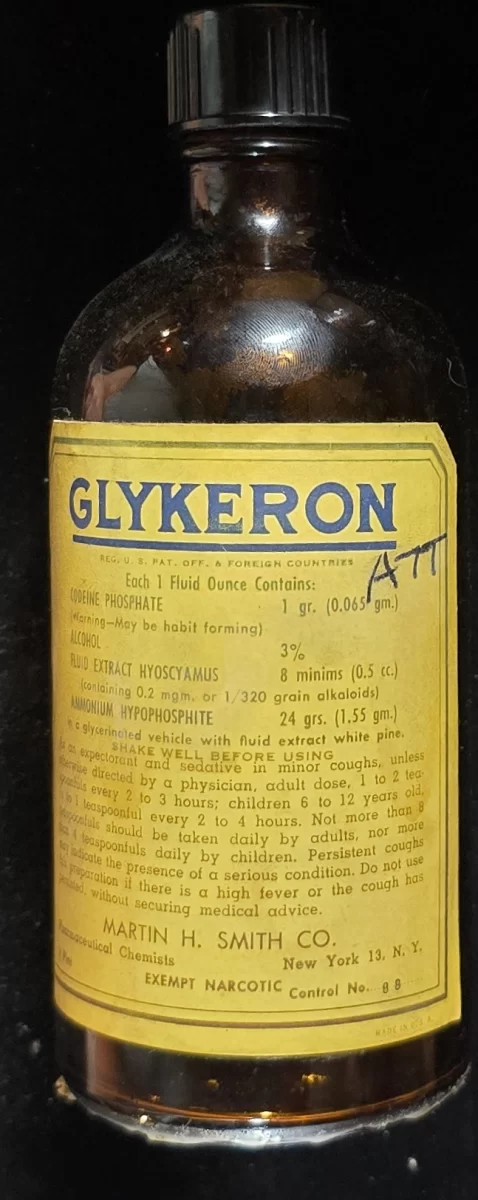
Description
This amber glass pint bottle of Glykeron cough syrup bears a prominent yellow pharmaceutical label listing a combination of narcotic and sedative ingredients:
Codeine phosphate – 1 grain per fluid ounce (0.065 g)
Fluid extract hyoscyamus – 8 minims (0.5 cc), equivalent to 0.2 mg of alkaloids
Alcohol – 3%
Ammonium hypophosphite – 24 grains (1.55 g)
Vehicle includes fluid extract of white pine
Manufactured by Martin H. Smith Co., Pharmaceutical Chemists, this syrup was marketed as an expectorant and sedative for cough relief. The bottle includes usage instructions, dosage guidance, and a warning not to exceed 4 teaspoonfuls per day for children or 8 for adults.
The label clearly states it falls under “Exempt Narcotic Control No. 88,” which allowed it to be sold without a prescription under the Harrison Narcotic Act, provided it met specific dilution limits.
Condition
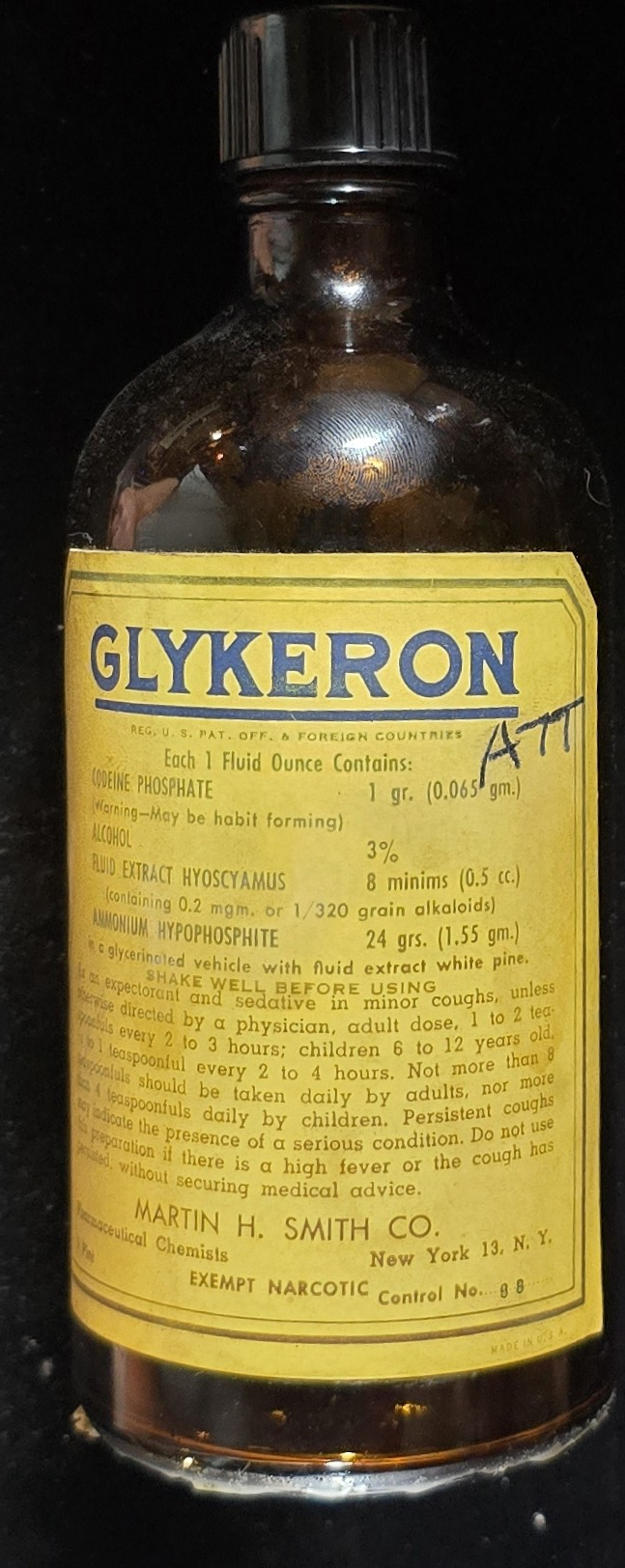
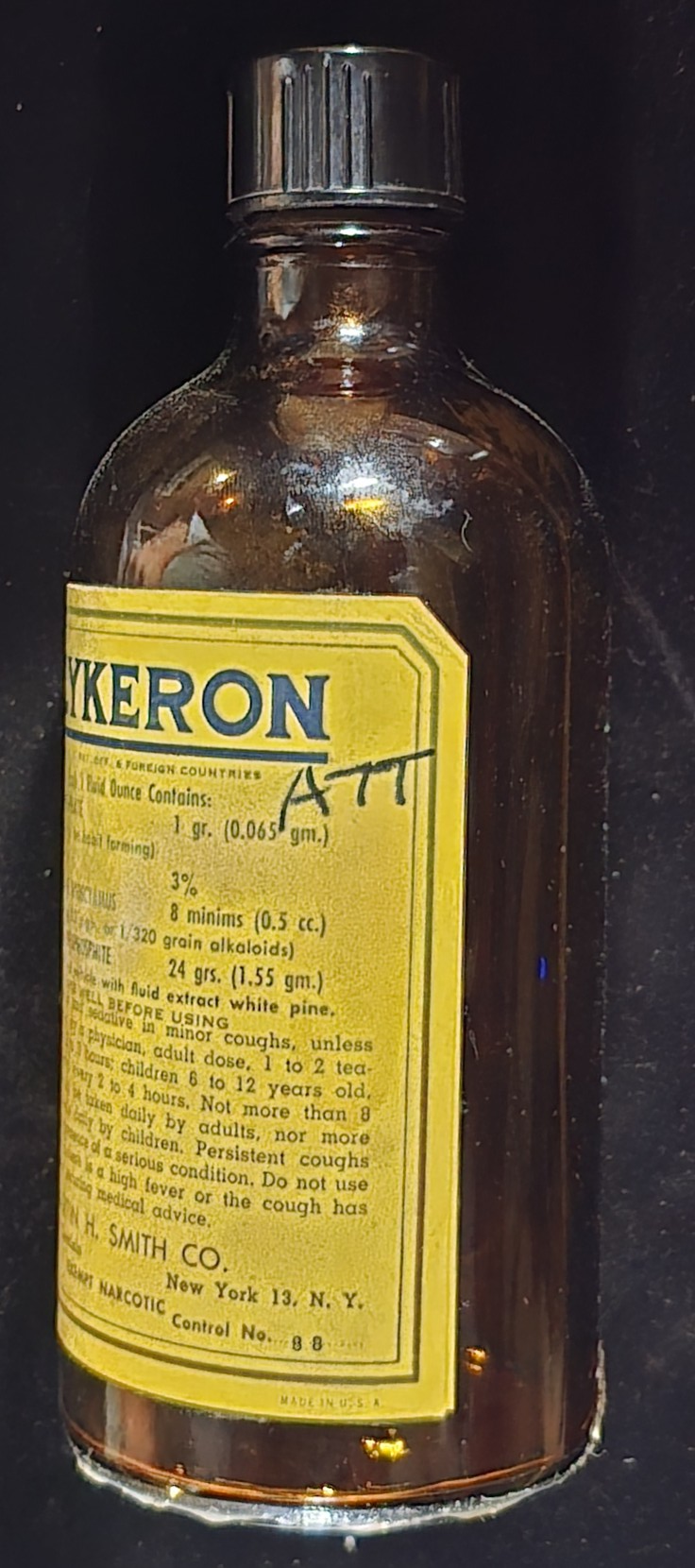
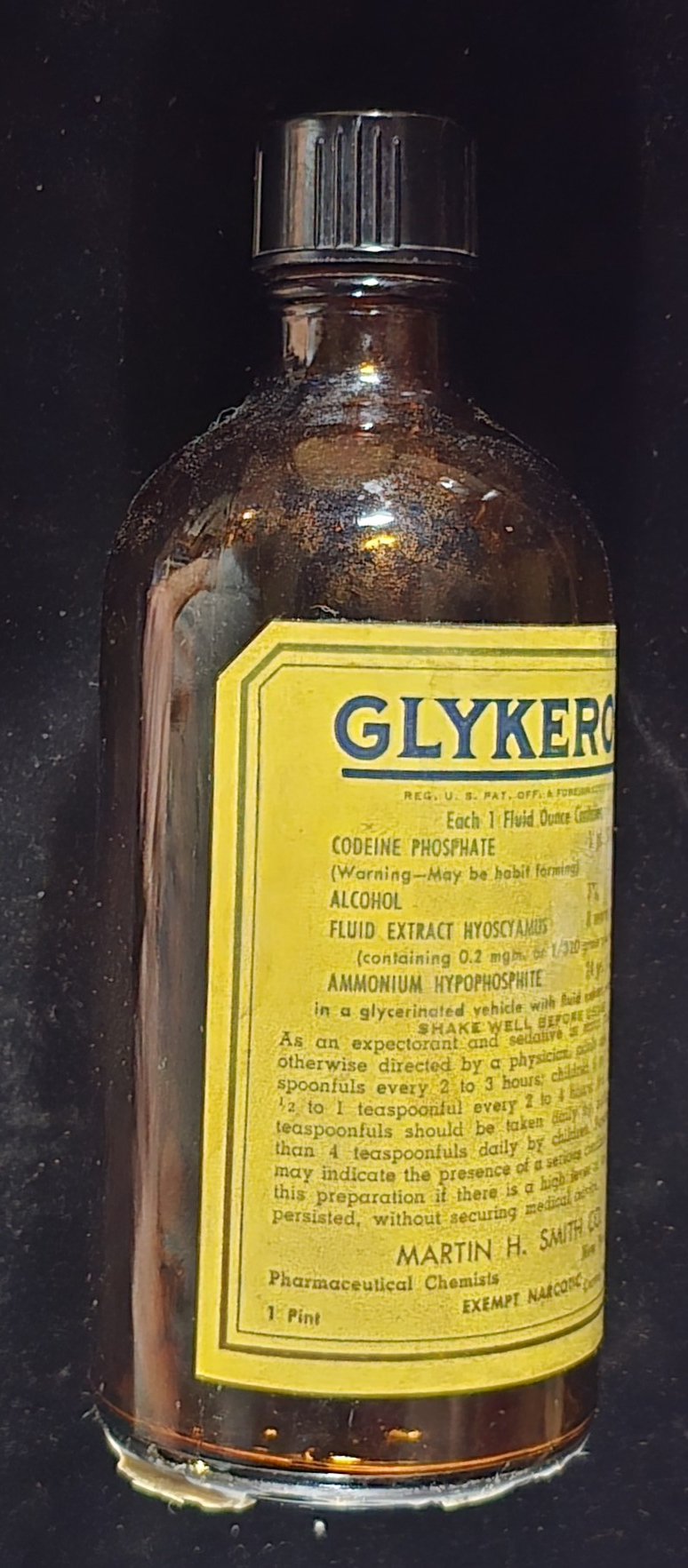
Bottle: Excellent condition; no chips or cracks
Cap: Screw-on black plastic cap intact
Label: Bright, legible, with minor wear and one handwritten annotation (“ATT”)
Contents: Empty but residue remains visible
Gallery
Historical context
Glykeron was manufactured during the early- to mid-20th century when narcotic cough syrups were widely available over the counter under “exempt” provisions of the Harrison Narcotic Act (1914). This act regulated opiates and coca products, but exempted medicines that contained small, diluted amounts—like this one with 1 grain of codeine per ounce.
The Martin H. Smith Co. was a well-known pharmaceutical firm operating in New York, producing both ethical and proprietary drugs. This bottle represents a transitional period in American drug regulation, between the patent medicine era and the post-FDA enforcement period.
Curious Facts, Ephemera, and Trivia
Hyoscyamus (henbane) is a powerful anticholinergic alkaloid with sedative and hallucinogenic effects in large doses. Its inclusion was common in early cough suppressants.
The syrup’s “Exempt Narcotic” status allowed it to be sold without a prescription so long as it was not advertised to contain narcotics.
The phrase “Shake Well Before Using” was legally required language on exempt narcotic preparations under federal guidelines.
Martin H. Smith Co. was acquired by Warner-Lambert (later Pfizer) in the mid-20th century.
At the time of sale, the bottle held 1 pint, a full 16 ounces—making for a substantial supply of codeine-containing syrup by modern standards.
Excerpt
From the label:
“As an expectorant and sedative in minor coughs, unless otherwise directed by a physician… not more than 8 teaspoonfuls should be taken daily by adults.”
“Persistent coughs may indicate the presence of a serious condition. Do not use this preparation if there is a high fever or the cough has persisted, without securing medical advice.”
Why it is in the Cabinet
This bottle represents a key moment in narcotic regulation history—when over-the-counter medications could legally contain habit-forming drugs like codeine and hyoscyamus, provided they met dilution and labeling rules. Its inclusion in the Cabinet preserves the visual and chemical legacy of pre-prescription opioid access, reflecting how normal it once was to treat a minor cough with codeine-laced syrup from a local chemist.
Support Dr. Bebout’s Cabinet of Medical Curiosities
If you enjoy the history, the oddities, and the effort, help keep this cabinet open. Every little bit helps preserve and share the strange wonders of medicine's past.
Buy Me a Ko-fi ☕ Buy Me a Coffee ☕ Tip via PayPal 💵