
Title
Glass Apothecary Jar – HYD. c. MAGN. (Hydrargyrum cum Magnesia)
Author
N/A (standard apothecary manufacture)
Image
Description
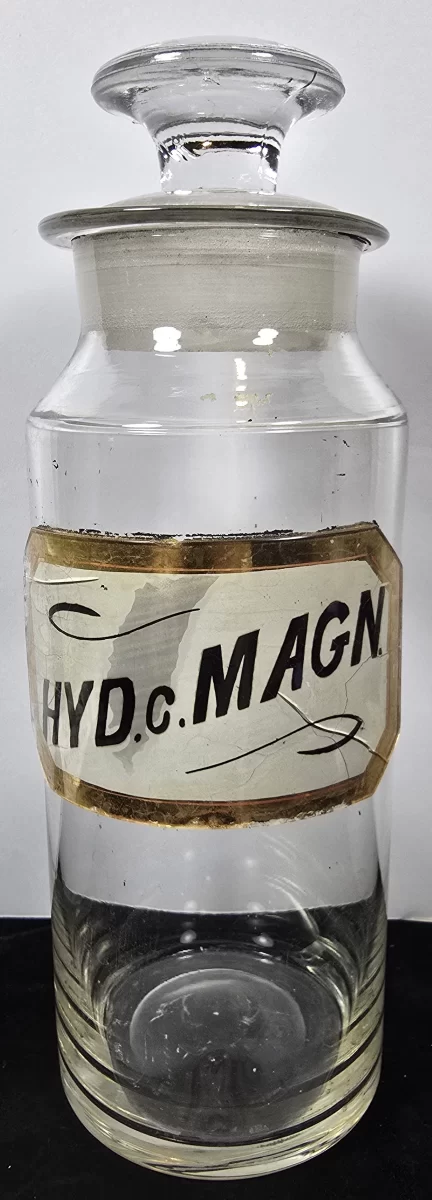
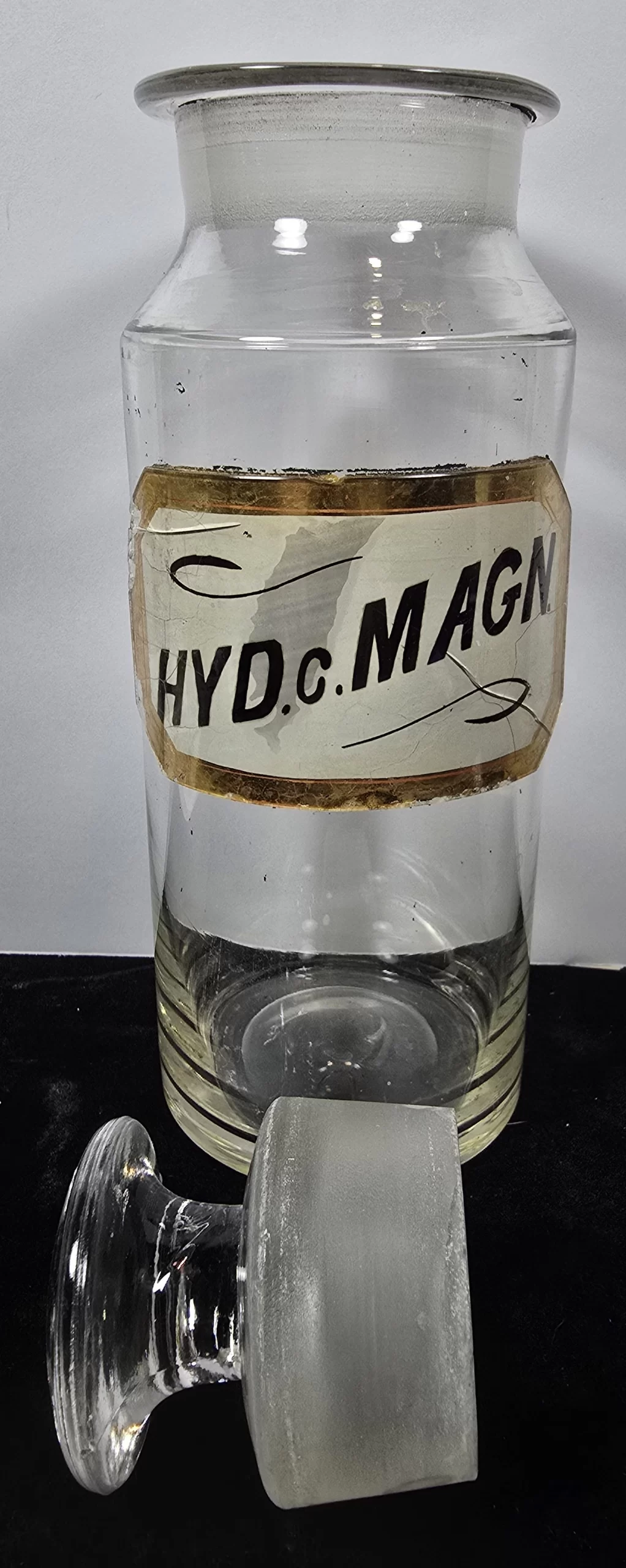
This is a tall, clear glass apothecary jar with ground glass stopper, featuring a large hand-lettered label bordered in gold and inscribed: “HYD. c. MAGN.” The abbreviation likely refers to Hydrargyrum cum Magnesia (a mercury and magnesia compound), which was used historically as a cathartic (laxative) and antacid in pharmacy practice.
Apothecary jars of this type were staples in 19th–early 20th century pharmacies. They held bulk quantities of raw drugs, powders, or preparations, often displayed prominently on open shelving behind the counter. The ground glass stopper formed an airtight seal to keep contents dry and uncontaminated.
Condition
Glass intact, no major chips or cracks.
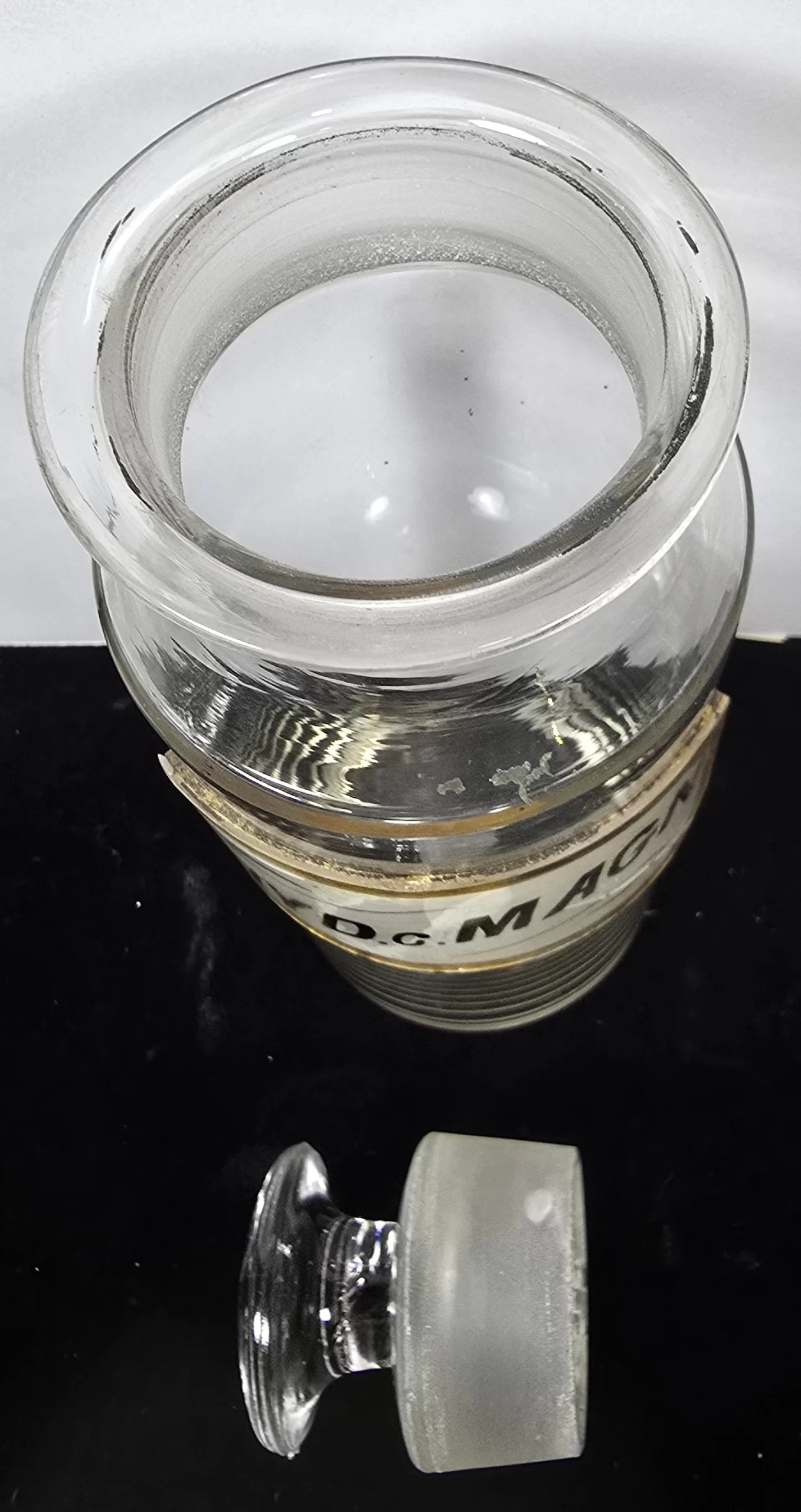
Stopper fits securely, frosted grinding intact.
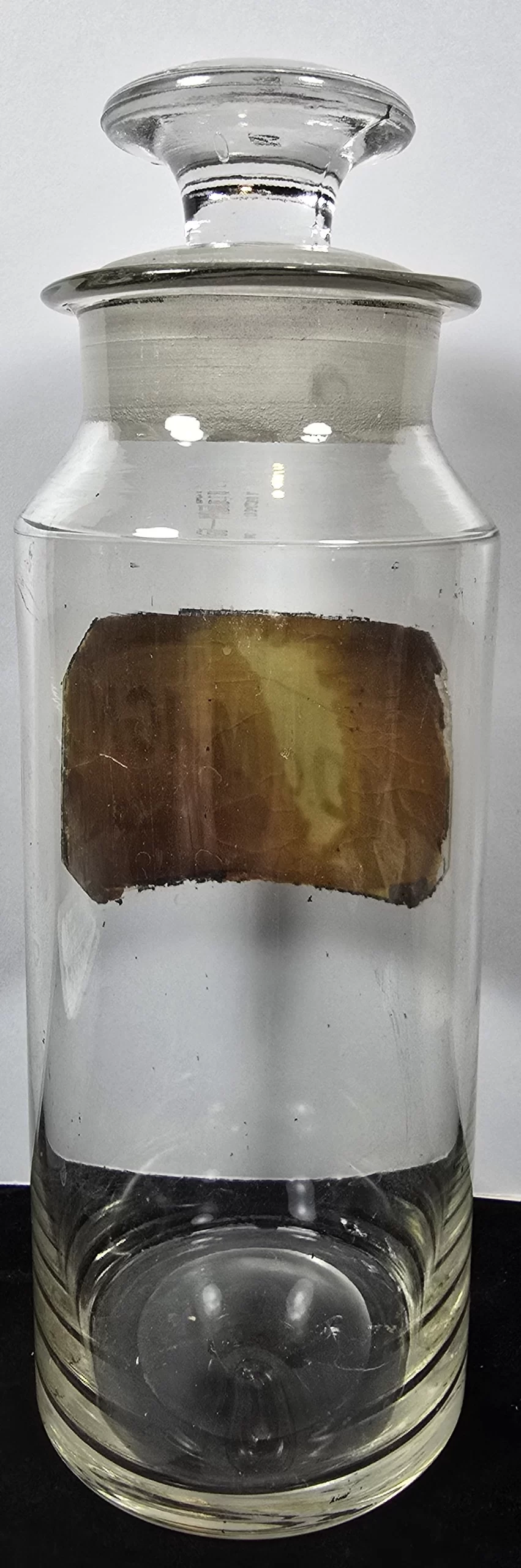
Label aged, browned, and cracked with minor loss, but still legible.
Some interior haze from prior use.
Gallery

Historical context
Magnesia (magnesium oxide or carbonate) was widely used to relieve indigestion, while mercury-containing compounds were common cathartics in the 18th and 19th centuries. “Hydrargyrum cum Magnesia” was a recognized preparation in early pharmacopoeias, though its toxicity ultimately led to discontinuation.
Apothecary jars like this one represent the blending of utility and display — practical storage vessels but also a form of pharmacy advertising, giving the shop a sense of order and credibility.
Curious Facts, Ephemera, and Trivia
The Latinized abbreviations on labels (HYD. for hydrargyrum, MAGN. for magnesia) were standard shorthand used by pharmacists.
Ground glass stoppers were preferred to corks because they sealed tightly and resisted absorbing chemical odors.
Large jars often contained compounds considered “official” in the pharmacopoeia, while smaller, unlabeled bottles were filled and sold to customers.
Excerpt
From the 1850s U.S. Dispensatory:
“Hydrargyrum cum Magnesia — employed as a mild cathartic in cases where mercurial alterative effects are desired.”
Why it is in the Cabinet
This jar showcases the imposing, decorative pharmacy storage vessels that defined the appearance of 19th-century apothecaries. Its labeled contents — a mercury-based preparation — are a striking reminder of how commonplace toxic metals once were in everyday medicine.
Support Dr. Bebout’s Cabinet of Medical Curiosities
If you enjoy the history, the oddities, and the effort, help keep this cabinet open. Every little bit helps preserve and share the strange wonders of medicine's past.
Buy Me a Ko-fi ☕ Buy Me a Coffee ☕ Tip via PayPal 💵