
Title
Foeniculum Apothecary Jar
Author
Unknown European Manufacturer (likely early 20th century)
Image
Description
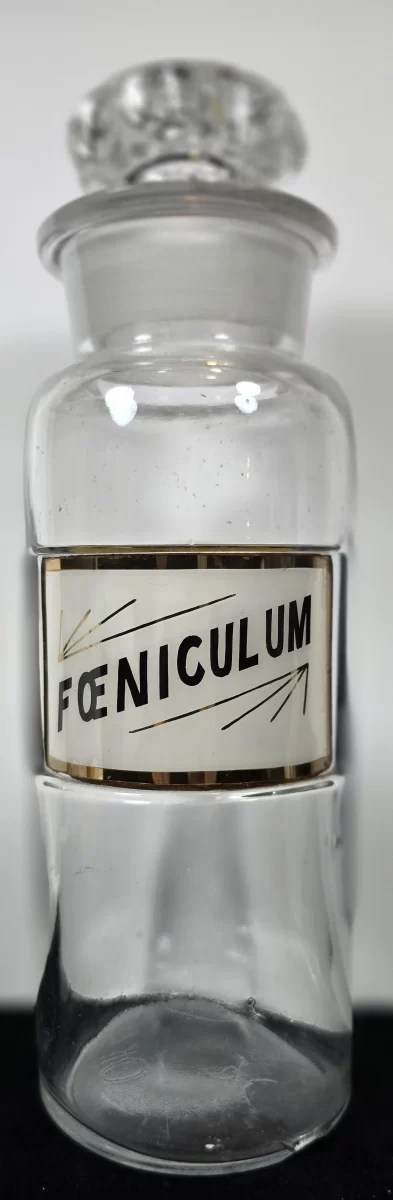
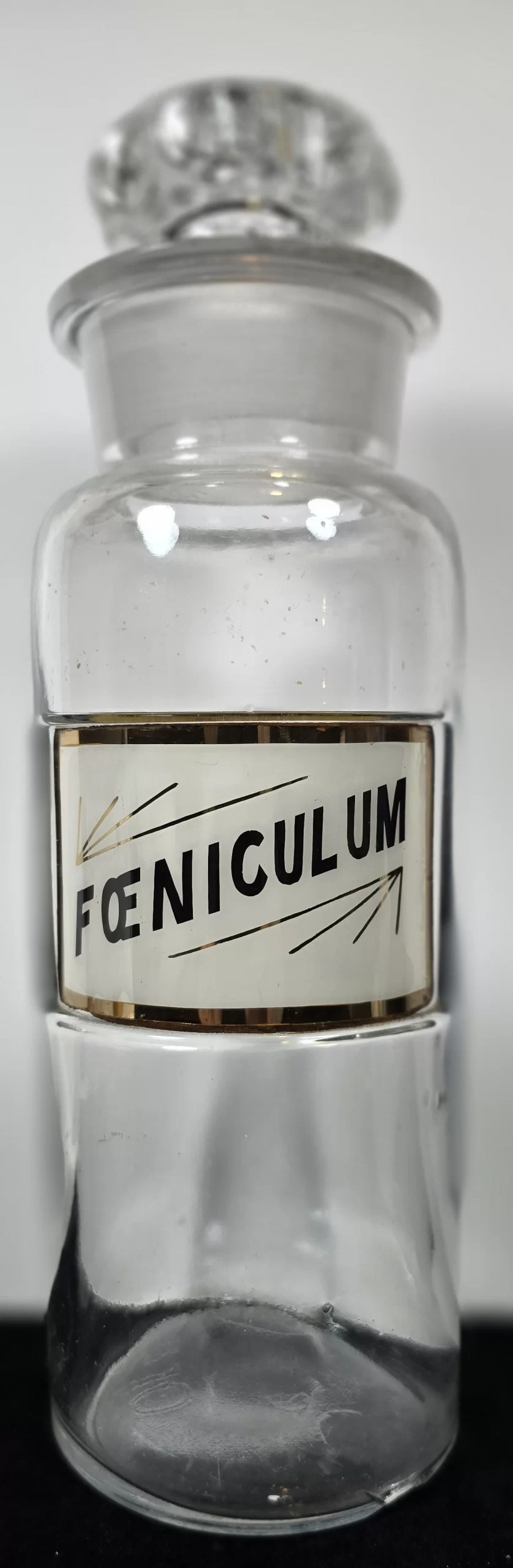
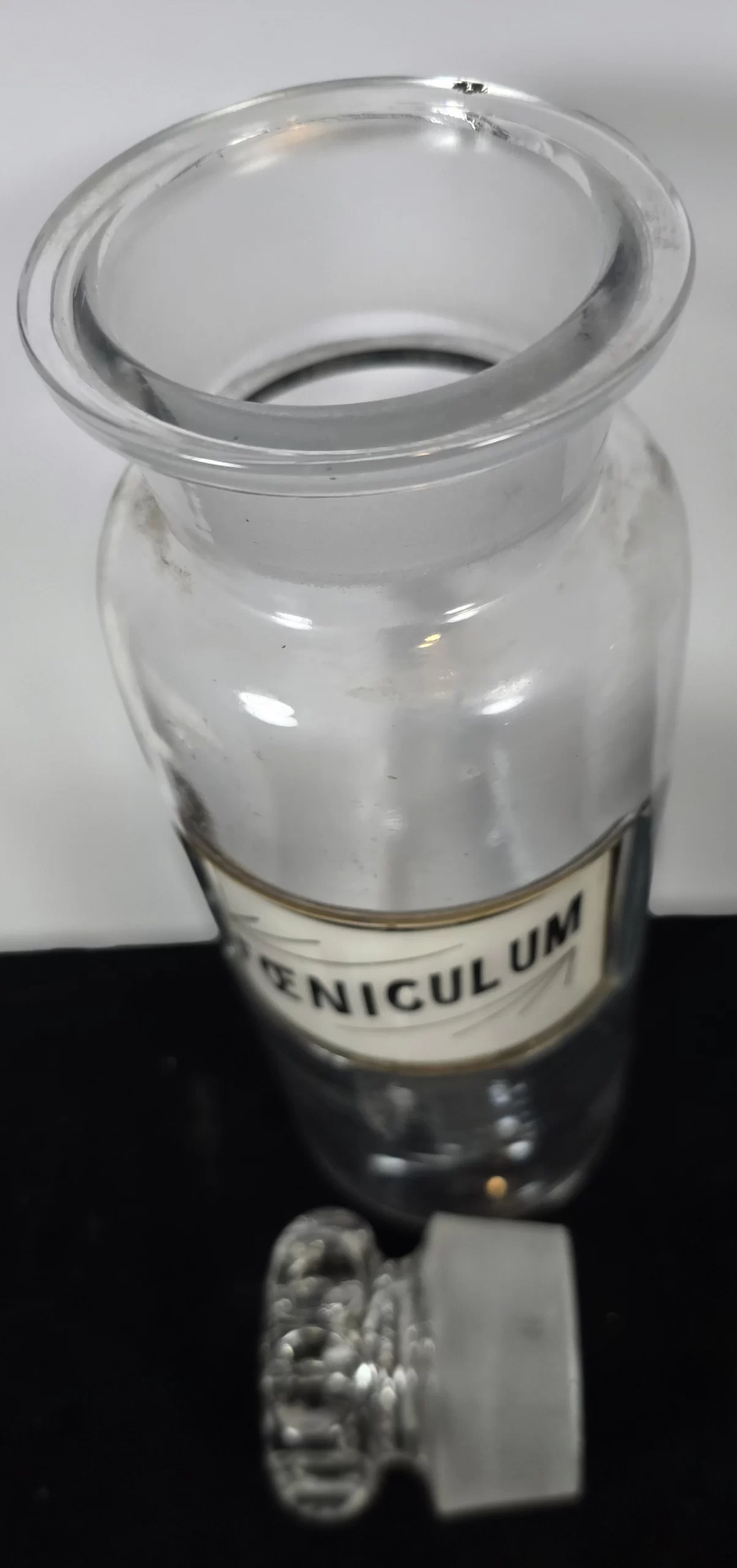
A beautifully preserved clear glass apothecary jar labeled “Fœniculum”, the Latin name for fennel.
The label is a white enamel plaque with black block lettering and decorative gold and black arrows, framed by a gold border.
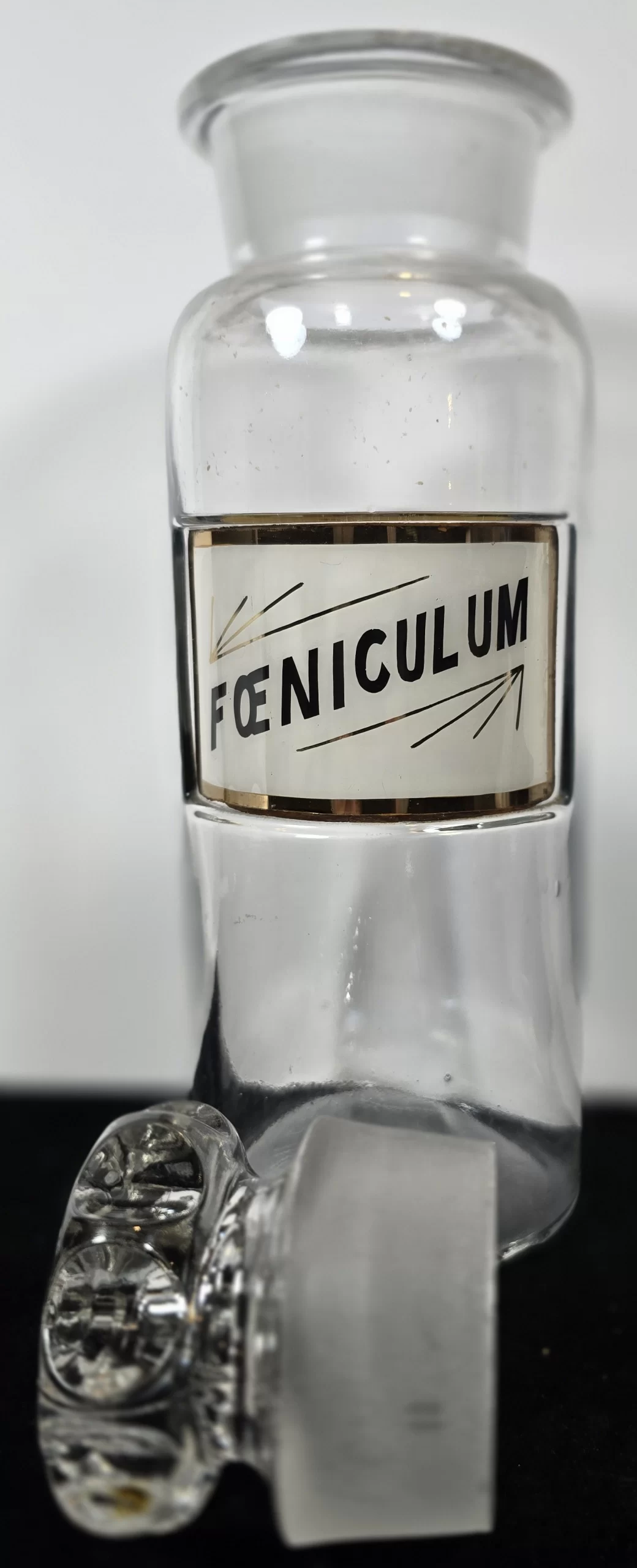
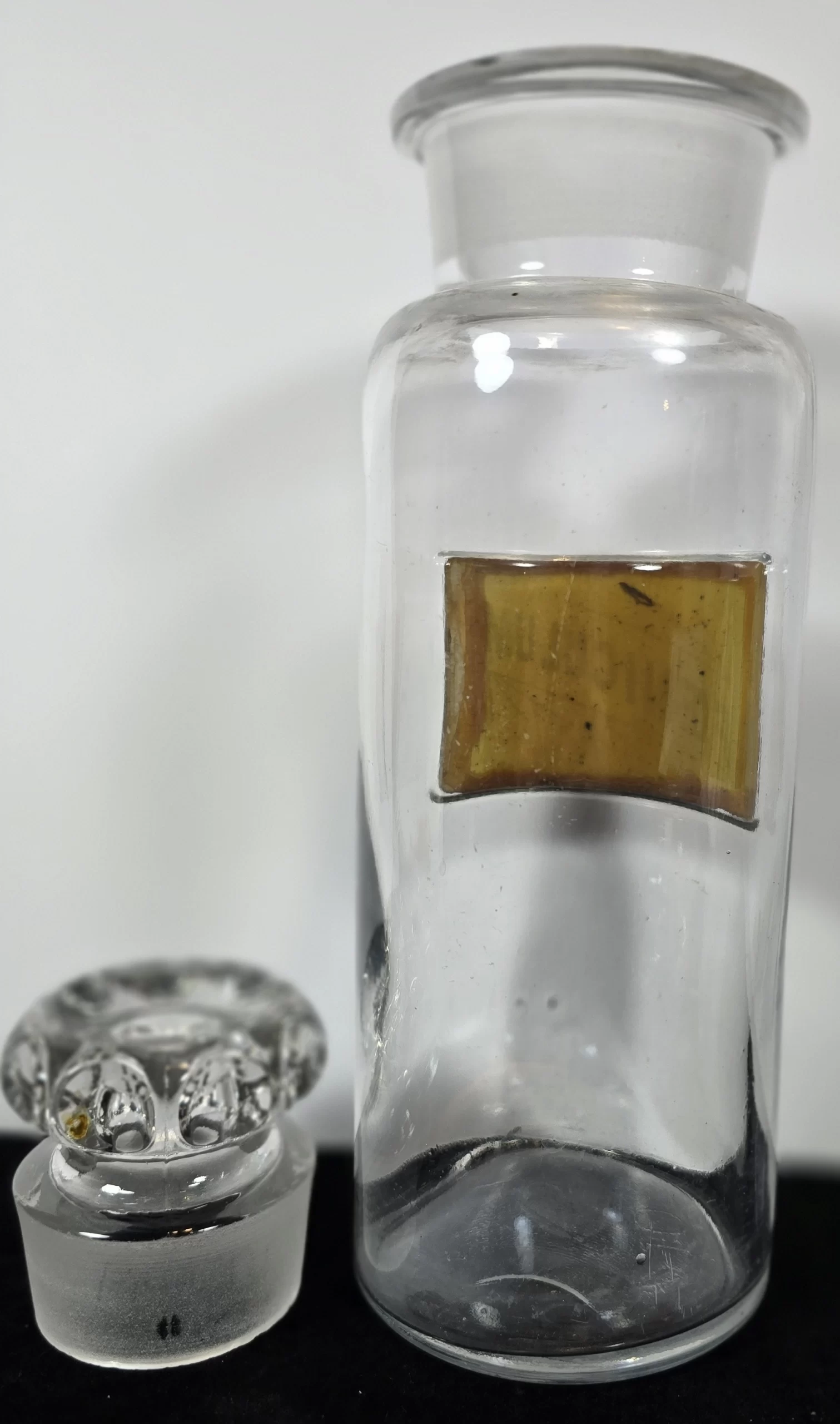
The jar features a ground glass stopper with an ornate faceted knob typical of continental European pharmacy design from the early 1900s to mid-century.
The term Fœniculum refers to Fœniculum vulgare, commonly known as fennel, a plant used historically for digestion, flatulence, colic, and as a mild aromatic stimulant. Apothecaries kept dried fennel seed or its essential oil in jars like this one for preparing tinctures and infusions.
Condition
Excellent condition. Glass is clear with only minor internal residue and light shelf wear on the base. Stopper fits snugly with intact ground joint. Label is vivid and clean with no flaking or discoloration.
Gallery
Historical context
Apothecary jars like this one were both functional and decorative, often displayed on open shelves behind the pharmacist’s counter.
Latin labeling was the professional standard for medical storage well into the 20th century, serving both a practical and aesthetic role in pharmacies across Europe and America.
The inclusion of the ligature “œ” in Fœniculum marks this as a classic pre-modern spelling, commonly replaced with “oe” or simply “e” in later pharmaceutical labeling.
Fennel has ancient medical roots — described by Hippocrates as a remedy for digestive distress and by medieval herbalists as a cleansing tonic and galactagogue (to promote lactation). Its essential oil, rich in anethole, was later used in compound tinctures and cough remedies.
Curious Facts, Ephemera, and Trivia
Apothecaries used color-coded or stylized labels to differentiate between herbal, chemical, and toxic contents — this white label indicates a simple herbal ingredient.
The term “Fœniculum” originates from the Latin for “little hay,” referencing the plant’s fine, feathery foliage.
Fennel was a key component in Aqua Anisi, Aqua Foeniculi, and other aromatic waters found in pharmacopoeias from the 18th–19th centuries.
These jars were often sold as matched sets, and modern collectors value their completeness and intact labels as indicators of authenticity.
Excerpt
“Fœniculum vulgare—aromatic, carminative, and gently stimulant; long esteemed for digestive and lacteal virtues.” — The Dispensatory of the United States of America, 1918 edition
Why it is in the Cabinet
This elegant apothecary jar represents the refined intersection of herbal medicine and pharmacy art. It stands as a tangible link between botanical tradition and early pharmaceutical practice — a simple yet striking vessel for one of the world’s oldest medicinal plants.
Support Dr. Bebout’s Cabinet of Medical Curiosities
If you enjoy the history, the oddities, and the effort, help keep this cabinet open. Every little bit helps preserve and share the strange wonders of medicine's past.
Buy Me a Ko-fi ☕ Buy Me a Coffee ☕ Tip via PayPal 💵