
Title
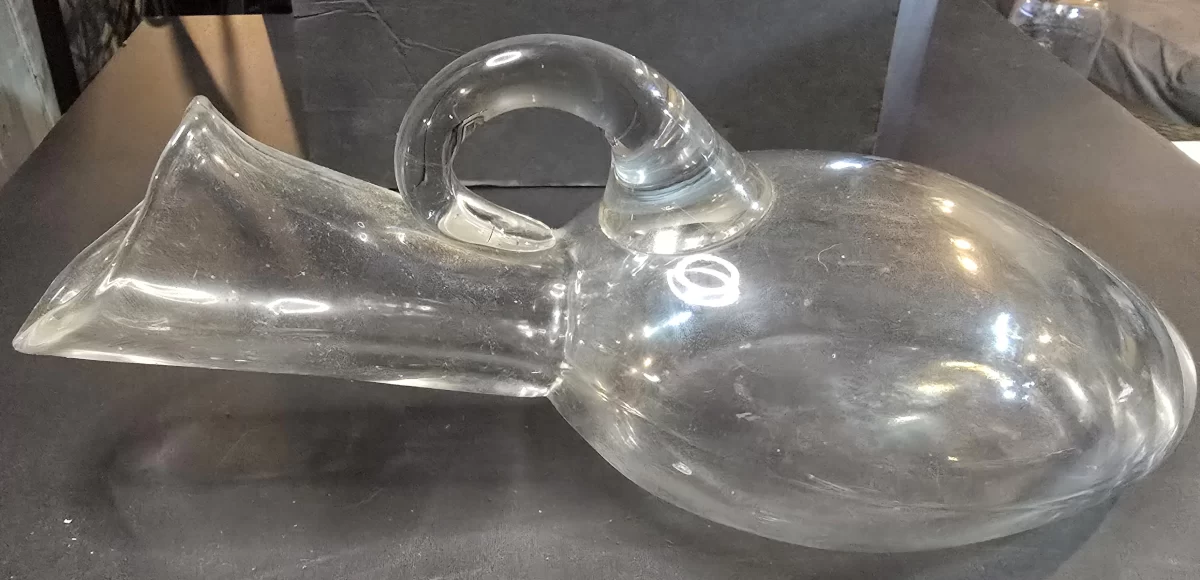
Female urinal (bedside urination vessel), clear glass, c. 1930–1950
Author
Unknown / unmarked maker
Image
Description
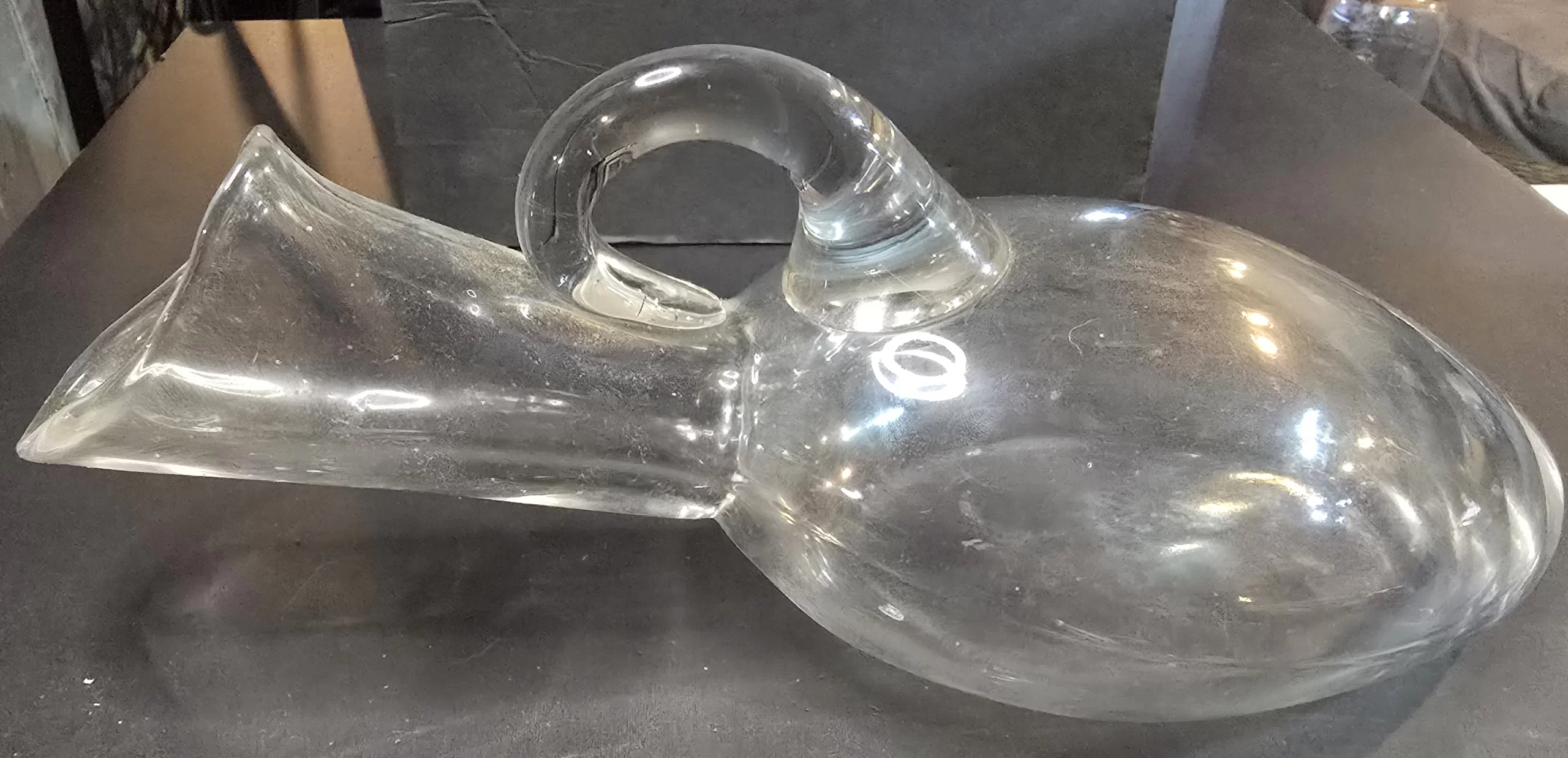
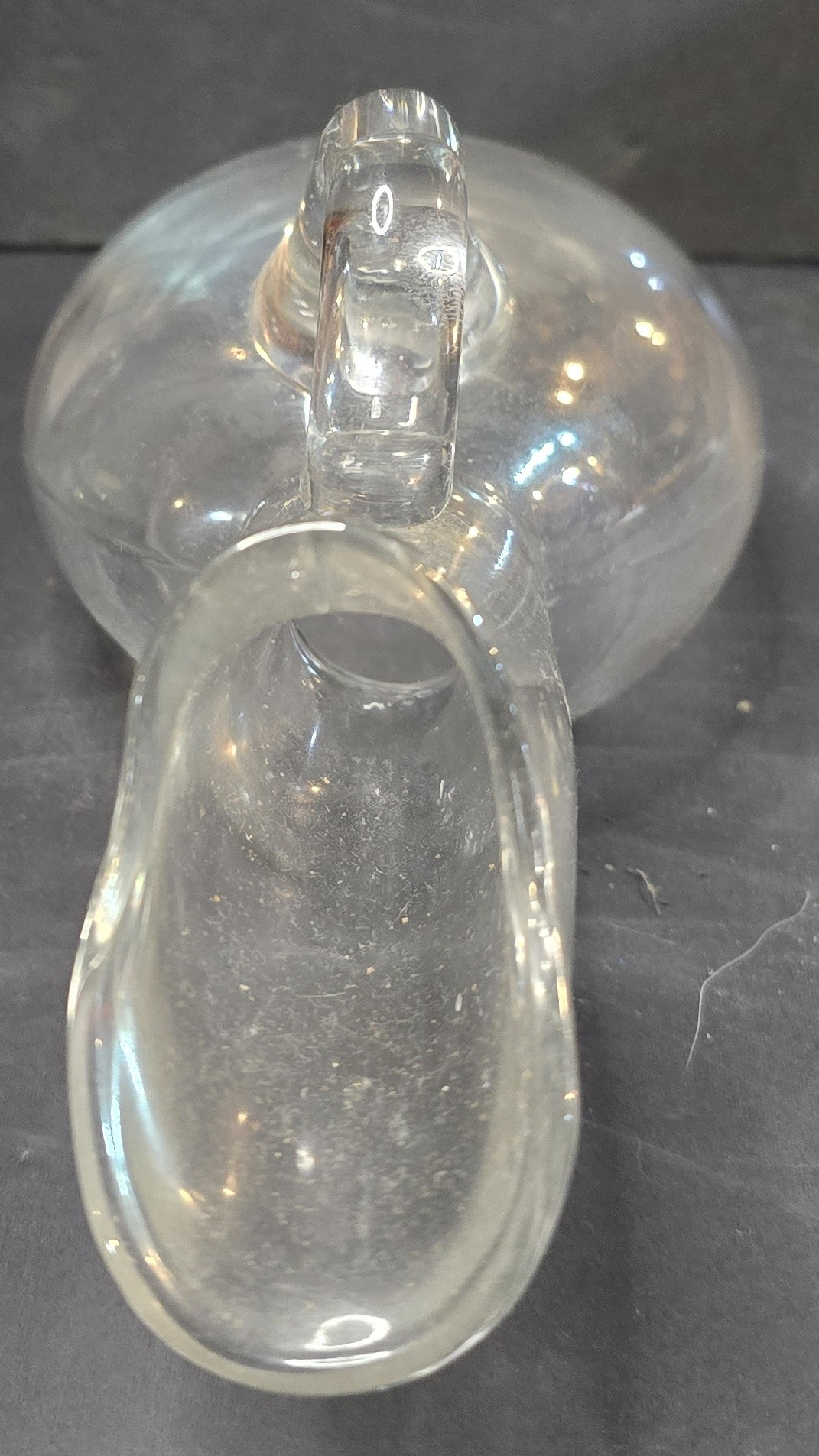
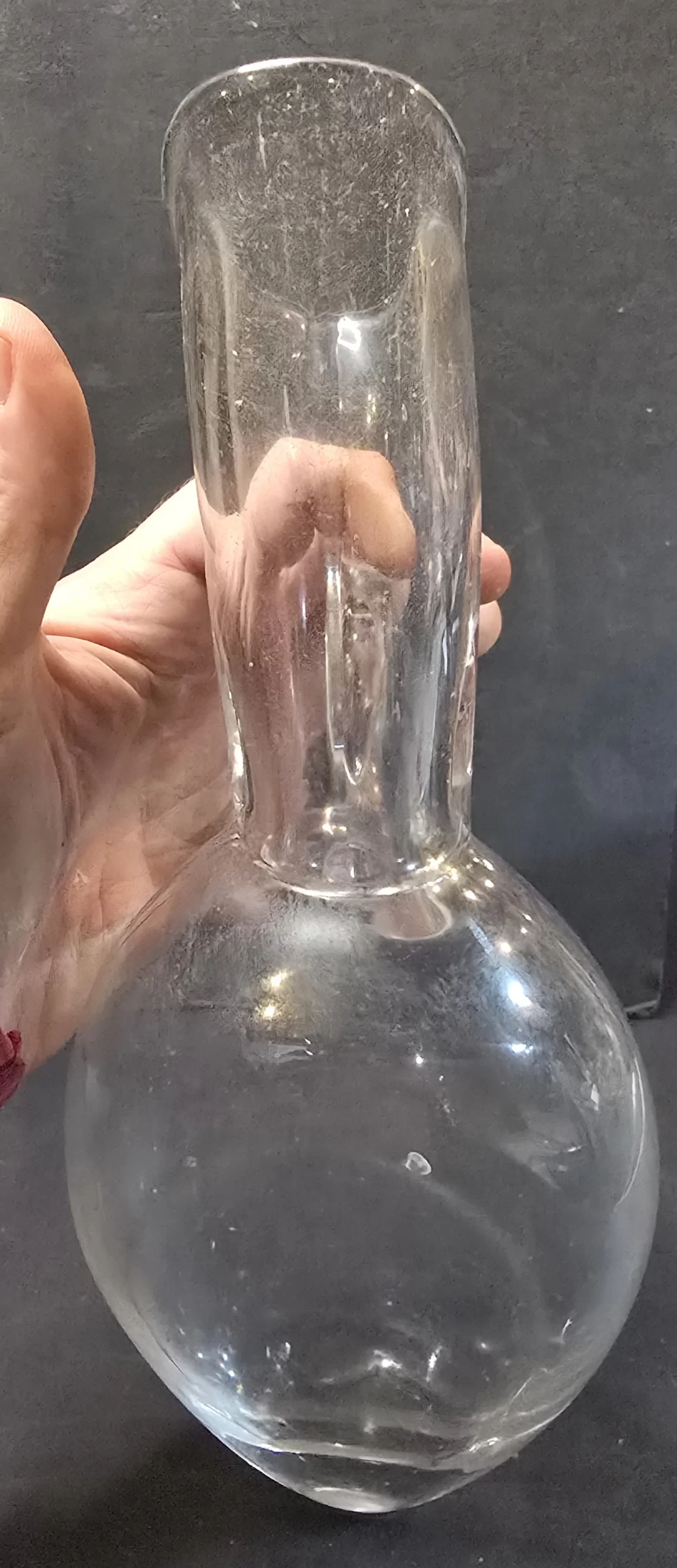
This is a classic female bedside urinal in clear glass, made for use in hospitals, sickrooms, and home nursing when standing or walking to a toilet wasn’t safe or possible. The defining feature is the wide, flattened oval mouthpiece designed to fit female anatomy and reduce spillage compared with the narrow, bottle-neck style common to male urinals. The vessel has a large bulb reservoir and a thick, integrated loop handle for control during use and emptying. It’s utilitarian design at its finest—nothing decorative, everything functional.
Condition
Good vintage condition. No obvious chips or cracks. Noticeable surface scratching/scuffing and general handling wear consistent with age and use; minor clouding/film and small specks present.
Gallery

Historical context
Before disposable plastics took over hospital supply rooms, bedside urinals were commonly made in glass, enamelware, or porcelain because they could be cleaned, boiled, and reused. Female urinals are less commonly encountered than the typical male “bottle” form, and the wide mouthpiece is a quick tell that this was designed specifically for women’s bedside care—often used for postoperative patients, childbirth recovery, illness, or frailty.
Curious Facts, Ephemera, and Trivia
The shape looks strange until you realize it’s basically a spill-control engineering project. Then it looks… only slightly less strange.
Glass versions feel “delicate,” but they were popular because they didn’t hold odors the way some early plastics could.
These were standard sickroom items for decades and rarely got saved—because nobody made scrapbooks about urinals. History is cruel.
Excerpt
Typical nursing-supply wording (paraphrased): “Female urinal—wide mouth, easy to cleanse; for bedside use.”
Why it is in the Cabinet
Because it’s honest medical history: the unglamorous hardware of care. This is the kind of object that kept patients safer (fewer falls, less strain, less misery) long before modern mobility aids and disposable convenience took over.
Support Dr. Bebout’s Cabinet of Medical Curiosities
If you enjoy the history, the oddities, and the effort, help keep this cabinet open. Every little bit helps preserve and share the strange wonders of medicine's past.
Buy Me a Ko-fi ☕ Buy Me a Coffee ☕ Tip via PayPal 💵