
Title
Febri-Tone Antimalarial and Tonic
Author
Wintersmith Chemical Co., Louisville, KY
(Successors to Arthur Peter & Co.)
Image
Description
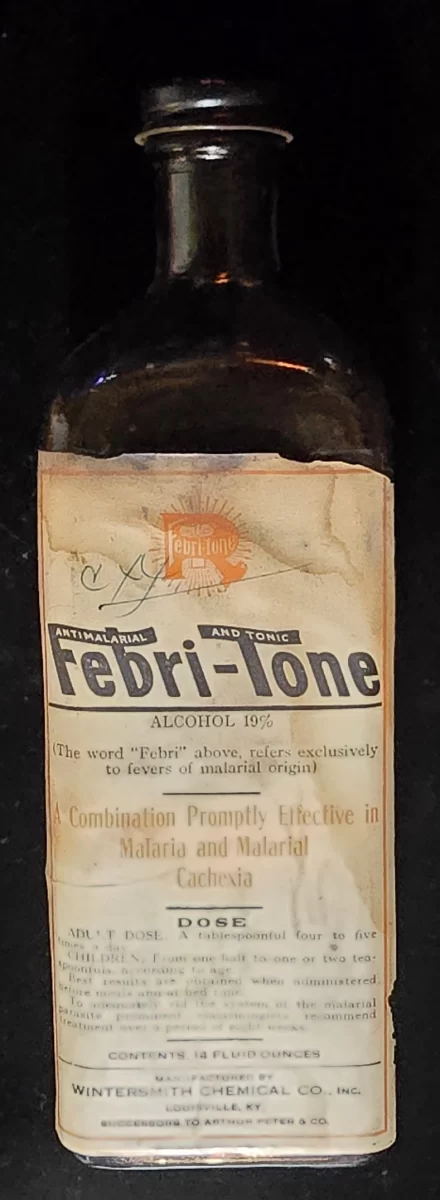
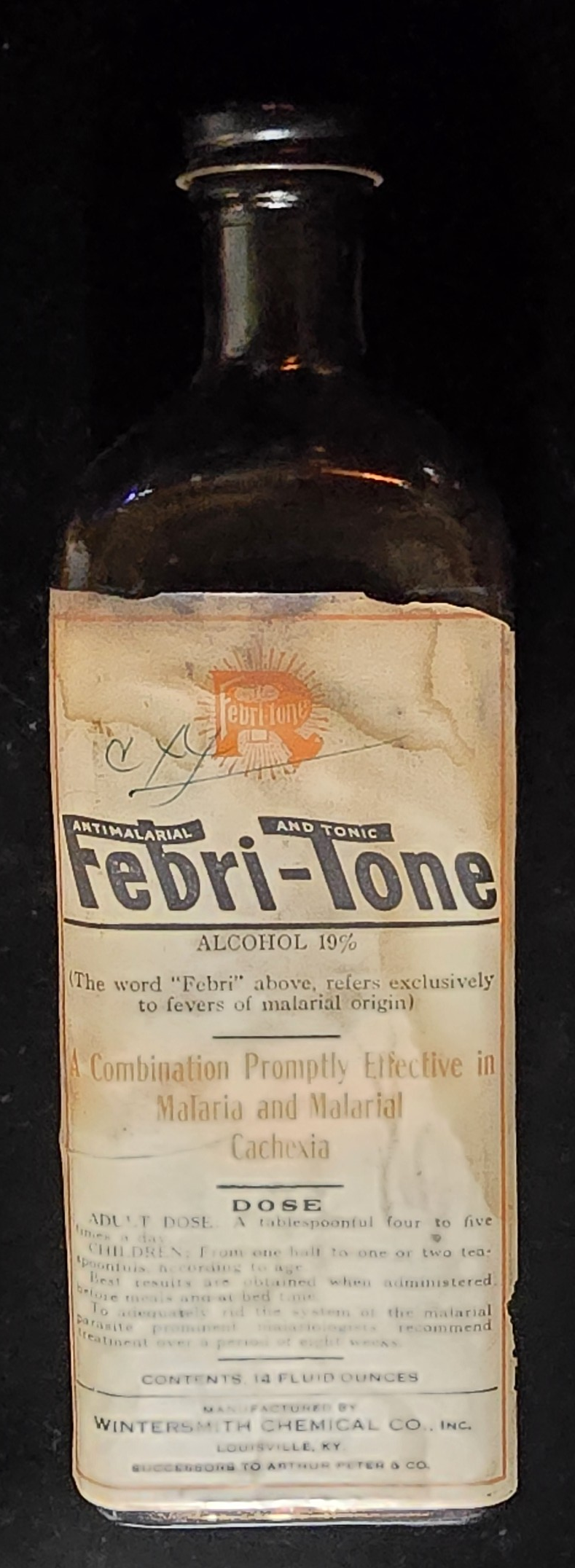
This amber glass bottle held Febri-Tone, a 14-ounce antimalarial tonic produced by Wintersmith Chemical Co. of Louisville, Kentucky. Marketed as “promptly effective in malaria and malarial cachexia,” the bottle declares a 19% alcohol content and recommended adult doses of 1 tablespoon 4–5 times a day—a staggering quantity by modern standards.
Despite vague labeling, Febri-Tone’s name and intended purpose suggest it was part of a class of bitters-style remedies often formulated with quinine, herbal extracts, alcohol, and sometimes arsenicals to treat fevers and chronic weakness associated with malaria.
Condition
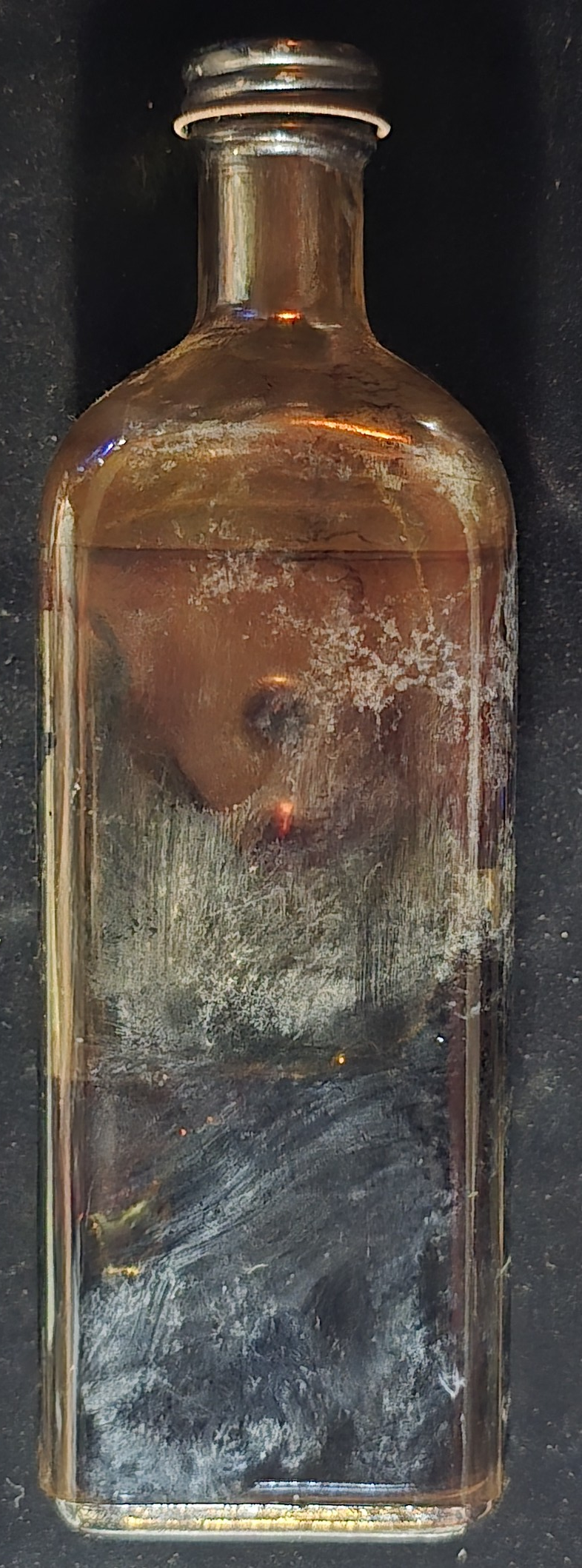
Bottle is intact and clear with slight clouding and residue inside. Label shows staining, fading, and an old ink inscription near the top. Glass is free of chips. Embossed screw-top finish appears original.
Gallery
Historical context
Malaria remained a public health concern in the American South well into the 20th century. Remedies like Febri-Tone were sold as preventive tonics and therapeutic aids for recurring fevers, especially in rural areas without access to formal medical care.
The branding reflects the pre-FDA era’s fondness for proprietary names built on Latin roots and medical jargon—with “Febri” referencing febrile illness and “Tone” suggesting a general health booster.
The Wintersmith name traces back to Arthur Peter & Co., a 19th-century Louisville apothecary that became known for its bitters and tonics. Products like this straddled the line between legitimate pharmacotherapy and patent medicine.
Curious Facts, Ephemera, and Trivia
he 19% alcohol base made it palatable, shelf-stable, and mildly intoxicating—sometimes abused as a “medicinal liquor.”
Malaria was so common that “tonic season” ads appeared every spring in Southern newspapers, urging families to stock up.
“Cachexia” refers to a wasting syndrome from chronic disease—Febri-Tone promised to restore strength and appetite.
While quinine isn’t listed, the name and purpose heavily imply its presence—making Febri-Tone a cousin to Peruna, Grove’s Tasteless Chill Tonic, and other malaria-era staples.
Excerpt
“A combination promptly effective in Malaria and Malarial Cachexia.”
Why it is in the Cabinet
Febri-Tone reflects a time when entire regions of the U.S. fought disease with alcohol-based tonics and hopeful marketing. Its Southern roots, therapeutic claims, and potent alcohol content tell a story of early 20th-century American medicine, shaped by local disease burdens and evolving pharmaceutical standards.
Support Dr. Bebout’s Cabinet of Medical Curiosities
If you enjoy the history, the oddities, and the effort, help keep this cabinet open. Every little bit helps preserve and share the strange wonders of medicine's past.
Buy Me a Ko-fi ☕ Buy Me a Coffee ☕ Tip via PayPal 💵