
Title
Elixir Passiflora and Bromide Compound
Author
Sharp & Dohme, Philadelphia, PA
Image

Description
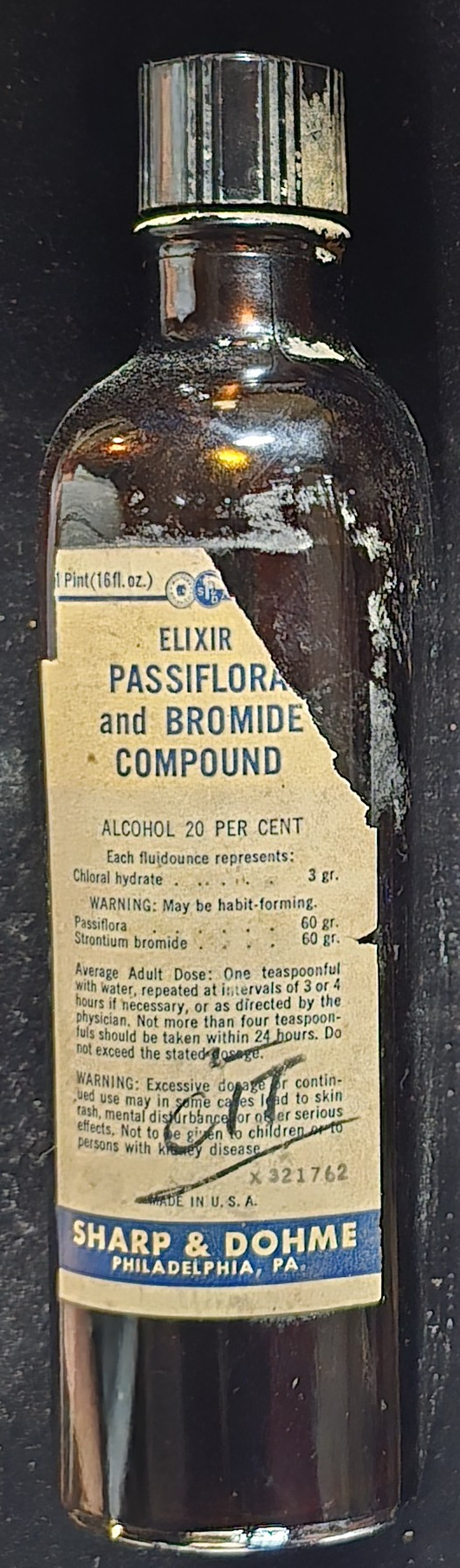
This antique brown-glass bottle held a potent over-the-counter sedative formulated by Sharp & Dohme prior to their 1953 merger with Merck. Labeled “Elixir Passiflora and Bromide Compound,” this product combined herbal and chemical sedatives including Passiflora (passionflower), strontium bromide, chloral hydrate, and 20% alcohol.
Marketed as a nerve tonic and sleep aid, the label warns the elixir “may be habit-forming” and cautions against overuse. It was dosed by the teaspoon, with instructions to limit use to no more than four doses per 24 hours. Its ingredients reflected a common pharmaceutical strategy of the time: blending botanical, bromide, hypnotic, and alcohol-based therapies into a single catch-all calming remedy.
Condition
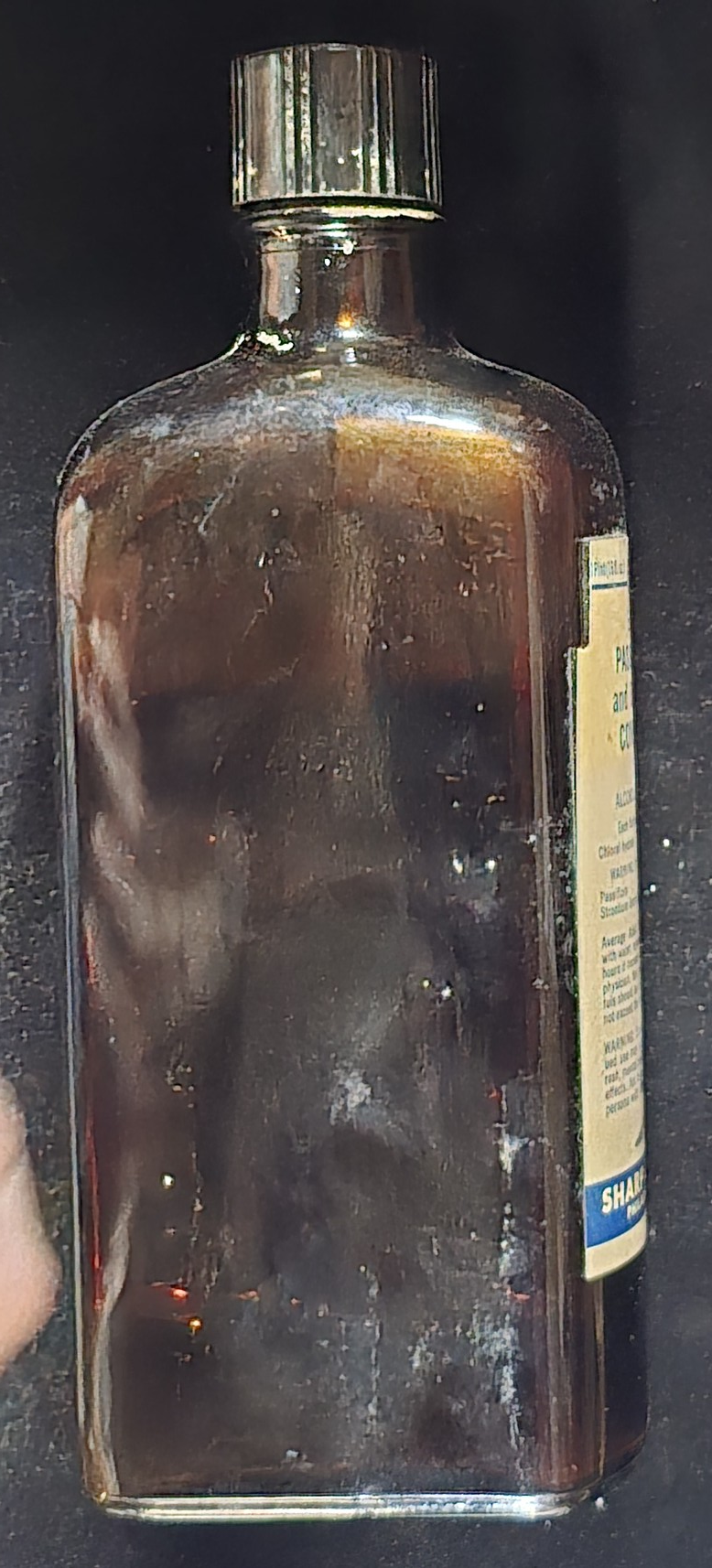
Bottle is intact with original metal cap. Label is partially torn and shows moderate discoloration and wear. Glass exhibits surface spotting and residue consistent with age. No contents remain.
Gallery
Historical context
This elixir dates from the 1930s–1940s, before the establishment of modern drug labeling and safety regulations. At that time, bromides were a standard treatment for anxiety and insomnia, and chloral hydrate was widely used as a sedative despite its toxicity and potential for abuse.
Sharp & Dohme, a major American drug manufacturer, produced a range of bromide compounds before merging with Merck in 1953. Passionflower extracts, meanwhile, had a long herbal tradition in both European and Native American medicine.
Curious Facts, Ephemera, and Trivia
The inclusion of chloral hydrate—one of the first synthetic hypnotics—links this formula to early chemical sedatives dating back to the 19th century.
Strontium bromide, while now obsolete in human medicine, was once used to calm the central nervous system.
This elixir is a classic example of a “shotgun formula”, blending multiple active agents into one bottle with little regard for pharmacological interaction.
Passionflower remains a popular herbal supplement today, often sold in tea or capsule form.
Bromide-based medications faded from use after the 1950s due to better alternatives and concerns about chronic toxicity (bromism).
- ☠️ Mickey Finn Connection
While not intended for foul play, this elixir shares key ingredients with the infamous “Mickey Finn”—a drink covertly spiked to sedate or incapacitate someone. Its chloral hydrate and alcohol content mirror the sedative base commonly used in early 20th-century criminal concoctions. In the wrong hands, a “therapeutic dose” could become a dangerous trap.
Excerpt
“WARNING: May be habit-forming… Do not exceed the stated dosage. Excessive dosage or continued use may in some cases lead to skin rash, mental disturbance or other serious effects.”
Why it is in the Cabinet
This bottle represents a pivotal period in American pharmaceutical history when remedies blurred the line between folk medicine and pharmacology. Its combination of herbal, sedative, and alcohol-based components makes it a prime example of early 20th-century over-the-counter sedation—and a compelling reminder of how far medical regulation has come.
Support Dr. Bebout’s Cabinet of Medical Curiosities
If you enjoy the history, the oddities, and the effort, help keep this cabinet open. Every little bit helps preserve and share the strange wonders of medicine's past.
Buy Me a Ko-fi ☕ Buy Me a Coffee ☕ Tip via PayPal 💵