
Title
Elixir ‘Chloro-Calcium’ (Elixir Calcium Chloride)
Author
Sharp & Dohme, Philadelphia, PA
Image
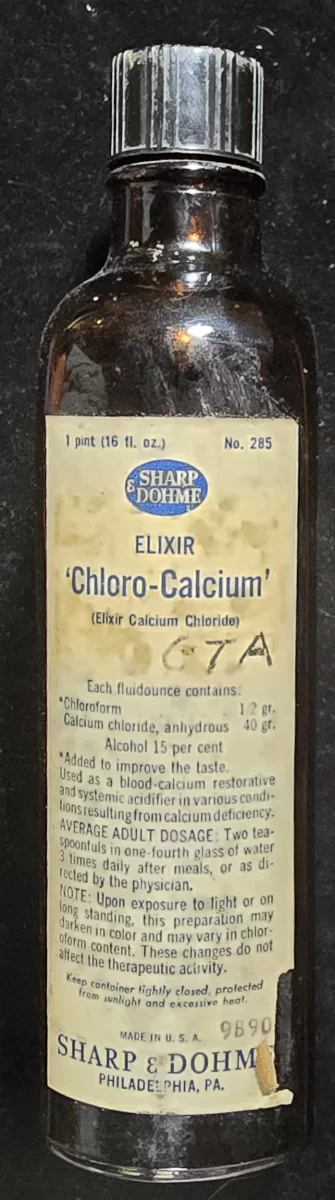
Description
A medicinal elixir containing chloroform and calcium chloride, this solution was marketed as a systemic acidifier and calcium supplement during a time when such remedies were often administered in sweetened alcoholic mixtures.
Each fluid ounce of this elixir provided:
Chloroform – 1½ grains
Calcium chloride, anhydrous – 40 grains
Alcohol – 15%
Marketed as a “blood-calcium restorative” to treat conditions resulting from calcium deficiency, it came with a dosing instruction of two teaspoons in water three times daily after meals. A note on the label warns of color changes due to light exposure, which could alter the chloroform content but not the therapeutic activity—a hint at just how loosely stability and efficacy were monitored.
Condition
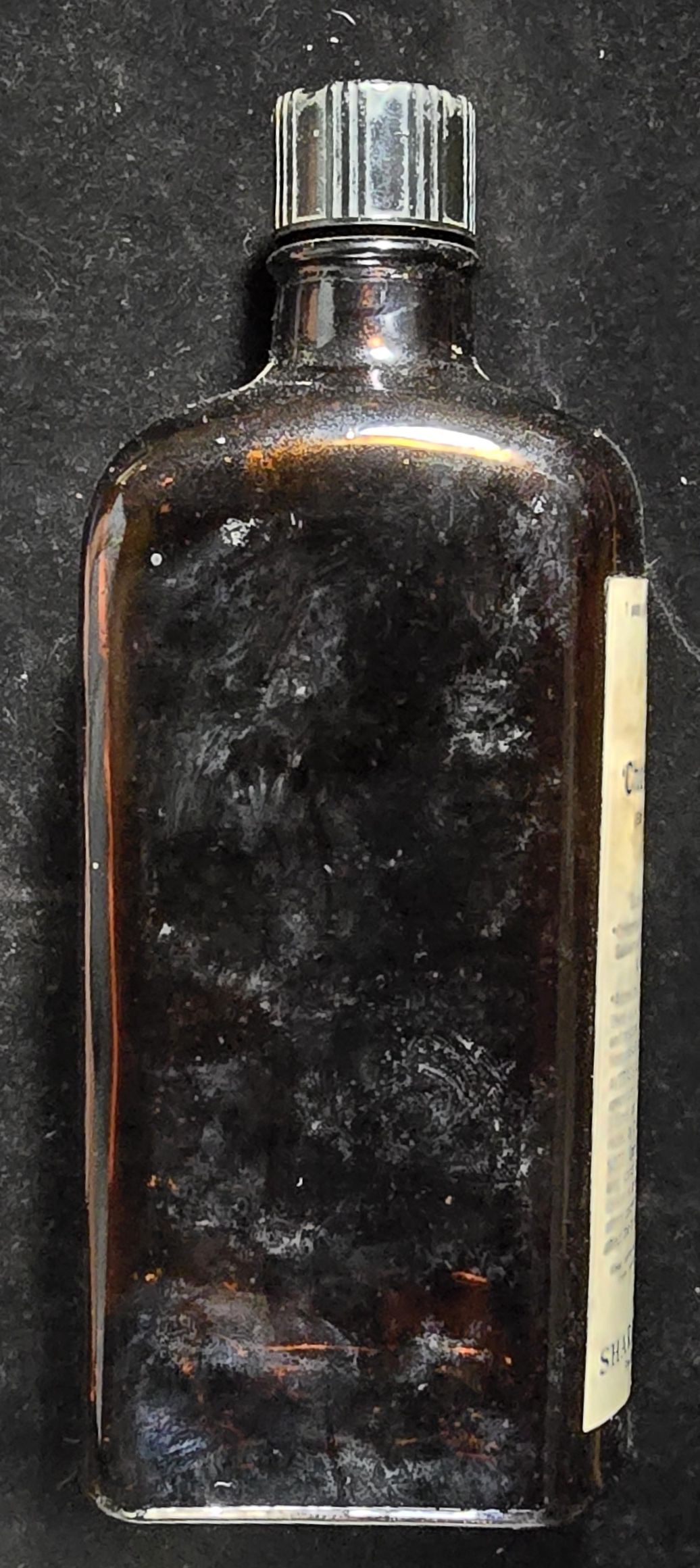
Bottle is intact with original metal cap and worn but readable label. Some label staining and discoloration are present, and a handwritten “6TA” appears on the front label. The glass shows signs of aging and fingerprint-like residue but no cracks.
Gallery

Historical context
Chloroform, discovered in the 1830s, became infamous as one of the earliest surgical anesthetics—but by the 20th century, its use had shifted toward sedative elixirs, liniments, and cough suppressants. Despite known risks—including liver toxicity and potential for respiratory failure—it remained widely available over the counter until stricter regulations emerged mid-century.
Calcium chloride was used in a variety of medical contexts, including treatment for tetany, rickets, and other calcium-deficiency syndromes, but delivering it in alcoholic chloroform solution was a hallmark of the pre-FDA era’s uninhibited approach to formulation.
Sharp & Dohme, a significant American pharmaceutical manufacturer, later merged with Merck in 1953.
Curious Facts, Ephemera, and Trivia
The “chloro” in the name doesn’t refer to chlorine—but rather chloroform, a sweet-smelling anesthetic that’s now banned from most therapeutic use.
The label candidly admits that the color and chloroform content might change over time—but assures users it’s still “therapeutic.”
This elixir’s sweetened alcoholic base helped mask the harsh, chemical taste of calcium chloride and chloroform.
Chloroform was so widely used in sedative syrups that it appeared in early cough remedies marketed to children.
This bottle represents a time when pharmacology and flavoring were equally important—and just as risky.
Excerpt
“Upon exposure to light or on long standing, this preparation may darken in color and may vary in chloroform content. These changes do not affect the therapeutic activity.”
Why it is in the Cabinet
This elixir captures the strange overlap of chemistry, marketing, and medicine in the early 20th century. Combining a potentially deadly anesthetic with a necessary electrolyte and advertising it as a health tonic, it is both a relic of therapeutic optimism and a cautionary tale about pre-regulatory pharmaceuticals.
Support Dr. Bebout’s Cabinet of Medical Curiosities
If you enjoy the history, the oddities, and the effort, help keep this cabinet open. Every little bit helps preserve and share the strange wonders of medicine's past.
Buy Me a Ko-fi ☕ Buy Me a Coffee ☕ Tip via PayPal 💵