
Title
Eli Lilly Tincture of Aconite, N.F. (1/4 Pint Poison Bottle)
Author
Eli Lilly and Company, Indianapolis, U.S.A.
Image

Description
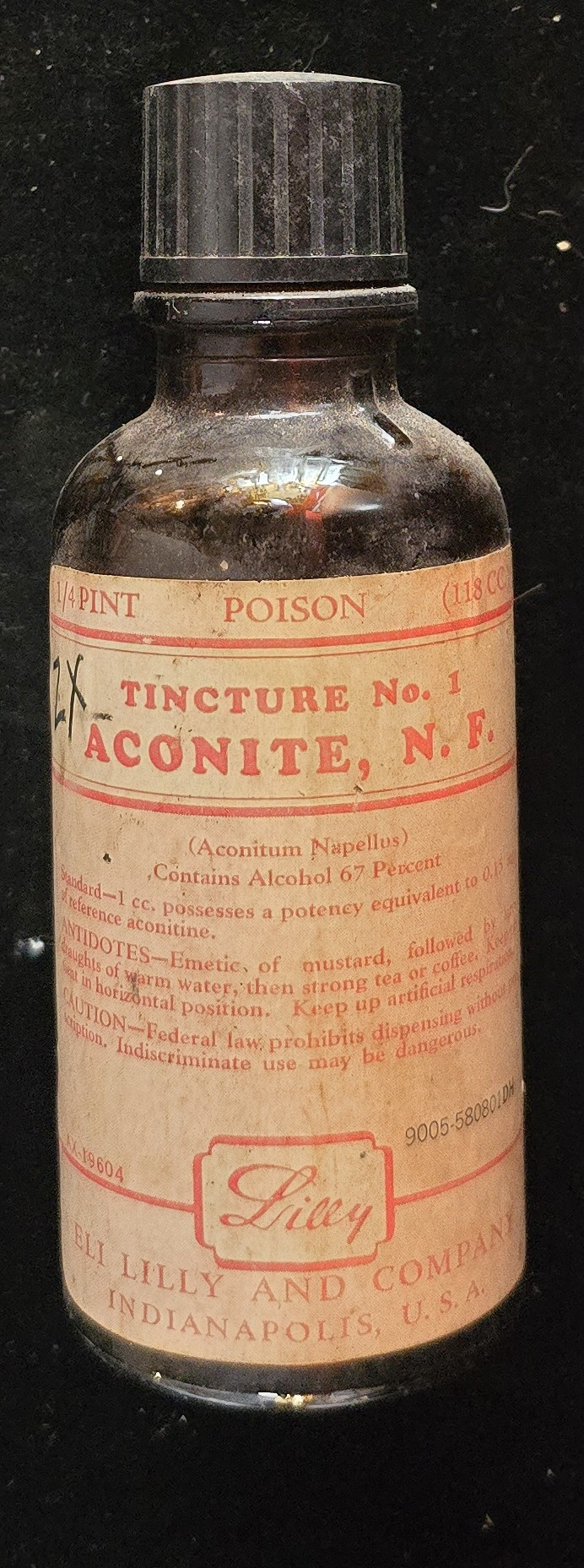
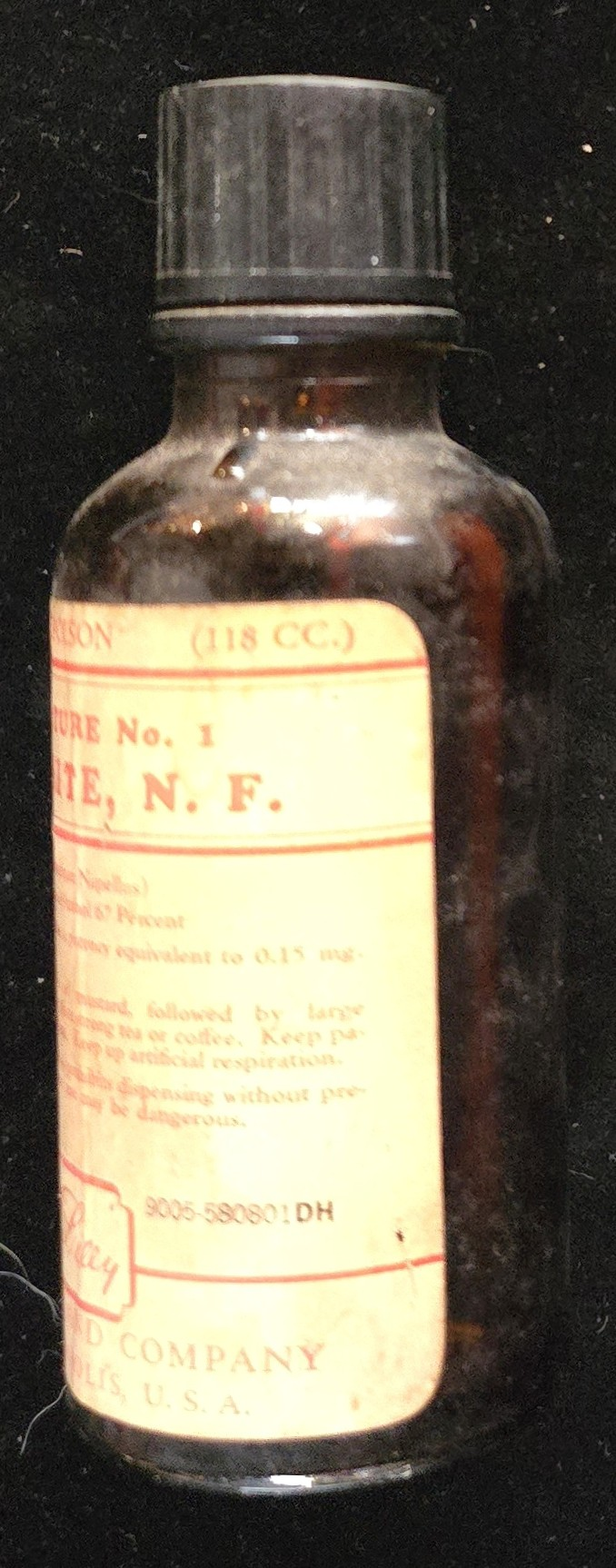
This brown glass pharmacy bottle once contained Tincture of Aconite, N.F., manufactured by Eli Lilly & Company of Indianapolis. The label prominently warns “POISON” and specifies its strength: 1 cc equal to 0.15 mg of reference aconitine. It contained aconitum napellus (monkshood), dissolved in 67% alcohol.
Aconite tincture was once used medicinally as a cardiac and pain remedy but had a razor-thin margin between therapeutic and fatal doses. Labels often included antidote instructions, such as inducing vomiting with mustard and administering strong tea or coffee.
Condition
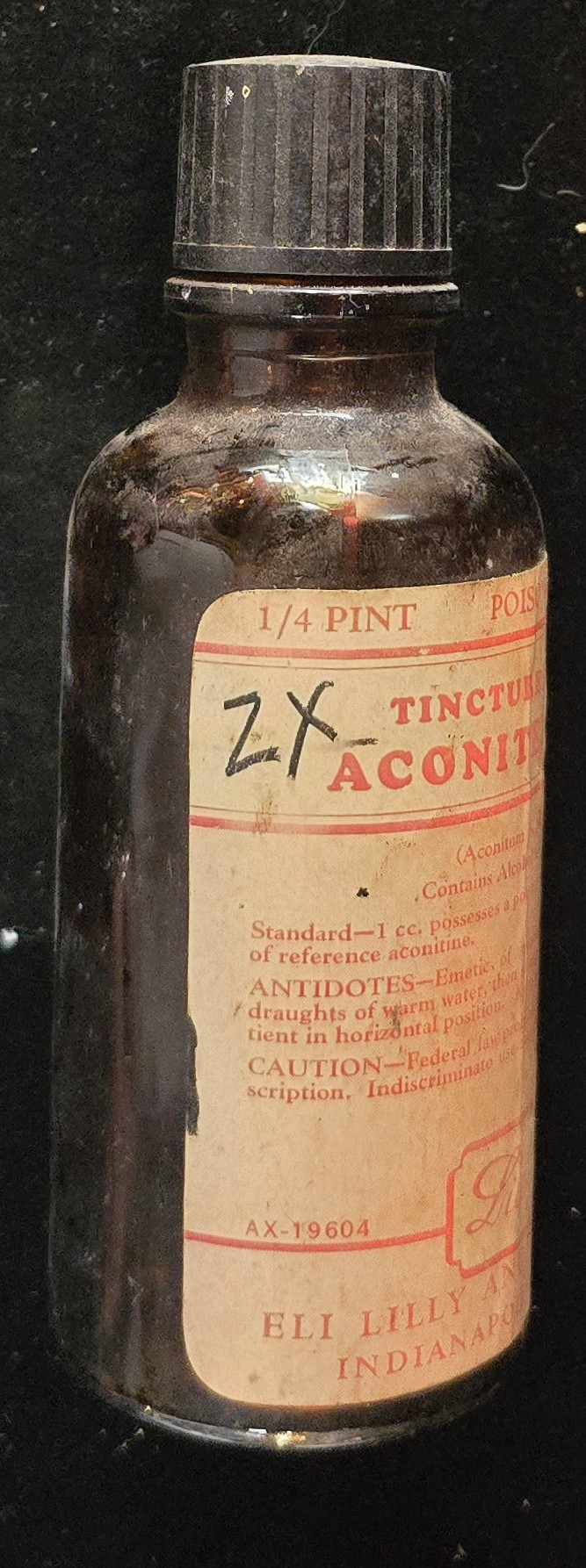
Amber glass bottle with intact paper label. Some wear, foxing, and discoloration visible; cap intact but worn. Black marker “2X” written across label. Bottle is empty.
Gallery
Historical context
Aconite, derived from monkshood or wolfsbane, has been recognized as one of history’s most deadly plant-derived poisons. Despite its risks, aconite tincture appeared in 19th and early 20th century pharmacopeias as a treatment for fevers, neuralgia, and cardiac irregularities. By the mid-20th century, its dangers outweighed its therapeutic use, leading to its removal from medical practice.
Curious Facts, Ephemera, and Trivia
In folklore, aconite was said to be used on arrow tips for hunting wolves, giving rise to the name wolfsbane.
Small errors in dosing tincture could lead to paralysis, arrhythmia, and death.
The presence of federal caution on the label reflects tightening U.S. drug laws in the early 20th century, particularly after the 1906 Pure Food and Drug Act.
Excerpt
“ANTIDOTES — Emetic of mustard, followed by large draughts of warm water; then strong tea or coffee. Keep patient in horizontal position. Keep up artificial respiration.”
Why it is in the Cabinet
This bottle represents the razor’s edge of early pharmaceutical practice—where the line between medicine and poison was perilously thin. It is an excellent example of how major companies like Eli Lilly marketed dangerous plant tinctures under federal regulation, highlighting both medical progress and the risks of pre-modern pharmacology.
Support Dr. Bebout’s Cabinet of Medical Curiosities
If you enjoy the history, the oddities, and the effort, help keep this cabinet open. Every little bit helps preserve and share the strange wonders of medicine's past.
Buy Me a Ko-fi ☕ Buy Me a Coffee ☕ Tip via PayPal 💵