
Title
Eli Lilly Injectable Camphor — No. 26 (Twelve 1 cc Ampoules), 0.2 gm (3 grs.) in Vegetable Oil
Author
Eli Lilly & Company (Indianapolis, U.S.A.)
Image
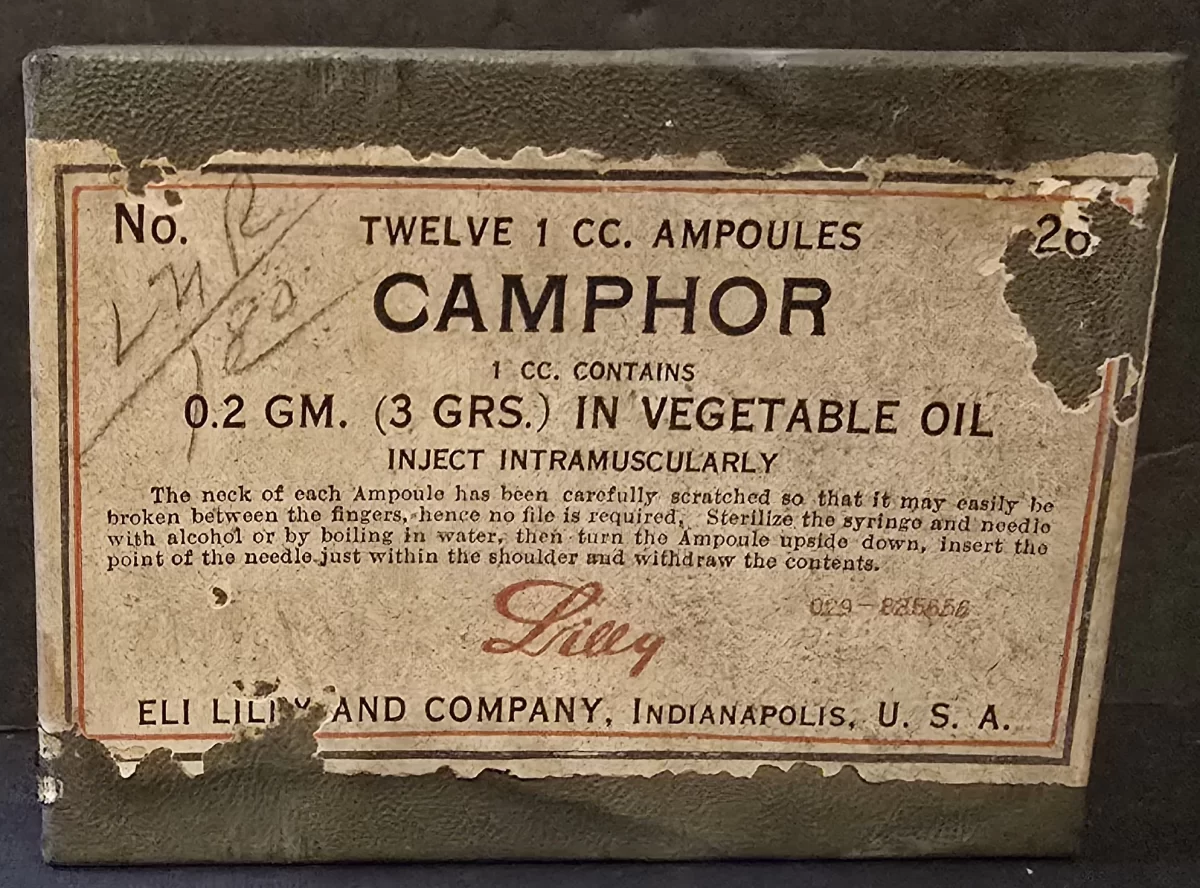
Description
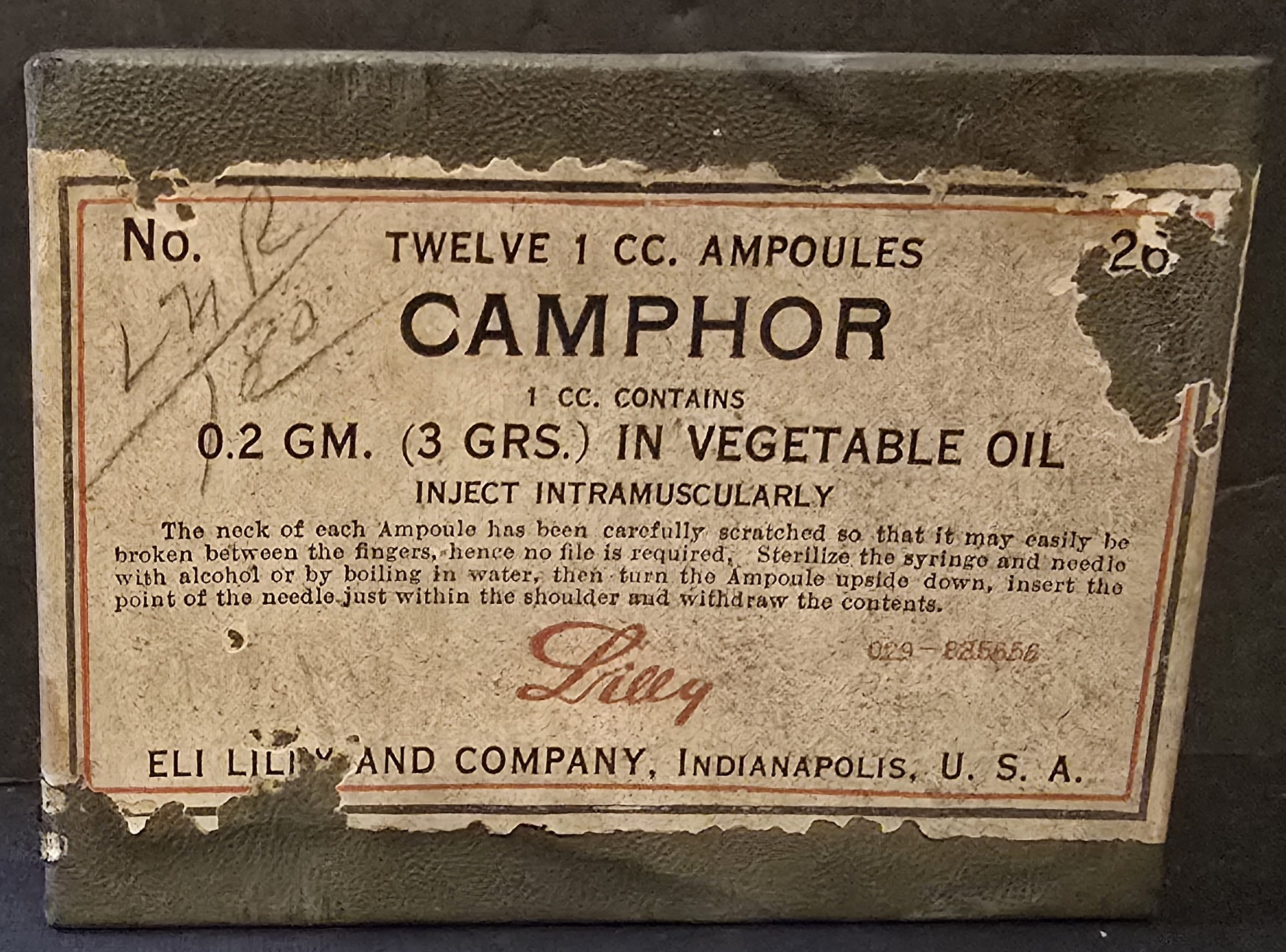
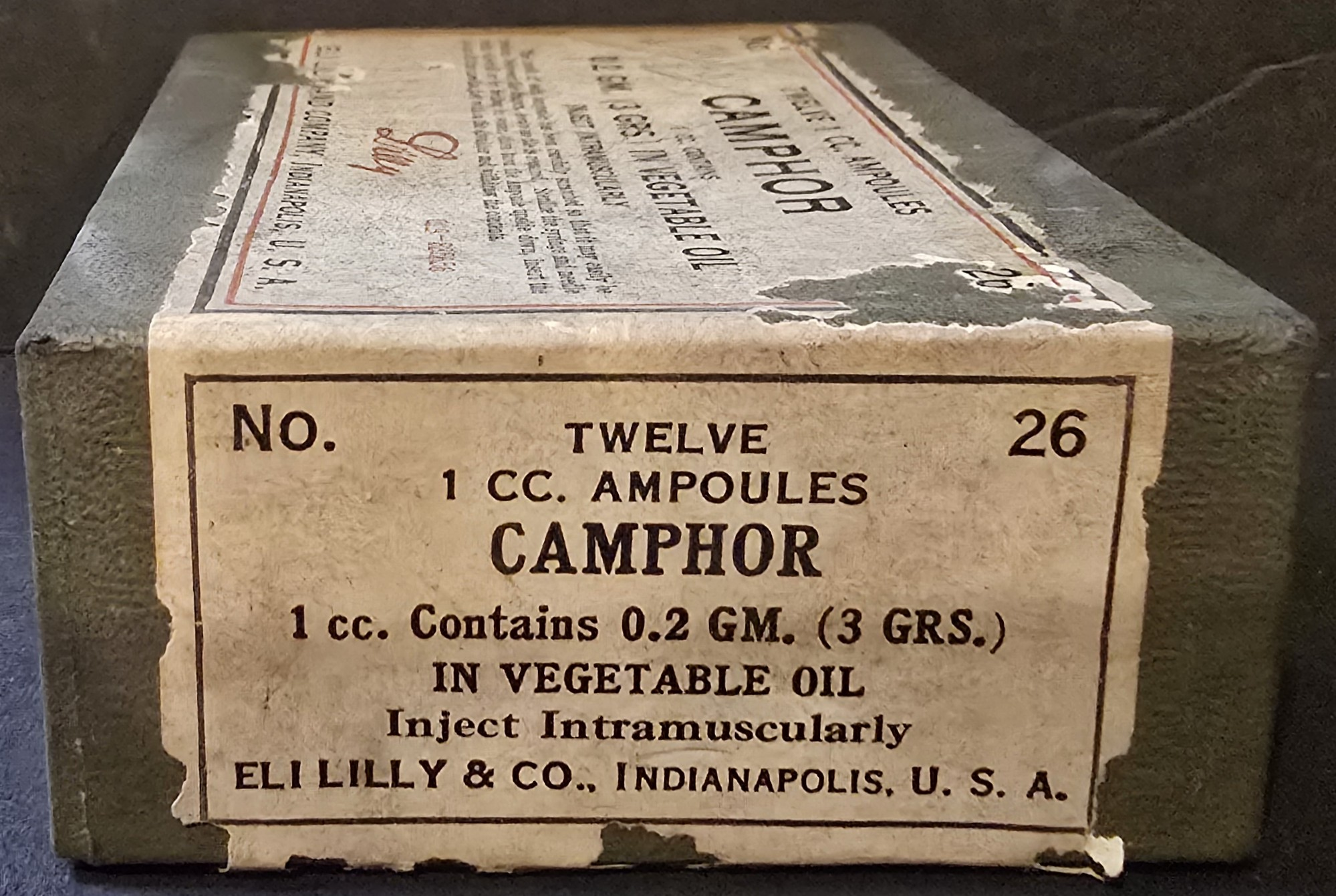
This is an original Eli Lilly & Company pharmaceutical carton for injectable camphor, labeled No. 26 and intended to hold twelve 1 cc ampoules. The primary label states: “1 cc contains 0.2 gm (3 grs.) in vegetable oil” with directions to inject intramuscularly.
Camphor is best known today as a topical ingredient (and as the smell that haunts old closets), but in the earlier 20th century it also lived a second life as an injectable “stimulant”—a period-typical attempt to prop up circulation/respiration during acute illness or “collapse.” This box is a clean example of that era’s confident labeling: simple dose statement, route, and manufacturer—no marketing poetry needed.
Condition
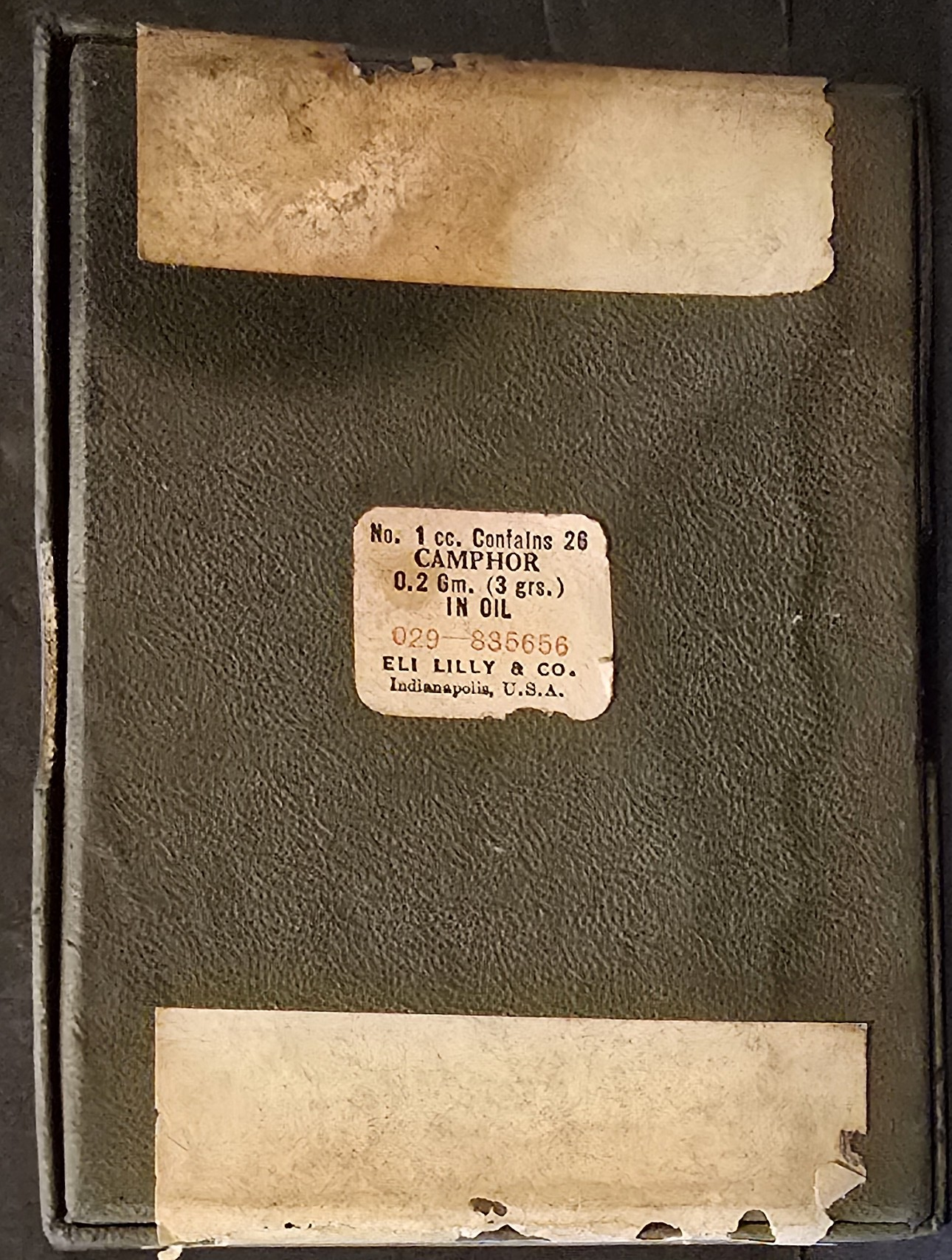
Original textured green carton with heavy overall wear. Labels show significant edge chipping, tears, losses, and soiling, including missing paper along corners and margins. Minor handwriting/marking present on the main label. Box structure appears intact, but contents (ampoules) are not shown/confirmed in the photos—cataloged here as the carton as pictured. The box is unopened and factory sealed.
Gallery
Historical context
Injectable camphor solutions were used historically as analeptics/stimulants in an age when clinicians had fewer targeted options for shock-like states and severe respiratory illness. Over time, enthusiasm for camphor injections faded as practice moved toward therapies with better evidence, better safety margins, and more predictable physiology.
Curious Facts, Ephemera, and Trivia
“3 grs.” = 3 grains (old apothecary carryover still hanging around in the labeling).
The box is a nice example of “industrial pharmacy” design: route + dose + manufacturer right on the face—built for a busy drug room, not a display case.
It’s also a reminder that Eli Lilly’s Indianapolis footprint wasn’t just big-business history—it shaped what physicians actually had in their hands.
Excerpt
“Inject intramuscularly.”
Why it is in the Cabinet
Because it’s pure, practical medical history: a mainstream manufacturer, a standard dose form, and a therapy that perfectly captures the trial-and-hope era of acute care—when “stimulant” injections were part science, part tradition, and part desperation.
Support Dr. Bebout’s Cabinet of Medical Curiosities
If you enjoy the history, the oddities, and the effort, help keep this cabinet open. Every little bit helps preserve and share the strange wonders of medicine's past.
Buy Me a Ko-fi ☕ Buy Me a Coffee ☕ Tip via PayPal 💵