
Title
Eli Lilly Calomel Tablets (Mercurous Chloride) – No. 373
Author
N/A
Image
Description
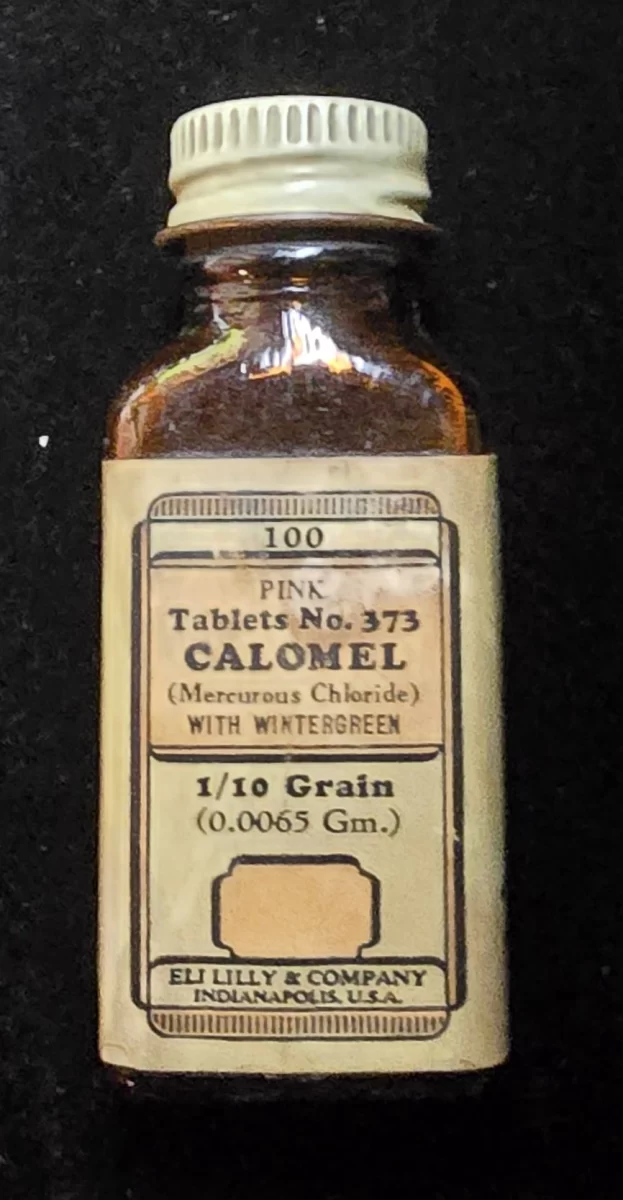
This amber glass bottle with screw cap once contained 100 pink Calomel Tablets No. 373, produced by Eli Lilly & Company of Indianapolis, Indiana. The label notes each tablet contained 1/10 grain (0.0065 grams) of mercurous chloride, also known as calomel, flavored with wintergreen to make ingestion more tolerable.
Calomel was once among the most widely prescribed remedies in the 18th and 19th centuries, recommended as a laxative, purgative, and treatment for everything from syphilis to constipation. By the early 20th century, its dangers were becoming more widely recognized. Chronic use of calomel led to mercury poisoning, causing drooling, gum disease, tremors, neurological damage, and even death.
The addition of wintergreen in this Eli Lilly formulation reflects attempts to mask the bitter metallic taste of mercurous chloride.
Condition
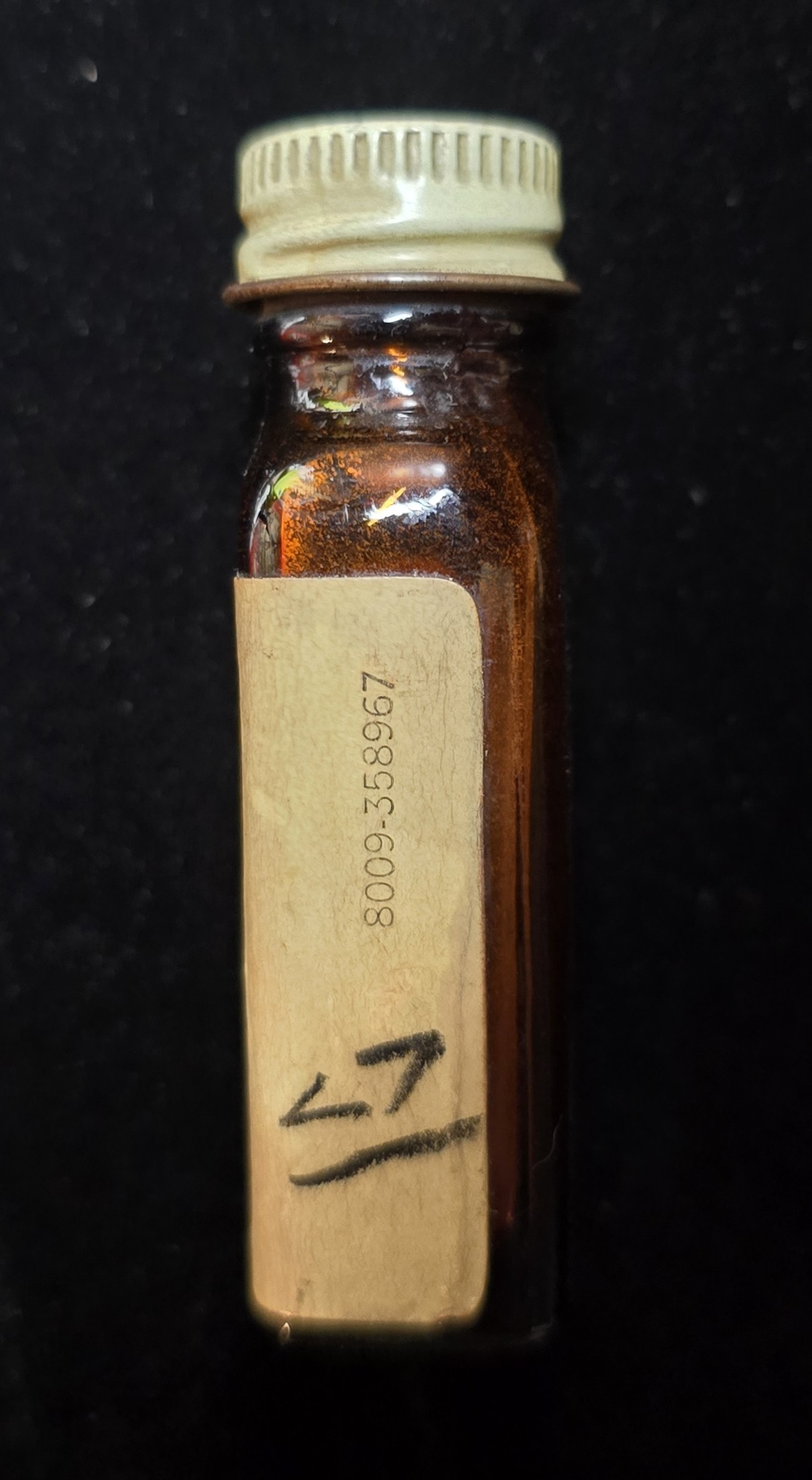
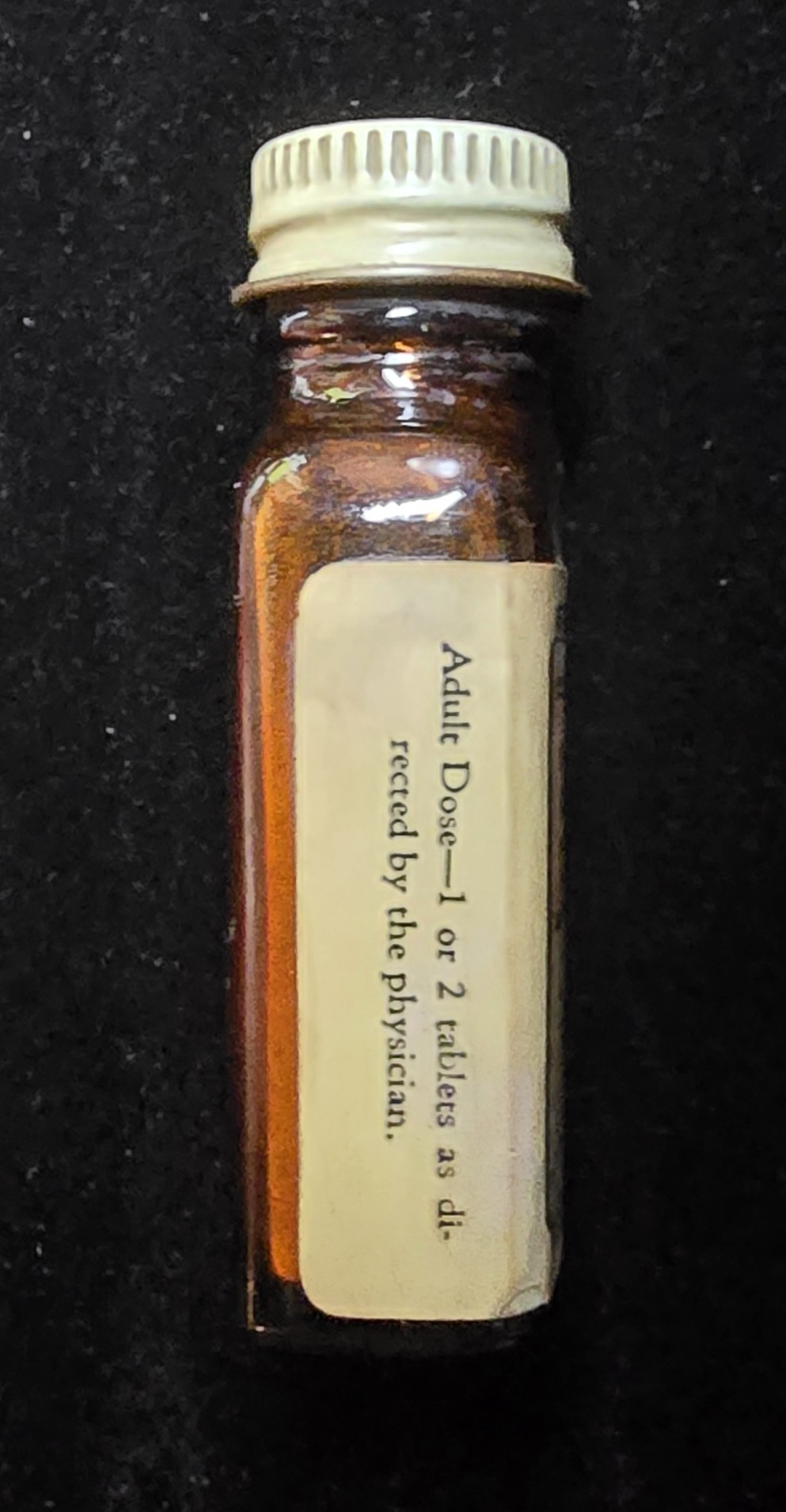
Amber bottle in good condition with intact paper label, though discolored with age. Metal cap shows oxidation. Marked dosage instructions remain legible.
Gallery

Historical context
Calomel (Hg₂Cl₂, mercurous chloride) was a staple drug for over a century, heavily used by physicians as a cathartic. It was considered a “cure-all,” though it more often harmed than healed. By the 1930s, safer alternatives led to its decline, and calomel is now remembered as one of the more infamous examples of “heroic medicine.”
Curious Facts, Ephemera, and Trivia
Calomel was so commonly prescribed that “blue mass” pills containing mercury became daily doses for many patients — even U.S. President Abraham Lincoln reportedly took them.
The side effects of chronic calomel use were sometimes mistaken for new diseases, leading to misdiagnosis.
Wintergreen was a frequent additive in patent medicines for its strong flavor, used to cover up harsher tastes.
Excerpt
“Calomel (Mercurous Chloride) with Wintergreen – 1/10 Grain (0.0065 Gm.)”
Why it is in the Cabinet
This bottle represents one of the most notorious “standard” medicines in American history. Once found in nearly every physician’s kit, Calomel illustrates the long-standing reliance on mercury-based treatments and their disastrous effects.
Support Dr. Bebout’s Cabinet of Medical Curiosities
If you enjoy the history, the oddities, and the effort, help keep this cabinet open. Every little bit helps preserve and share the strange wonders of medicine's past.
Buy Me a Ko-fi ☕ Buy Me a Coffee ☕ Tip via PayPal 💵