
Title
Dropsy No. 2 – Compressed Tablets (Chocolate Brown)
Author
Manufacturer: Kremers–Urbanto, Pharmacal Chemists, Milwaukee, Wisconsin
Est. Date: ca. 1900–1920
Image
Description
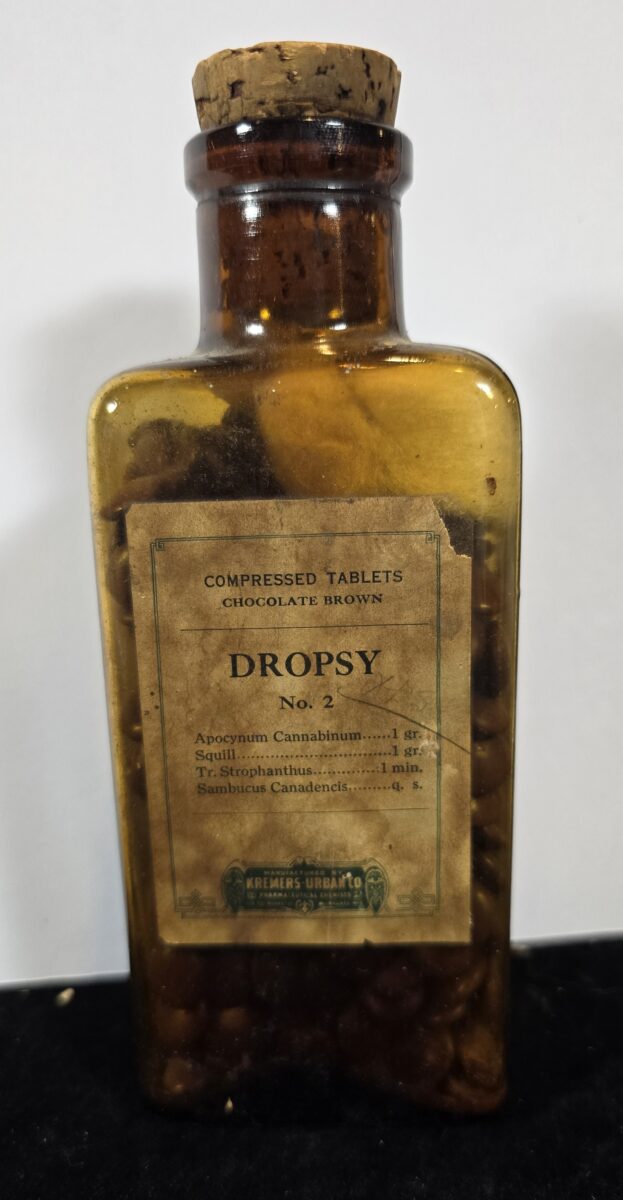
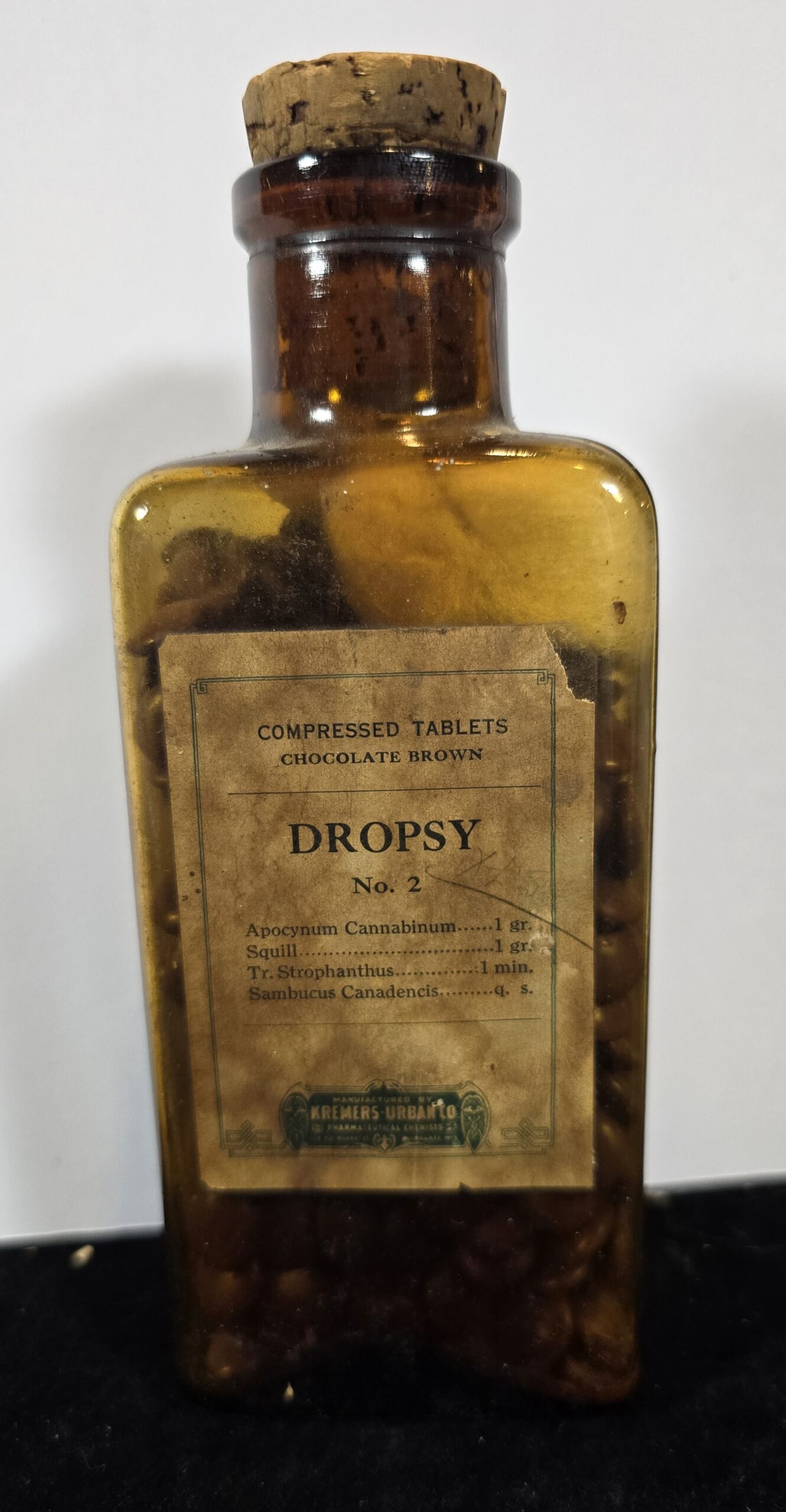
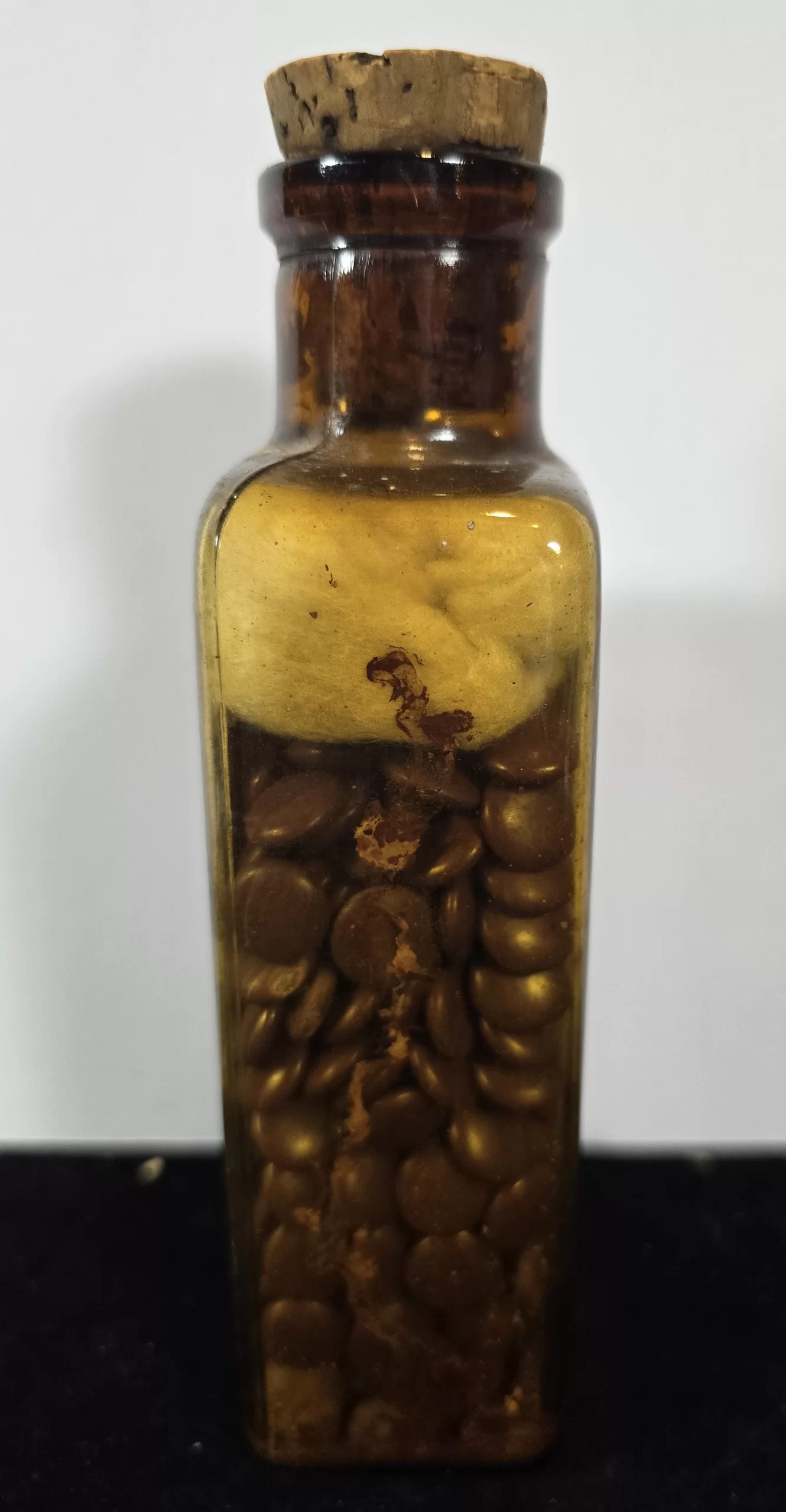
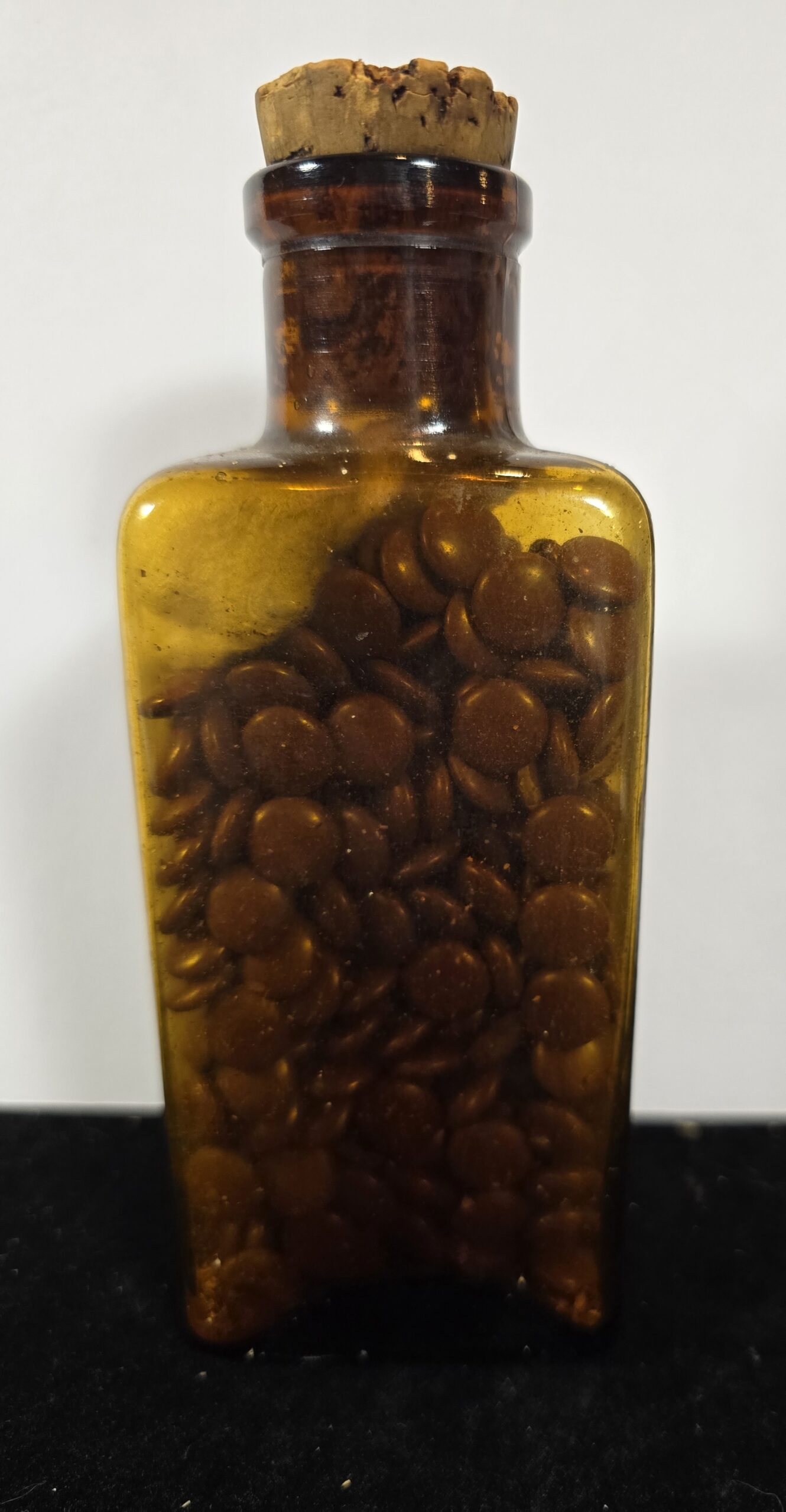
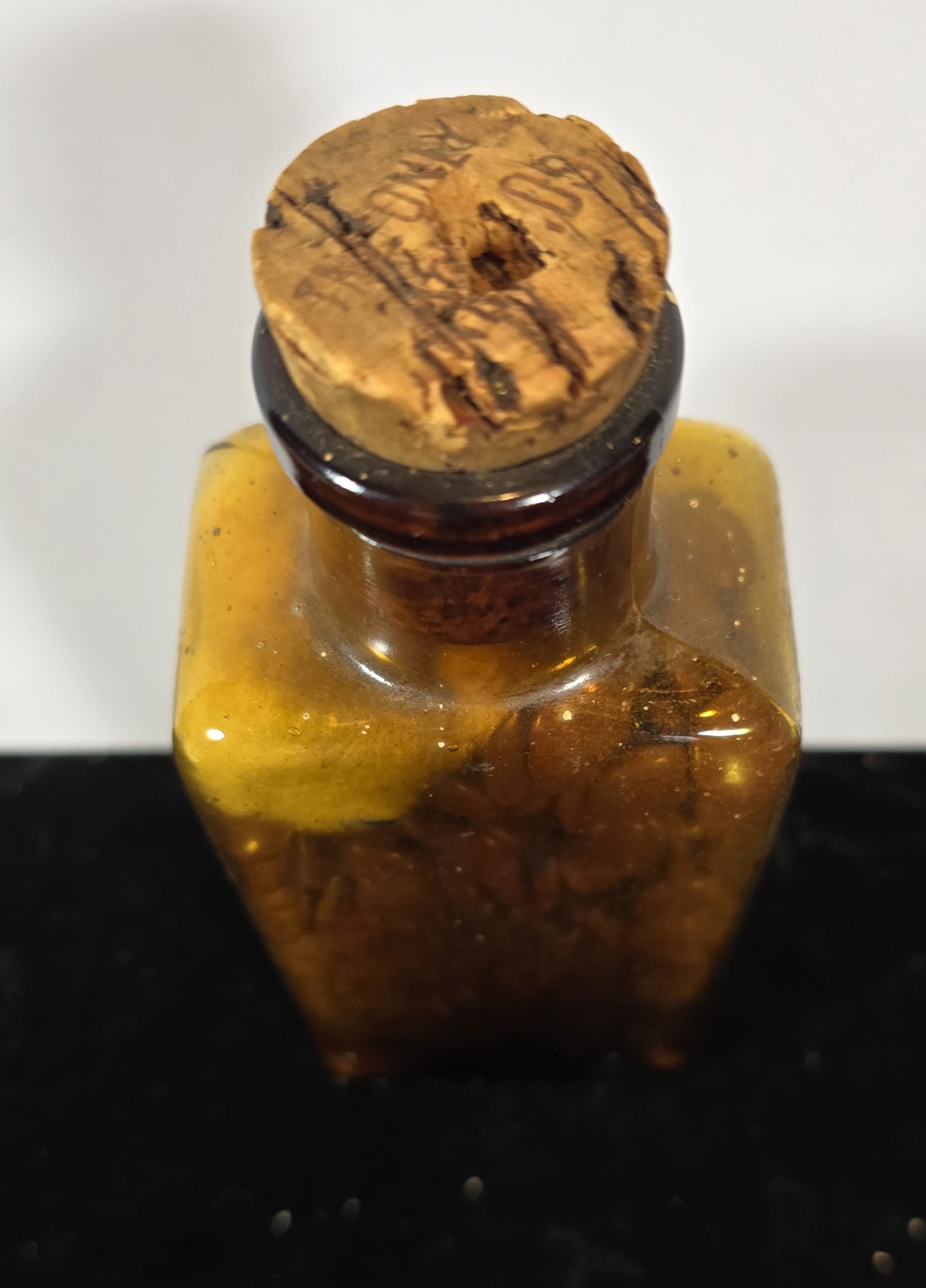
This amber, square-shouldered apothecary bottle contains its full supply of original “Dropsy No. 2” compressed tablets, still sealed beneath the cork and packed with a cotton wad at the shoulder. The front label identifies the preparation as “Chocolate Brown” tablets compounded for the treatment of dropsy—the historical term for edema, often from cardiac or renal failure.
The formula lists a collection of potent botanicals once used as diuretics and cardiotonic agents:
Apocynum cannabinum – “Indian hemp,” a digitalis-like cardiac stimulant
Squill – a traditional expectorant and diuretic
Tincture of Strophanthus – containing strophanthin, a cardiac glycoside
Sambucus canadensis – elder, used historically as a mild diuretic
Together, these ingredients formed an early 20th-century attempt to increase urine output and stimulate the failing heart—essentially a proprietary herbal version of digitalis therapy.
The label features the ornate typography and border typical of Kremers–Urbanto’s pharmaceutical output, presenting a classic example of pre-regulation patent medicine marketed for chronic conditions with few effective treatments at the time.
Condition
The bottle remains excellent and complete, with full original contents, intact label with age patina and corner loss, visible sediment within the tablets, and original cork showing expected wear. Glass is clean with no cracks or chips.
Gallery
Historical context
Before congestive heart failure was understood as a physiologic entity, “dropsy” served as a catch-all diagnosis for generalized edema. Treatments ranged from bloodletting and mercurial diuretics to botanicals such as apocynum, strophanthus, squill, and digitalis. Many pharmacies compounded their own mixtures, each claiming superior potency.
Kremers–Urbanto was an established Milwaukee pharmacal firm, well known for producing standardized botanical extracts and compressed tablets in the early 1900s. Their preparations often appealed to physicians who favored traditional materia medica over rapidly emerging synthetic pharmaceuticals.
Curious Facts, Ephemera, and Trivia
Apocynum cannabinum was once called “American digitalis,” though its therapeutic window was arguably even more dangerous.
Strophanthus extracts were used in Africa as arrow poisons; in small doses they were marketed as “safer” cardiac stimulants than digitalis. Spoiler: they were not safer.
“Chocolate brown” referred not to flavor but to tablet color—though many manufacturers intentionally made tablets look palatable. Because why not tempt fate when you’re already handing out plant glycosides?
These “Dropsy” remedies were sometimes prescribed in escalating doses until “appropriate diuresis” occurred… or until the patient developed alarming arrhythmias.
Excerpt
“When the tissues are surcharged with fluid, the judicious employment of stimulating diuretics may afford relief to the sufferer.” — typical phrasing from early 20th-century materia medica texts describing apocynum- and strophanthus-based dropsy treatments.
Why it is in the Cabinet
This bottle is not merely a relic of pre-FDA therapeutics—it’s a perfect example of the era’s high-risk “physiologic” treatment philosophy, where cardiac glycosides and potent botanicals were mixed freely and sold as routine therapy. It represents the bridge between folk herbalism, patent medicine marketing, and early scientific pharmacology, all in one handsome amber bottle.
Support Dr. Bebout’s Cabinet of Medical Curiosities
If you enjoy the history, the oddities, and the effort, help keep this cabinet open. Every little bit helps preserve and share the strange wonders of medicine's past.
Buy Me a Ko-fi ☕ Buy Me a Coffee ☕ Tip via PayPal 💵