
Title
Dr. Hobson’s Compound Carbolic Salve
Author
Pfeiffer Chemical Co., New York & St. Louis — No. 121 (1933 Revision)
Image
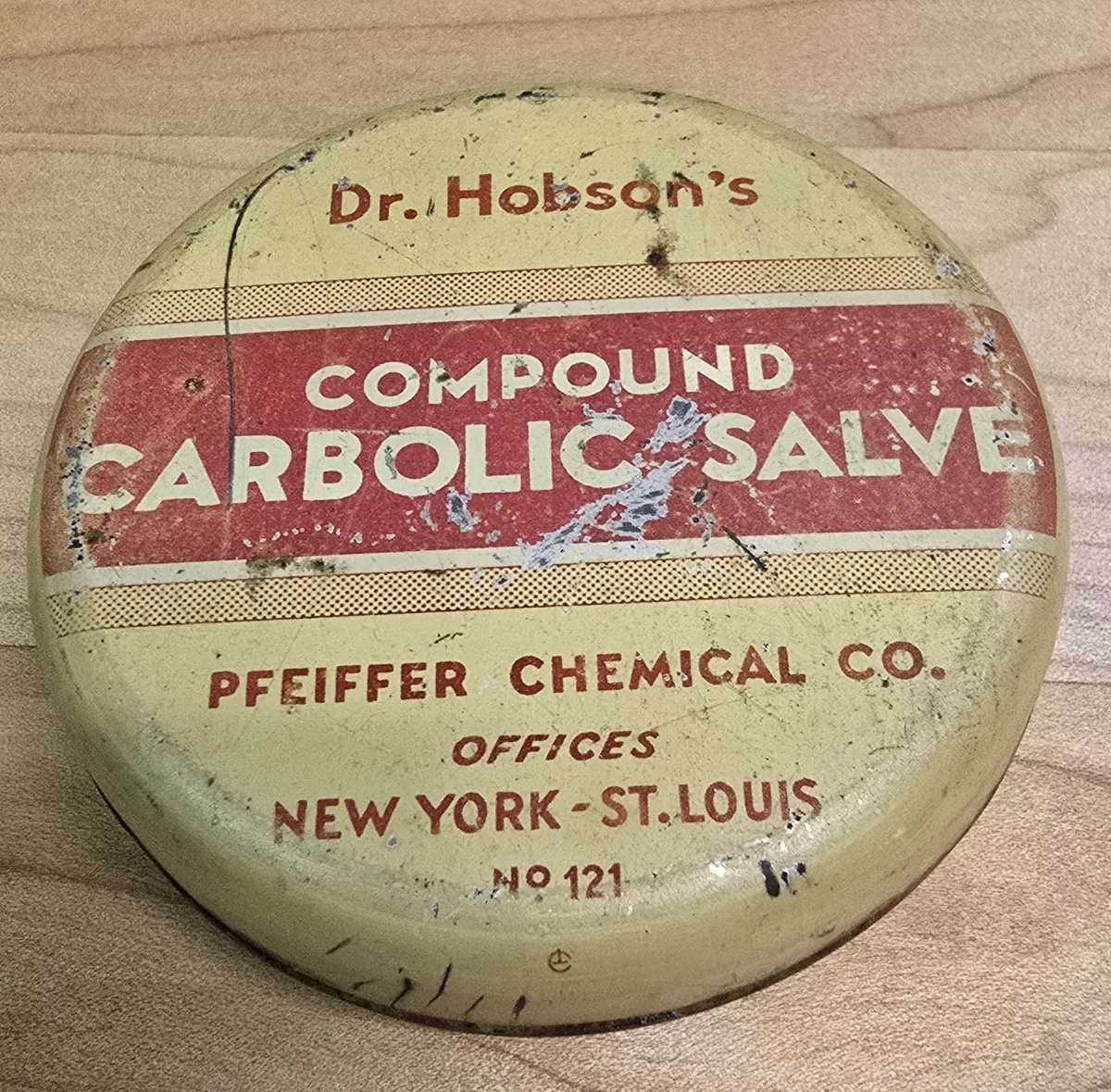
Description
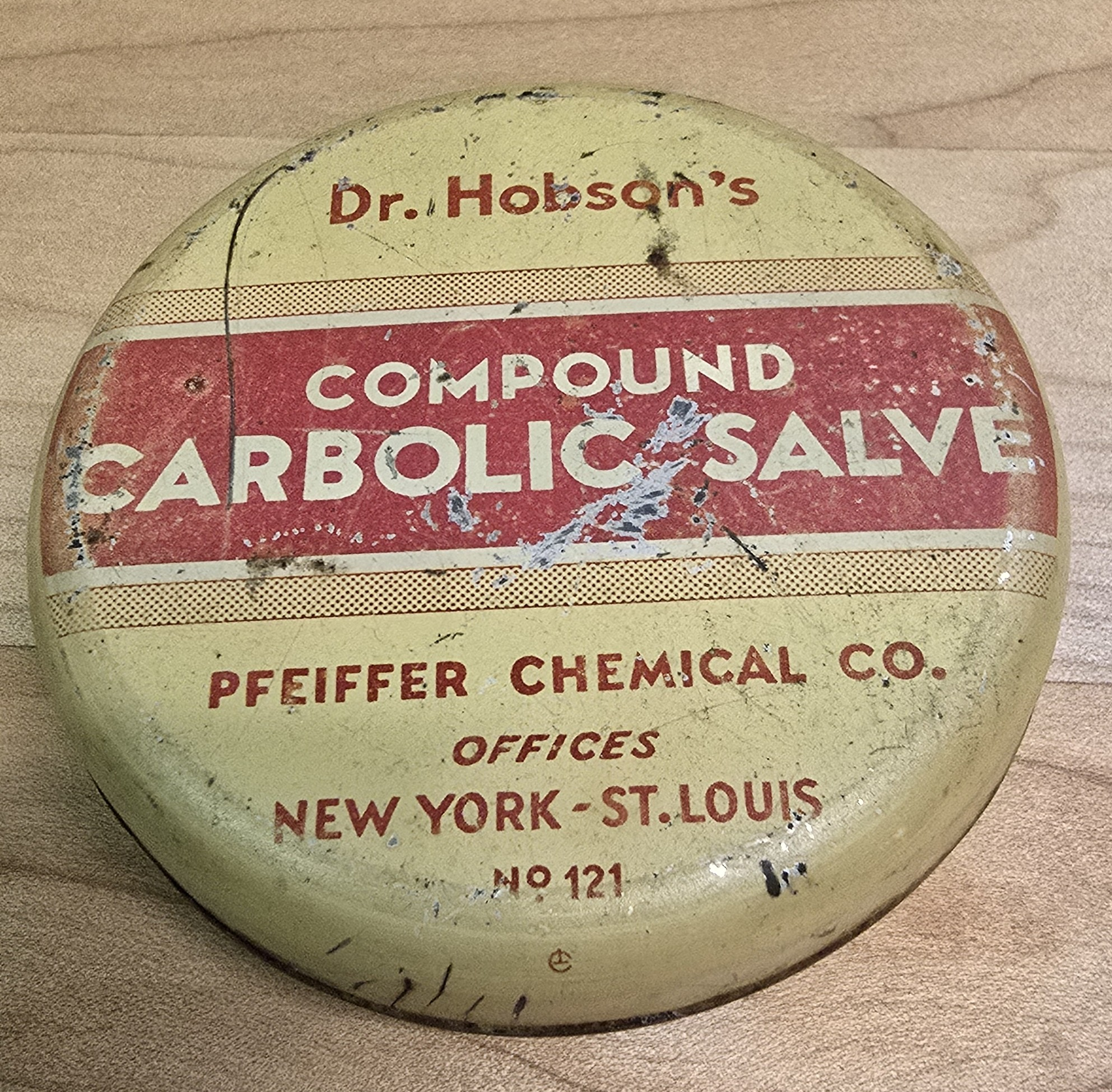
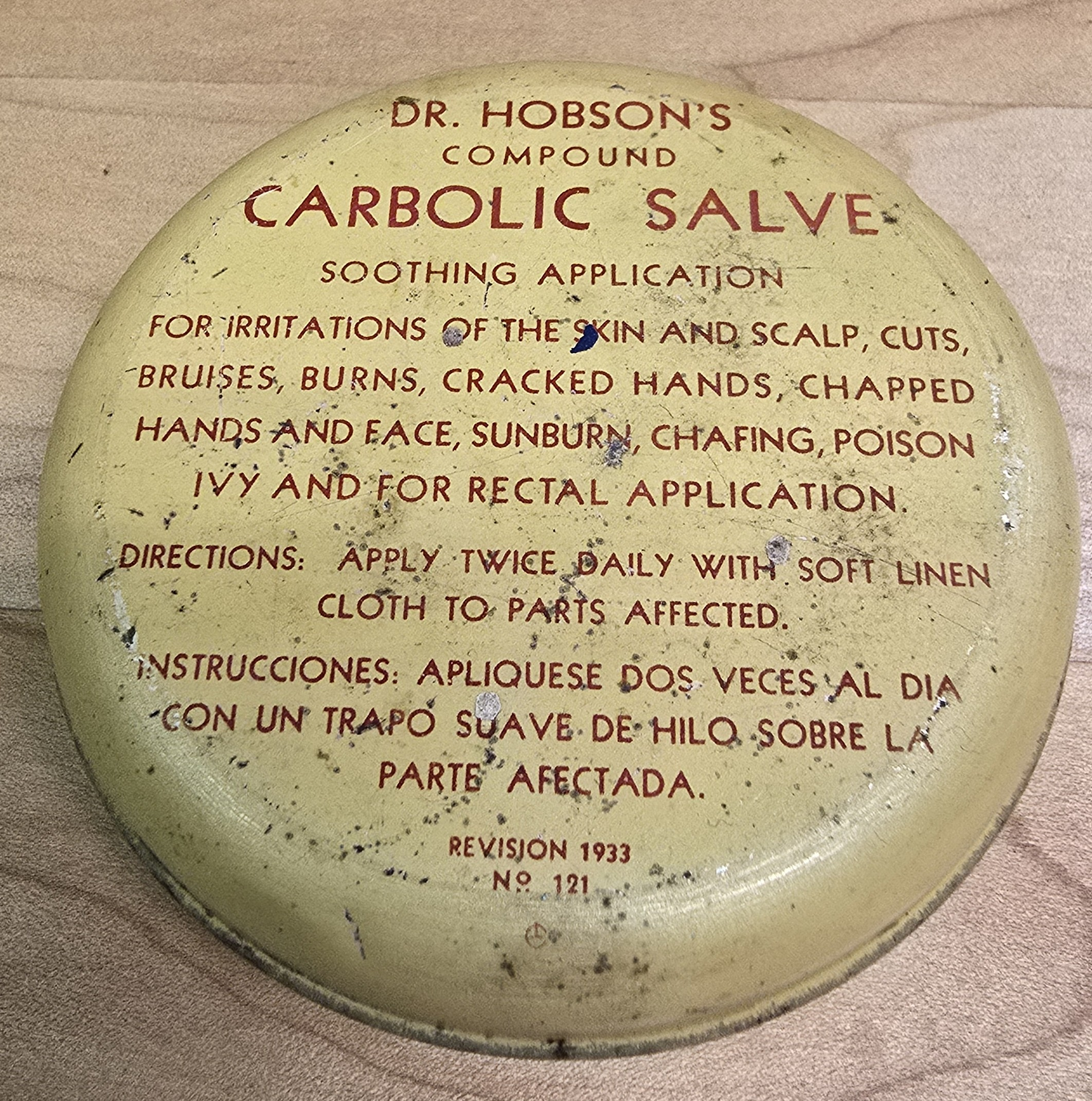
This pale yellow and red metal tin once held Dr. Hobson’s Compound Carbolic Salve, a widely marketed early 20th-century topical treatment. Manufactured by Pfeiffer Chemical Co., this “soothing application” was advertised for a remarkably broad array of ailments: cuts, burns, sunburn, chafing, poison ivy, cracked hands, chapped skin, and even rectal application. The formulation relied on carbolic acid (phenol), a common antiseptic and disinfectant of the era.
The tin features both English and Spanish instructions, suggesting distribution across multilingual or Latin American markets. The product was marketed as a multi-purpose household remedy—typical of the era’s “cure-all” branding style.
Condition
The tin shows moderate wear consistent with age, including surface rust, scratches, scuffs, and faded paint on the lid. Text remains largely legible despite mild abrasion. The base label and revision number are intact. No contents remain inside. A solid example of a well-used 1930s household item.
Gallery
Historical context
Carbolic acid salves surged in popularity in the late 1800s and early 1900s, shortly after Joseph Lister demonstrated the antiseptic power of phenol in surgical practice. Over-the-counter carbolic salves became a staple in American households by the 1920s and 1930s, used for everything from bug bites to infected wounds.
This particular formulation, revised in 1933, reflects a period where regulation was beginning to creep in—but where multi-use claims still flourished. Phenol-based ointments remained common until safer, less corrosive antiseptics replaced them mid-century.
Curious Facts, Ephemera, and Trivia
Carbolic acid is toxic in high doses and can burn skin with prolonged exposure. Ironically, it was marketed as “soothing.”
The word “carbolic” was often used to inspire confidence, despite risks. The name lent an air of scientific legitimacy.
Pfeiffer Chemical Co. operated out of New York and St. Louis, two major hubs for early pharmaceutical manufacturing.
Dual-language labeling was uncommon in 1933, making this tin an interesting artifact of broader marketing ambition.
Excerpt
“For irritations of the skin and scalp, cuts, bruises, burns, cracked hands, chapped hands and face, sunburn, chafing, poison ivy and for rectal application.“
Why it is in the Cabinet
This tin exemplifies the intersection of folk medicine and early pharmaceutical branding—a time when antiseptics and cure-alls shared the same shelf. Its broad and vaguely defined uses reflect the nascent medical consumer culture of pre-WWII America. It also serves as a striking visual and historical contrast to modern regulation of topical drugs.
Support Dr. Bebout’s Cabinet of Medical Curiosities
If you enjoy the history, the oddities, and the effort, help keep this cabinet open. Every little bit helps preserve and share the strange wonders of medicine's past.
Buy Me a Ko-fi ☕ Buy Me a Coffee ☕ Tip via PayPal 💵