Title
Dodge & Olcott Oil Pennyroyal (European) — Poison Bottle
Author
Dodge & Olcott Co., New York
Image
Description
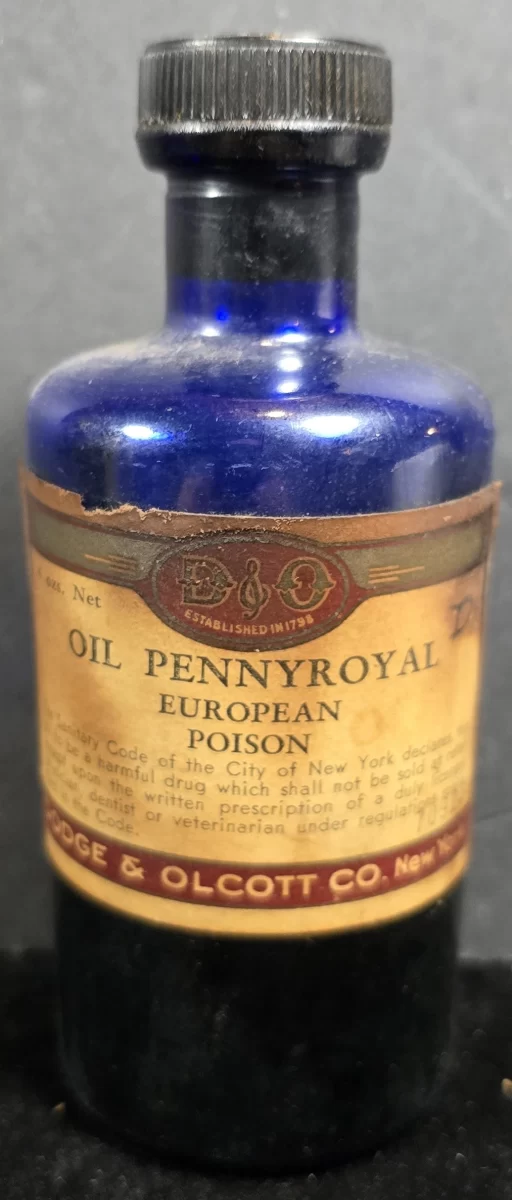
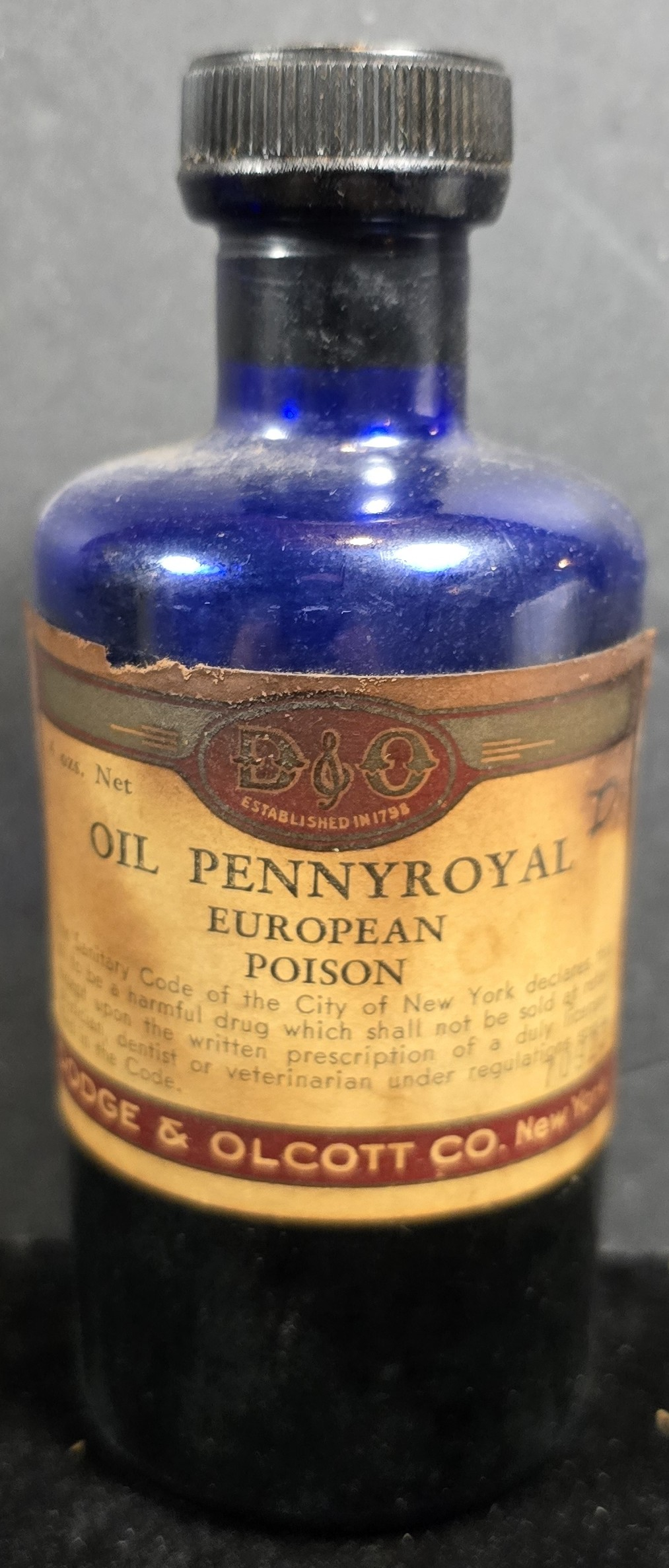
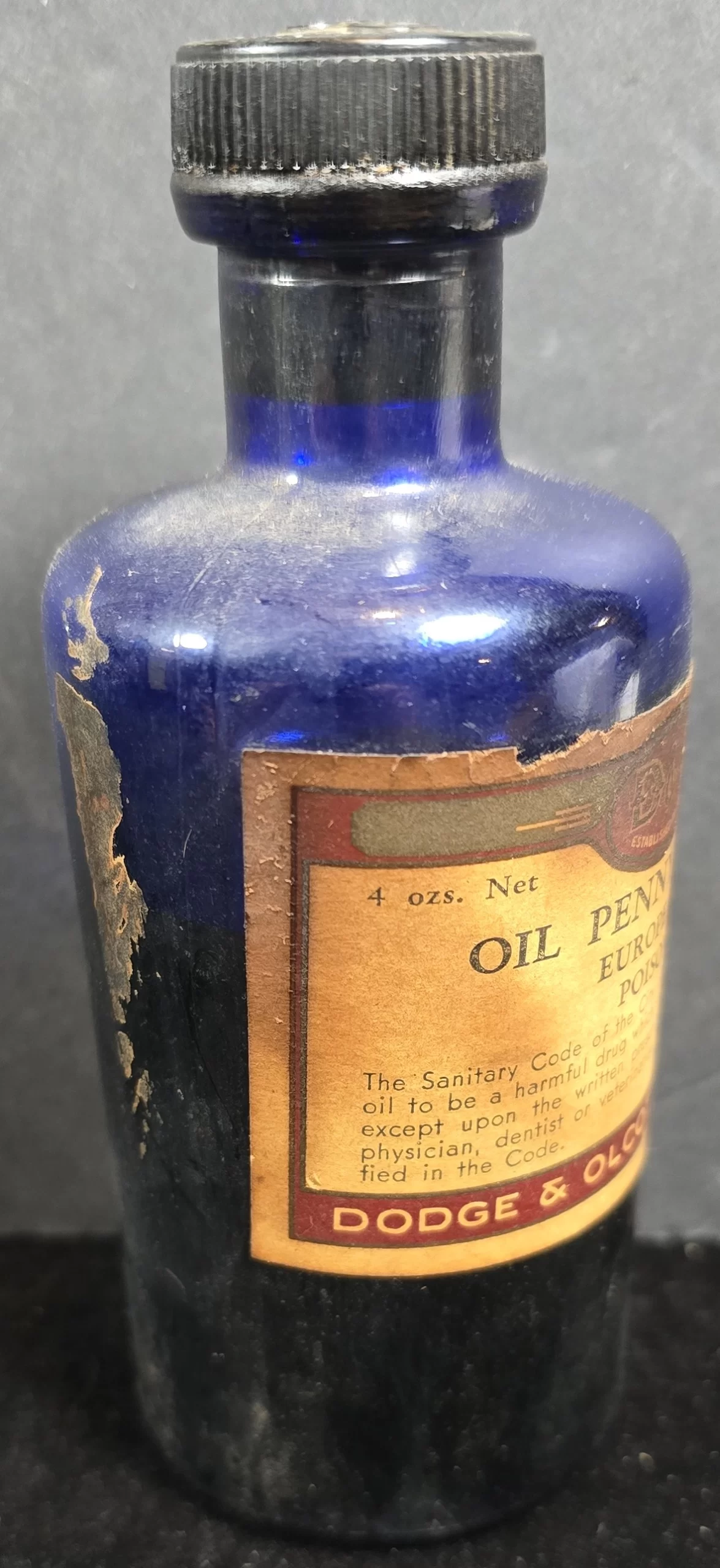
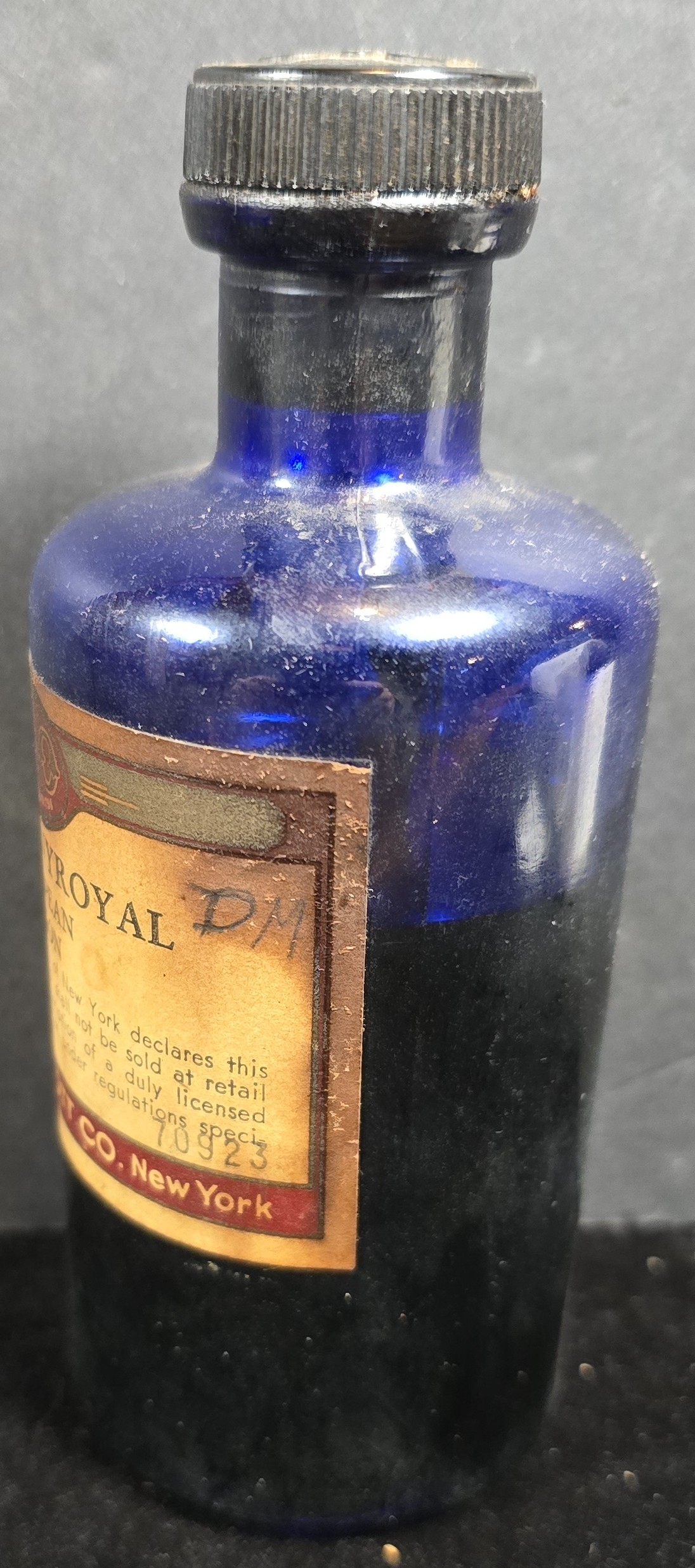
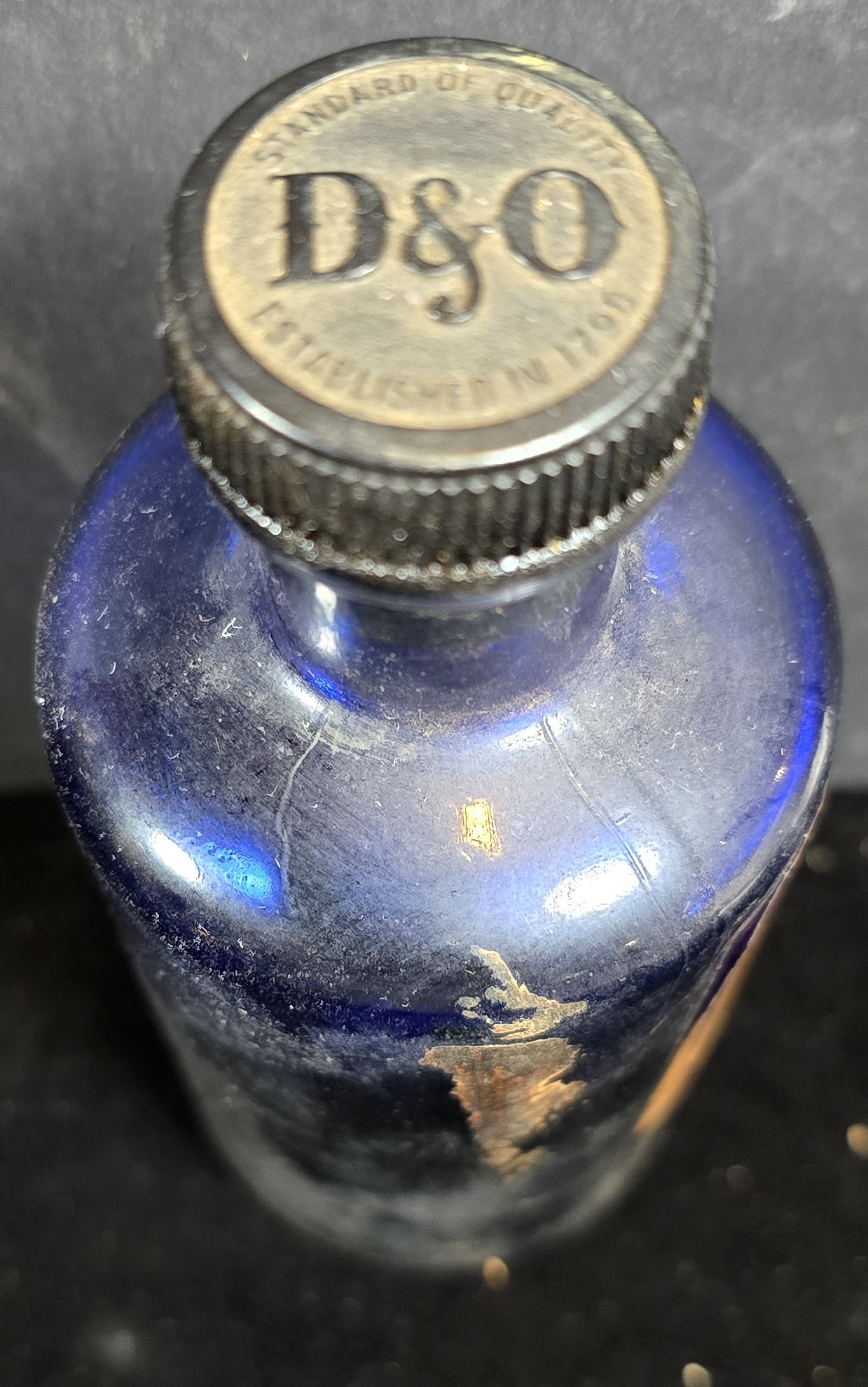
This is a 4-ounce cobalt-blue glass bottle of European Oil of Pennyroyal manufactured by Dodge & Olcott Co., New York. The label includes an early 20th-century poison warning and a Sanitary Code notice restricting sales to licensed professionals. The bottle features the firm’s D&O emblem and a black metal screw cap embossed with “Standard of Quality.” The paper label retains most of its color, with edge chipping, handwriting marks, and light abrasion consistent with age. The bottle’s deep blue glass was a standard packaging choice for volatile essential oils that degraded in sunlight.
Condition
The bottle is structurally intact with no cracks or chips. Label shows moderate flaking, fading, and handwritten notation. Surface dust and minor residue are present on the glass and cap.
Gallery
Historical context
Pennyroyal (Mentha pulegium) was widely used for centuries as a herbal remedy, most notoriously as an emmenagogue intended to stimulate menstrual flow. By the late 19th and early 20th century, essential oil distillation made the preparation far more potent — and far more dangerous. The principal toxic compound, pulegone, is now known to cause severe liver injury and acute poisoning even in small quantities.
Dodge & Olcott, established in 1798, was one of the earliest American importers and processors of essential oils. By the early 1900s the company produced medicinal and industrial oils, fragrances, and chemical ingredients for pharmacies and manufacturing. Products like Oil of Pennyroyal were sold primarily to pharmacists, veterinarians, and physicians because of their toxicity and narrow therapeutic window.
Municipal and state sanitary codes reflected these risks. New York City classified pennyroyal oil as a “harmful drug,” restricting retail sale only to licensed professionals. Bottles such as this would have been kept behind the counter and dispensed sparingly for pharmaceutical compounding.
Curious Facts, Ephemera, and Trivia
Pennyroyal oil was a common ingredient in early insect repellents, including preparations for fleas, mites, and household pests.
Newspapers from the era frequently reported poisonings due to self-dosing, often tied to attempts at menstrual regulation or pregnancy termination — a fact that drove the push for stronger labeling laws.
Dodge & Olcott would eventually merge into the modern fragrance and chemical industry, later becoming part of Givaudan, one of the world’s largest flavor and fragrance corporations.
Excerpt
European Pennyroyal Oil — Poison. The Sanitary Code of the City of New York declares this oil to be a harmful drug which shall not be sold at retail except upon the written prescription of a duly licensed physician, dentist or veterinarian.
Why it is in the Cabinet
This bottle represents a perfect intersection of medical history, regulatory evolution, and the darker chapters of early American pharmacy. Pennyroyal oil’s longstanding association with home remedies, menstrual manipulation, and toxic misadventure makes it an essential example of why pharmacists and physicians fought for stricter drug controls. The intact cobalt bottle and legible poison warning make this an exceptional addition to the Cabinet.
Support Dr. Bebout’s Cabinet of Medical Curiosities
If you enjoy the history, the oddities, and the effort, help keep this cabinet open. Every little bit helps preserve and share the strange wonders of medicine's past.
Buy Me a Ko-fi ☕ Buy Me a Coffee ☕ Tip via PayPal 💵