
Digestive Tonic Prescription – Pepsin, Dilute Muriatic Acid, Strychnine, and Elixir Lactopeptin (Dr. Nicholson, Brenham, Texas)
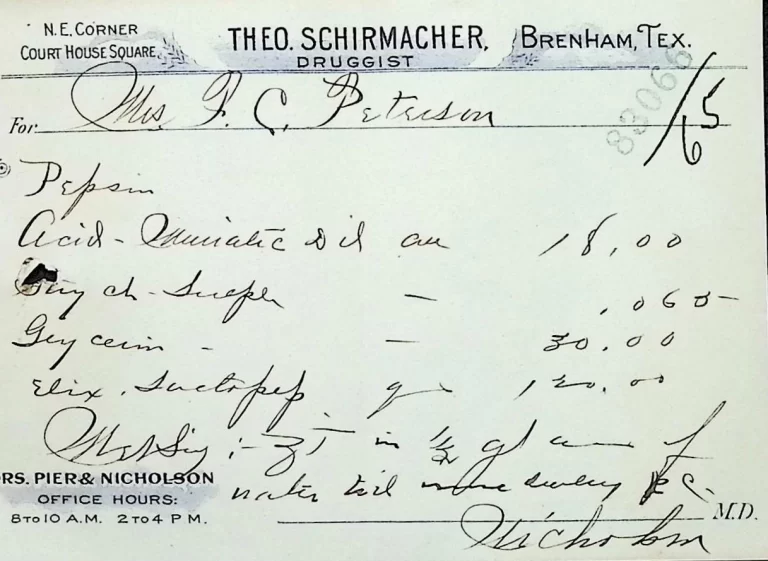
Prescribing Doctor: Dr. Nicholson
Patient Name: Mrs. P. C. Peterson
Pharmacy: Theo. Schirmacher, Druggist — Brenham, Texas (N.E. Corner Court House Square)
Date: Undated (likely early 1900s)
Transcription
℞
Pepsin
Acid. Muriatic dil. aa 18.00
Strychn. sulph. .065
Glycerin 30.00
Elix. Lactopep. q.s. ad 120.00
Sig: Take ʒi (1 dram) in ½ glass of water three times daily after meals.
Interpretation
This mixture combines pepsin (a digestive enzyme), dilute muriatic acid (hydrochloric acid solution), strychnine sulfate (a bitter stimulant and tonic), glycerin, and Elixir Lactopeptin, a proprietary digestive aid popular around 1900. The blend was designed to promote digestion and stimulate gastric secretions—an early “digestive tonic.”
Condition
Prescription slip is in excellent condition with strong ink contrast and clear legibility. The Theo. Schirmacher pharmacy imprint is sharply printed, and Dr. Nicholson’s signature remains intact.
Historical Context
Digestive elixirs such as Elixir Lactopeptin were once considered essential tonics for “weak stomachs,” dyspepsia, and chronic gastritis. Physicians often added muriatic acid to mimic natural gastric secretions and strychnine for its stimulating effect on the nervous system and appetite. By the early 20th century, such tonics were staples in American apothecaries before being replaced by standardized pharmaceuticals.
Curious Facts and Trivia
Elixir Lactopeptin was produced by Reed & Carnrick and advertised as “nature’s own digestive assistant.”
Strychnine, though toxic in large amounts, was widely used in tiny doses as a tonic and to treat fatigue and digestive atony.
Pepsin and hydrochloric acid mixtures were common before the development of modern antacids and enzyme tablets.
Callout Box
⚠️ Caution: Strychnine is now recognized as a dangerous neurotoxin. Even small overdoses can cause severe convulsions or death. Modern medicine no longer uses it for digestive or tonic purposes.
Why It’s in the Cabinet
This prescription represents a quintessential turn-of-the-century digestive formula—scientifically grounded in the physiology of the day, yet perilous by modern standards. It reflects both the innovation and the risk-taking of early American pharmacy.
Support Dr. Bebout’s Cabinet of Medical Curiosities
If you enjoy the history, the oddities, and the effort, help keep this cabinet open. Every little bit helps preserve and share the strange wonders of medicine's past.
Buy Me a Ko-fi ☕ Buy Me a Coffee ☕ Tip via PayPal 💵