
Title
Differential Diagnosis – Second Edition
Author
Richard C. Cabot, M.D.
Image
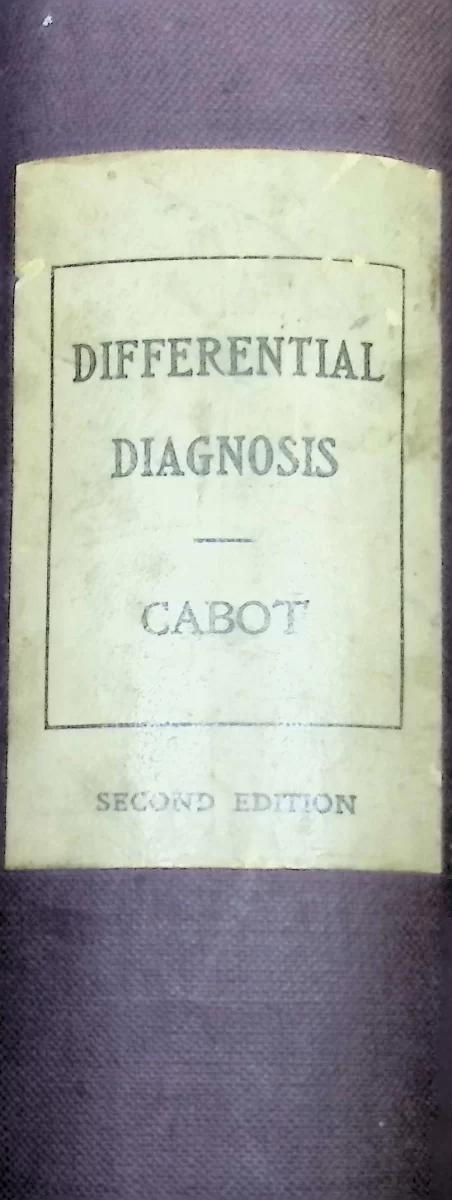
Description
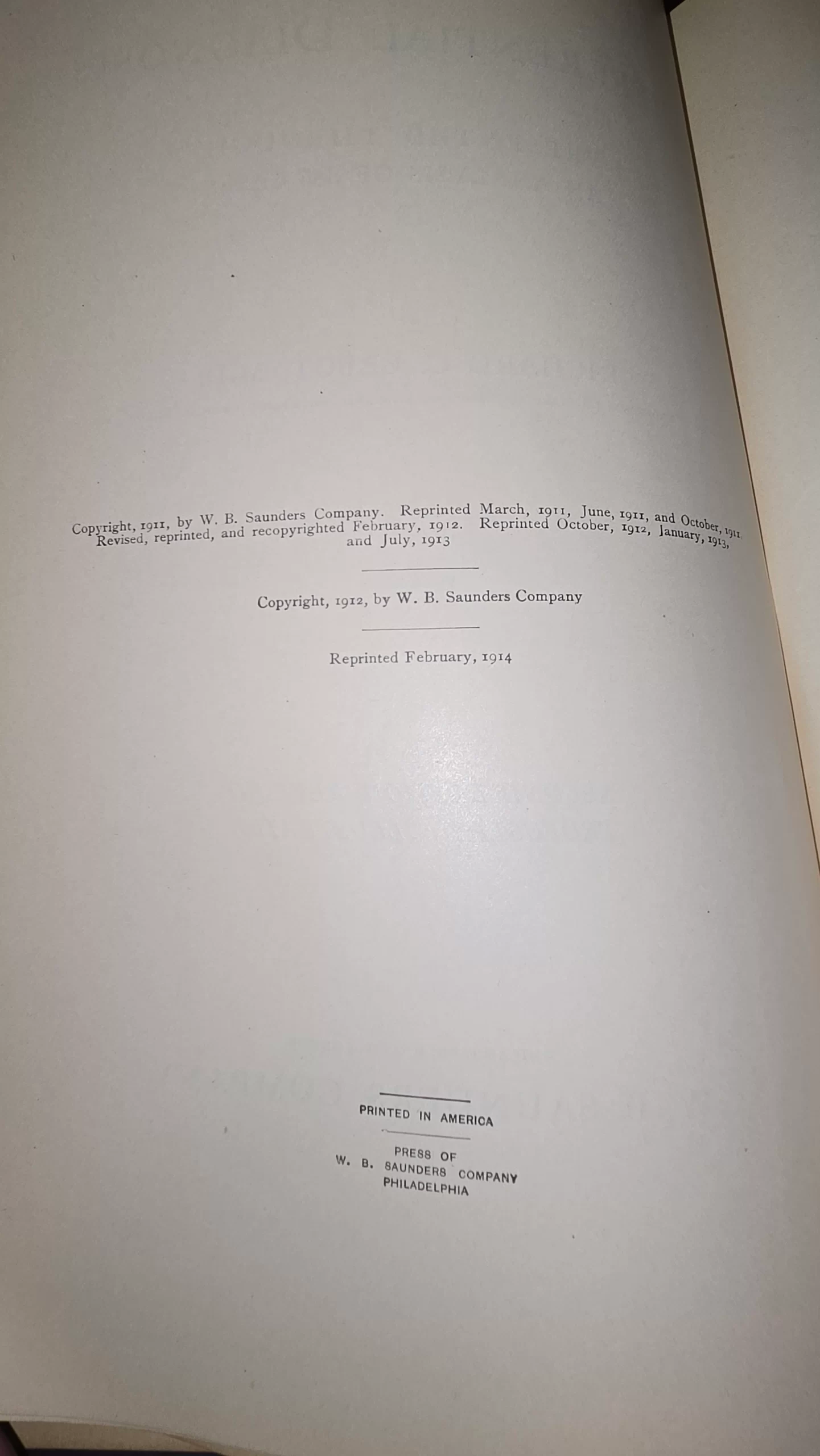
This is the 1914 reprint of Differential Diagnosis by renowned physician Richard C. Cabot, published by W. B. Saunders Company of Philadelphia. Cabot, a Harvard professor and innovator in internal medicine and medical education, presents his signature analytic method of case-based reasoning. Organized by symptoms rather than diseases, the book teaches physicians how to reason through diagnostic uncertainty using comparative symptom tables, structured chapters, and visual aids—many of which were revolutionary at the time. This second edition includes extensive updates and dozens of charts and diagrams reflecting real-world hospital data.
Condition
Purple cloth hardcover with edge wear and some fading. Paper spine label is intact but stained and yellowed with age. Inner flyleaf bears the signature “Jno H. Ladd M.D.” suggesting a prior owner. Interior pages are clean, with slight toning. Binding remains sound.
Gallery


Historical context
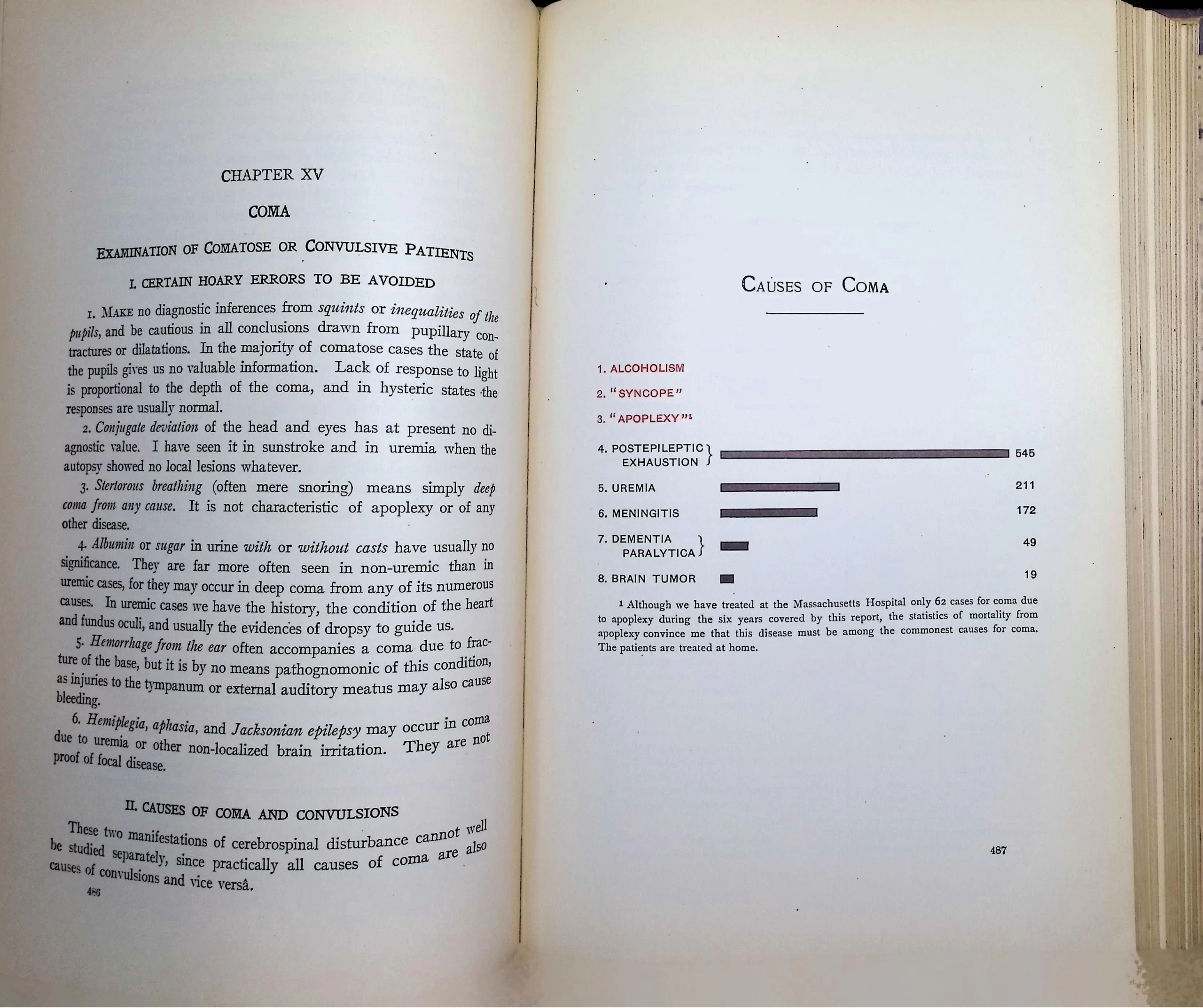
Richard Cabot was a pioneer of the “problem-oriented” diagnostic approach that would eventually influence SOAP note structure and clinical algorithms. At the time, most medical texts were structured by disease rather than symptom—Cabot flipped the model, reflecting how patients actually present. His charts, such as those comparing coma etiologies and abdominal pain localization, offered a structured diagnostic framework in an era when modern imaging and labs were limited or nonexistent.
Curious Facts, Ephemera, and Trivia
This edition includes a comparative bar chart showing postepileptic exhaustion as the leading recorded cause of coma—more than meningitis or uremia.
The book frequently references “apoplexy,” a now-antiquated umbrella term for stroke.
Cabot’s method was seen as controversial at first; his use of hospital statistics and systematic reasoning was deemed too “cold” by some contemporaries.
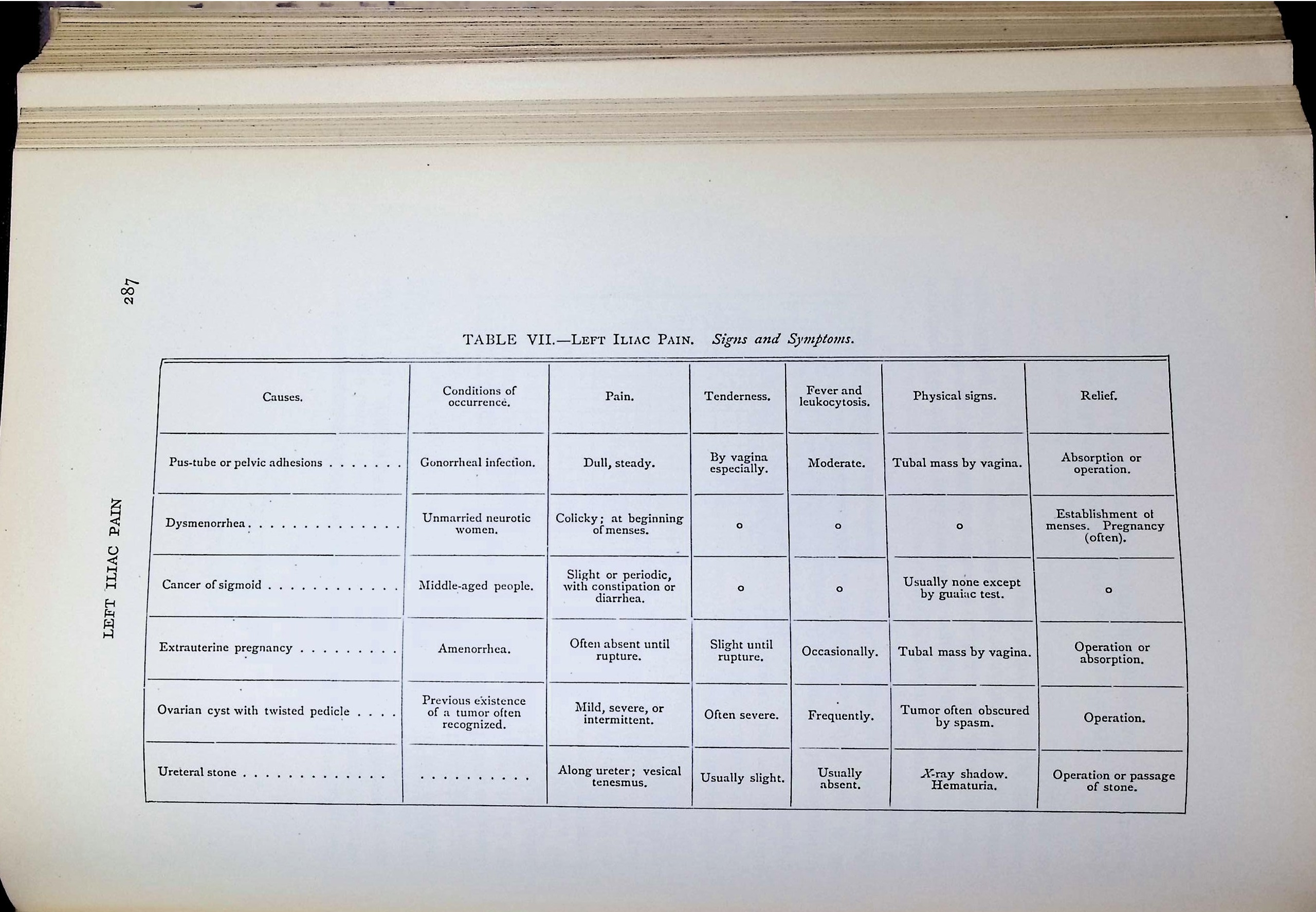
Tables such as “Left Iliac Pain” include symptom associations like “unmarried neurotic women” under dysmenorrhea—a revealing look at the gendered medical language of the period.
Excerpt
“Make no diagnostic inferences from squints or inequalities of the pupils… Lack of response to light is proportional to the depth of the coma, and in hysteric states the responses are usually normal.”
— Chapter XV, Coma
Why it is in the Cabinet
Cabot’s work is a turning point in diagnostic methodology. More than a century old, it feels surprisingly modern in its approach to clinical reasoning. This edition, annotated and passed through the hands of a prior physician, preserves the lineage of bedside logic, medical humility, and the evolution of differential diagnosis itself.
Support Dr. Bebout’s Cabinet of Medical Curiosities
If you enjoy the history, the oddities, and the effort, help keep this cabinet open. Every little bit helps preserve and share the strange wonders of medicine's past.
Buy Me a Ko-fi ☕ Buy Me a Coffee ☕ Tip via PayPal 💵