
Title
Cosanyl Cough Syrup Bottle
Author
Manufactured by Parke, Davis & Company
Image
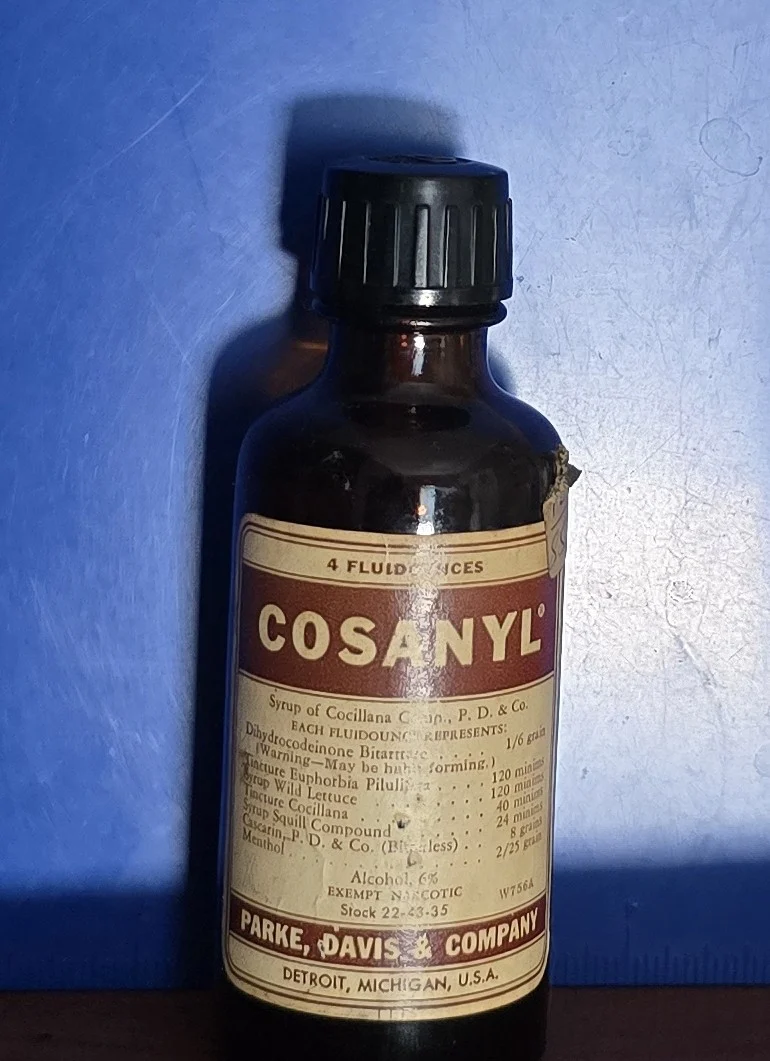
Description
This antique glass bottle once contained “Cosanyl,” a potent cough suppressant and expectorant formula marketed in the mid-20th century. It features a partially intact paper label listing ingredients with notable pharmacological activity. The bottle is approximately three-quarters full. This was a syrup not for the faint of lung—formulated back when “take one teaspoon” might also knock you out cold.
Condition
Good overall. Label is partially worn but still readable. Glass bottle intact with no chips or cracks. Approximately 3/4 of the original liquid remains.
Gallery
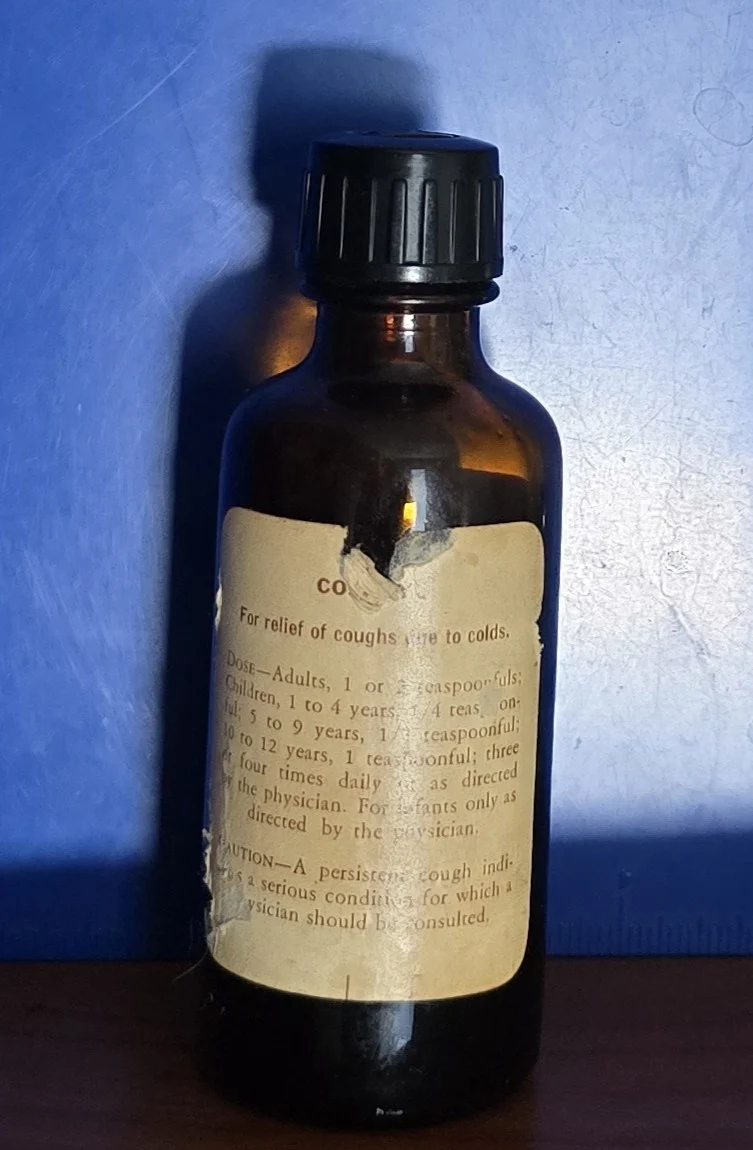
Historical context
Cosanyl was part of a class of mid-century prescription cough syrups that blurred the line between medicine and sedation. These syrups were common in a time before the Controlled Substances Act of 1970 reclassified many opiate-based ingredients. Cosanyl’s formulation reflects an era when codeine analogs, botanical derivatives, and laxatives coexisted peacefully in a single bottle.
Discussion of Exempt Narcotics
Cosanyl fell into the legal category of “exempt narcotics”—medications that contained low doses of controlled substances like opiates but could still be sold without a prescription prior to federal reclassification. These were common in corner pharmacies well into the 1950s and 60s. Though they often required a pharmacist’s oversight and a signature in a logbook, no formal prescription was needed. Cosanyl’s composition would later place it firmly on the radar of the DEA and FDA when abuse and dependency risks came under more scrutiny. Its formulation illustrates how accessible narcotics once were under the guise of legitimate therapy.
Curious Facts, Ephemera, and Trivia
One of Cosanyl’s primary ingredients was dihydrocodeinone, a close chemical cousin of hydrocodone, making it a powerful antitussive.
Other ingredients included Euphorbia pilulifera (a traditional bronchial relaxant), wild lettuce syrup (a folk sedative), cocillana bark, compound squill syrup, cascarin (a stimulant laxative), and menthol.
The combination of opiate derivatives and botanical expectorants created a multi-targeted treatment for coughs—and likely, unintentional naps.
Excerpt
For relief of persistent coughs, bronchial irritation, and upper respiratory discomfort. Administer with caution.
Why it is in the Cabinet
This bottle is a time capsule of a bygone era of pharmacy when complex mixtures of narcotics, botanicals, and stimulants were dispensed routinely and without digital oversight. It exemplifies the kind of historical quackery-meets-legitimacy that the Cabinet of Medical Curiosities was built to showcase.
Support Dr. Bebout’s Cabinet of Medical Curiosities
If you enjoy the history, the oddities, and the effort, help keep this cabinet open. Every little bit helps preserve and share the strange wonders of medicine's past.
Buy Me a Ko-fi ☕ Buy Me a Coffee ☕ Tip via PayPal 💵