
Title
Compound Benzoin Tincture Bottle
Author
Robinson Laboratories
Image
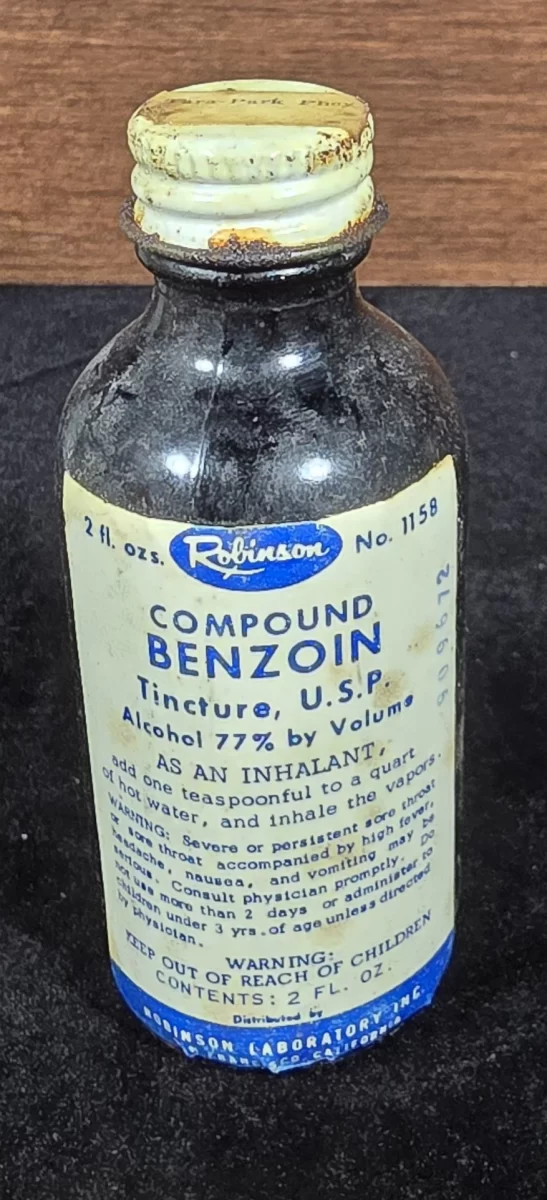
Description
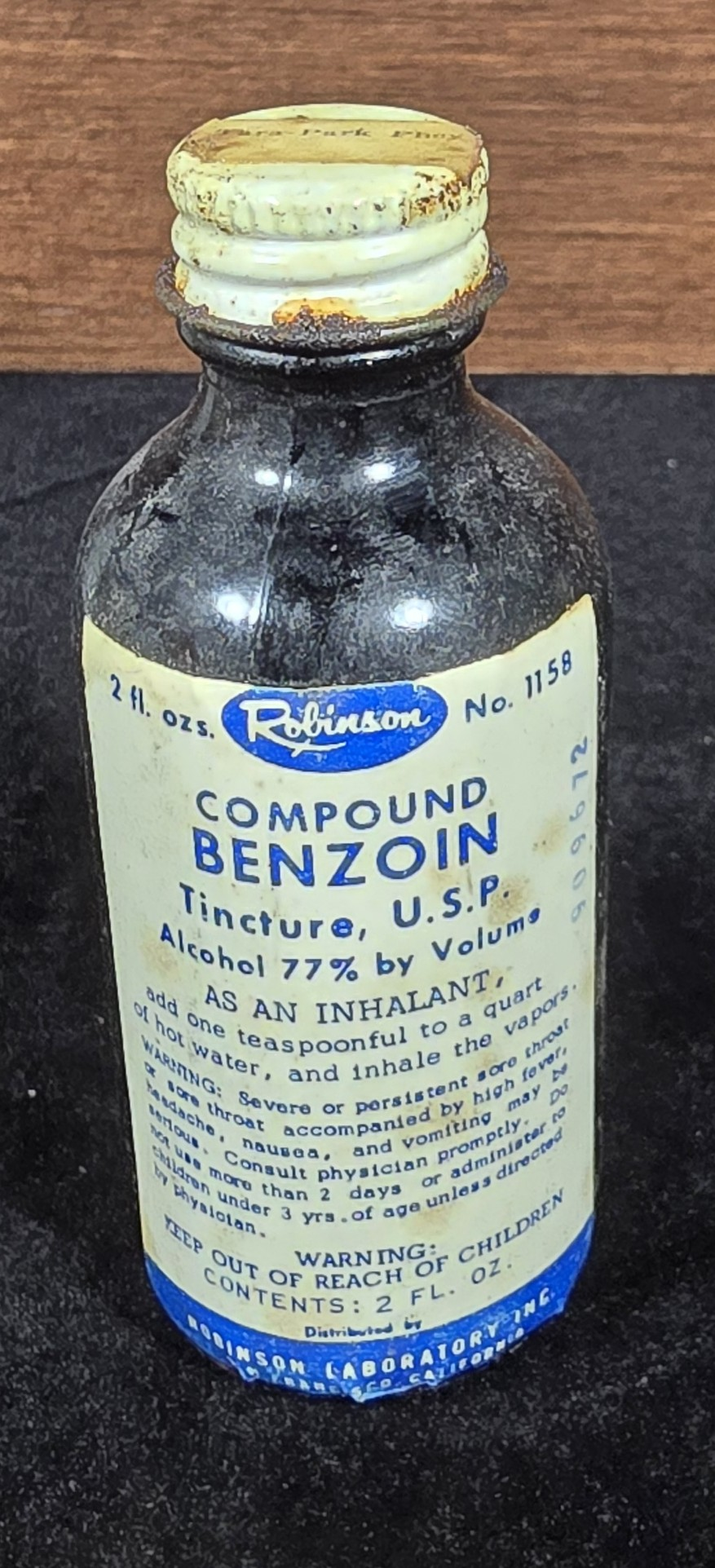
This is a 2-fluid-ounce vintage glass bottle labeled Compound Benzoin Tincture, U.S.P., distributed by Robinson Laboratories, Inc. The label states the solution contains 77% alcohol by volume and was intended “as an inhalant.” The instructions advise users to add one teaspoon to a quart of hot water and inhale the vapors to relieve symptoms such as sore throat and congestion. The bottle features a cream-colored metal cap with remnants of an old pharmacy label, possibly reading “Forest Park Pharmacy.”
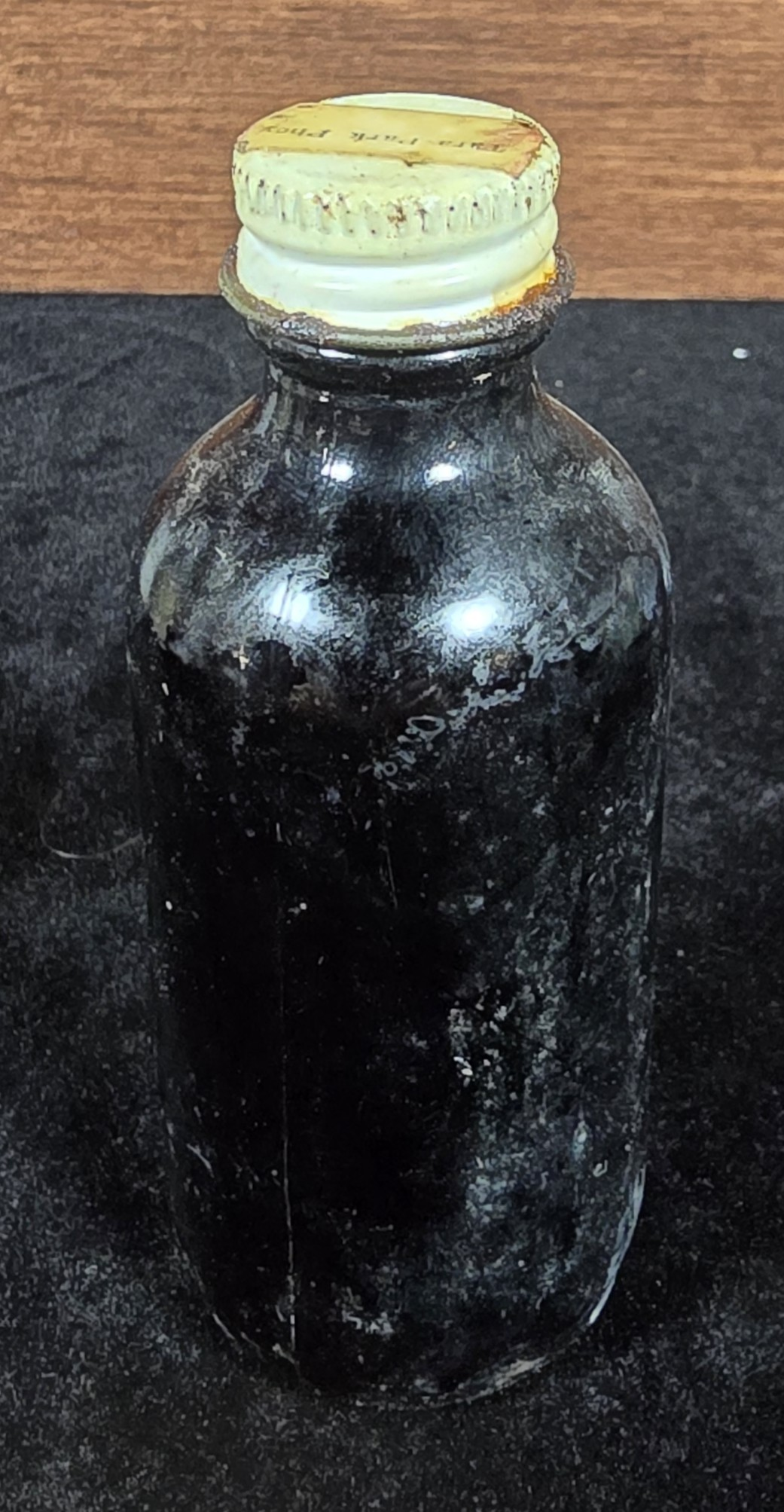
The rear of the bottle is plain, with darkened, weathered glass indicative of age and chemical staining.
Condition
Label intact with light staining and minor foxing
Cap oxidized with visible rust around the rim
Bottle contents missing
Glass shows mild residue and patina from prolonged storage
Gallery
Historical context
Compound Benzoin Tincture was a common item in household and clinical use throughout the early to mid-20th century. Benzoin resin, derived from the bark of trees in the genus Styrax, was valued for its aromatic, antiseptic, and protective properties. When dissolved in alcohol, the tincture was used in steam inhalation for respiratory relief and often served as a protective skin barrier when applied externally.
This formulation also served as a component in surgical dressings and was frequently applied to mucous membranes to protect against irritation.
Curious Facts, Ephemera, and Trivia
Compound Benzoin Tincture is still included in some modern formularies and was once used in “compound tincture of benzoin,” also known as Friar’s Balsam.
The high alcohol content (77%) allowed it to function as both a solvent and a preservative, giving it a sharp, aromatic punch when opened.
It was often used by singers and public speakers in steam form to ease strained vocal cords.
Excerpt
“Add one teaspoonful to a quart of hot water, and inhale the vapors…”
— Instruction label on the bottle
Why it is in the Cabinet
This item represents a practical, everyday remedy from the mid-century American pharmacy—part respiratory aid, part aromatic comfort, and part antiseptic powerhouse. Its mixture of high-proof alcohol and natural resin offers a snapshot of a time when pharmacy shelves were stocked with powerful compounds in simple bottles, and inhalation was as much ritual as remedy.
Support Dr. Bebout’s Cabinet of Medical Curiosities
If you enjoy the history, the oddities, and the effort, help keep this cabinet open. Every little bit helps preserve and share the strange wonders of medicine's past.
Buy Me a Ko-fi ☕ Buy Me a Coffee ☕ Tip via PayPal 💵