
Title
Cinchophen Squibb – Early Gout and Arthritis Remedy
Author
Manufactured by E. R. Squibb & Sons, New York
Image
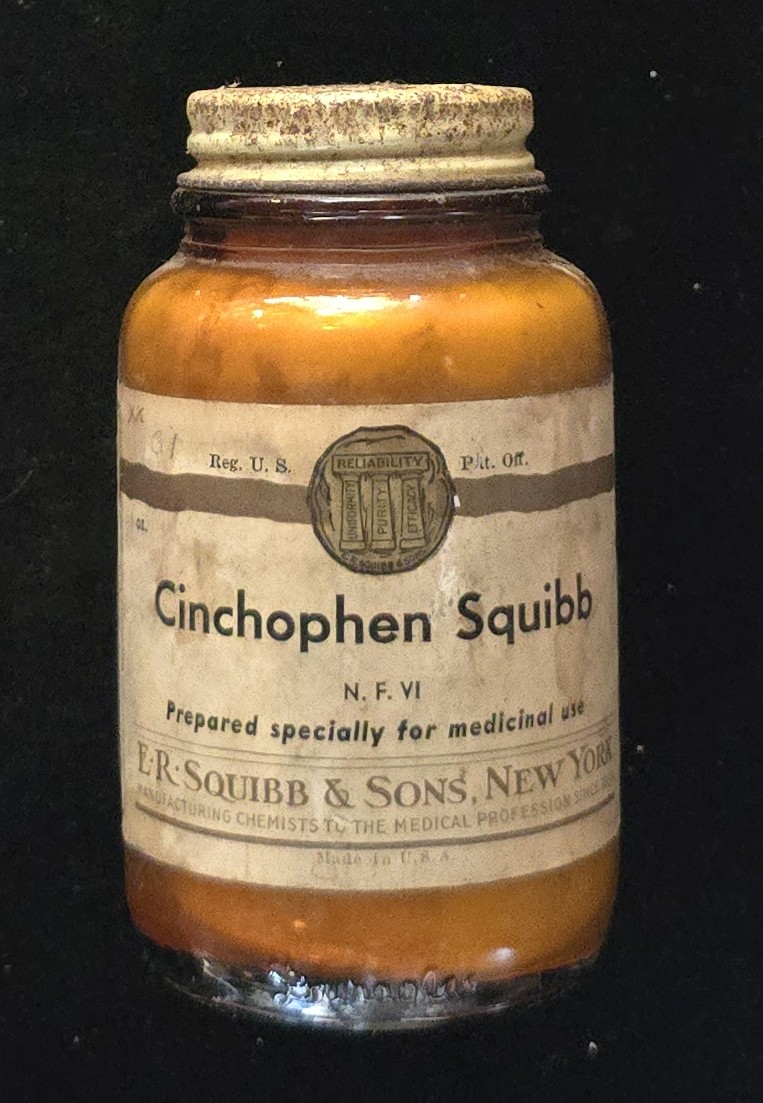
Description
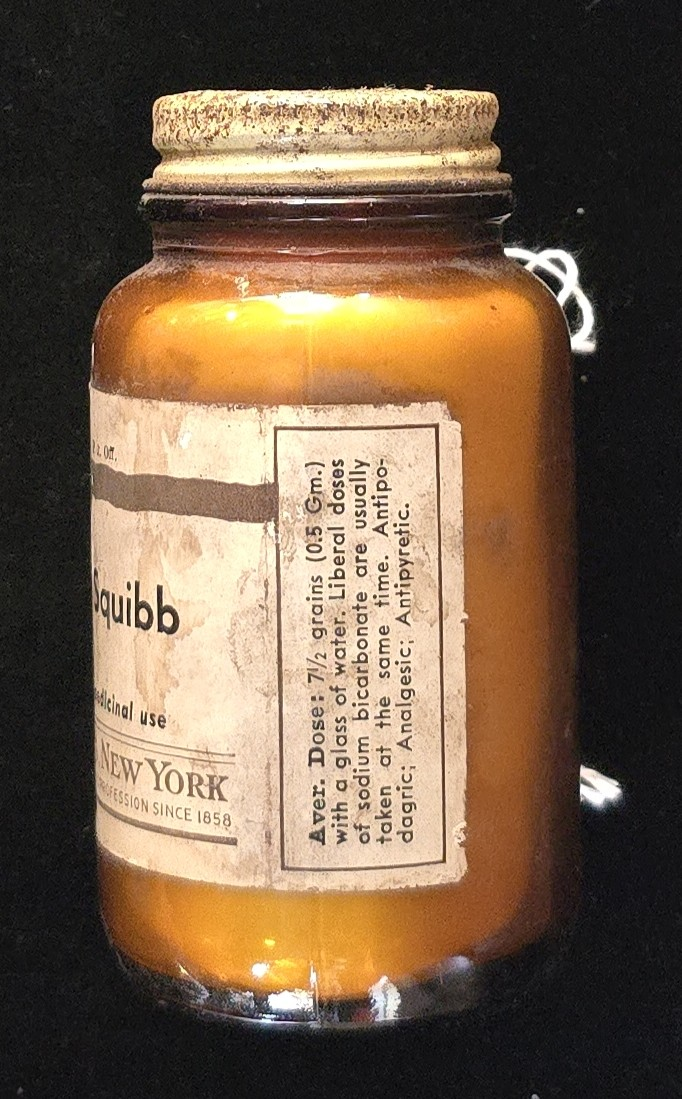
This amber glass jar, produced by E. R. Squibb & Sons of New York, once contained Cinchophen (Phenylcinchoninic acid), marketed for the treatment of gout and arthritis. The label reads “Prepared specially for medicinal use” and lists recommended dosages, noting its use as an analgesic, antipyretic, antirheumatic, and antipyodalgic (gout remedy). The bright orange powder remains inside, sealed under its original metal screw cap.
Condition
The jar is intact and still filled with its original powdered Cinchophen. The metal screw cap shows signs of oxidation, and the paper label is worn with staining but largely legible. Squibb’s trademark seal and slogans, including “Reliability, Integrity, Purity,” are still visible.
Gallery
Historical context
Cinchophen was introduced in 1908 as a breakthrough for gout and arthritis, conditions historically treated with limited success. It quickly gained popularity worldwide, sold under brand names like Atophan. Physicians prescribed it widely for its ability to relieve joint pain and reduce uric acid levels.
However, by the 1920s–1930s, reports emerged linking Cinchophen to serious and sometimes fatal liver damage. Cases of hepatic necrosis, jaundice, and acute liver failure accumulated, leading to its withdrawal from human medicine. Despite its toxicity, it lingered in limited veterinary use for decades. Today, Cinchophen stands as a cautionary example of early 20th-century drug development — effective but devastatingly unsafe.
Curious Facts, Ephemera, and Trivia
Marketed heavily by Squibb as reliable and pure, yet one of the most toxic drugs of its era.
Often prescribed for chronic gout sufferers who had little else available, until allopurinol and safer uric acid–lowering drugs appeared in the mid-20th century.
Cinchophen’s dangers contributed to the growing drug safety movement that eventually led to stronger FDA regulation.
Even after its withdrawal for humans, some countries used Cinchophen in veterinary medicine to treat arthritis in dogs.
Excerpt
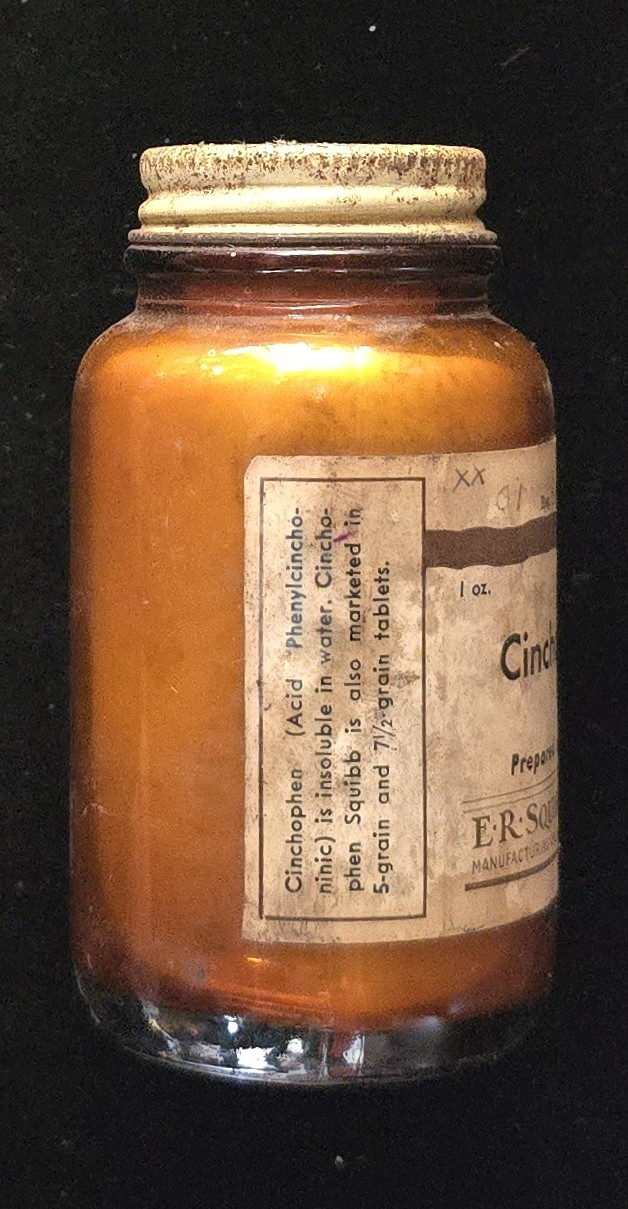
Cinchophen (Acid Phenylcinchoninic) is insoluble in water. Cinchophen Squibb is also marketed in 5-grain and 7½-grain tablets. Average dose: 7½ grains (0.5 gm) with a glass of water. Liberal doses of sodium bicarbonate are usually taken at the same time. Antipodagric. Analgesic. Antipyretic.
Why it is in the Cabinet
This jar is a striking artifact of early pharmaceutical history — complete with its vivid orange contents still sealed inside. Cinchophen illustrates the dangers of medicine marketed as safe and effective before adequate testing. Once hailed as a modern cure for gout and arthritis, it instead became infamous for causing fatal liver damage. It now serves as a reminder of why drug safety oversight became essential.
Support Dr. Bebout’s Cabinet of Medical Curiosities
If you enjoy the history, the oddities, and the effort, help keep this cabinet open. Every little bit helps preserve and share the strange wonders of medicine's past.
Buy Me a Ko-fi ☕ Buy Me a Coffee ☕ Tip via PayPal 💵