
Title
Chlorazene Tablets (Abbott Laboratories)
Author
Abbott Laboratories
Image
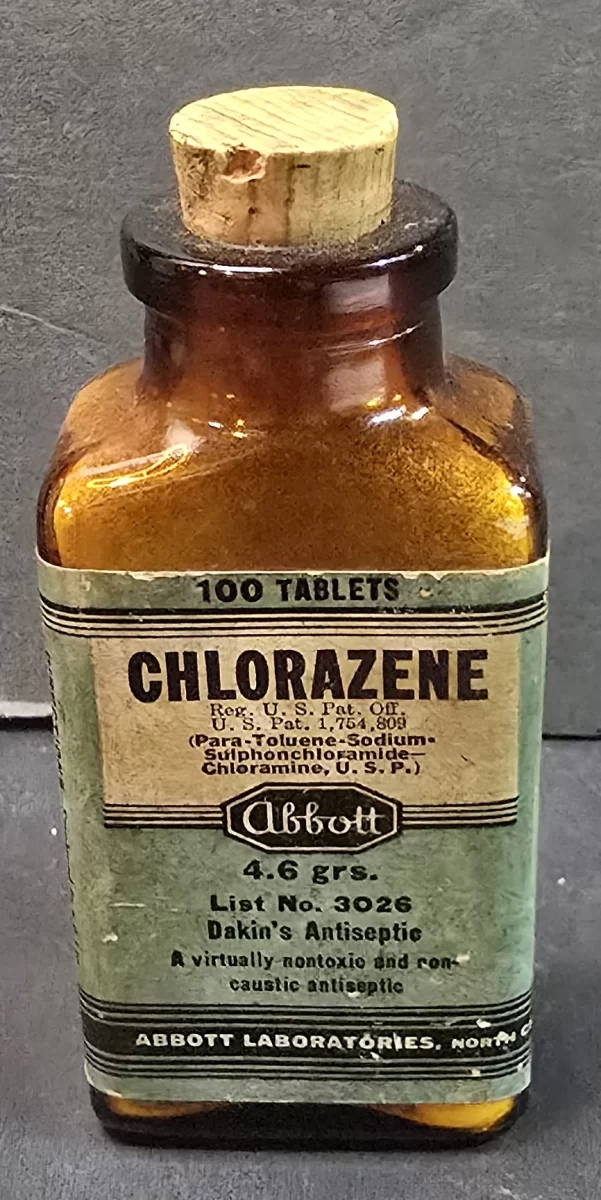
Description
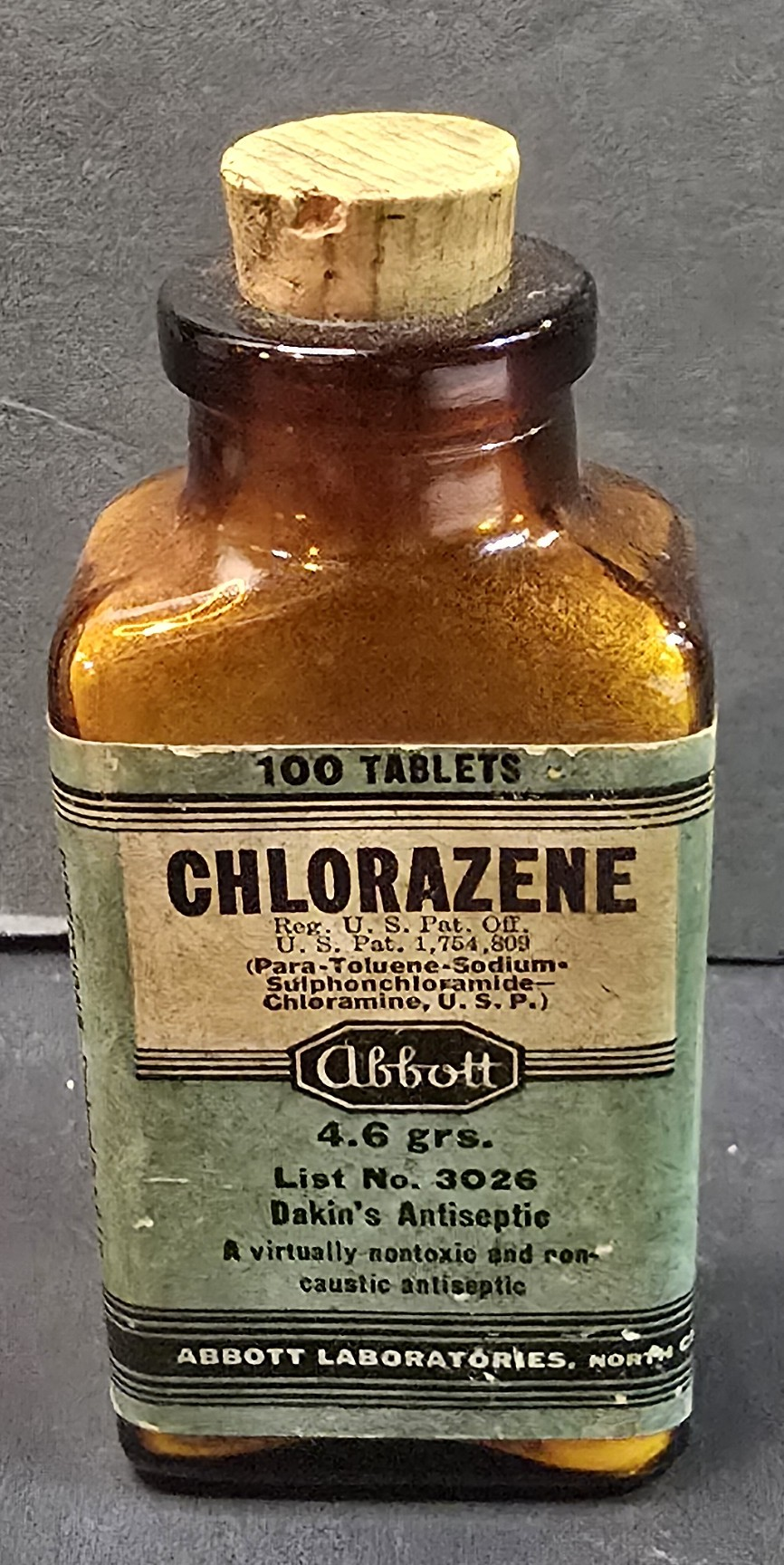
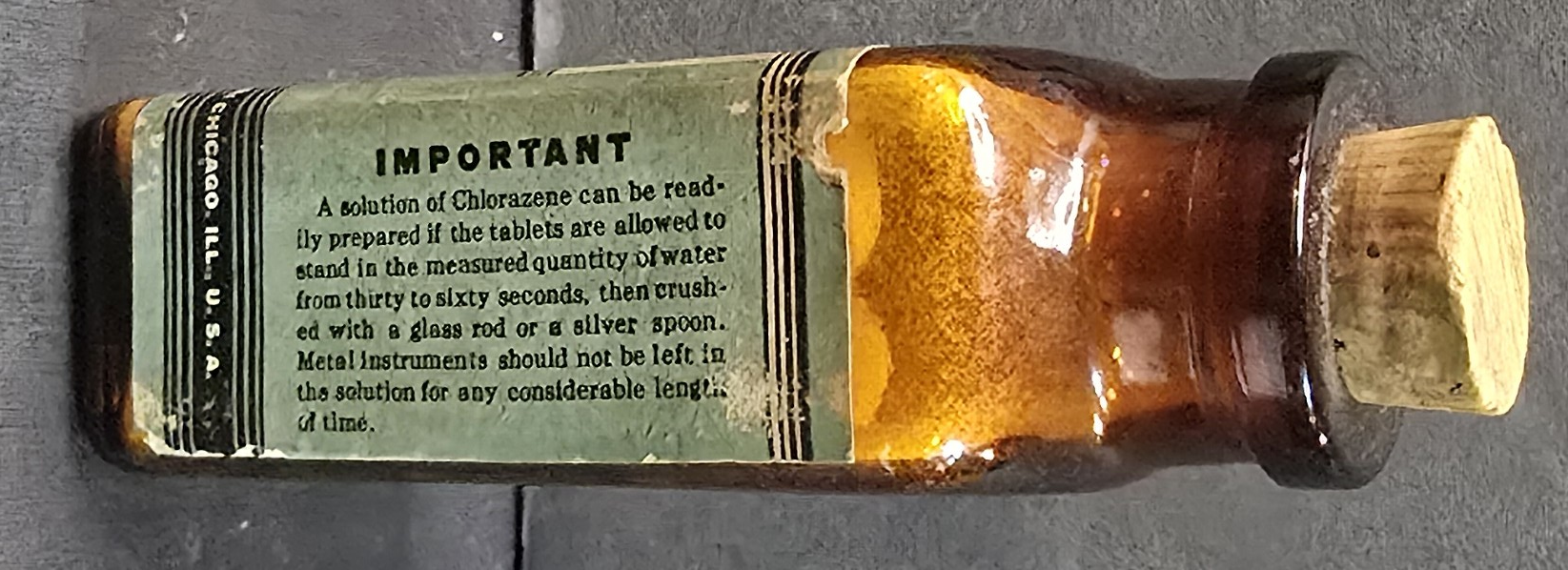
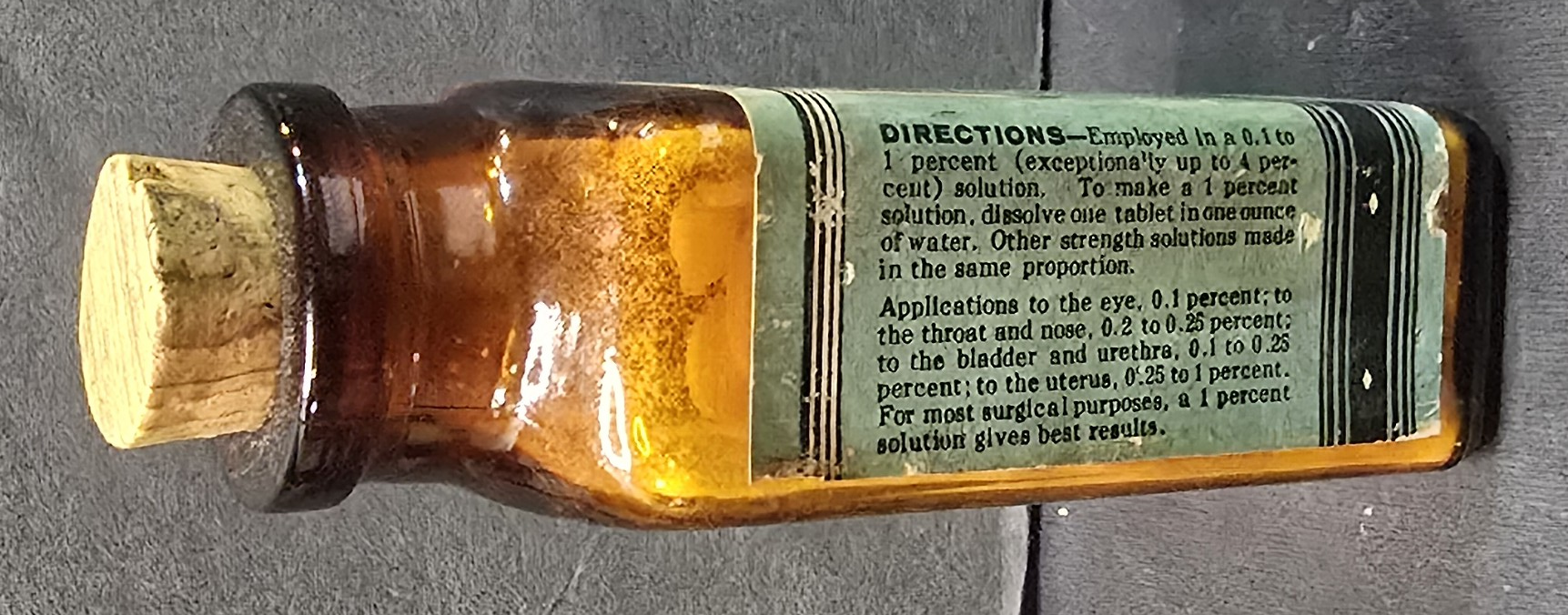
This is an original early 20th-century bottle of Chlorazene Tablets, manufactured by Abbott Laboratories and sold in tablet form for preparation of antiseptic solutions. The label identifies the compound as para-toluene-sodium-sulphonchloramide (chloramine), marketed as a “virtually nontoxic and non-caustic antiseptic.” Each bottle originally contained 100 tablets, with directions for dissolving tablets to prepare solutions of varying strength depending on use.
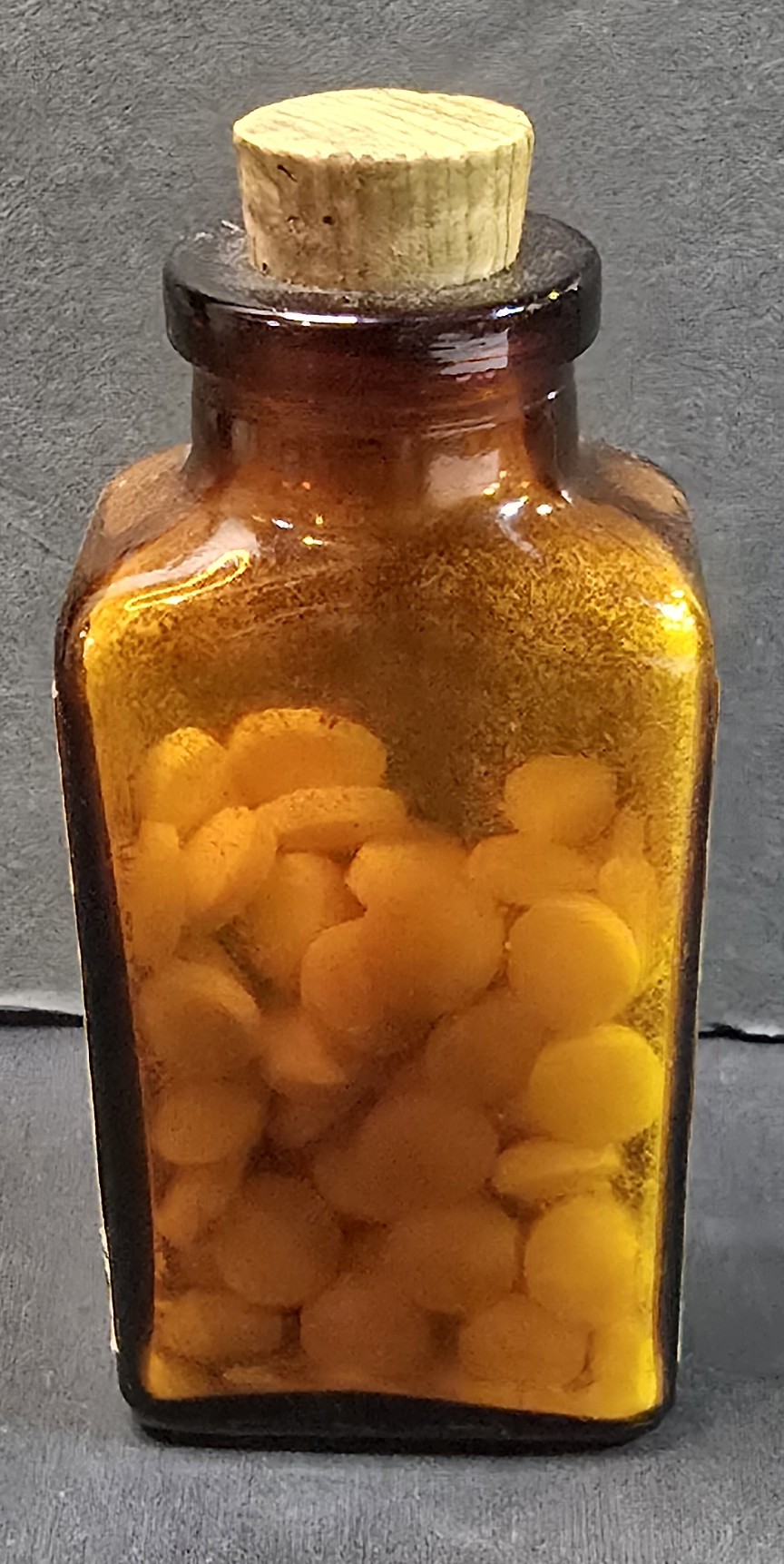
The bottle is amber glass with a cork stopper and retains its original paper label, including dosage instructions and indications. Chlorazene was commonly used for wound care, surgical irrigation, gargles, and general antisepsis, particularly in hospital and clinical settings during the early antiseptic era. This example remains unopened, with tablets still present.
Condition
Original amber glass bottle with intact cork stopper; label present and legible with expected edge wear, light scuffing, and age toning. Tablets remain inside. No structural damage noted.
Gallery
Historical context
Chlorazene was part of the broader movement in late 19th and early 20th century medicine toward chemical antisepsis, following the work of Lister and others. Chloramine compounds offered a more stable and less caustic alternative to earlier antiseptics such as carbolic acid. Abbott marketed Chlorazene aggressively to hospitals and physicians as a safer, modern antiseptic suitable for repeated clinical use.
This product sits squarely in the transition period between crude antiseptics and the later antibiotic era, representing a time when infection control relied heavily on chemical disinfection rather than antimicrobial therapy.
Curious Facts, Ephemera, and Trivia
Chlorazene solutions were often prepared fresh by dissolving tablets immediately before use, reflecting concerns about stability and potency. The instructions specify different concentrations for eye use, nasal and throat irrigation, bladder irrigation, and general surgical purposes—something rarely seen on modern pharmaceutical labels. Abbott’s branding here emphasizes safety (“virtually nontoxic”), a notable selling point in an era when many antiseptics were anything but.
Excerpt
“Dakin’s Antiseptic — A virtually nontoxic and non-caustic antiseptic.”
Why it is in the Cabinet
This bottle represents real, everyday medical practice, not fringe medicine or patent-medicine hype. It is a tangible artifact from the era when infection control was evolving rapidly but still depended on chemistry, technique, and discipline rather than antibiotics. It also exemplifies Abbott’s early pharmaceutical manufacturing and standardization efforts, which helped shape modern clinical medicine.
Support Dr. Bebout’s Cabinet of Medical Curiosities
If you enjoy the history, the oddities, and the effort, help keep this cabinet open. Every little bit helps preserve and share the strange wonders of medicine's past.
Buy Me a Ko-fi ☕ Buy Me a Coffee ☕ Tip via PayPal 💵