
Title
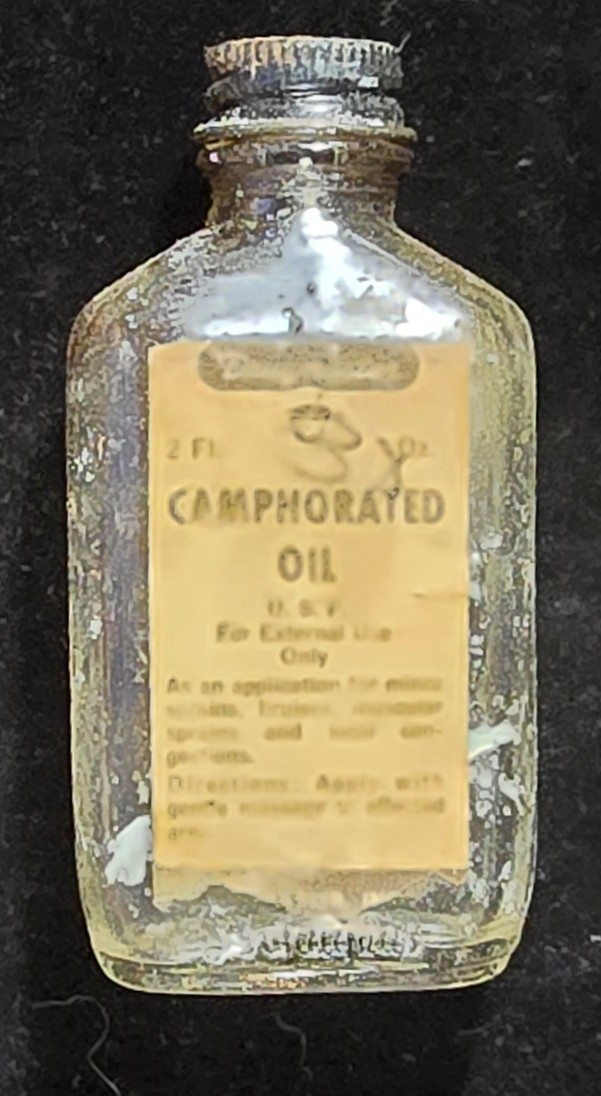
Camphorated Oil
Author
N/A
Image
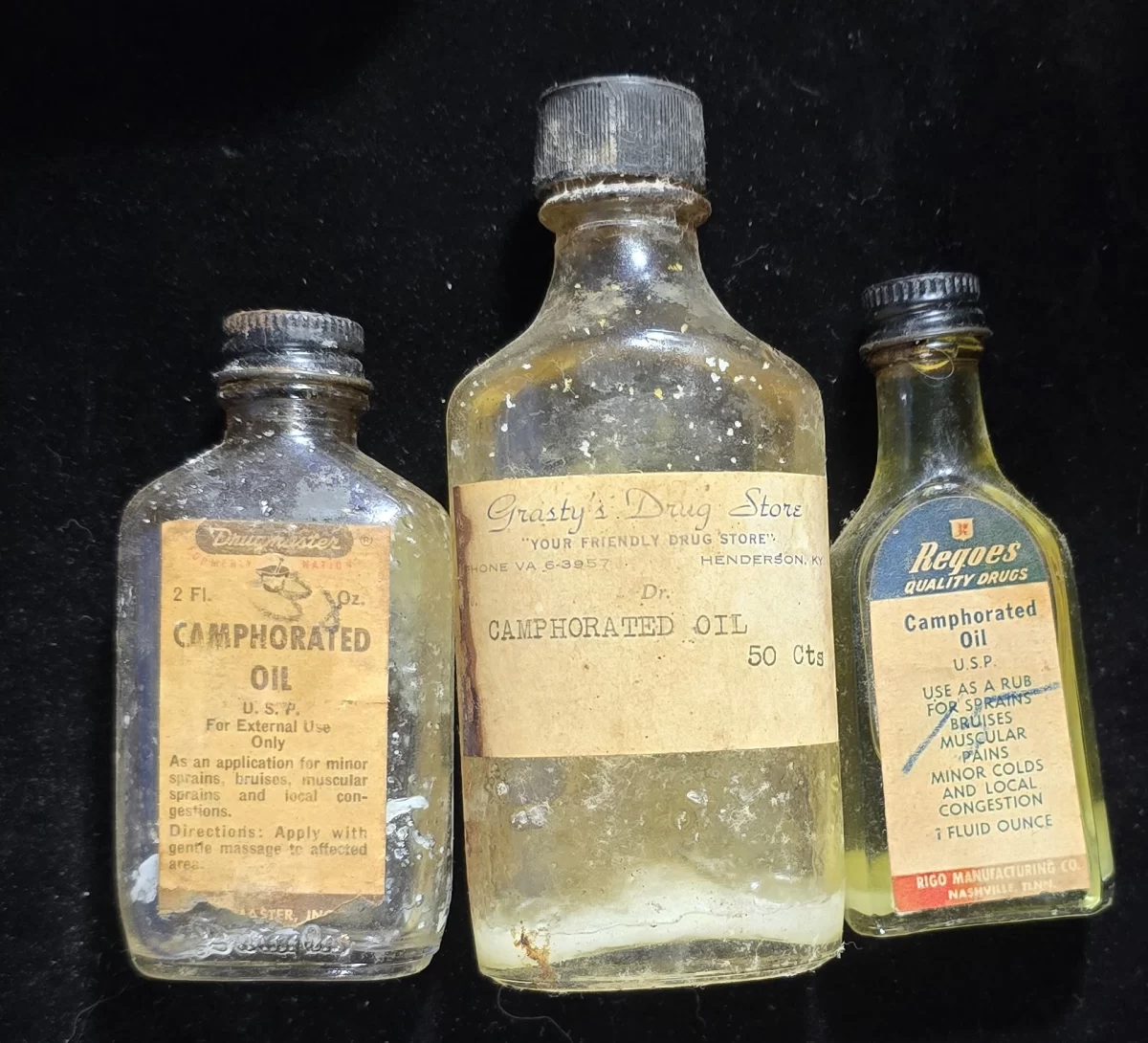
Description
These vintage bottles of Camphorated Oil represent one of the most common household remedies of the early–mid 20th century. Prepared by dissolving camphor crystals in cottonseed or olive oil (usually at 20% strength), the product was widely applied externally for:
Sprains, bruises, and muscular pain
Minor colds and congestion
General topical use as a “counter-irritant”
While sometimes taken internally in small doses in the 19th century, camphor’s toxicity eventually limited camphorated oil to external use only.
The bottles in this collection show both local pharmacy compounding and commercially packaged production, illustrating how this remedy bridged the line between the druggist’s counter and mass-marketed medicine.
Condition
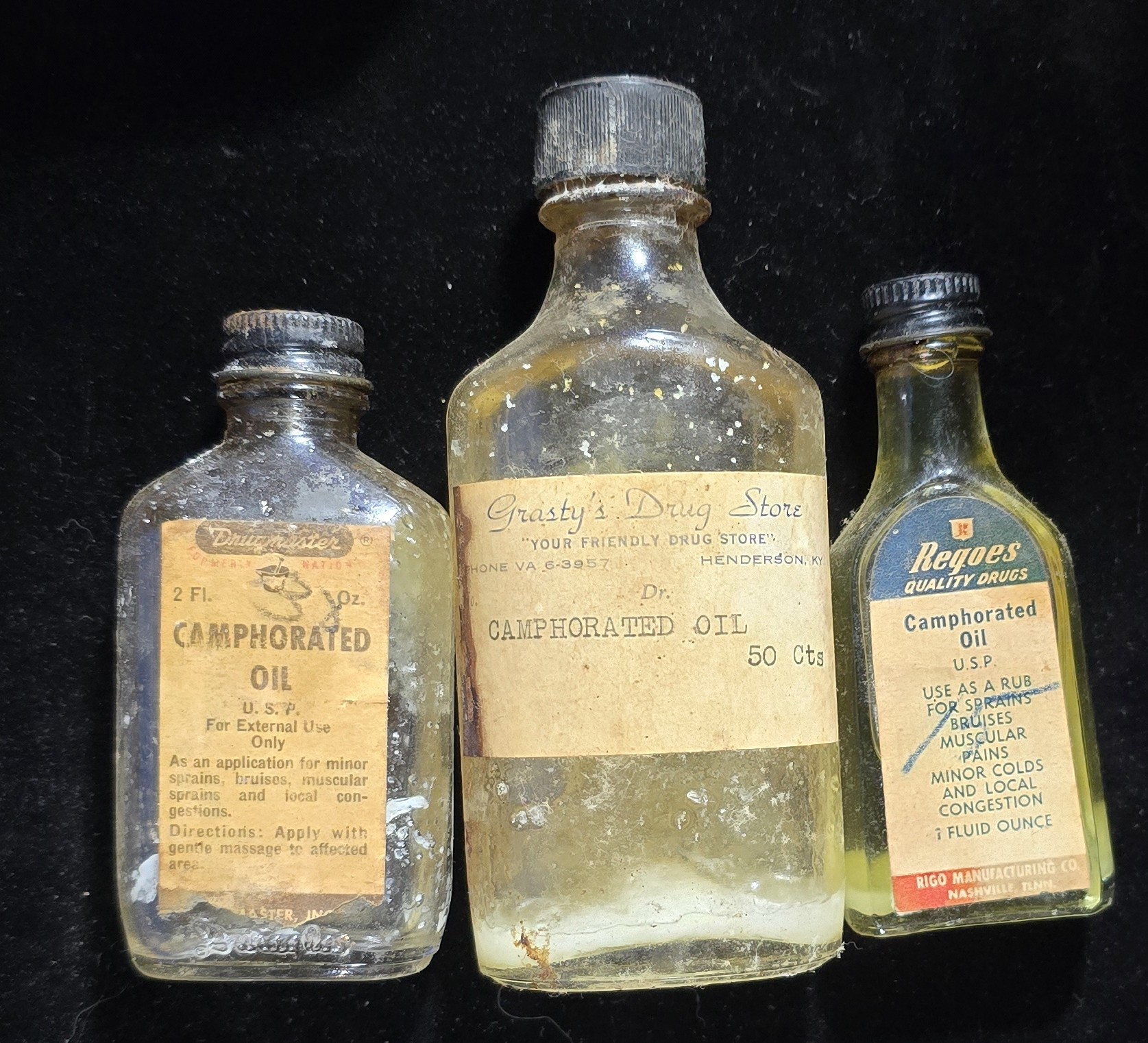
Bottle 1: Clear glass, pharmacy label “Camphorated Oil U.S.P. – For External Use Only.” Label intact but aged.
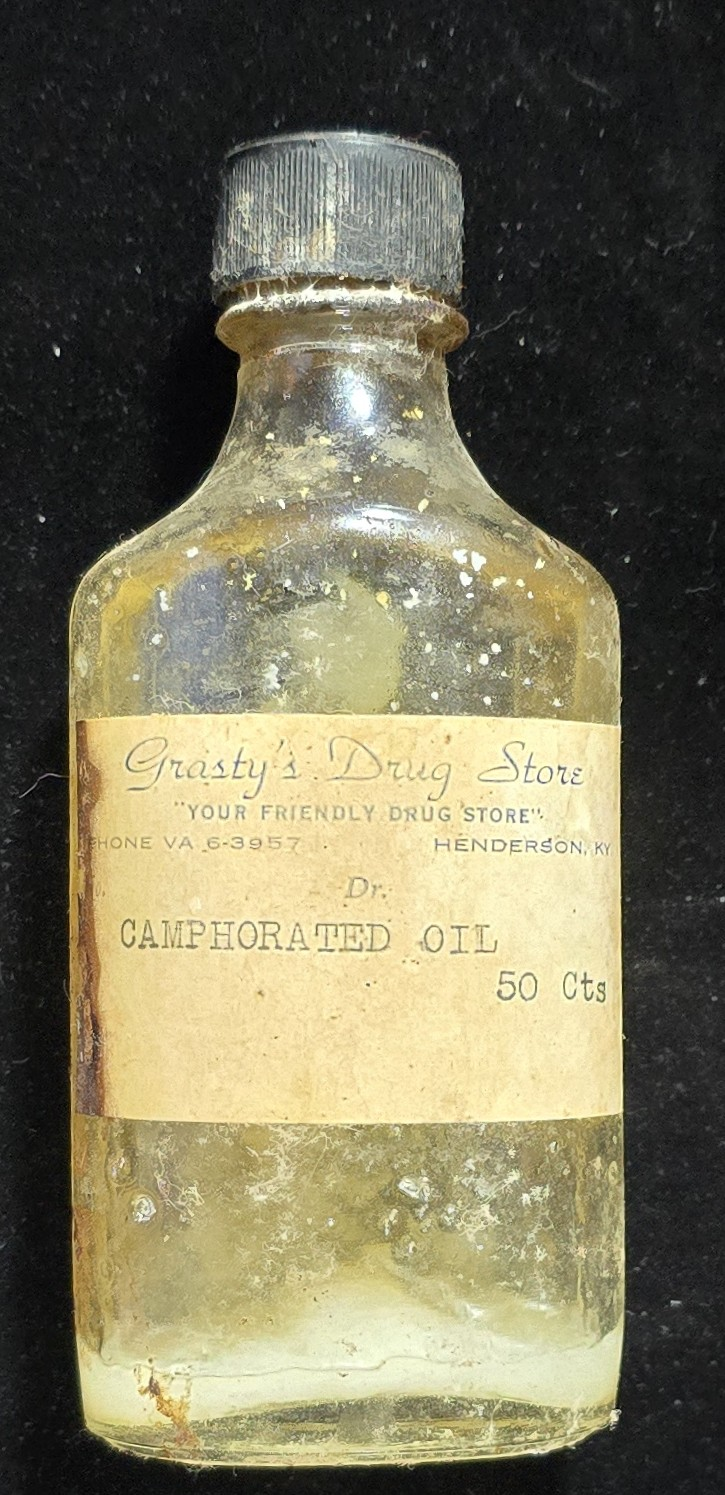
Bottle 2: Grasty’s Drug Store, Henderson, KY — regional druggist label with original 50¢ price mark. Some label staining.
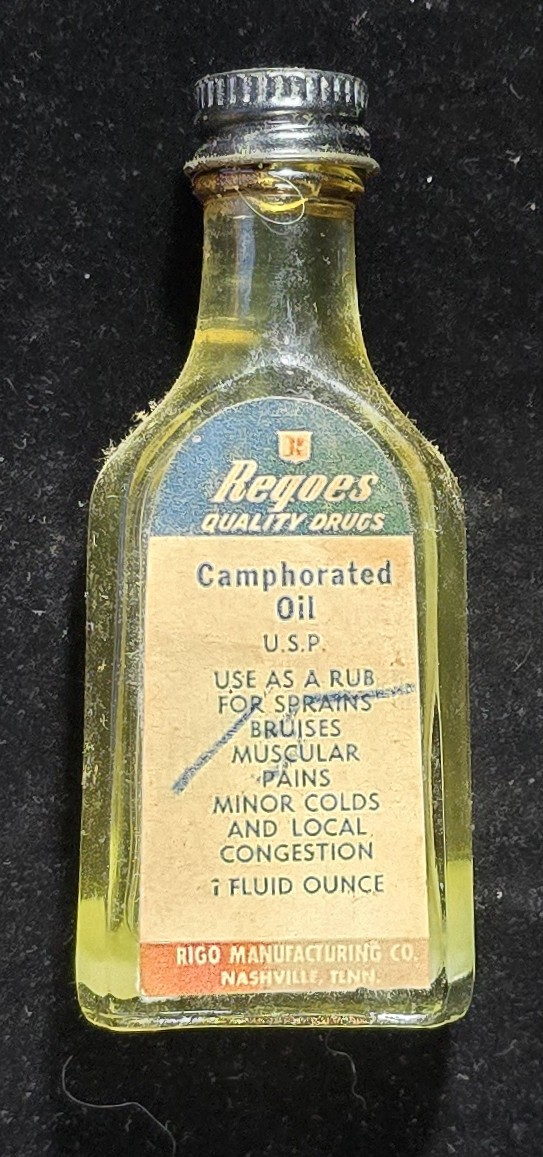
Bottle 3: Regos Quality Drugs, Nashville, TN (Rigo Manufacturing Co.) — commercial branding, clear labeling of uses. Light wear, otherwise excellent preservation.
All three bottles retain their paper labels and metal caps, making them well-preserved pharmaceutical examples.
Gallery
Historical context
Camphor has been used medicinally for centuries, imported from Asia and prized for its pungent odor and cooling sensation.
By the 19th century, it was a staple in American pharmacopeias.
Camphorated oil, simple to prepare, was listed in the U.S. Pharmacopeia and became a standard stock item in nearly every pharmacy by the early 20th century.
Its gradual decline came as synthetic rubs like Vicks VapoRub and more specialized liniments took over the same market.
Curious Facts, Ephemera, and Trivia
Camphor, despite its soothing uses, is toxic if ingested in sufficient amounts — seizures and poisoning cases were sometimes reported when it was mistaken for a harmless oil.
It was also used as a moth repellent and embalming ingredient, adding to its reputation as a “multipurpose” substance.
Local branding, like Grasty’s Drug Store in Henderson, KY, shows how independent pharmacies once competed with major manufacturers by bottling their own compounds.
Why it is in the Cabinet
These bottles highlight the intersection of local druggists and mass-market pharmaceuticals, while also preserving a piece of everyday medical history. Nearly every American household once had a bottle of camphorated oil — making these artifacts a tangible connection to common domestic medicine in the first half of the 20th century.
Support Dr. Bebout’s Cabinet of Medical Curiosities
If you enjoy the history, the oddities, and the effort, help keep this cabinet open. Every little bit helps preserve and share the strange wonders of medicine's past.
Buy Me a Ko-fi ☕ Buy Me a Coffee ☕ Tip via PayPal 💵