
Title
Caldesene Medicated Powder
Author
Pharmadent Division, Pennwalt Corporation, Rochester, New York
Image
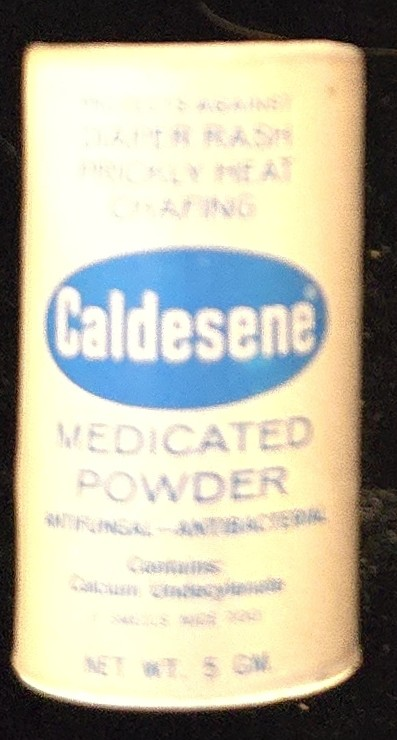
Description
This 5-ounce tin of Caldesene Medicated Powder represents mid-to-late 20th century over-the-counter dermatologic care. The brand became popular for treating and preventing diaper rash, chafing, and prickly heat, particularly in infants but also for adults. The powder’s active ingredient, calcium undecylenate, is both antifungal and antibacterial, making it effective for common skin irritations caused by moisture and heat.
Produced by the Pharmadent Division of the Pennwalt Corporation, Caldesene was a staple in medicine cabinets and hospitals alike. It was widely advertised as gentle, soothing, and protective—ideal for baby care yet marketed with clinical authority. The packaging here likely dates from the 1960s–1970s, featuring the classic blue-and-white color scheme and cylindrical metal canister before plastic containers became common.
Condition
Very good vintage condition. Tin retains bright printing and minimal surface wear. Minor discoloration consistent with age. Cap intact; contents not verified.
Gallery
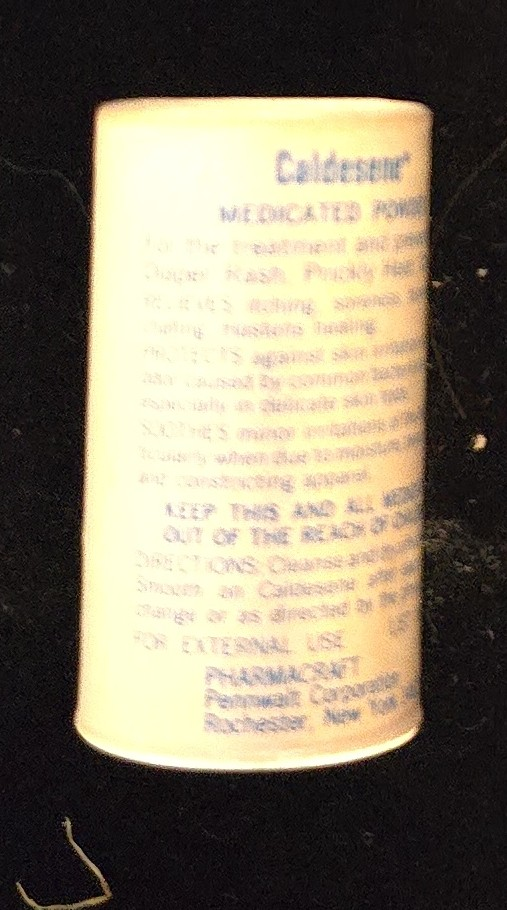
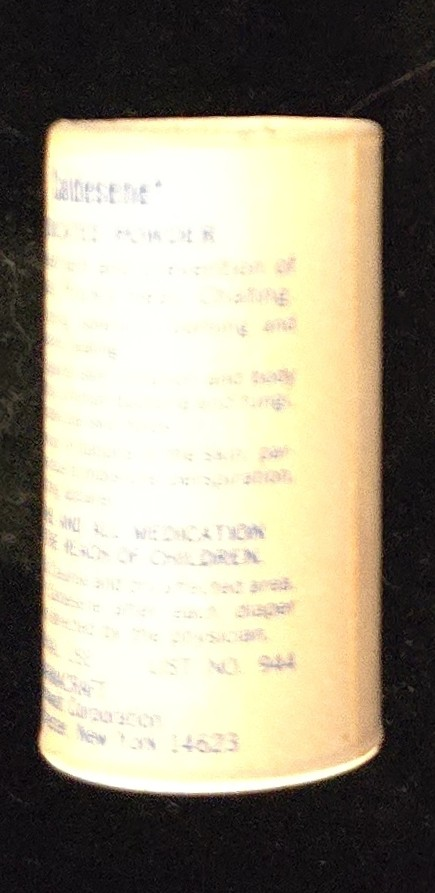
Historical context
Caldesene’s formulation reflects a transitional period in 20th-century hygiene and dermatology. In the postwar decades, parents increasingly sought “scientific” yet gentle baby products. Pennwalt, better known for its industrial chemicals and dental supplies, expanded into consumer medical lines under the Pharmadent label. Caldesene occupied a niche between baby powder and medicated antifungal powders such as Desenex or Tinactin.
Products containing undecylenic acid salts (like calcium undecylenate) were commonly recommended for treating tinea infections—athlete’s foot, ringworm, and jock itch—making Caldesene one of the few crossover powders marketed as both cosmetic and medical.
Curious Facts, Ephemera, and Trivia
The undecylenate compounds derive from castor oil and were introduced as antifungal agents in the 1940s.
Caldesene was one of the first powders to be simultaneously branded for “baby and body,” prefiguring later dual-use products.
Later versions of Caldesene (still sold today) transitioned to talc-free and cornstarch-based formulations in response to safety concerns about talcum powder.
Excerpt
Advertising from the 1960s claimed: “Caldesene forms a protective barrier between tender skin and moisture, soothing while it heals.”
Why it is in the Cabinet
This Caldesene tin bridges pharmaceutical dermatology and everyday home care. It captures an era when medical manufacturers extended their expertise into family products, wrapping pharmacologic ingredients in the comfort of baby-blue packaging.
Support Dr. Bebout’s Cabinet of Medical Curiosities
If you enjoy the history, the oddities, and the effort, help keep this cabinet open. Every little bit helps preserve and share the strange wonders of medicine's past.
Buy Me a Ko-fi ☕ Buy Me a Coffee ☕ Tip via PayPal 💵