
Title
Calcium Hypophosphite (Merck)
Author
Merck & Co., Inc., Manufacturing Chemists, New York
Image
Description
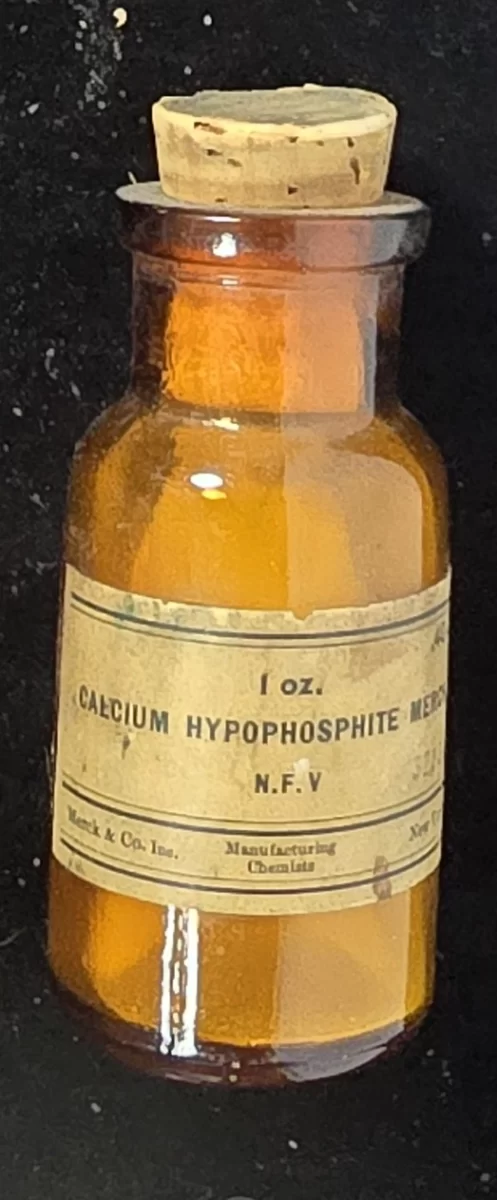
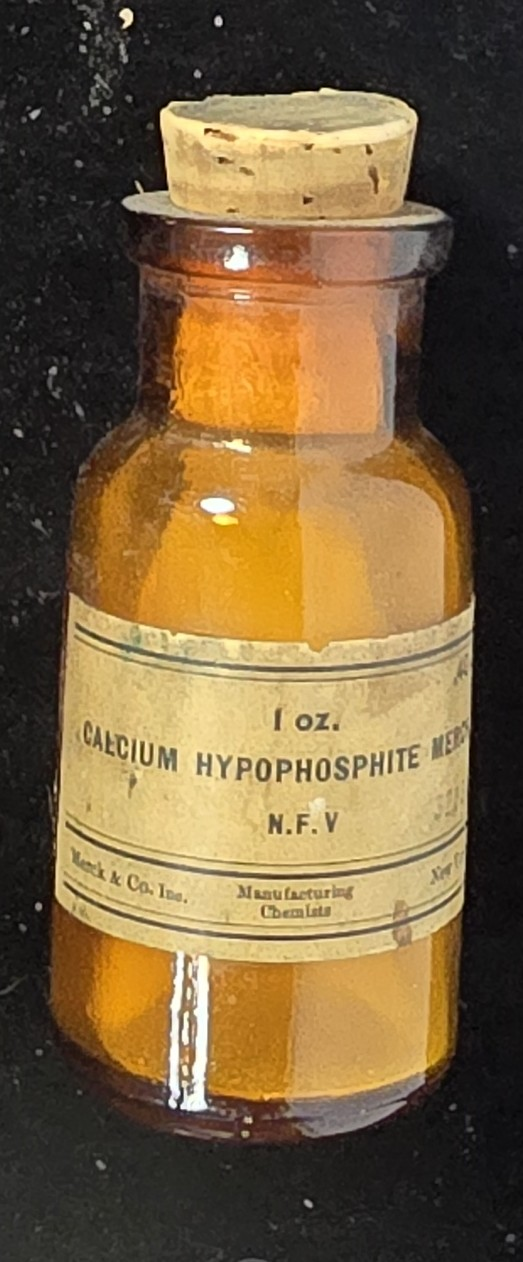
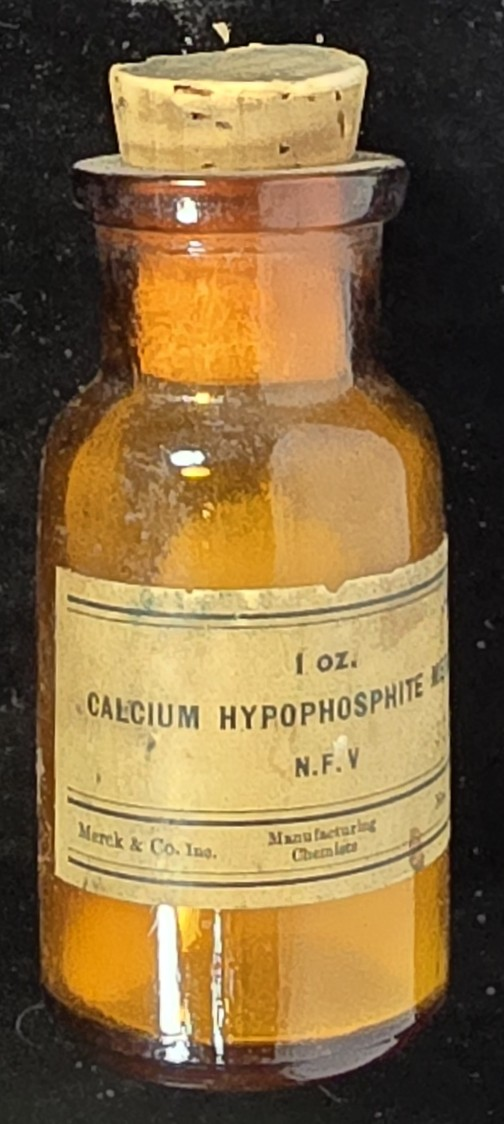
This is a 1 oz amber glass bottle of Calcium Hypophosphite produced by Merck & Co., Inc., back when Merck was still branding itself as “Manufacturing Chemists” in New York. The original paper label is intact and legible. The bottle is sealed with its original cork.
“Calcium hypophosphite” refers to calcium salts of hypophosphorous acid. In late 19th- and early 20th-century medicine, hypophosphites (calcium, sodium, etc.) were promoted as “nutritive tonics.” They were sold for anemia, debility, nervous exhaustion, tuberculosis, “weak lungs,” poor appetite, and general wasting. The idea was that phosphorus-containing compounds would ‘build up’ blood, nerves, and bone and restore vitality. These claims show up all over early Merck literature and patent medicines of the era.
Label notes:
“Calcium Hypophosphite Merck”
“N.F.V.” This refers to the National Formulary (then called the National Formulary of the U.S. Pharmacopoeial Convention). Drugs listed in the National Formulary were considered recognized, standard preparations for pharmacy use in the United States.
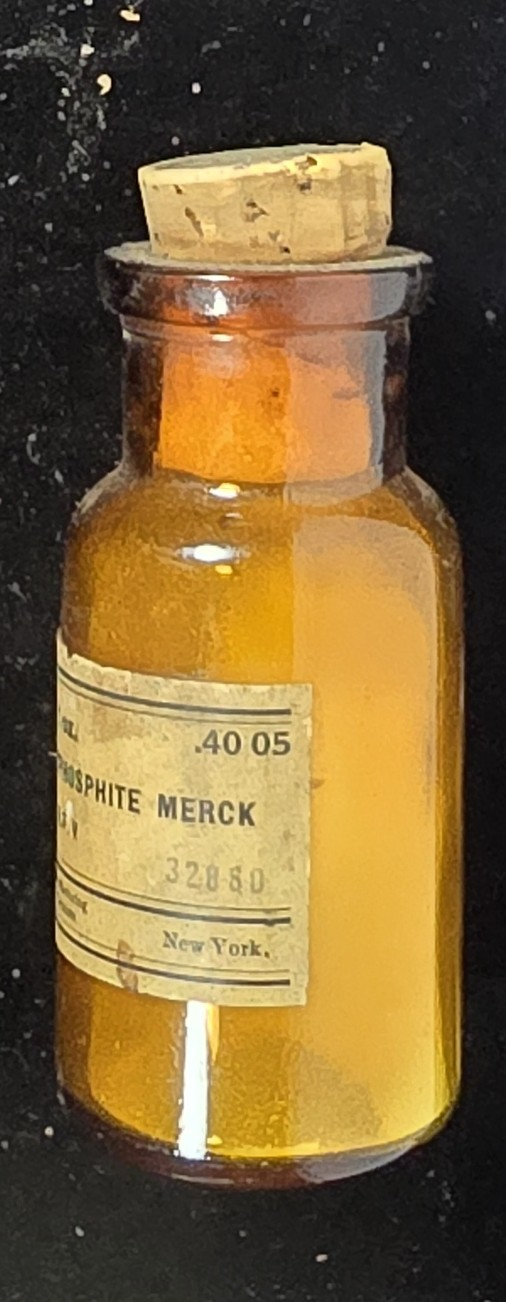
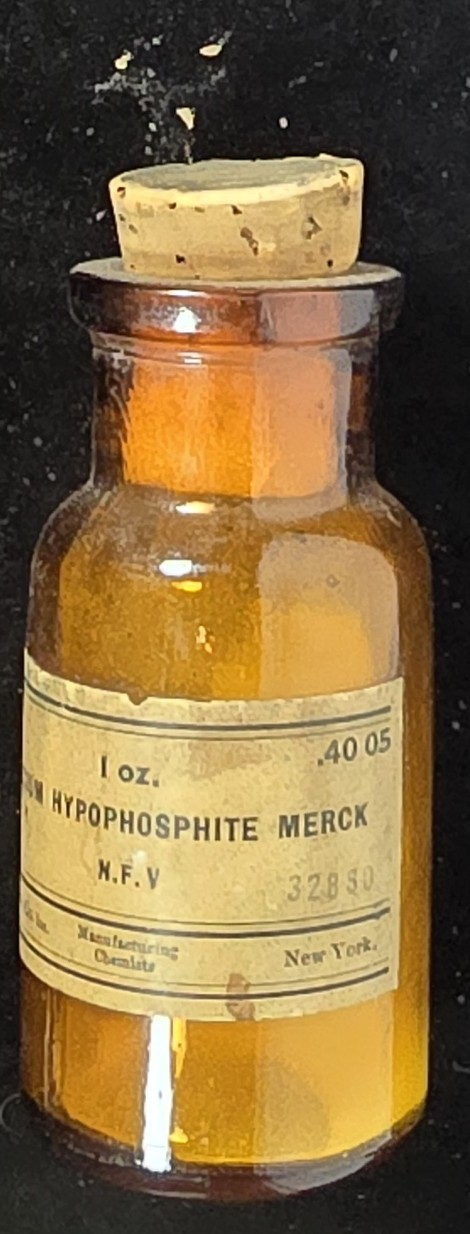
Lot / catalog style numbers printed on the label (including “4005” and a stamped lot “32880”), which helps date this as an in-house chemical supply product rather than a finished patent-medicine retail bottle.
This is exactly the kind of raw ingredient a pharmacist or physician would have kept on the shelf to compound syrups, elixirs, or tonics for patients.
Condition
Amber glass bottle is clean and glossy with no cracks. Cork is present but dried, chipped, and uneven. Paper label shows darkening, edge wear, and small stains but remains mostly intact and readable. Outstanding survival for a 1 oz working chemical bottle.
Gallery
Historical context
Before antibiotics, tuberculosis (“consumption”) killed aggressively. Doctors were desperate for anything that would slow the wasting. Hypophosphite mixtures became popular in the late 1800s as “reconstructive tonics”: nourish the nervous system, stimulate appetite, promote weight gain. They were advertised not as poison, but as food for your cells.
By the early-mid 20th century, Merck and other chemical houses were supplying hypophosphites as recognized National Formulary ingredients, so a local pharmacist could legally mix and dispense them as a “reputable” preparation instead of a sketchy patent nostrum. This bottle represents that transition: it’s not a carnival cure-all, it’s a standardized chemical from a major manufacturer.
Curious Facts, Ephemera, and Trivia
Hypophosphites were often blended with codeine or other cough suppressants and sold as “building-up cough syrups” for weak, consumptive patients. You weren’t just getting a tonic — you were getting early narcotic cough control.
• “N.F.” status mattered. Once an ingredient appeared in the National Formulary, a pharmacist could claim legitimacy and avoid being lumped in with traveling snake-oil salesmen.
• Merck started in the U.S. as a chemical supplier to doctors and pharmacists long before it became the giant prescription pharmaceutical brand people think of today.
Excerpt
Typical period claims for calcium (and other) hypophosphites promised “improved appetite, increased weight, restoration of vigor, and relief of nervous exhaustion in neurasthenic and tuberculous patients.” In plain English: tired, thin, coughing, anxious, not sleeping? Here, drink phosphorus.
Why it is in the Cabinet
This little Merck bottle is a snapshot of how physicians used to treat chronic wasting disease and “nervous collapse” a hundred years ago. It’s pharmacy-grade, not carnival medicine, but the promise is basically the same: we can build you back up. It ties directly into turn-of-the-century tuberculosis care, convalescent care, and America’s obsession with “tonics” for weakness.
Support Dr. Bebout’s Cabinet of Medical Curiosities
If you enjoy the history, the oddities, and the effort, help keep this cabinet open. Every little bit helps preserve and share the strange wonders of medicine's past.
Buy Me a Ko-fi ☕ Buy Me a Coffee ☕ Tip via PayPal 💵