
Title
Caffeine Sodio-Benzoate Ampoule
Author
Parke, Davis & Co., Detroit, Michigan
Image
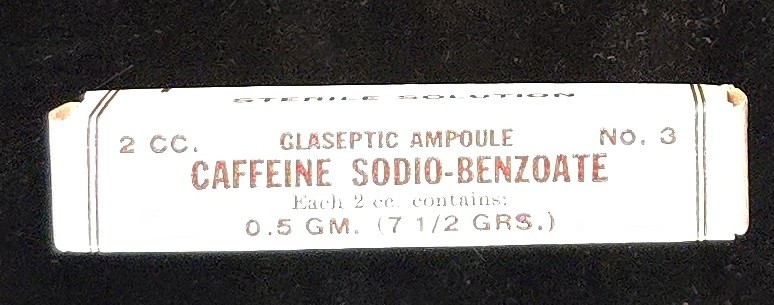
Description
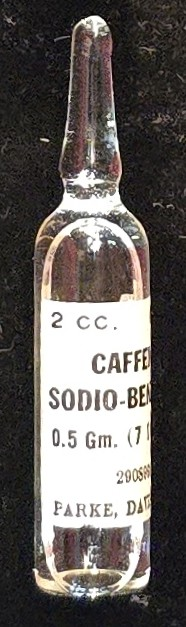
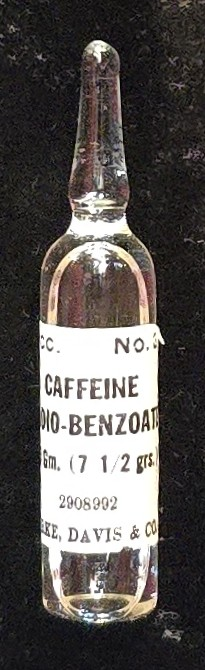
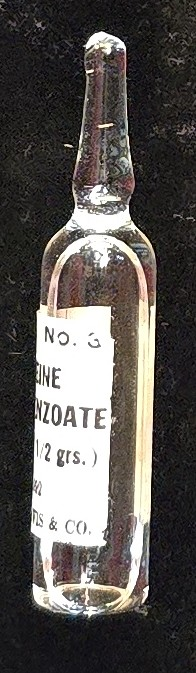
This is a vintage glass ampoule of Caffeine Sodio-Benzoate (Caffeine Sodium Benzoate), produced by Parke, Davis & Co., Detroit. The label indicates a 2 cc sterile solution, with a dosage of 0.5 gm (7 ½ grains) per ampoule. Caffeine sodio-benzoate was once a widely used injectable stimulant, administered for conditions such as migraine, respiratory depression, circulatory collapse, and even to counteract sedative overdose. The compound combined caffeine with sodium benzoate to improve solubility for parenteral use.
Condition
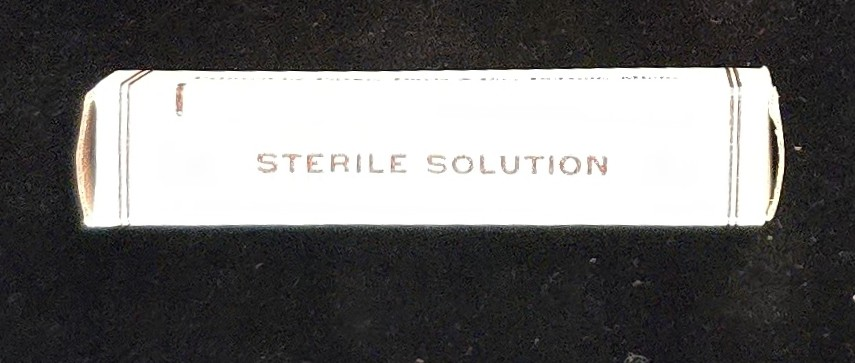
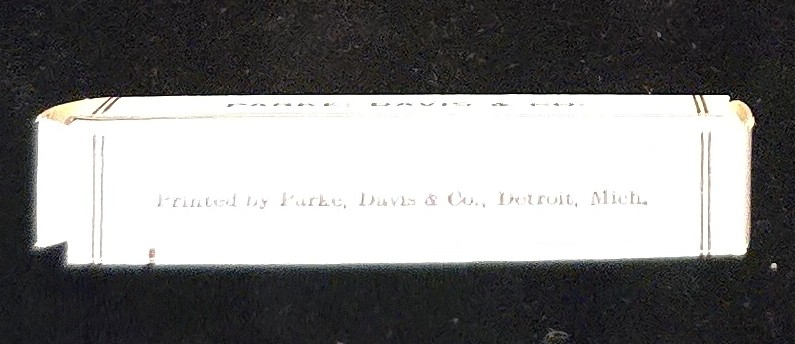
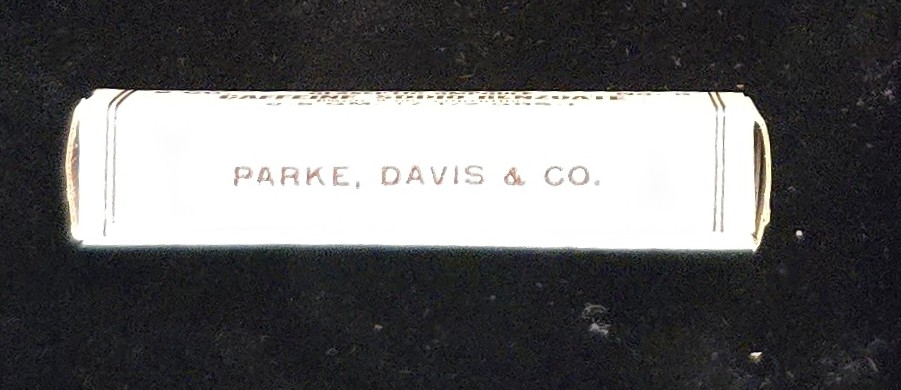
Original glass ampoule in excellent preserved condition, still sealed. Accompanied by the labeled cardboard packaging, showing light age-related wear but clear printing.
Gallery
Historical context
Parke, Davis & Co., founded in 1866 in Detroit, was one of the largest American pharmaceutical companies of the late 19th and 20th centuries. Their products included vaccines, antiseptics, narcotics, and stimulants like caffeine sodio-benzoate. Injectable caffeine preparations were especially popular in the early to mid-20th century before safer, more effective stimulants and migraine treatments replaced them.
Curious Facts, Ephemera, and Trivia
In older medical practice, caffeine injections were sometimes given as a cardiac stimulant.
The preparation was also used in obstetrics to counteract postpartum respiratory depression.
By the 1950s–60s, its medical use declined in favor of improved respiratory stimulants and safer pharmacologic interventions.
Excerpt
Caffeine sodio-benzoate, in doses of 0.5 gm, may be administered hypodermically as a central nervous system stimulant, useful in combating respiratory failure or profound circulatory depression.
Why it is in the Cabinet
This ampoule represents the intersection of early injectable medicine and pharmaceutical history, showcasing how once-standard stimulants are now obsolete. As an authentic Parke, Davis preparation, it highlights the evolution of drug manufacturing and therapeutic practices in the first half of the 20th century.
Support Dr. Bebout’s Cabinet of Medical Curiosities
If you enjoy the history, the oddities, and the effort, help keep this cabinet open. Every little bit helps preserve and share the strange wonders of medicine's past.
Buy Me a Ko-fi ☕ Buy Me a Coffee ☕ Tip via PayPal 💵