New Cabinet Entries
03/03/2026Title
Anomalies and Curiosities of Medicine (Popular Edition, 1900)
Author
George M. Gould, A.M., M.D.Walter L. Pyle, A.M., M.D.
Image
Description
Anomalies and Curiosities of Medicine is one of the most famous compendiums of unusual, rare, and extreme medical cases ever published. First issued in the late 19th century and here represented in the 1900 Popular Edition, the work gathers centuries of case reports documenting congenital anomalies, dermatologic extremes, remarkable tumors, unusual pregnancies, skeletal deformities, and medical oddities drawn from global literature.
Gould and Pyle did not merely collect sensational stories — they compiled, indexed, and referenced cases from medical journals and historical sources with remarkable thoroughness. The book contains hundreds of text illustrations and multiple photographic and color plates, some of which are striking even by modern standards.
This volume reflects an era when medicine was transitioning from anecdotal cataloguing to systematic pathology, yet still maintained a fascination with the extraordinary.
Condition
Red cloth hardcover with gilt spine stamping. Cloth shows age toning and mild edge wear but remains structurally solid. Binding appears intact. Pages clean with expected age toning. Plates present and well preserved based on images provided. Overall condition: Very Good antique condition for age (1900).
Gallery
Historical context
The late 19th century saw intense interest in teratology and pathological extremes. Medicine was cataloging deviations from “normal” anatomy in an attempt to understand development, heredity, and disease mechanisms.
This book sits at the crossroads of:
Victorian medical curiosity
Early pathological classification
Proto-endocrinology and congenital studies
Pre-modern bioethics
Many cases would today be discussed in terms of genetics, endocrinology, oncology, or social determinants of health. In 1900, they were gathered under the umbrella of “anomalies.”
Importantly, this text influenced how generations of physicians conceptualized rare disease and variation.
Curious Facts, Ephemera, and Trivia
The book includes 295 text illustrations and 12 half-tone and colored plates, which was ambitious production for its time.
It became a reference text for medical lecturers seeking striking case examples.
Some cases are cited from journals dating back centuries.
The language reflects the medical and cultural attitudes of the era — clinically detached, occasionally sensational.
Excerpt
From Chapter I, Genetic Anomalies — early commentary on menstruation superstitions illustrates how medicine wrestled with myth, folklore, and physiology simultaneously at the turn of the century.
Why it is in the Cabinet
Because this book perfectly captures medicine’s long-standing tension between scientific rigor and human fascination with the unusual. It is scholarly — but it is also unapologetically compelling.
And visually? Those plates stop people mid-sentence.
It belongs in any serious medical history collection.
Digital Edition Available
A high-resolution digital copy of Anomalies and Curiosities of Medicine (1900 Popular Edition) is available through this site.
This edition has been carefully scanned and preserved to maintain:
Original pagination
Plate placement
Typography and formatting
Historical integrity of the text
The digital version allows readers to examine the illustrations and case reports in detail without handling the physical volume.
Access the digital edition here: Anomalies and Curiosities
This preserves the artifact while allowing the scholarship to remain accessible.
← Back to the Cabinet Directory
Support Dr. Bebout’s Cabinet of Medical Curiosities
If you enjoy the history, the oddities, and the effort, help keep this cabinet open. Every little bit helps preserve and share the strange wonders of medicine’s past.
Buy Me a Ko-fi ☕
Buy Me a Coffee ☕
Tip via PayPal 💵 [...]Read more...
03/03/2026Title
Jennings-Style Mouth Gag (Self-Retaining Oral Retractor), nickel-plated steel, c. 1890–1925
Author
Not applicable (instrument). Maker not visible in provided photos (no stamp/etching seen).
Image
Description
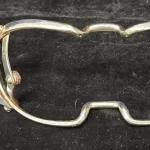
This is a Jennings-style mouth gag, a self-retaining oral retractor designed to hold the jaws open and maintain exposure of the oral cavity and oropharynx during procedures such as early tonsil surgery, oral surgery, and other ENT/dental work. The defining features of this pattern are present: an oval facial frame that stabilizes the instrument externally, an internal bite/jaw blade (with serrated grip surface), and a ratcheting lever mechanism with a textured thumb plate that allows controlled opening and then locks into position.
In practical use, the frame braces against the face while the internal blade and linkage apply steady opening force. This is not a gentle tool — it is a functional restraint device used to create an unobstructed field when hands and assistants were limited and when anesthesia and airway management were far less refined than today.
The instrument appears complete and functional based on the visible components: external frame, internal blade, hinged linkage, and ratchet/locking lever.
Condition
Nickel plating shows age-appropriate wear with scattered dulling and surface oxidation/patina, especially around joints and contact points. Joints, pivots, and fasteners appear intact with no visible cracks or missing linkages in the photos provided. Serrated bite surface remains well-defined. Overall condition is good antique condition with cosmetic wear consistent with use and age.
Gallery
Historical context
The Jennings-style mouth gag belongs to the era when mechanical exposure and restraint instruments were central to surgery. Before modern suction, lighting, endotracheal anesthesia norms, and disposable airway adjuncts, a tool like this helped a surgeon maintain access to the throat and oral cavity with fewer hands. These gags are closely associated with the practical realities of early ENT and oral surgery: limited airway control, heavy reliance on assistants, and instruments designed for speed and control rather than comfort.
Curious Facts, Ephemera, and Trivia
The serrated bite surface isn’t decorative — it’s there to resist slipping once the patient clenches or shifts.
The ratchet mechanism turns “hold this open” into “hold this open until we’re done,” which is exactly why these are memorable museum pieces.
Instruments like this often appear in old surgical catalogs under “mouth gags,” “oral specula,” or “tonsil instruments,” sometimes with multiple blade options depending on intended use.
Excerpt
“Self-retaining” is the polite catalog term for “this thing will keep working whether the patient likes it or not.”
Why it is in the Cabinet
Because it is a brutally honest example of practical historical medicine: clever mechanics solving a real surgical problem in an era that didn’t have today’s airway safety margin or patient comfort expectations. It’s also visually striking — the silhouette reads instantly as “surgical,” even to non-medical visitors, and it tells a story without needing a label.
← Back to the Cabinet Directory
Support Dr. Bebout’s Cabinet of Medical Curiosities
If you enjoy the history, the oddities, and the effort, help keep this cabinet open. Every little bit helps preserve and share the strange wonders of medicine’s past.
Buy Me a Ko-fi ☕
Buy Me a Coffee ☕
Tip via PayPal 💵 [...]Read more...

02/26/2026Title
Native Oil Liniment
Author
Manufacturer unknown (likely small regional or proprietary distributor)
Image
Description
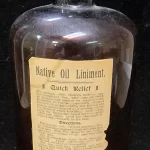
This large amber apothecary bottle is labeled “Native Oil Liniment – Quick Relief.” The paper label advertises treatment for an astonishing list of ailments including cramps, colic, cholera morbus, sunstroke, influenza, lumbago, neuralgia, sprains, bruises, earache, blood poisoning, rheumatism, sour stomach, and heart-burn.
The directions instruct both internal and external use. Dosing ranges from drops to spoonfuls, adjusted for age and severity of symptoms. The label specifically mentions use in infants during teething, children with croup, and adults suffering from rheumatic complaints. It is marketed as both a soothing syrup and a topical application, depending on need.
The bottle itself is a substantial, early 20th-century style amber glass container with a ground lip and wide flared collar, typical of druggist-supplied refill stock bottles. The typography and language suggest a late 19th to early 20th century origin, likely pre-Pure Food and Drug Act or shortly thereafter.
Price printed on the label: 50 cents per bottle.
Condition
Amber glass bottle in very good structural condition. No visible cracks or chips to the body. Ground lip intact. Original paper label present but shows edge loss, especially on the lower right corner, with age toning and moderate wear consistent with period storage. Adhesive ghosting visible on one side where an additional label may have once been present.
Gallery
Historical context
Liniments were among the most common household remedies of the late 19th and early 20th centuries. Many were oil-based preparations combining turpentine, camphor, capsicum, wintergreen, or other counter-irritants. Some also contained opiates or alcohol for internal “soothing” use.
The phrase “Native Oil” was often used to imply purity, local sourcing, or proprietary herbal extraction. The extraordinary range of claimed indications places this firmly in the transitional era between traditional herbal practice and early regulated pharmaceuticals.
The inclusion of internal dosing for cholera morbus and blood poisoning is particularly characteristic of the patent medicine period.
Curious Facts, Ephemera, and Trivia
“Cholera morbus” in 19th-century terminology usually referred to severe gastroenteritis, not true cholera.• Internal use of liniments was not uncommon prior to stricter federal labeling requirements.• The “Quick Relief” branding reflects the growing consumer demand for immediate symptomatic improvement rather than long-term cure.• The broad claim list mirrors the classic “cure-all” marketing style seen in Radam’s Microbe Killer and other era products.
Excerpt
“Quick Relief — For cramps, colic, cholera morbus, sun-stroke, influenza, lumbago… especially adapted for colds… good for rheumatism… sour or sick stomach, heart-burn.”
Why it is in the Cabinet
This bottle represents the unapologetic confidence of early proprietary medicine — one formula, dozens of ailments, and complete faith in its universal utility. It stands as a reminder of a time when regulation was minimal, marketing was bold, and a household liniment might just as easily be swallowed as rubbed on the skin.
← Back to the Cabinet Directory
Support Dr. Bebout’s Cabinet of Medical Curiosities
If you enjoy the history, the oddities, and the effort, help keep this cabinet open. Every little bit helps preserve and share the strange wonders of medicine’s past.
Buy Me a Ko-fi ☕
Buy Me a Coffee ☕
Tip via PayPal 💵 [...]Read more...
02/25/2026Title
Open-Drop Sponge Chloroform/Ether Anesthesia Mask
(Schimmelbusch-Era Variant)
Author
Not Applicable – Surgical Instrument
Image
Description
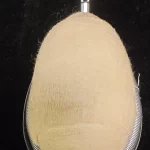
This open-drop sponge anesthesia mask represents early twentieth-century inhalational anesthetic practice. The device consists of a rigid oval metal frame forming the facial rim, a fine wire mesh backing, and a domed sponge core enclosed in gauze. A small metal loop at the superior aspect serves as a handle for positioning and rapid removal.
The mask was designed for administration of volatile anesthetics such as ether or chloroform using the open-drop method. The sponge absorbed the anesthetic agent, which was then vaporized and inhaled by the patient as the mask was held over the nose and mouth. The rigid rim allowed the mask to rest against the face while maintaining airflow around the edges.
Unlike the original 1889 Schimmelbusch bar-frame mask, which used layered gauze over open crossbars, this example incorporates a fixed sponge dome supported by mesh. It represents a commercial adaptation of the same open-drop anesthetic principle.
Estimated date: circa 1900–1925.
Condition
Original metal frame intact and structurally stable. Mesh backing complete. Sponge dome present and well-preserved for age with expected discoloration and fiber wear. No major corrosion or deformation noted. Display-stable condition.
Gallery
Historical context
Open-drop ether and chloroform anesthesia dominated surgical practice in the late nineteenth and early twentieth centuries. Anesthetic was applied in drops onto gauze or sponge material while the mask was held over the patient’s face.
Dr. Curt Schimmelbusch (1860–1895) designed a widely adopted wire-frame mask in 1889 to improve anesthetic control and prevent pooling of caustic chloroform against the skin. Numerous commercial variations followed, including sponge-supported models like this example.
These masks required constant manual control by the anesthetist and provided minimal airway protection by modern standards. Despite their simplicity, they were used in countless surgical procedures worldwide before the development of closed-circuit systems and endotracheal anesthesia.
Curious Facts, Ephemera, and Trivia
Ether and chloroform were often applied by junior surgical staff or assistants.
Chloroform could cause chemical skin irritation and even burns if allowed to pool.
Open-drop anesthesia required careful observation of respiratory rate and pupil size to judge depth of anesthesia.
Variations in mask construction reflected evolving attempts to balance airflow, vapor concentration, and patient comfort.
Excerpt
“To anesthetize a patient, gauze was stretched over the metal bars and the anesthetic applied in drops so that the patient breathed in evaporated anesthetic as well as air.”
(Period descriptions of open-drop technique)
Why it is in the Cabinet
Why It Is in the Cabinet
This mask represents a transitional moment in surgical history when anesthesia was effective but still mechanically simple and manually controlled. It illustrates the practical ingenuity of early anesthetic equipment and the realities of pre-modern operating rooms. It is a tangible reminder of how far airway management and anesthetic safety have progressed.
← Back to the Cabinet Directory
Support Dr. Bebout’s Cabinet of Medical Curiosities
If you enjoy the history, the oddities, and the effort, help keep this cabinet open. Every little bit helps preserve and share the strange wonders of medicine’s past.
Buy Me a Ko-fi ☕
Buy Me a Coffee ☕
Tip via PayPal 💵 [...]Read more...
02/25/2026Title
The Philosophy of Sleep
Author
Robert Macnish
Image
Description
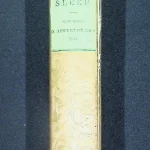
The Philosophy of Sleep is a 19th-century medical-philosophical work exploring sleep as a physiologic state and a cultural mystery. This copy is the First American Edition, published in New York by D. Appleton & Co., 200 Broadway, dated 1834 (M DCCC XXXIV). Macnish frames sleep as an “intermediate state between wakefulness and death,” then expands into topics that blend physiology, observation, and period beliefs—dreaming, nightmare/daymare, somnambulism, trance states, and “spectral illusions.”
The table of contents reads like a Victorian sleep clinic that wandered into the supernatural aisle: chapters cover Dreaming, Prophetic Power of Dreams, Nightmare, Daymare, Sleep-Walking, Sleep-Talking, Sleeplessness, Drowsiness, Protracted Sleep, Sleep From Cold, Trance, Voluntary Waking Dreams, Spectral Illusions, Reverie, Abstraction, Sleep of Plants, and General Management of Sleep. It’s an early American printing that captures how physicians and educated readers tried to explain the mind and body before modern neuroscience and sleep medicine existed.
Condition
Original cloth binding with printed paper spine label intact. Noticeable wear at spine ends and along the joint edges, with visible splitting/tearing at the lower spine area; interior pages appear clean with light age toning/foxing consistent with age. Text block appears serviceable based on photos.
Gallery
Historical context
Published in 1834, this sits in the pre-EEG, pre-psychoanalysis era when “sleep science” was still a mix of physiology, moral philosophy, and reported phenomena. Works like this are valuable snapshots of how medicine tried to systematize dreaming, parasomnias, and altered states long before modern diagnostic categories existed.
Curious Facts, Ephemera, and Trivia
The book treats daymare as its own topic—basically a daylight cousin to nightmare (a very on-brand 1800s concept).
The scope is unusually broad for the period: it places sleep disorders (insomnia, drowsiness, prolonged sleep) alongside trance, spectral experiences, and plant “sleep.”
“Sleep from cold” includes hibernation and cold-induced torpor across species—an early popular-medical approach to comparative physiology.
Excerpt
“Sleep is the intermediate state between wakefulness and death…”
Why it is in the Cabinet
Because this is the kind of book that shows medicine mid-transition: one foot in observation and physiology, the other in the era’s fascination with dreams, trance, and the strange edges of consciousness. It’s a perfect Cabinet piece for anyone who likes their medical history with a little fog on the moor.
Digital Edition and Download
A fully digitized copy of this 1834 First American Edition of The Philosophy of Sleep has been preserved and is available for download directly from this site.
The original text has been scanned and archived to ensure long-term preservation and accessibility for researchers, collectors, and students of early medical thought. Providing direct access to historical works like this aligns with the mission of the Cabinet: preserving and sharing medical history rather than allowing it to fade into obscurity.
You may download the digital edition below:
Download The Philosophy of Sleep (1834) – PDF
← Back to the Cabinet Directory
Support Dr. Bebout’s Cabinet of Medical Curiosities
If you enjoy the history, the oddities, and the effort, help keep this cabinet open. Every little bit helps preserve and share the strange wonders of medicine’s past.
Buy Me a Ko-fi ☕
Buy Me a Coffee ☕
Tip via PayPal 💵 [...]Read more...