
Title
Burdock Blood Bitters Trade Card — “Can’t Eat, Can’t Sleep” Variant
Author
Foster, Milburn & Co., Buffalo, N.Y.
Image
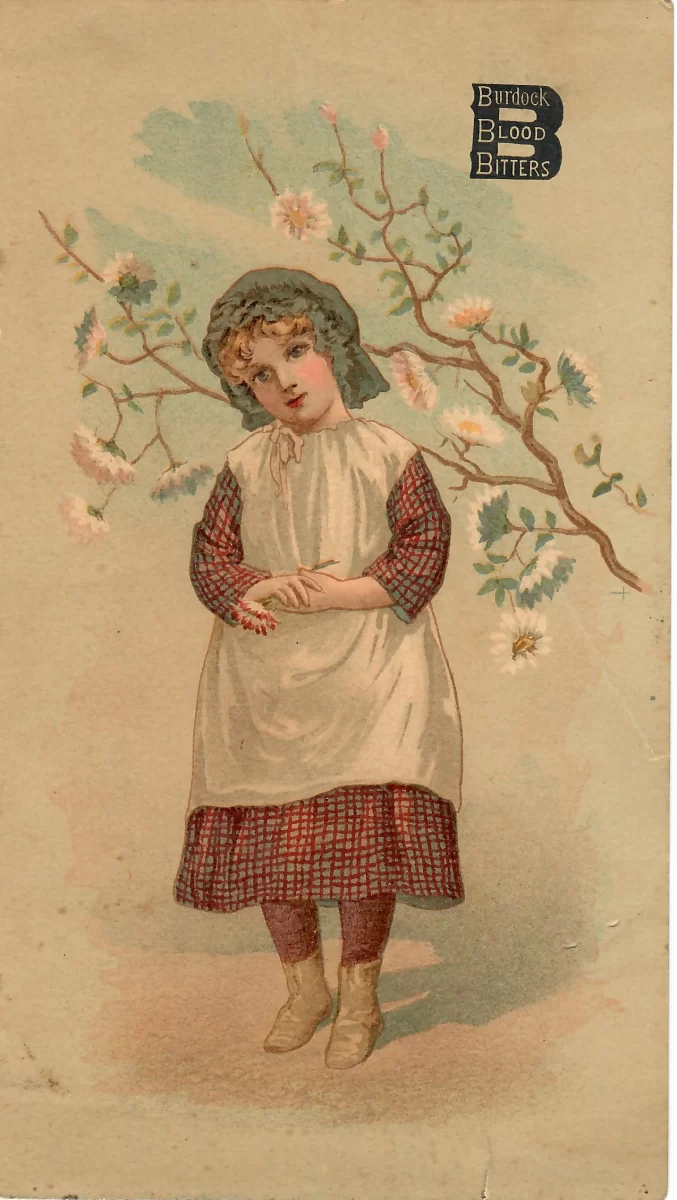
Description
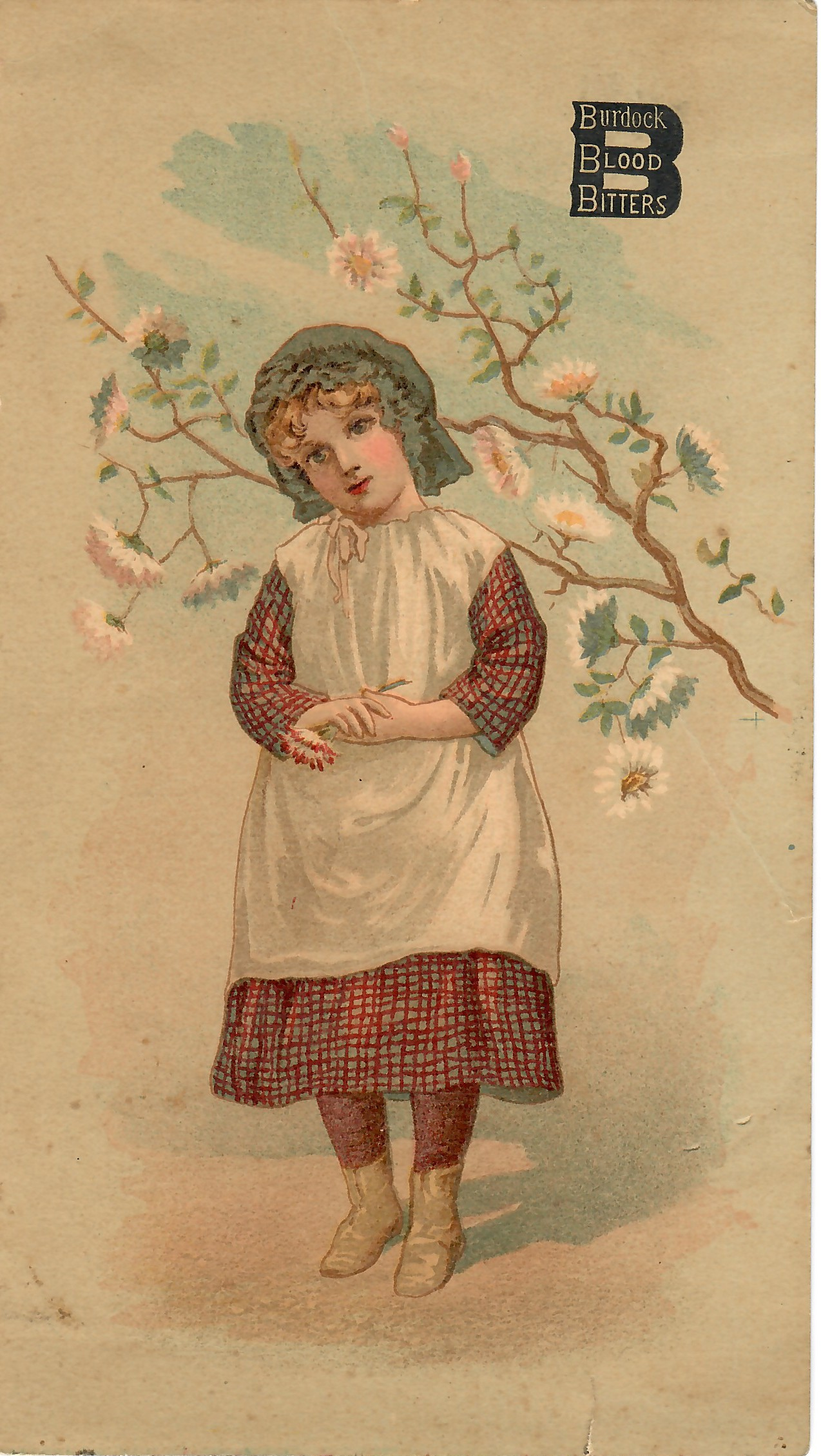
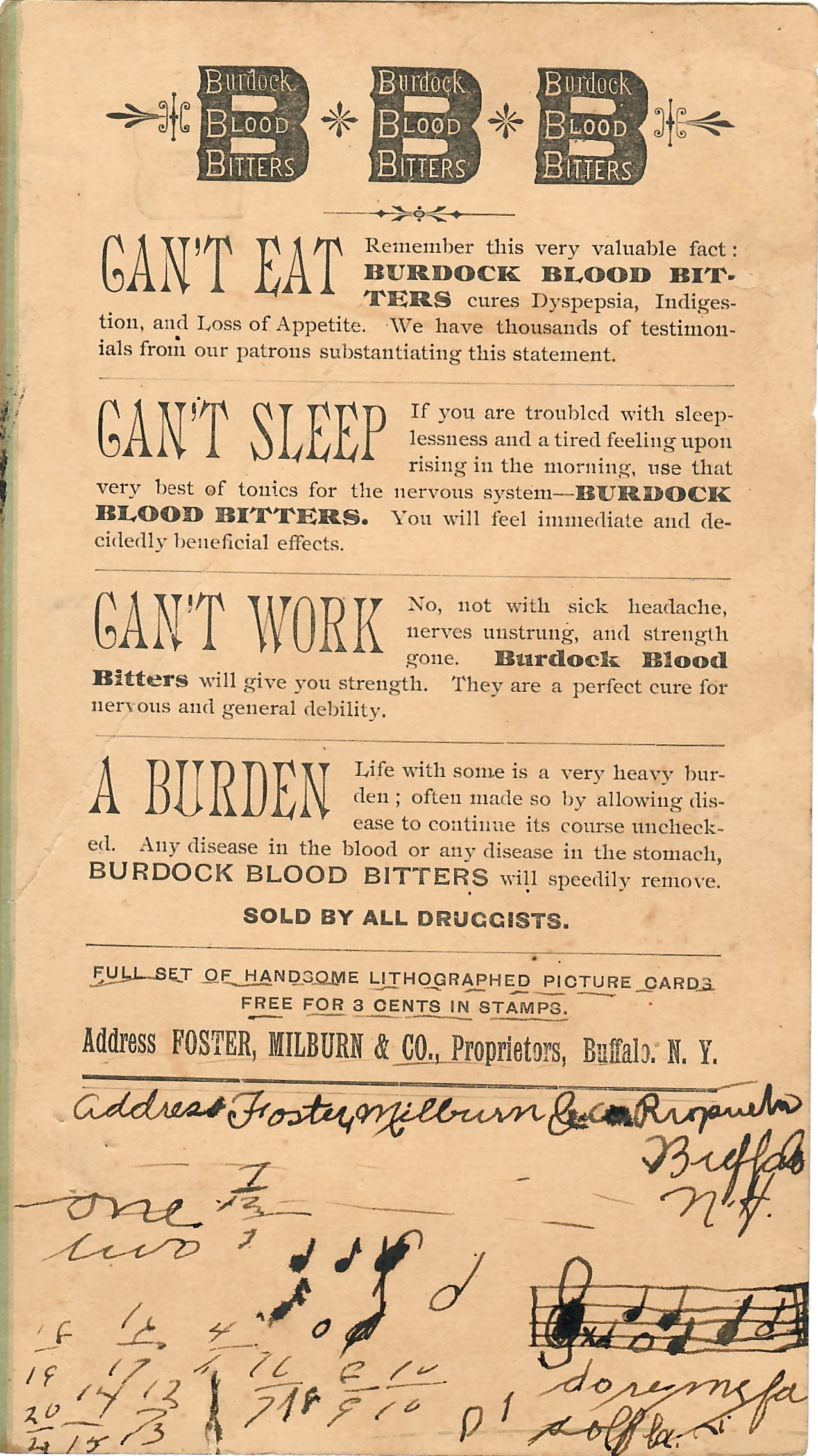
This late-19th-century Burdock Blood Bitters trade card features a full-color chromolithograph of a young child standing before flowering branches, paired with a reverse side filled with promotional text claiming relief for dyspepsia, indigestion, sleeplessness, nervous exhaustion, general debility, and “any disease in the blood or stomach.” Like most proprietary medicine advertising of the era, the card blends sentimental imagery with bold therapeutic claims, reinforcing Burdock Blood Bitters as a universal purifier capable of restoring appetite, strength, and vitality. Cards like this were widely distributed by traveling agents and druggists, designed to be eye-catching enough to keep the product in daily household view. The combination of gentle imagery and aggressive medical promises reflects a hallmark advertising strategy of 19th-century bitters manufacturers appealing simultaneously to domesticity and fear of chronic illness.
Condition
The card shows moderate wear with surface toning, corner rounding, and scattered stains. The advertisement side contains handwritten notes and musical scribbles made by an early owner, along with ink markings along the margins. The chromolithograph image remains vibrant, though light edge wear and small creases are visible. Overall, it retains strong aesthetic clarity and legibility despite expected age-related flaws.
Gallery
Historical context
Burdock Blood Bitters was among the most heavily promoted “blood purifiers” of the late 1800s, produced by Foster, Milburn & Co. in Buffalo, New York. Bitters manufacturers capitalized on widespread belief in impure or “bad” blood as the root of countless ailments, marketing their products as cures for everything from indigestion to chronic fatigue. Trade cards were a primary advertising medium of the time: inexpensive, visually appealing, and easily distributed through general stores and druggists. Burdock Blood Bitters used these cards to reinforce its identity as a household tonic in an era before federal regulation, when bold medical claims were common and largely unchecked.
Curious Facts, Ephemera, and Trivia
The company offered full sets of lithographed cards for “three cents in stamps,” encouraging customers to collect and exchange the images much like modern trading cards. Burdock Blood Bitters also ran national advertising campaigns featuring dramatic testimonials and elaborate botanical imagery meant to symbolize purity, cleansing, and vigor. Surviving cards frequently show handwritten notes, as families often reused them as scrap paper, reminders, or children’s drawing pads—reflected in the ink markings on this example.
Excerpt
“Burdock Blood Bitters cures dyspepsia, indigestion, and loss of appetite… Any disease in the blood or any disease in the stomach, Burdock Blood Bitters will speedily remove.”
Why it is in the Cabinet
This trade card is an ideal example of late-19th-century patent medicine marketing, showcasing both the visual charm and the sweeping, unfounded promises that defined the bitters industry. It pairs domestic, innocent imagery with aggressive medical claims, illustrating how everyday advertising shaped public perceptions of health and disease. As an artifact, it represents the intersection of medical culture, commerce, and American print ephemera.
Support Dr. Bebout’s Cabinet of Medical Curiosities
If you enjoy the history, the oddities, and the effort, help keep this cabinet open. Every little bit helps preserve and share the strange wonders of medicine's past.
Buy Me a Ko-fi ☕ Buy Me a Coffee ☕ Tip via PayPal 💵