
Title
Black Leaf 40 – Nicotine Sulfate Insecticide
Author
Manufactured by various drug and chemical companies; this bottle distributed by Mason-Waller Drug Co., Morganfield, Kentucky.
Image
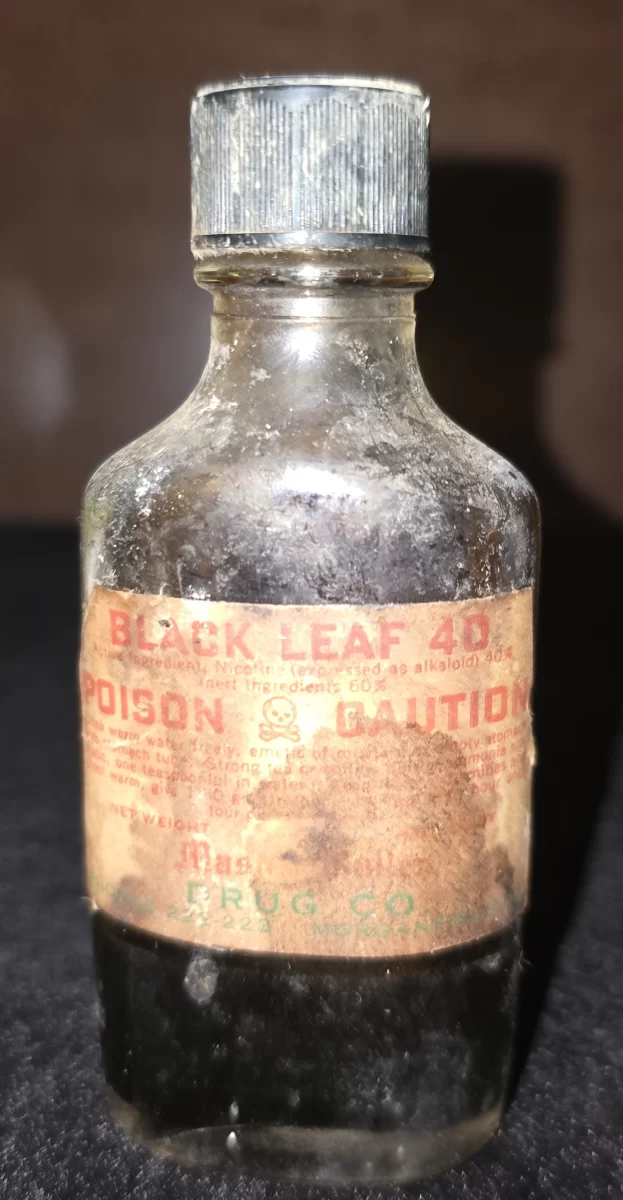
Description
This small amber bottle once contained “Black Leaf 40,” a nicotine sulfate solution marketed as a powerful agricultural insecticide. Its active ingredient, 40% nicotine (listed as “alkaloid”), was extracted from tobacco. Introduced in the early 20th century, Black Leaf 40 was widely used to control aphids, thrips, and other soft-bodied insects on crops and gardens. Though effective, it was acutely toxic to humans and animals, and labels bore prominent “POISON – CAUTION” warnings with a skull-and-crossbones emblem.
Condition
The bottle is intact with its original Bakelite screw cap and retains partial contents. The paper label is present though worn and stained, with some legible text: “BLACK LEAF 40 – POISON – CAUTION.” Glass remains solid with embossed measurements (℥ii) visible. Some exterior residue and age patina present.
Gallery

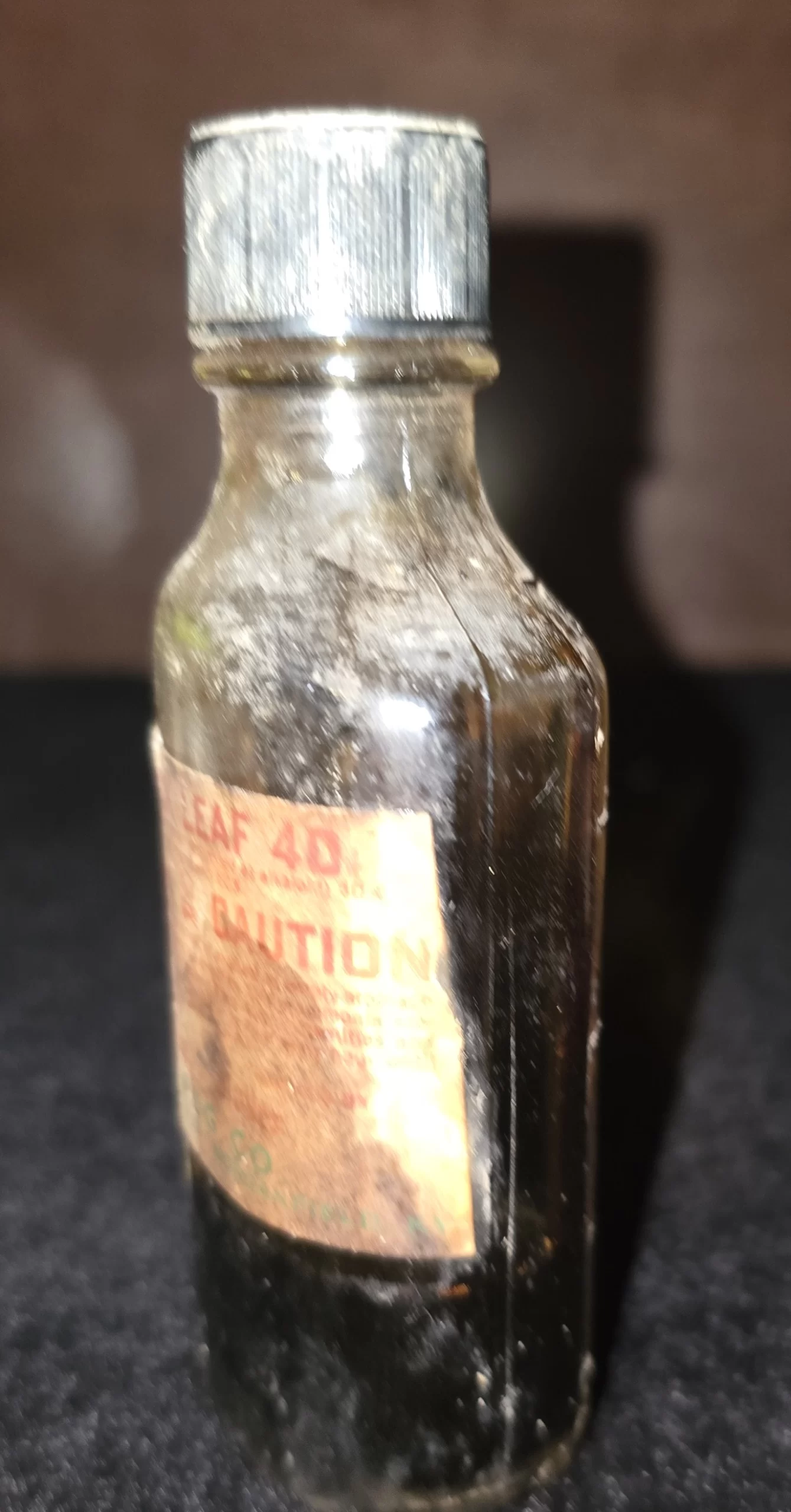
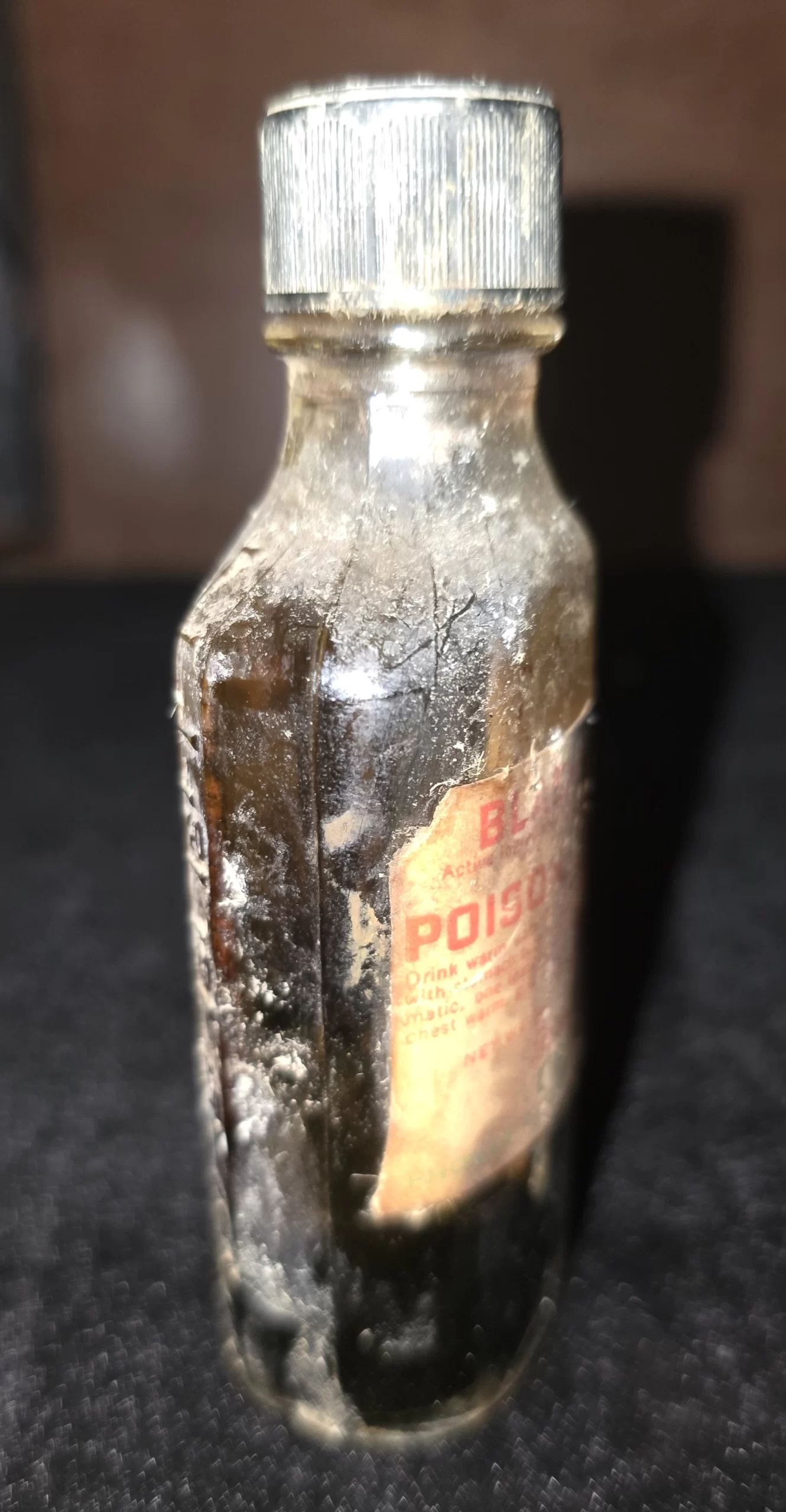
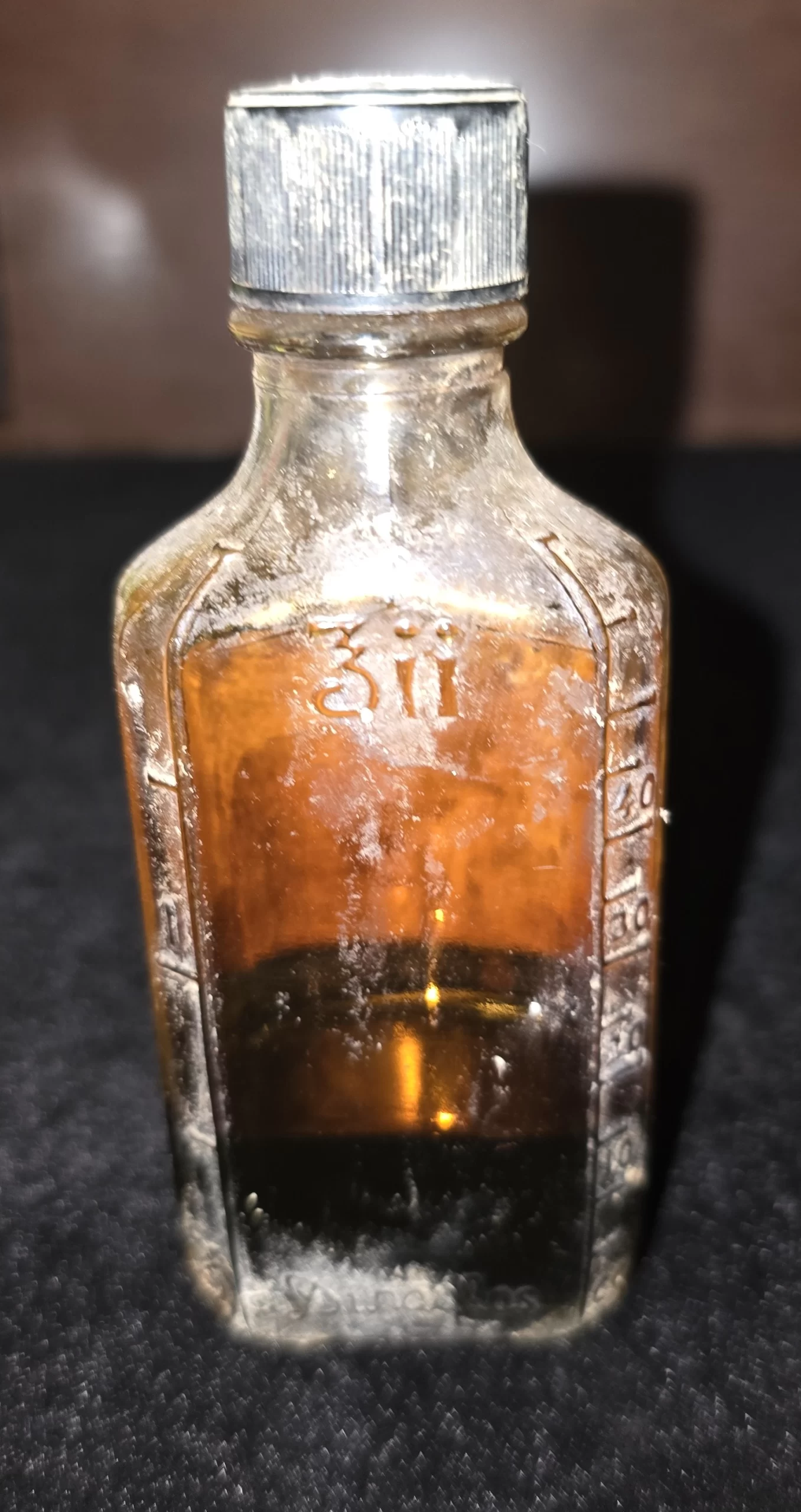
Historical context
Black Leaf 40 was once common in American households and farms, sold through druggists and general stores. It illustrates a time when highly toxic compounds were freely sold and used with minimal safety equipment. By the 1950s–1960s, safer synthetic pesticides began replacing nicotine sulfate, and by the 1990s it was no longer marketed in the U.S.
Curious Facts, Ephemera, and Trivia
The product name came from the “black leaf” of tobacco plants.
Directions for emergency poisoning treatment were printed directly on the label, reflecting the known danger.
Despite its risks, it was promoted as a “natural” solution compared to arsenic-based insecticides.
Nicotine’s rapid neurotoxic effects on insects were the same pathways that made it lethal to humans in overdose.
Excerpt
Active ingredient: Nicotine (expressed as alkaloid) 40%. Inert ingredients: 60%. POISON – CAUTION. Drink warm water freely, give emetic of mustard or salt…
Why it is in the Cabinet
This bottle represents the intersection of medicine, agriculture, and poison control in American history. Though not a “medicine” in the usual sense, its distribution through drug companies shows how blurred the line was between pharmacy and pesticide in the early 20th century. It also serves as a chilling reminder of how casually dangerous substances were once handled in everyday life.
Safety Note: Since this bottle still contains liquid, it should be treated as hazardous. Keep sealed, avoid opening, and store securely away from heat, pets, or children.
Support Dr. Bebout’s Cabinet of Medical Curiosities
If you enjoy the history, the oddities, and the effort, help keep this cabinet open. Every little bit helps preserve and share the strange wonders of medicine's past.
Buy Me a Ko-fi ☕ Buy Me a Coffee ☕ Tip via PayPal 💵