
Title
Bisodol Antacid Tablets Tin
Author
Whitall Laboratories, Inc.
Image
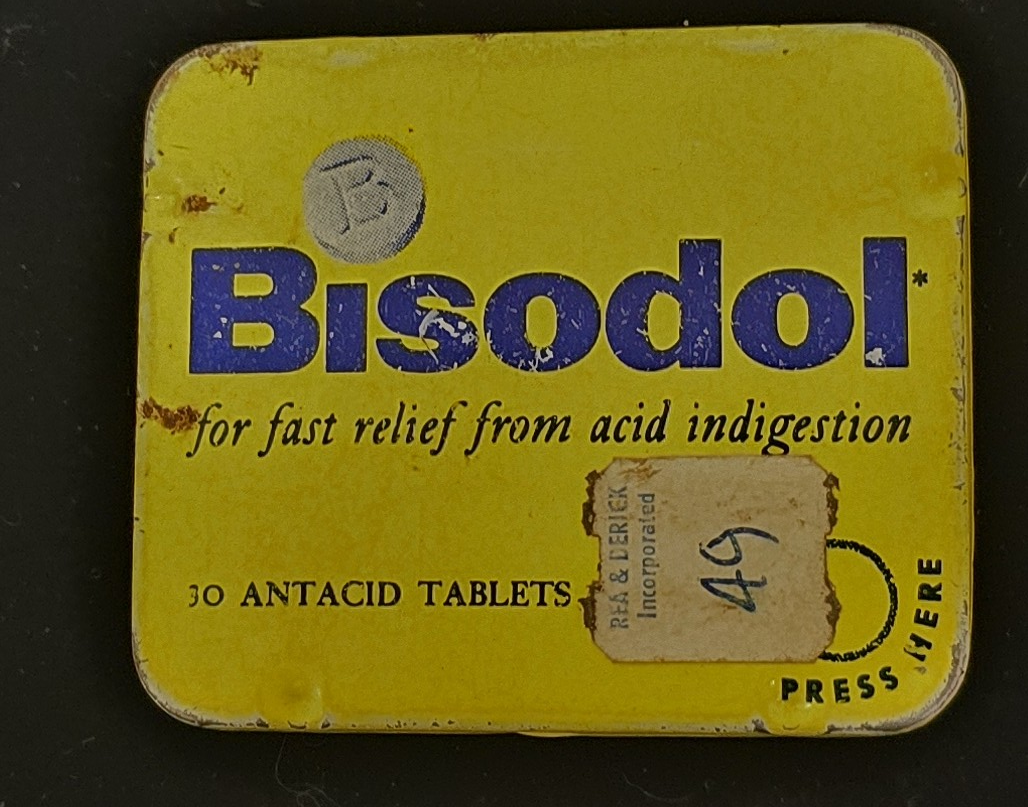
Description
This bright yellow Bisodol tin once held 30 antacid tablets formulated for the rapid relief of acid indigestion, sour stomach, heartburn, and gas. Produced by Whitall Laboratories, Inc., New York, the tin features bold blue typography and a prominent “Press Here” opener, typical of mid-20th-century pocketable pharmaceutical packaging. A small retailer’s price sticker from Rea & Derick Incorporated remains affixed to the front, adding a layer of commercial provenance.
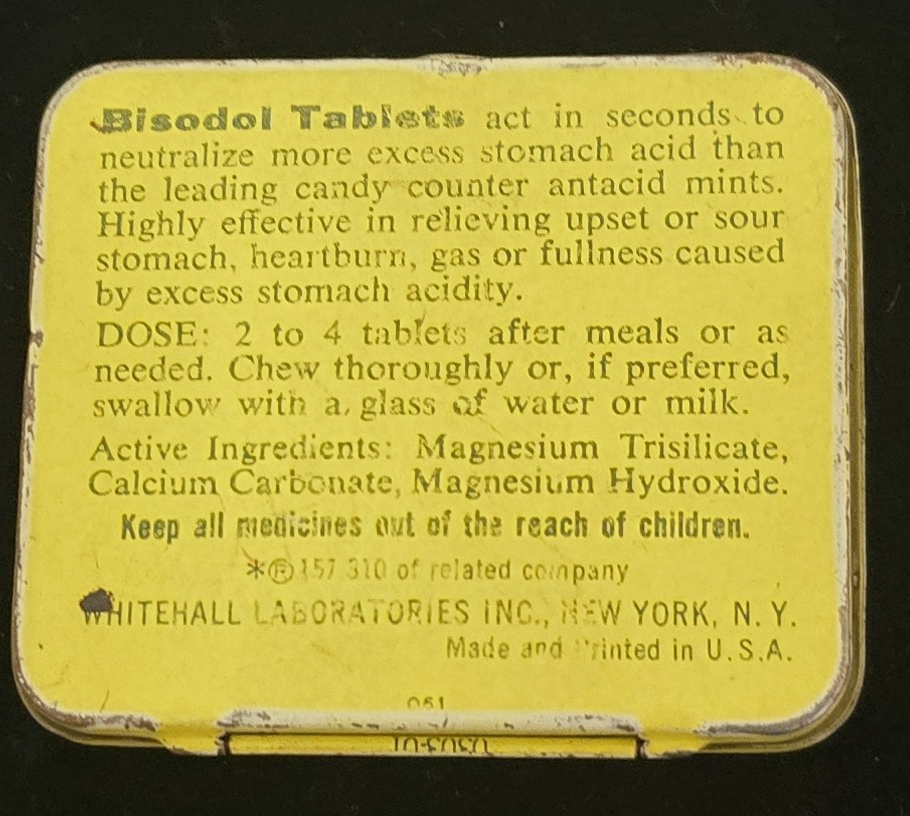
The reverse label preserves the full list of active ingredients—calcium carbonate, magnesium hydroxide, and magnesium trisilicate—a classic combination long used to neutralize stomach acid before modern proton pump inhibitors revolutionized gastrointestinal pharmacotherapy. Dosage instructions recommend chewing 2–4 tablets, particularly after meals, and note the product’s value for excess stomach acid or upset stomach caused by “rich foods,” which is a very 1950s way of saying: You overdid it at dinner again.
Condition
Tin shows moderate wear with scratches, paint loss, and edge rubbing. Hinged lid fully functional; text remains legible on both sides.
Gallery
Historical context
Bisodol was part of a competitive OTC antacid market dominated by chalk-based remedies before the advent of H2 blockers (1970s) and PPIs (1980s) transformed gastrointestinal care. These tins were designed to fit easily into a coat pocket or purse, providing relief on the go for a society increasingly reliant on fast food, cigarettes, coffee, and stress—an era where stomach acid was practically a national pastime.
Whitall Laboratories, originally tied to glass and pharmaceutical supply manufacturers, marketed Bisodol widely through pharmacies and general stores. Surviving tins offer a glimpse into mid-century consumer medicine: inexpensive, practical, and aggressively advertised as a simple fix for common discomforts.
Curious Facts, Ephemera, and Trivia
Bisodol ads routinely emphasized “fast” or “immediate” action, even before standardized onset-time measurements existed.
The hinged metal tin format was phased out by the late 20th century in favor of blister packs—cheaper, lighter, and less likely to rust in someone’s glove box.
Many early antacid brands leaned heavily on magnesium trisilicate, which has largely disappeared from modern OTC formulations.
Excerpt
“Highly effective in relieving upset or sour stomach, heartburn, gas or fullness caused by excess stomach acidity.” — from the original tin.
Why it is in the Cabinet
This tin beautifully represents the everyday pharmacology of the mid-20th century—simple formulations, clever portable packaging, and remedies that your grandparents probably carried in their pockets. As an intact example with retailer provenance, it fits squarely into the Cabinet’s mission of preserving the material culture of practical American medicine.
Support Dr. Bebout’s Cabinet of Medical Curiosities
If you enjoy the history, the oddities, and the effort, help keep this cabinet open. Every little bit helps preserve and share the strange wonders of medicine's past.
Buy Me a Ko-fi ☕ Buy Me a Coffee ☕ Tip via PayPal 💵