
Title
B.F.I. Antiseptic First-Aid Dressing and Surgical Powder
Author
Manufactured by Sharp & Dohme, Division of Merck & Co., Philadelphia, Pennsylvania, U.S.A.
Image
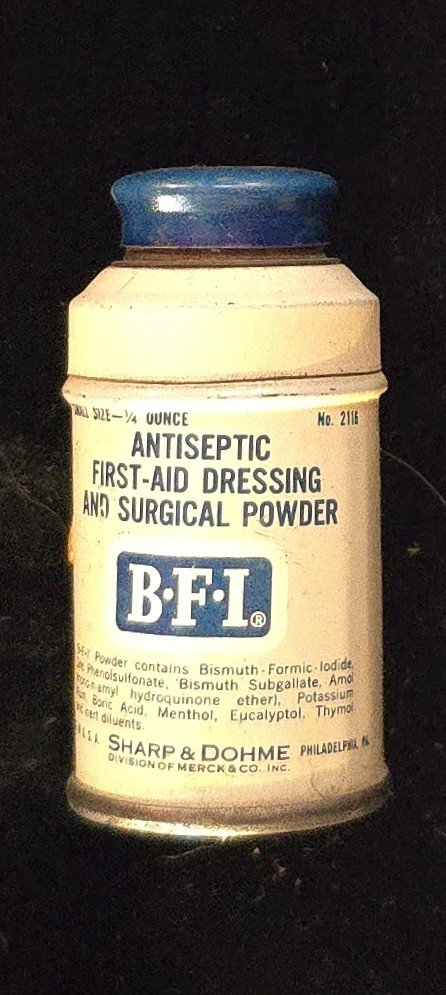
Description
This small metal tin of B.F.I. Antiseptic First-Aid Dressing and Surgical Powder was produced by Sharp & Dohme, a division of Merck & Co., Philadelphia, Pennsylvania. The label identifies the contents as a fine dusting powder containing bismuth formic iodide, bismuth subgallate, amyl hydroquinone ether, potassium boric acid, menthol, eucalyptol, and thymol.
Marketed for minor skin troubles, burns, and irritations, B.F.I. Powder promised antiseptic, soothing, and astringent effects. It was sprinkled directly onto wounds or irritated areas to promote healing and reduce infection. Bismuth salts were common antiseptic agents in early 20th-century medicine, prized for their protective and drying qualities before the widespread use of antibiotics.
The minimalist typography and blue-white enamel design reflect the mid-century aesthetic of Sharp & Dohme packaging, suggesting production from the 1940s–1950s, shortly after the company’s merger with Merck & Co.
Condition
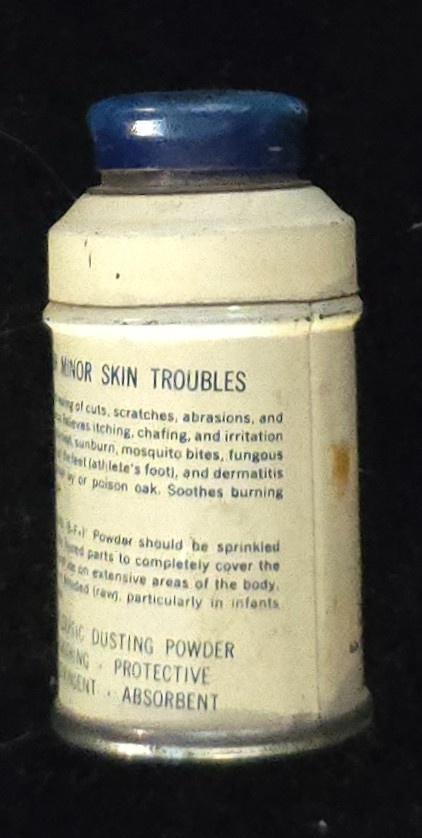
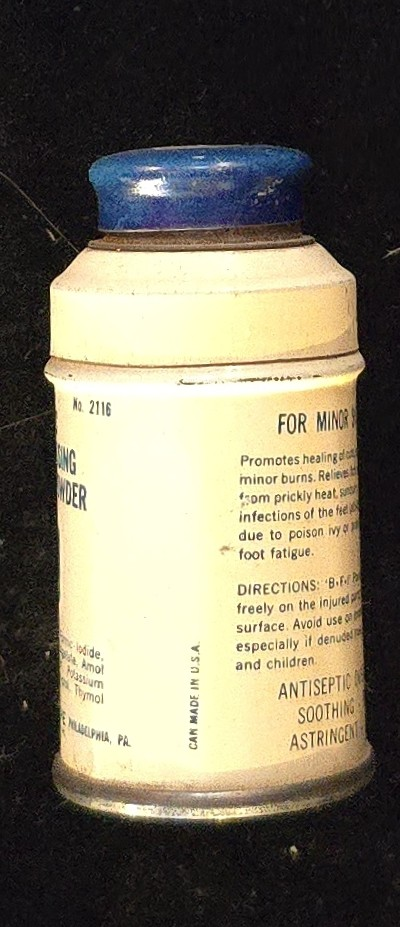
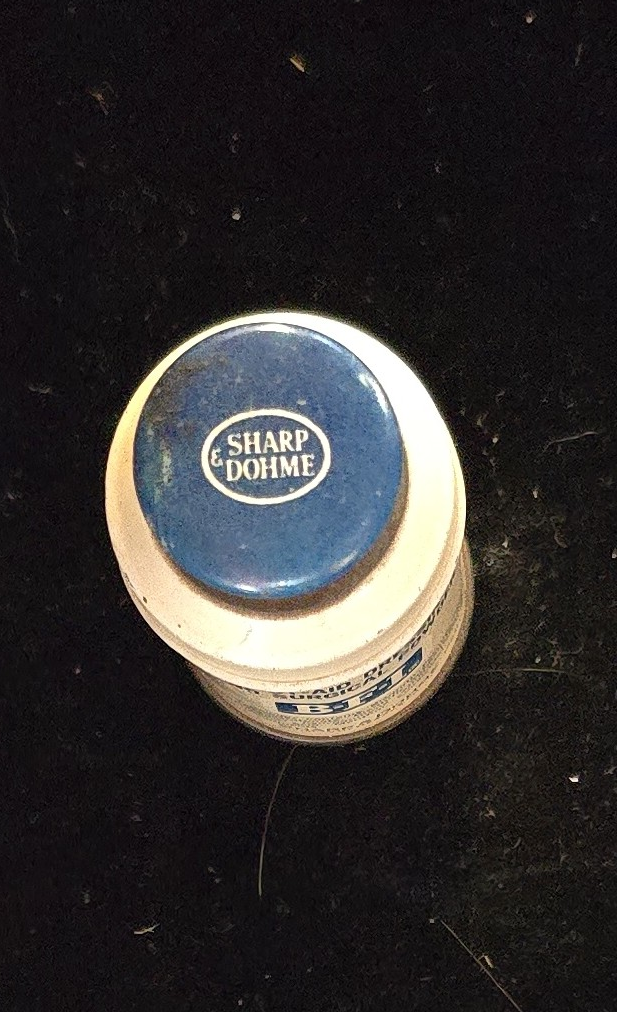
Very good with minor wear and light surface oxidation at edges; blue lid intact with visible Sharp & Dohme logo.
Gallery
Historical context
Bismuth-based antiseptics were widely employed from the late 19th through mid-20th century as topical treatments for wounds, ulcers, and infections. Products like B.F.I. Powder represented the transitional era of over-the-counter first-aid supplies before modern antibiotic creams became standard. Sharp & Dohme, originally founded in 1845, became one of the most respected American pharmaceutical firms, merging with Merck in 1953.
Curious Facts, Ephemera, and Trivia
The name B.F.I. derives from the key ingredient, bismuth formic iodide. The compound’s deep red crystalline form gave early versions of the powder a faint pink hue. Similar preparations were marketed to military medics during World War II for rapid field dressing of burns and abrasions.
Excerpt
“For minor skin troubles… promotes healing of cuts, scratches, abrasions, and minor burns. Relieves itching, chafing, and irritation.”
This statement reflects the confident tone of mid-century pharmaceutical advertising, emphasizing relief and protection in compact, carry-anywhere tins.
Why it is in the Cabinet
This tin was preserved as a representative example of mid-20th-century antiseptic and surgical first-aid products. Its combination of bismuth salts, menthol, and thymol bridges the gap between traditional antiseptics and modern wound powders, illustrating the evolving approach to infection control before antibiotic dominance.
Support Dr. Bebout’s Cabinet of Medical Curiosities
If you enjoy the history, the oddities, and the effort, help keep this cabinet open. Every little bit helps preserve and share the strange wonders of medicine's past.
Buy Me a Ko-fi ☕ Buy Me a Coffee ☕ Tip via PayPal 💵