
Title
Ayer’s Cherry Pectoral Trade Card & Advertisement
Author
J. C. Ayer & Co., Lowell, Massachusetts
Image
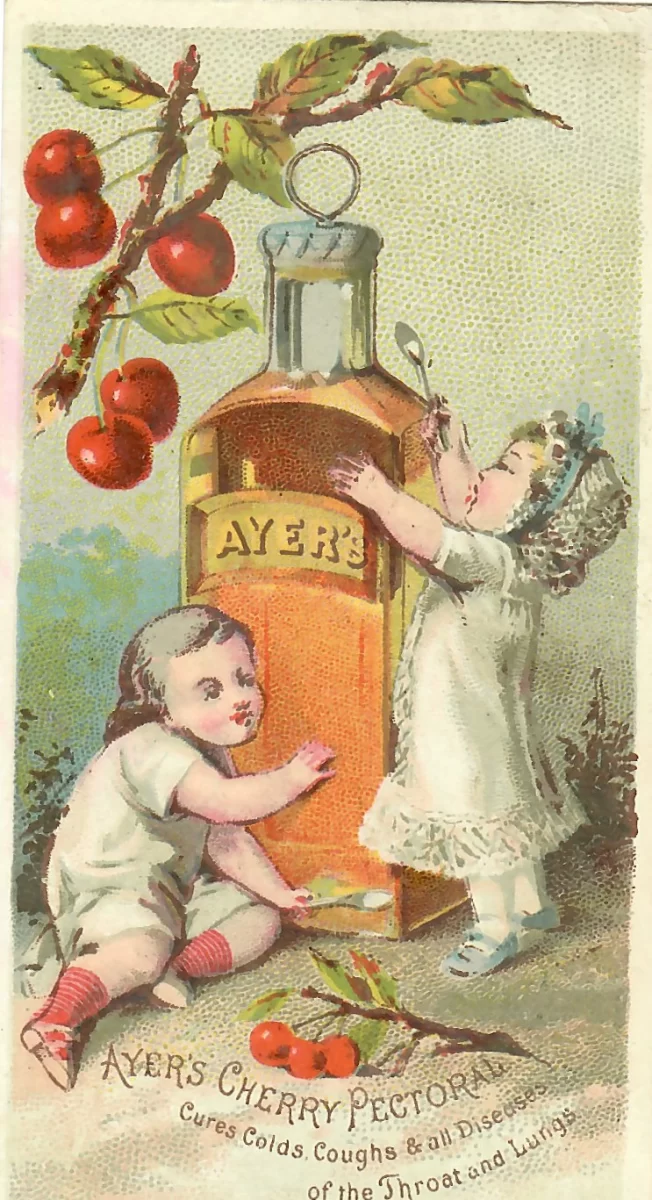
Description
Ayer’s Cherry Pectoral was one of the most widely advertised proprietary medicines of the 19th century. Marketed as a cure for colds, coughs, sore throat, influenza, bronchitis, asthma, and even consumption (tuberculosis), it promised near-universal relief of respiratory ailments. The ingredients often included morphine derivatives and alcohol, making the product both potent and habit-forming.
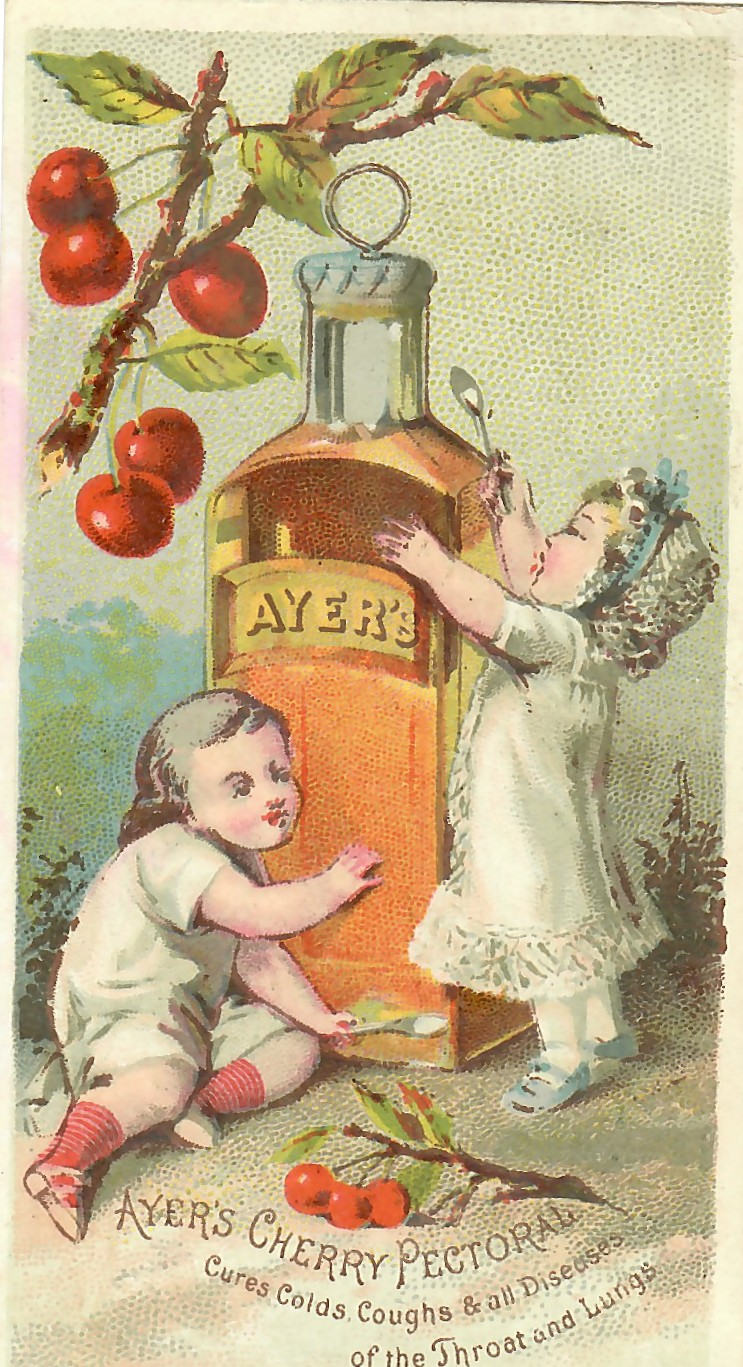
The trade card here depicts children enthusiastically “drinking” from an oversized bottle of Ayer’s Cherry Pectoral—a striking example of how Victorian advertising used innocence and health symbolism to normalize the use of patent medicines, even among children.
Condition
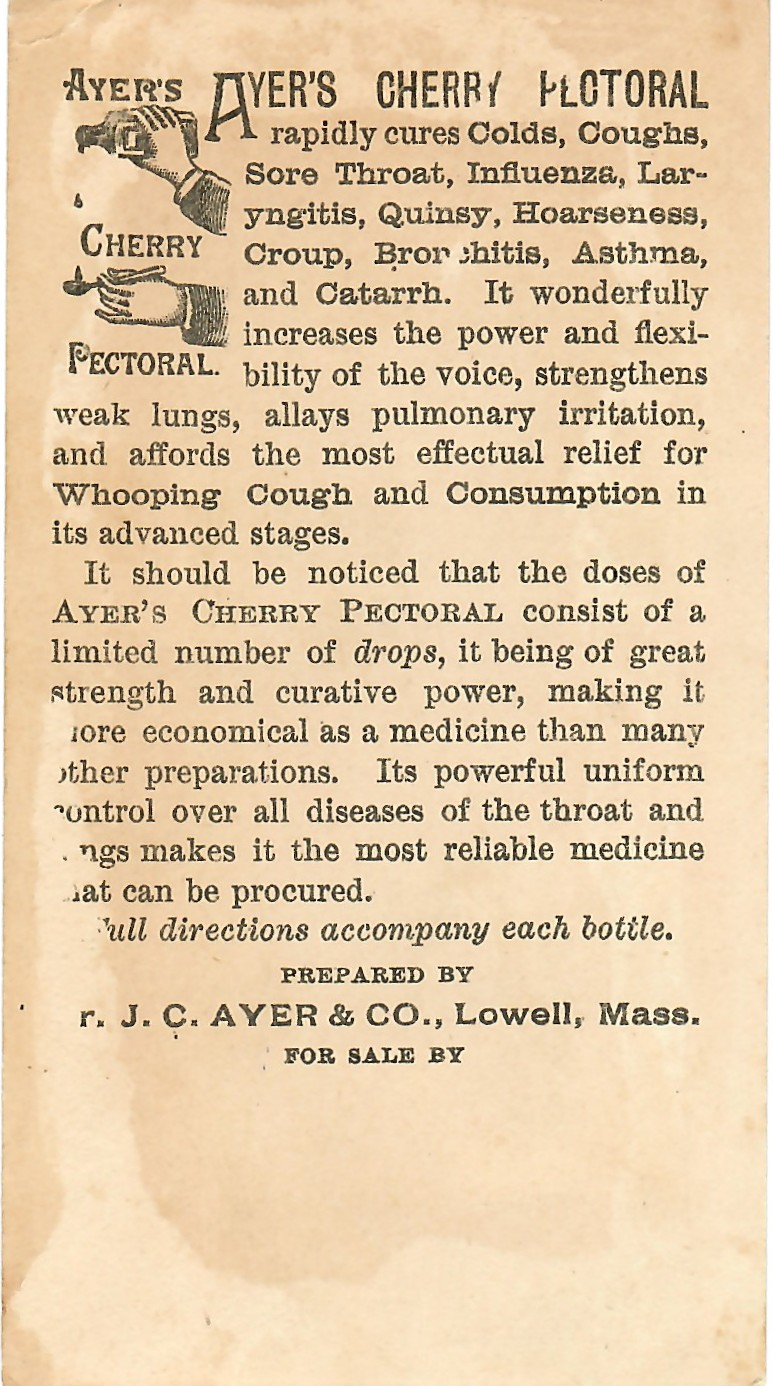
Both pieces show age-related toning. The chromolithograph retains bright colors with minimal edge wear. The printed slip is browned with some staining, but the text remains fully legible.
Gallery
Historical context
Founded in 1841 in Lowell, Massachusetts, J. C. Ayer & Co. grew into one of the largest patent medicine companies in America. The firm spent heavily on advertising and trade cards like this, distributing millions across the U.S. and Europe. Ayer’s Cherry Pectoral was sold well into the 20th century until stricter drug laws curtailed claims of universal cures.
Curious Facts, Ephemera, and Trivia
Ayer’s advertisements often used children, angels, and wholesome imagery, despite the product containing narcotics.
“Consumption” (tuberculosis) was a leading cause of death in the 19th century, making products like Cherry Pectoral immensely profitable.
Ayer’s also produced Sarsaparilla, Hair Vigor, and other tonics, becoming a household name by the 1880s.
See Also: The Ayer’s Cherry Pectoral embossed bottle
Excerpt
“Ayer’s Cherry Pectoral rapidly cures Colds, Coughs, Sore Throat, Influenza, Laryngitis, Quinsy, Hoarseness, Croup, Bronchitis, Asthma, and Catarrh… affording the most effectual relief for Whooping Cough and Consumption in its advanced stages.”
Why it is in the Cabinet
This ephemera perfectly illustrates the powerful role of advertising in the rise of 19th-century patent medicines. It combines striking visuals with bold medical claims, showing how commercial medicine blurred the line between health, hope, and profit.
Support Dr. Bebout’s Cabinet of Medical Curiosities
If you enjoy the history, the oddities, and the effort, help keep this cabinet open. Every little bit helps preserve and share the strange wonders of medicine's past.
Buy Me a Ko-fi ☕ Buy Me a Coffee ☕ Tip via PayPal 💵