
Title
Axene (Yellow Cinnamon)
Author
The Warren-Teed Products Co., Columbus 8, Ohio
Image
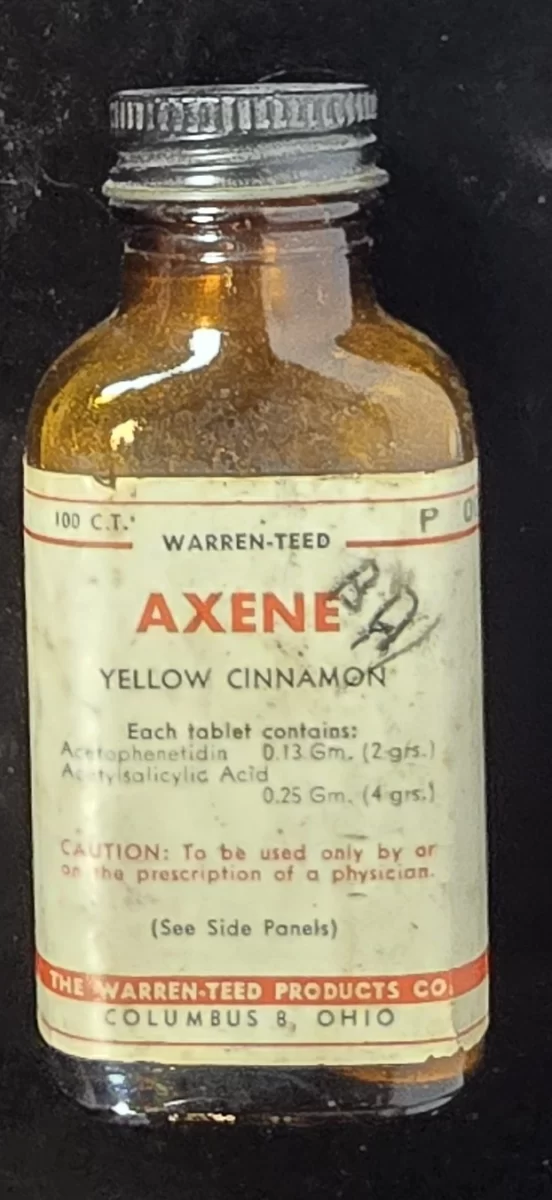
Description
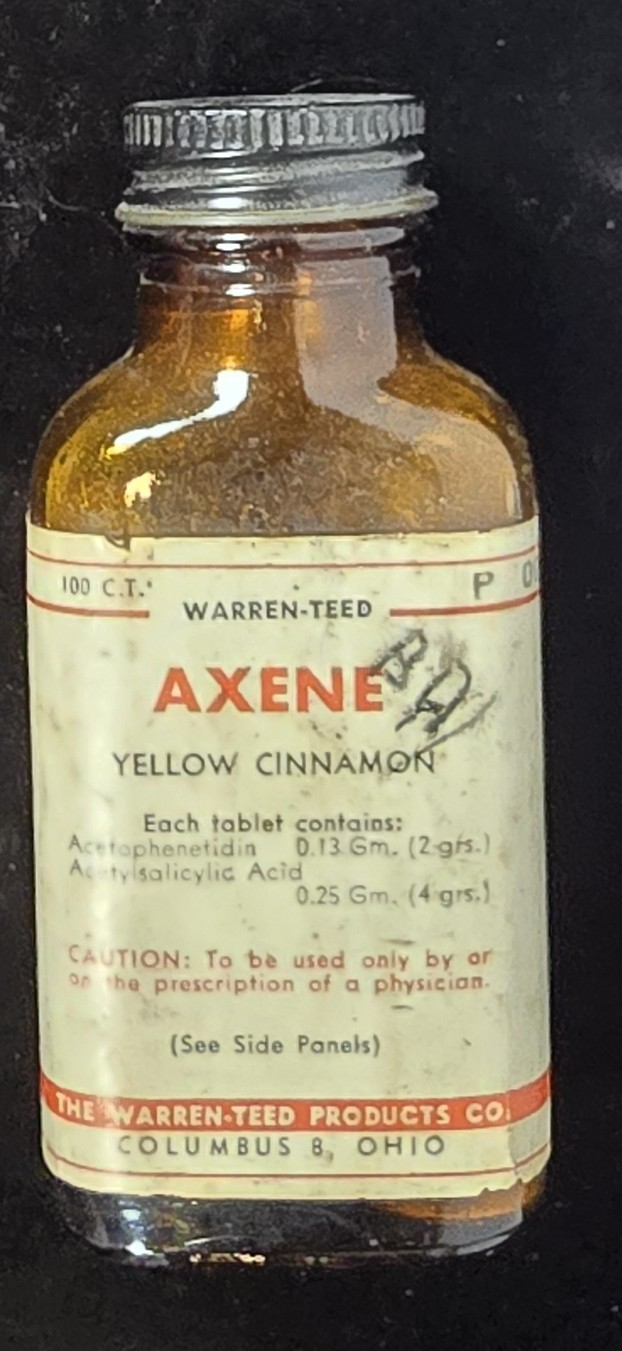
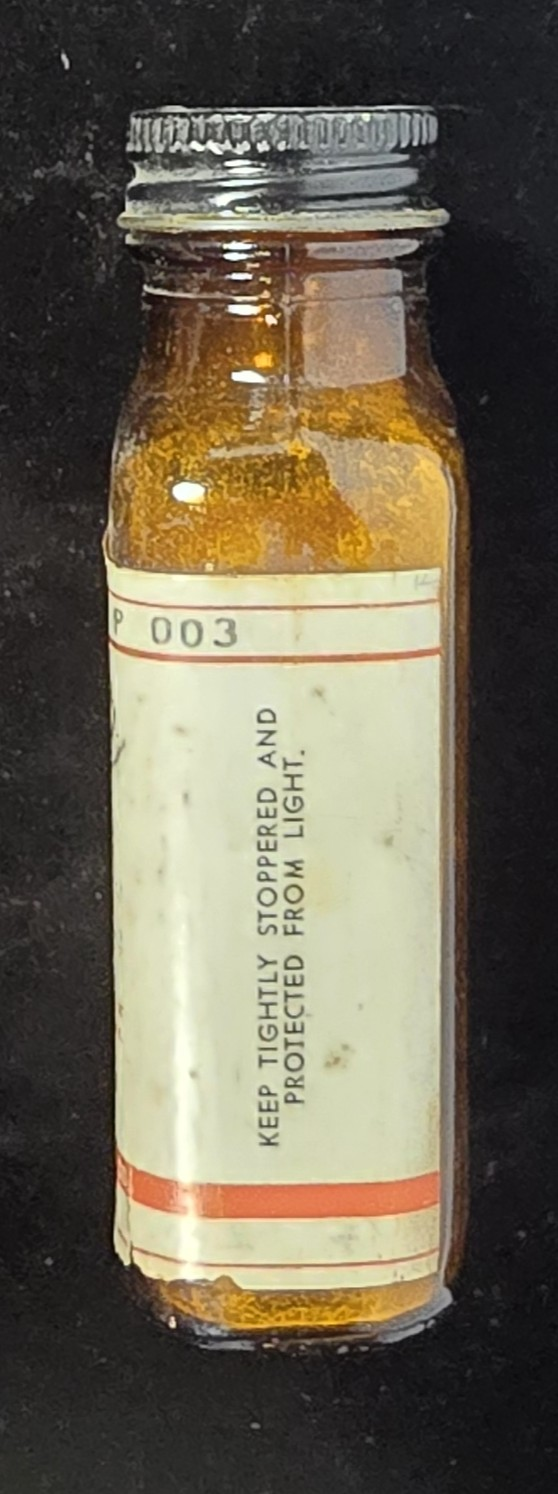
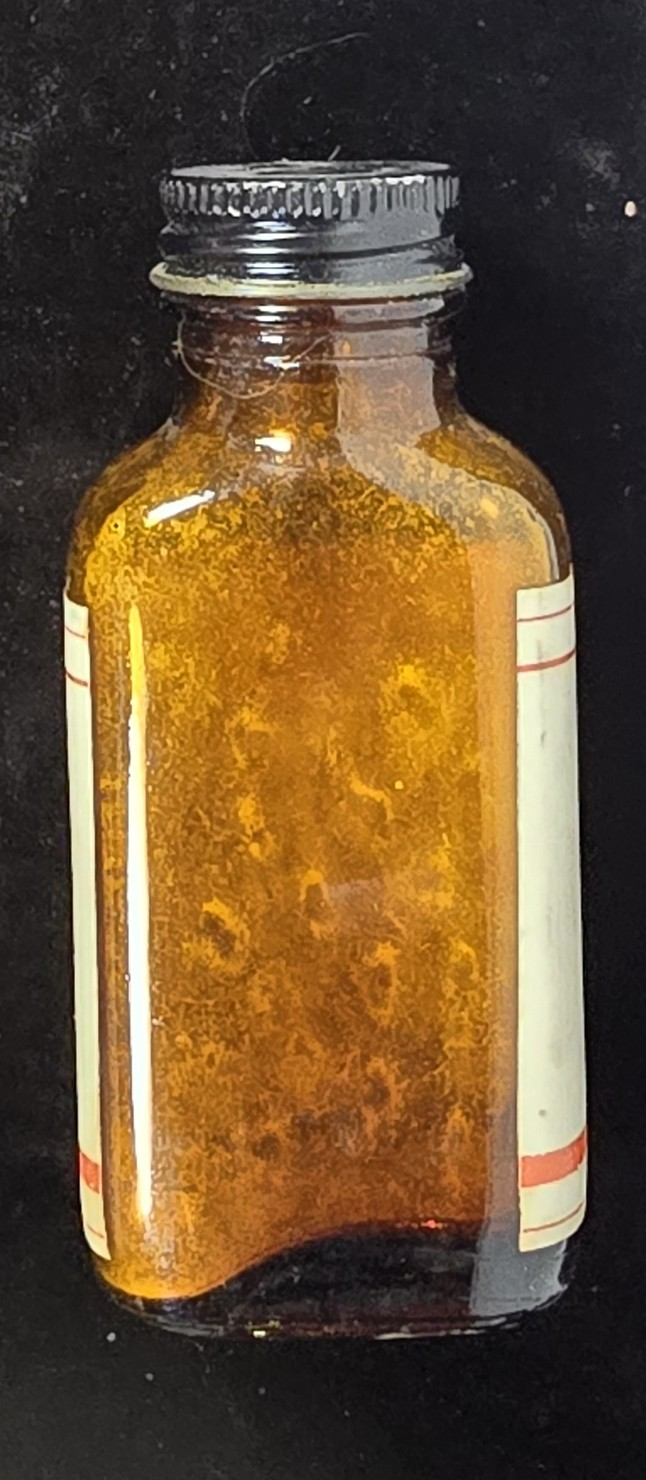
This amber glass prescription bottle labeled “Axene – Yellow Cinnamon” was produced by The Warren-Teed Products Company of Columbus, Ohio. Each tablet contained acetophenetidin 0.13 g (2 grains) and acetylsalicylic acid 0.25 g (4 grains), combining the analgesic properties of phenacetin and aspirin. The label carries a prescription warning — “To be used only by or on the prescription of a physician” — and advises protection from light, suggesting sensitivity of the active ingredients.
The name “Yellow Cinnamon” refers to one of several Axene formulations marketed by Warren-Teed during the mid-20th century. The bottle’s National Formulary–style labeling, numeric batch code (“P 003”), and metal screw cap are typical of the 1940s–1950s pharmaceutical packaging period.
Condition
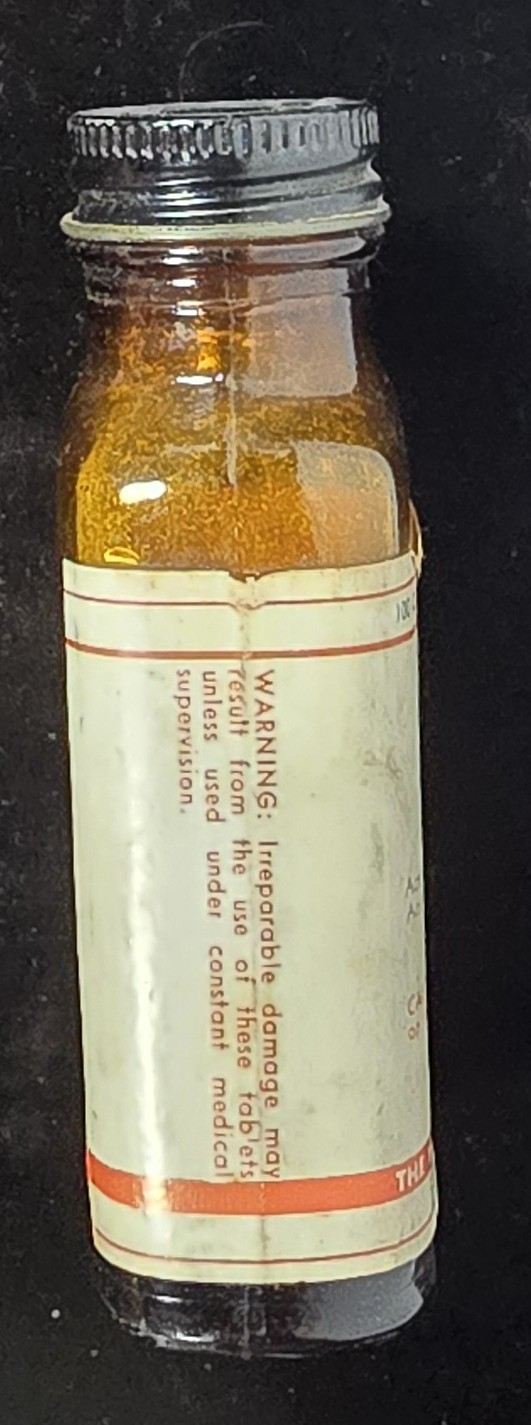
Good overall. The amber bottle remains clear with intact threaded metal cap and full labeling. Minor staining and label toning are present, along with light surface wear. Faint oxidation visible around the cap rim. No cracks or structural damage noted.
Gallery
Historical context
The Warren-Teed Products Company operated in Columbus, Ohio, and produced a variety of ethical pharmaceuticals and proprietary mixtures for physicians’ use. The Axene line was formulated for pain and fever relief, blending phenacetin (acetophenetidin) with aspirin to enhance analgesic and antipyretic effects.
Phenacetin was widely used from the late 19th century until its eventual withdrawal from the U.S. market in 1983 due to nephrotoxicity and carcinogenicity. Its inclusion in Axene reflects mid-20th-century pharmacology before the risks of chronic phenacetin use were fully recognized.
The “Yellow Cinnamon” descriptor likely indicated flavoring or dye to distinguish the preparation from other Axene variants. The manufacturer’s strict cautionary labeling reflects a post–Food, Drug, and Cosmetic Act (1938) regulatory environment emphasizing physician oversight.
Curious Facts, Ephemera, and Trivia
Phenacetin was first introduced in 1887 by Bayer as one of the earliest synthetic analgesics derived from aniline.
Many mid-century combination analgesics paired phenacetin with aspirin and caffeine, forming the basis for “APC” compounds (Aspirin-Phenacetin-Caffeine).
Warren-Teed’s “Axene” name likely derives from the Greek axein (to cure or heal).
Surviving labeled Axene bottles are uncommon, as most phenacetin-containing drugs were destroyed or discarded following FDA withdrawal orders in the 1980s.
Excerpt
“CAUTION: To be used only by or on the prescription of a physician.” — from front label
Why it is in the Cabinet
This bottle represents a transitional moment in 20th-century pharmacology, when powerful synthetic analgesics like phenacetin were embraced as modern scientific alternatives to older compounds. Its intact label, clear cautionary text, and distinctive “Yellow Cinnamon” variety make it a valuable reference to both pharmaceutical progress and regulatory evolution.
Support Dr. Bebout’s Cabinet of Medical Curiosities
If you enjoy the history, the oddities, and the effort, help keep this cabinet open. Every little bit helps preserve and share the strange wonders of medicine's past.
Buy Me a Ko-fi ☕ Buy Me a Coffee ☕ Tip via PayPal 💵