
Title
Auricol
Author
H. O. Hurley Co., Incorporated, Louisville, Kentucky
Image
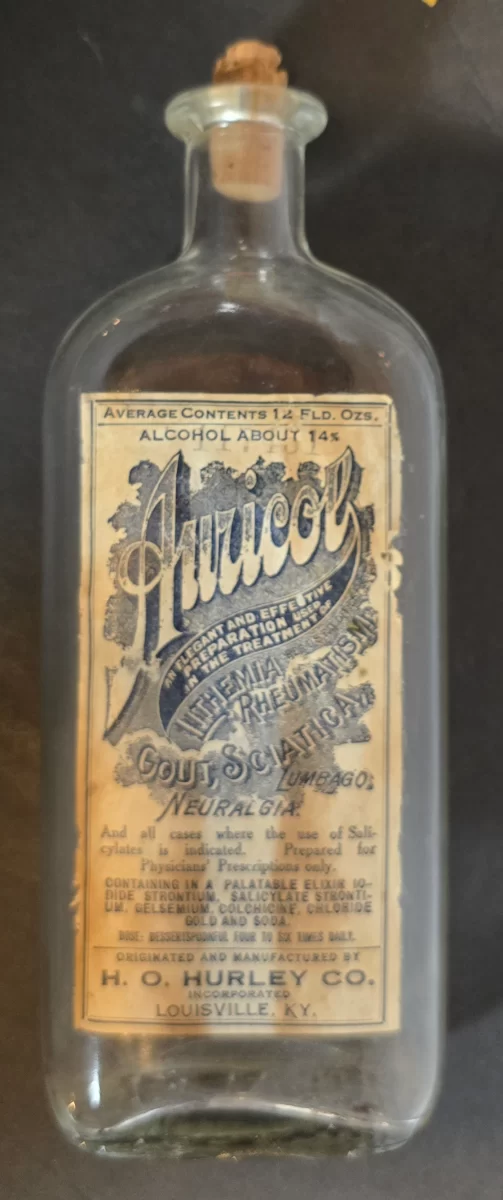
Description
Auricol was an “elegant and effective preparation” marketed for physicians’ prescriptions only and promoted for anemia, rheumatism, gout, sciatica, lumbago, and neuralgia. The label states it contains “about 14% alcohol,” which was common in early patent and prescription remedies. The pitch is basically: drink this medicated elixir four to six times a day and your joint pain, nerve pain, and gout will get better.
Chemically, Auricol claims to deliver a palatable elixir of iodide of strontium, salicylate of strontium, gelsemium, colchicine, chloride of gold, and soda. Every ingredient on that list was, at the time, viewed as an active medicinal substance:
Strontium salts and salicylates were used like aspirin/anti-inflammatories for gout and rheumatism.
Colchicine is still (carefully) used today for gout flares because it blocks the inflammatory response in joints.
Gelsemium is a toxic plant alkaloid historically sold as a sedative/nerve pain remedy; in higher doses it can cause dangerous respiratory depression.
“Chloride of gold” (various gold salts) was marketed in the late 1800s/early 1900s as a rheumatism and arthritis treatment, long before modern disease-modifying agents.
Put all of that into ~14% alcohol and you’ve basically got an early 20th century prescription-strength pain cocktail.
The label instructs: “Dose: dessertspoonful, four to six times daily,” which would easily deliver repeated alcohol and alkaloid exposure throughout the day. This makes Auricol a great snapshot of how pain, gout, and “rheumatism” were managed before FDA-era standardization and before safer dosing studies. Preparations like this blurred the line between pharmacy and tonic whiskey.
Condition
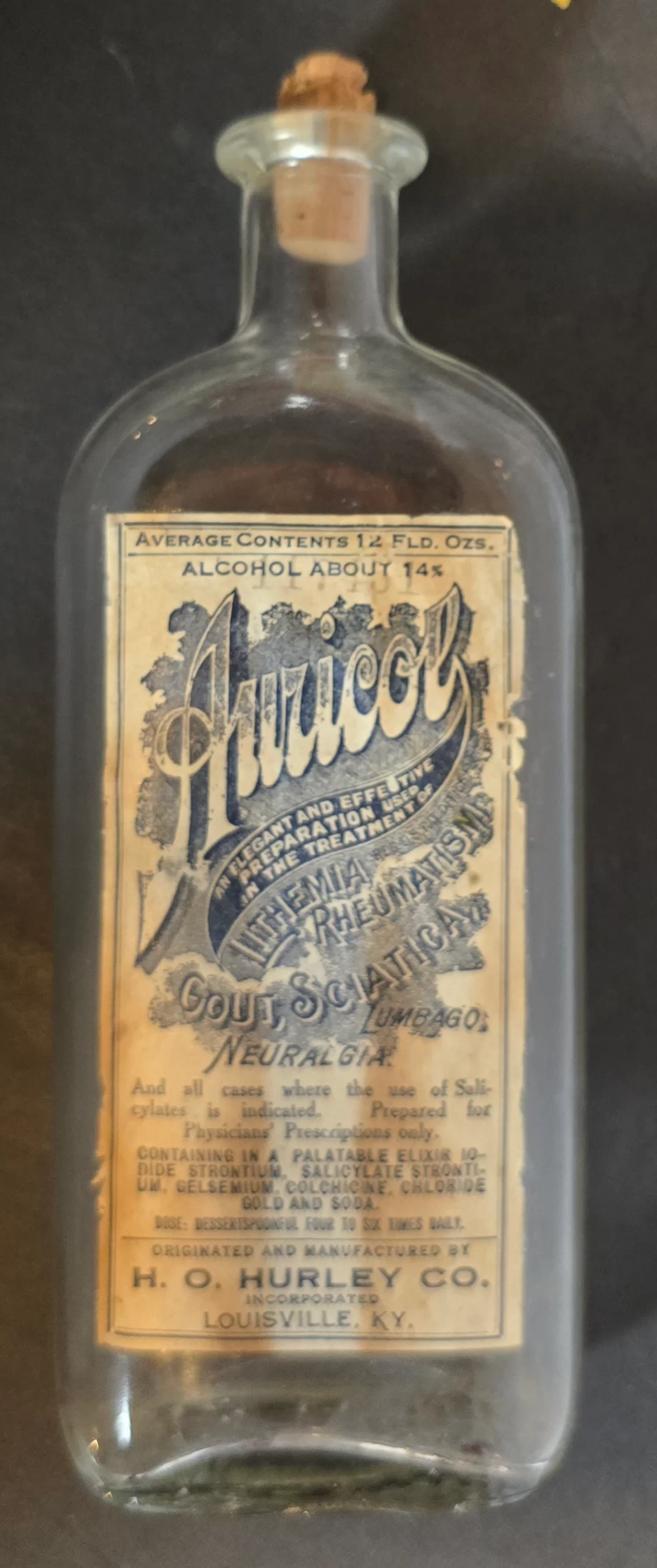
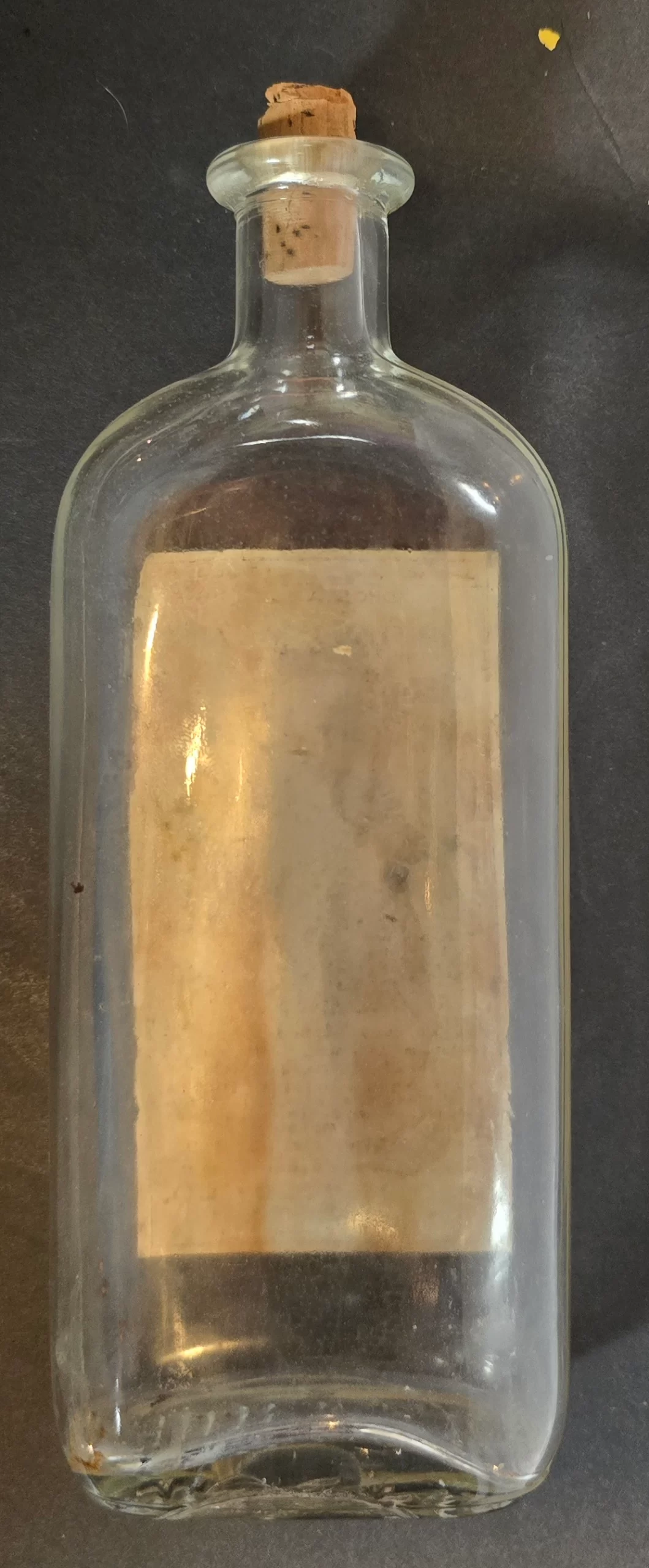
Clear glass bottle with original cork in place. Paper label present and still legible, with mild browning, corner wear, and darkening/ink rub especially in the center text block. Glass is clean and intact with no obvious cracks or major chips. Back label panel on this example is blank/washed (label either missing or fully browned). Overall very displayable early physician’s prescription bottle from Louisville, Kentucky.
Gallery
Historical context
At the turn of the 20th century and into the early 1900s, “rheumatism” was a catch-all label for anything from autoimmune arthritis to gout to sciatica. Treatments leaned heavily on salicylates (early aspirin relatives), colchicine (for gout), and alcohol as both solvent and pain reliever. Companies often advertised these mixtures directly to physicians, not the public, to get around accusations of being a “patent medicine.” “Physicians’ Prescriptions only” on this label is classic pharmaceutical marketing of the era.
Louisville, Kentucky was a busy drug manufacturing and distribution hub in that period, with firms compounding tonics that could be shipped throughout the Ohio and Mississippi river corridors. Bottles like this help document regional medical industry in Kentucky, not just the big East Coast houses.
Curious Facts, Ephemera, and Trivia
– The label specifically lists “Anemia” alongside gout and sciatica. Today, anemia and gout are not exactly treated with the same drug. That pairing tells you how broadly these remedies were sold: weak, pale, tired, hurting? Take Auricol.
– Gelsemium and colchicine both have very narrow safety margins. Too much and you don’t just get “relief,” you get toxic. This bottle is a perfect example of how casually dangerous some “routine” pain medicines were.
– “Chloride of gold” ended up in a lot of cure-alls for alcoholism, arthritis, and “nerve exhaustion.” Gold-based injections and elixirs were still being pushed well into the early/mid 1900s.
Excerpt
“An elegant and effective preparation used in the treatment of Anæmia, Rheumatism, Gout, Sciatica, Lumbago, Neuralgia … Containing in a palatable elixir Iodide Strontium, Salicylate Strontium, Gelsemium, Colchicine, Chloride Gold and Soda… Dose: Dessertspoonful, four to six times daily. Originated and manufactured by H. O. Hurley Co., Incorporated, Louisville, Ky.”
Why it is in the Cabinet
I collect early pain, nerve, and gout treatments because they show the crossover between real pharmacology and outright danger. Auricol hits every note I love: regional Kentucky pharmacy history, high alcohol content, colchicine and gelsemium in the same swallow, and bold therapeutic promises for everything from anemia to lumbago. This single bottle tells you exactly how people were treating daily pain 100+ years ago — and why so many of those “cures” quietly disappeared once regulators started asking what was actually in them.
Support Dr. Bebout’s Cabinet of Medical Curiosities
If you enjoy the history, the oddities, and the effort, help keep this cabinet open. Every little bit helps preserve and share the strange wonders of medicine's past.
Buy Me a Ko-fi ☕ Buy Me a Coffee ☕ Tip via PayPal 💵