
Title
Aromatic Spirit of Ammonia Ampoules
Author
Manufacturer: Mine Safety Appliances Co.
Location: Pittsburgh, Pennsylvania
Image

Description
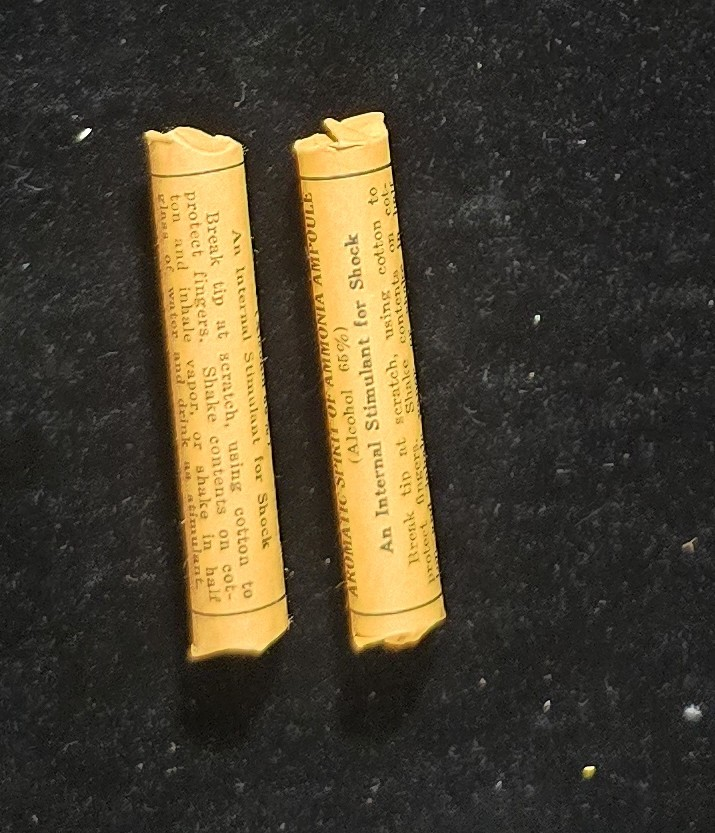
These sealed yellow-paper-wrapped aromatic spirit of ammonia ampoules were manufactured by Mine Safety Appliances Co., a company better known for gas masks, respirators, and industrial safety gear. Each ampoule contains 2 cc of a 66% alcohol-based ammonia solution, intended for emergency treatment of shock, collapse, or fainting.
The label outlines two methods of use:
Inhalant: Break the tip, soak cotton, and inhale the vapors.
Oral stimulant: Shake into half a glass of water and drink.
Often used in both medical and industrial first aid kits, these ampoules were marketed for rapid arousal and revival in settings like construction sites, coal mines, and battlefield medicine.
Condition
Both ampoules are intact and unopened, with full labels legible on both sides. Paper wrapping is slightly creased and discolored with age but fully intact. The glass within remains sealed. No leakage or crystallization noted.
Gallery
Historical context
Aromatic ammonia solutions have long been a go-to “revival agent” in both professional and civilian settings. Popular from the 19th century through mid-20th century, these preparations—often referred to as smelling salts—were believed to stimulate the sympathetic nervous system by irritating the mucous membranes and triggering a rapid inhalation reflex.
While most modern use is restricted to athletic sideline revival or historical re-enactment, these ampoules were once standard equipment in crash carts and trauma kits. The packaging, dosage style, and dual-use design speak to an era when field expediency outweighed nuance, and revival was prioritized over comfort or long-term safety.
Curious Facts, Ephemera, and Trivia
The 66% alcohol base not only preserved the solution but added its own stimulant effect when ingested.
Despite being labeled for internal use, modern toxicology would caution strongly against ingesting this formulation.
Mine Safety Appliances Co. (MSA), founded in 1914, originally supplied equipment for mining disasters and poison gas protection in WWI.
“Break at notch” ampoules like these were often stored with cotton swabs or gauze strips in emergency field pouches.
Why it is in the Cabinet
These ampoules capture a practical but dramatic moment in medical history—where revival could be as simple (and as aggressive) as cracking open a vaporous glass capsule. Their dual-use design and preserved state offer a rare glimpse into mid-century emergency care, especially in hazardous or remote work environments like mines, factories, or military posts.
Support Dr. Bebout’s Cabinet of Medical Curiosities
If you enjoy the history, the oddities, and the effort, help keep this cabinet open. Every little bit helps preserve and share the strange wonders of medicine's past.
Buy Me a Ko-fi ☕ Buy Me a Coffee ☕ Tip via PayPal 💵