
Title
Apothecary Jar – Pulv. Stramonii
Author
N/A – Pharmaceutical container
Image
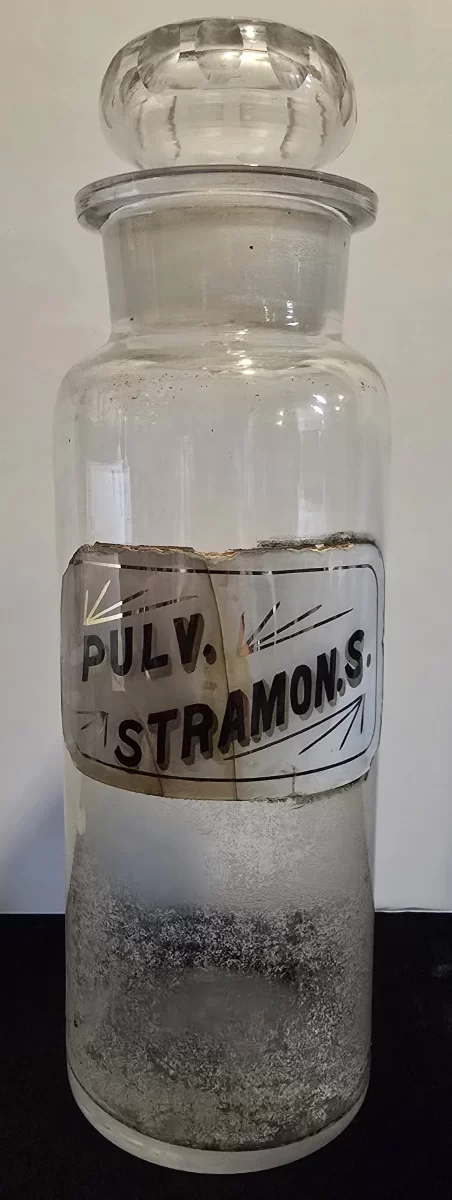
Description
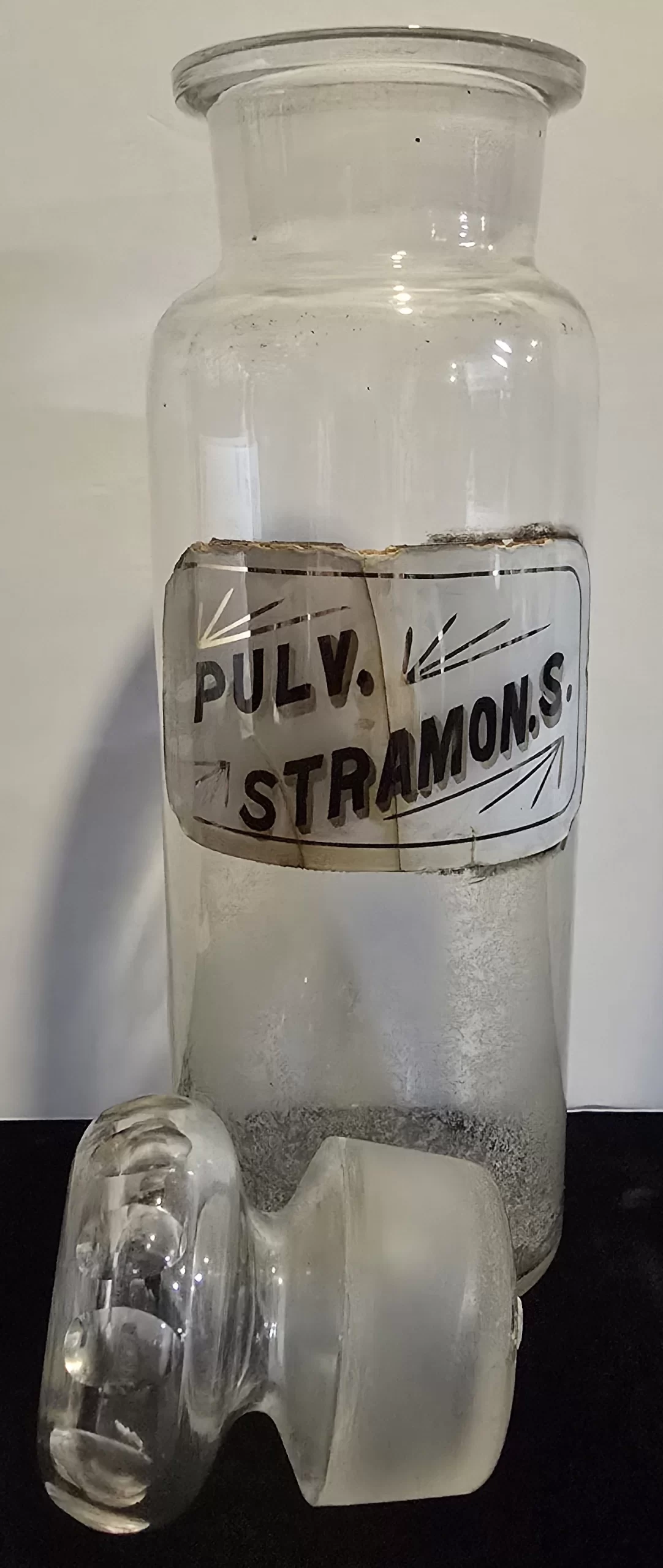
This large antique apothecary jar once contained Pulv. Stramonii (Powdered Stramonium), derived from the leaves and seeds of Datura stramonium, commonly called Jimsonweed or Thorn Apple. Stramonium was historically used as a treatment for asthma, cough, and pain due to its anticholinergic and hallucinogenic properties. However, it was also extremely dangerous, with overdoses leading to delirium, coma, or death.
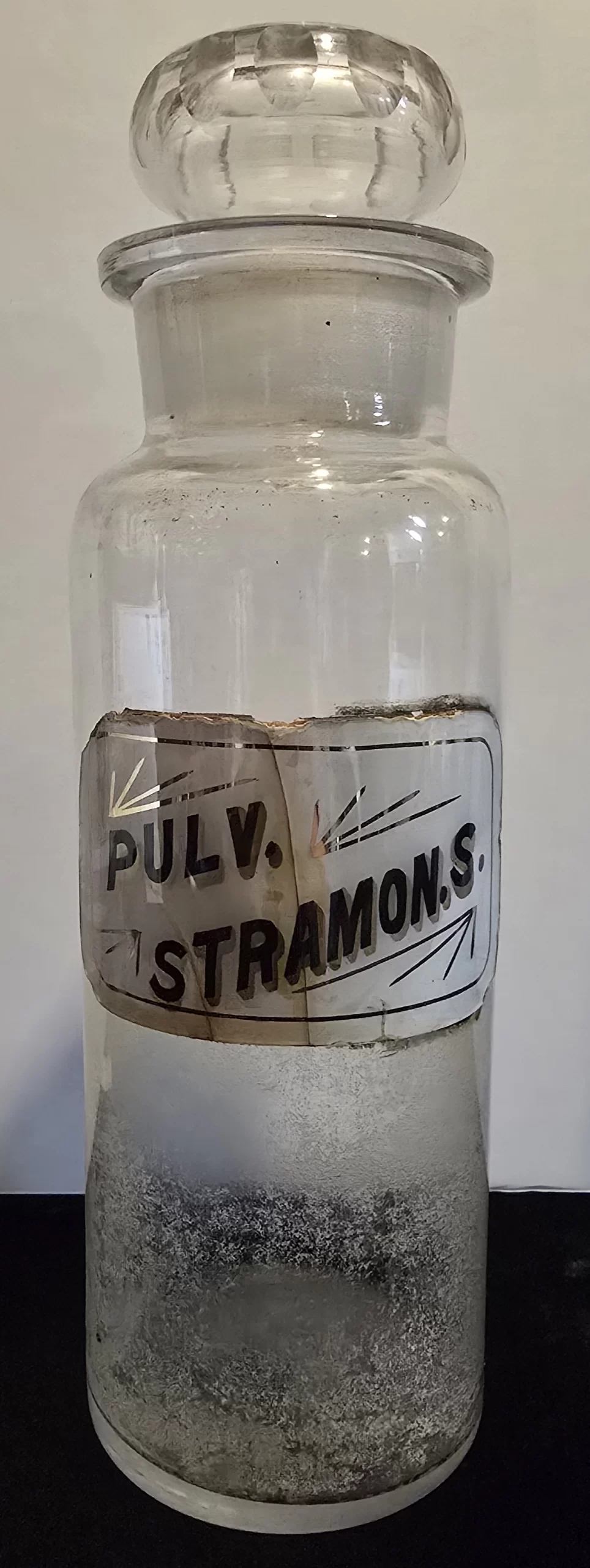
The jar is hand-blown glass with a ground glass stopper, and it retains its original painted/applied label. The bold black lettering with arrowed embellishments identifies the contents in Latinized abbreviation: Pulv. for powdered, Stramon. S. for Stramonium.
Condition
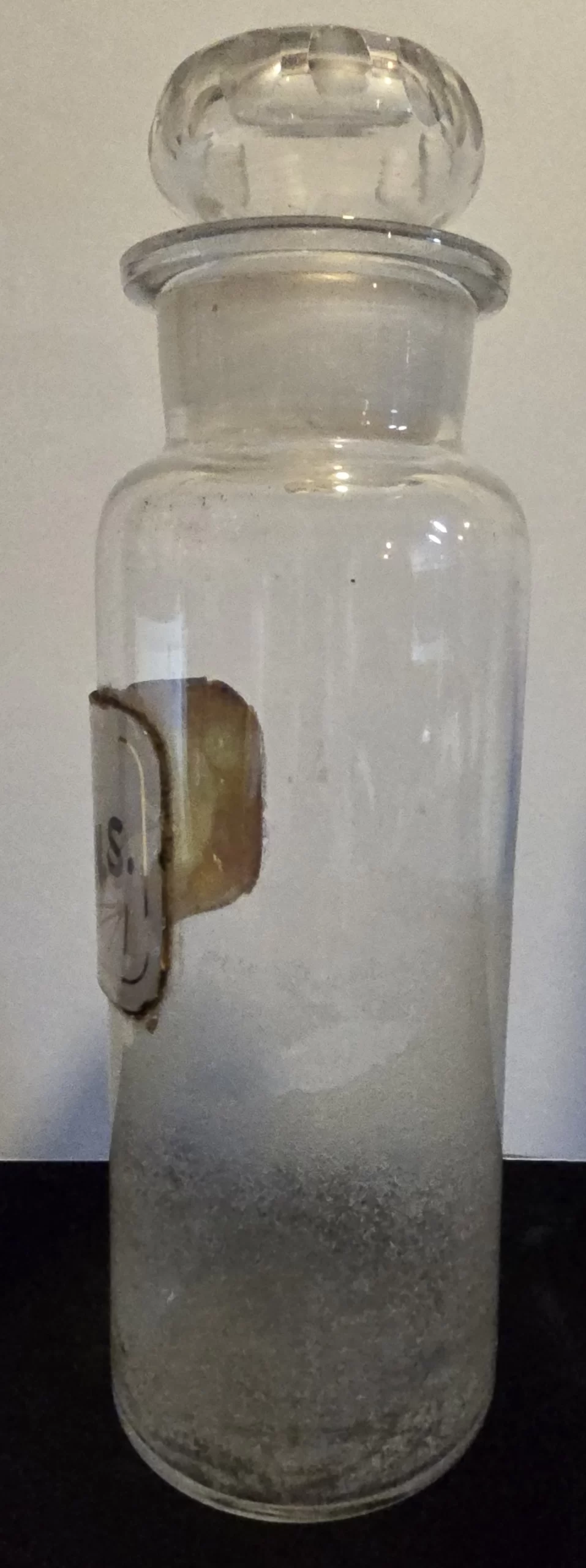
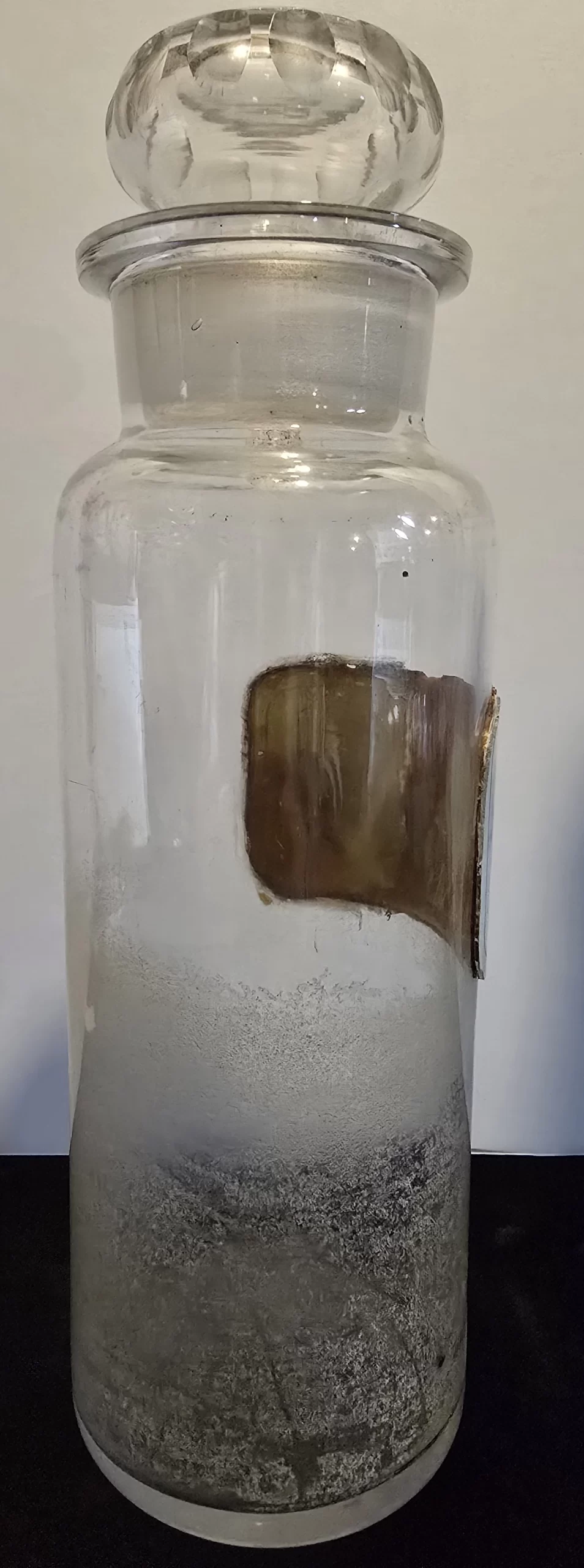
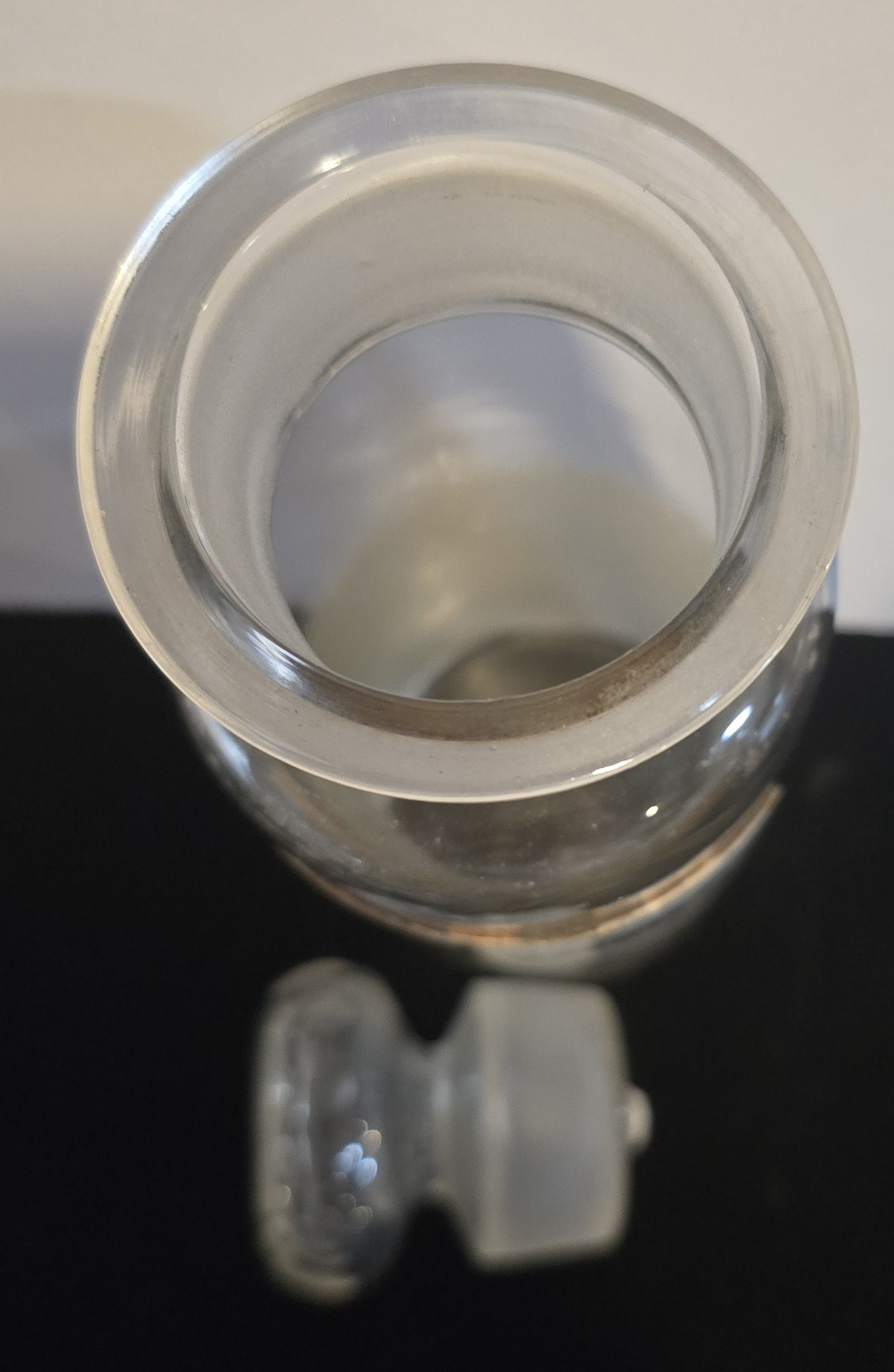
The jar shows wear consistent with age. The label is fragile, browned, and partially cracked. Some internal residue and fogging are present in the glass, likely from the original powdered contents. The stopper and jar remain intact.
Gallery
Historical context
In 19th and early 20th century medicine, stramonium was incorporated into powders, tinctures, and even cigarettes for asthma relief. Apothecary jars like this were standard in pharmacies, hospitals, and doctor’s offices, keeping dangerous drugs organized and labeled. Stramonium belongs to the nightshade family, sharing its toxic alkaloid profile with belladonna and henbane.
Curious Facts, Ephemera, and Trivia
Jimsonweed got its name from Jamestown, Virginia, where colonial soldiers once poisoned themselves by accident after eating it.
Stramonium was sometimes rolled into “asthma cigarettes,” marketed as a supposed safer inhalation therapy.
Its psychoactive and toxic properties made it both feared and revered in folk medicine across cultures.
Excerpt
From King’s American Dispensatory (1898):
“Stramonium, though an energetic narcotic, when cautiously used, is one of the most valuable remedies in the Materia Medica, especially in spasmodic asthma.”
Why it is in the Cabinet
This jar is an outstanding representation of apothecary practice and pharmaceutical history. Both the substance and its container highlight the blend of medical hope and toxic danger present in historical remedies.
Support Dr. Bebout’s Cabinet of Medical Curiosities
If you enjoy the history, the oddities, and the effort, help keep this cabinet open. Every little bit helps preserve and share the strange wonders of medicine's past.
Buy Me a Ko-fi ☕ Buy Me a Coffee ☕ Tip via PayPal 💵