
Title
Antiseptic Poison — Corrosive Sublimate Solution (Mercuric Chloride)
Author
Bradwood Manufacturing Company, New Haven, Connecticut
Image
Description
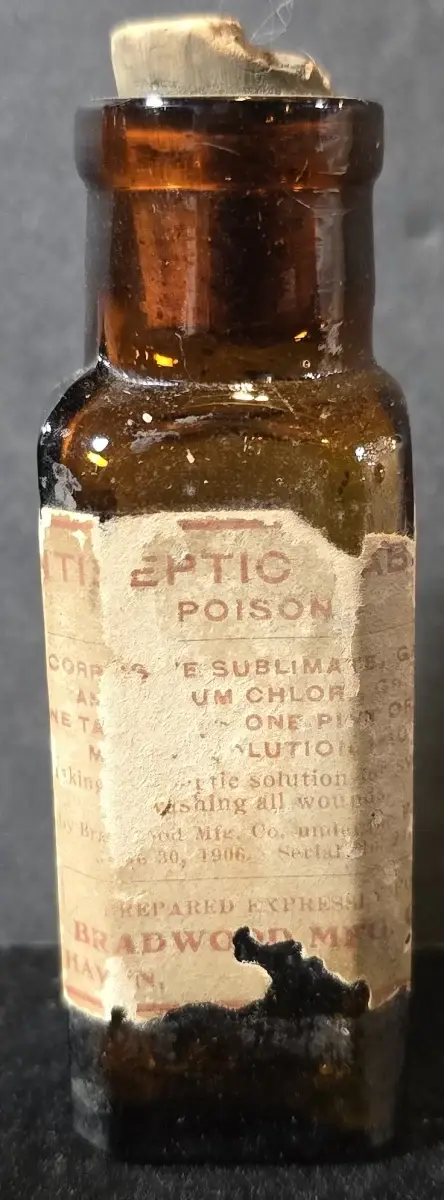
This amber glass bottle is labeled “Antiseptic — POISON” and contains a corrosive sublimate solution, a mercury-based antiseptic widely used in the late 19th and early 20th centuries. The label identifies the active agent as corrosive sublimate (mercuric chloride), compounded as a liquid antiseptic solution intended for wound cleansing and disinfection.
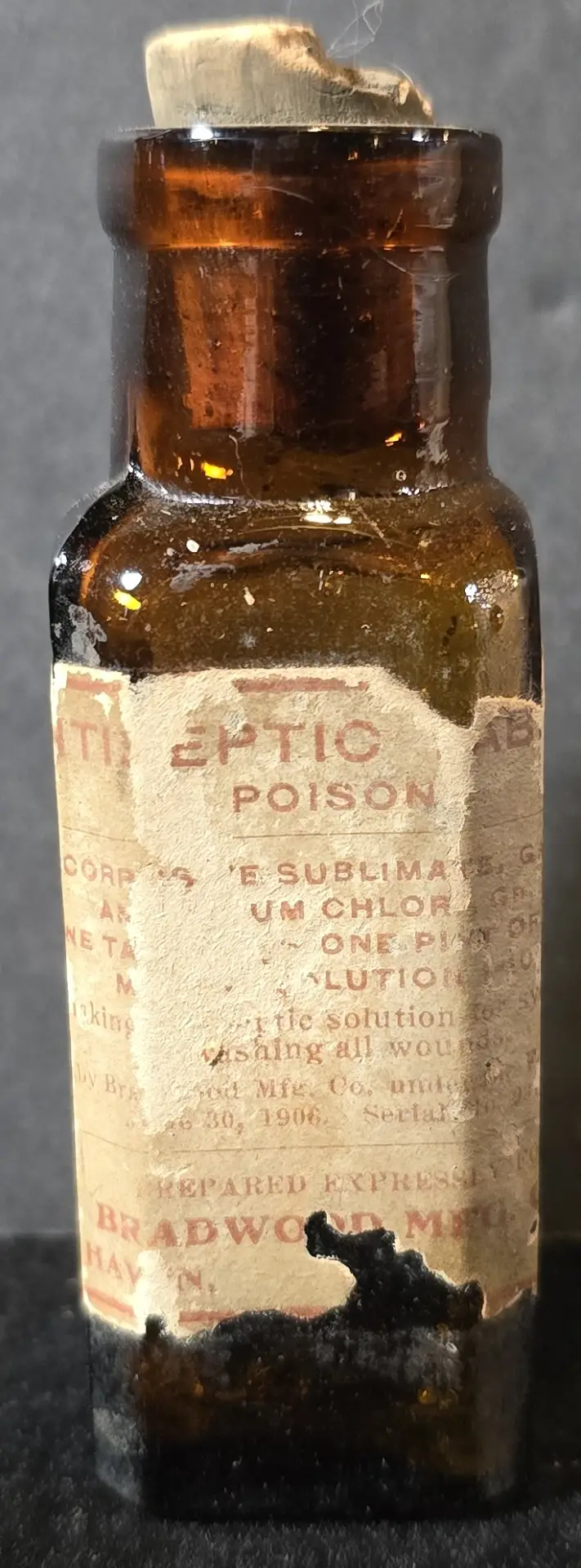
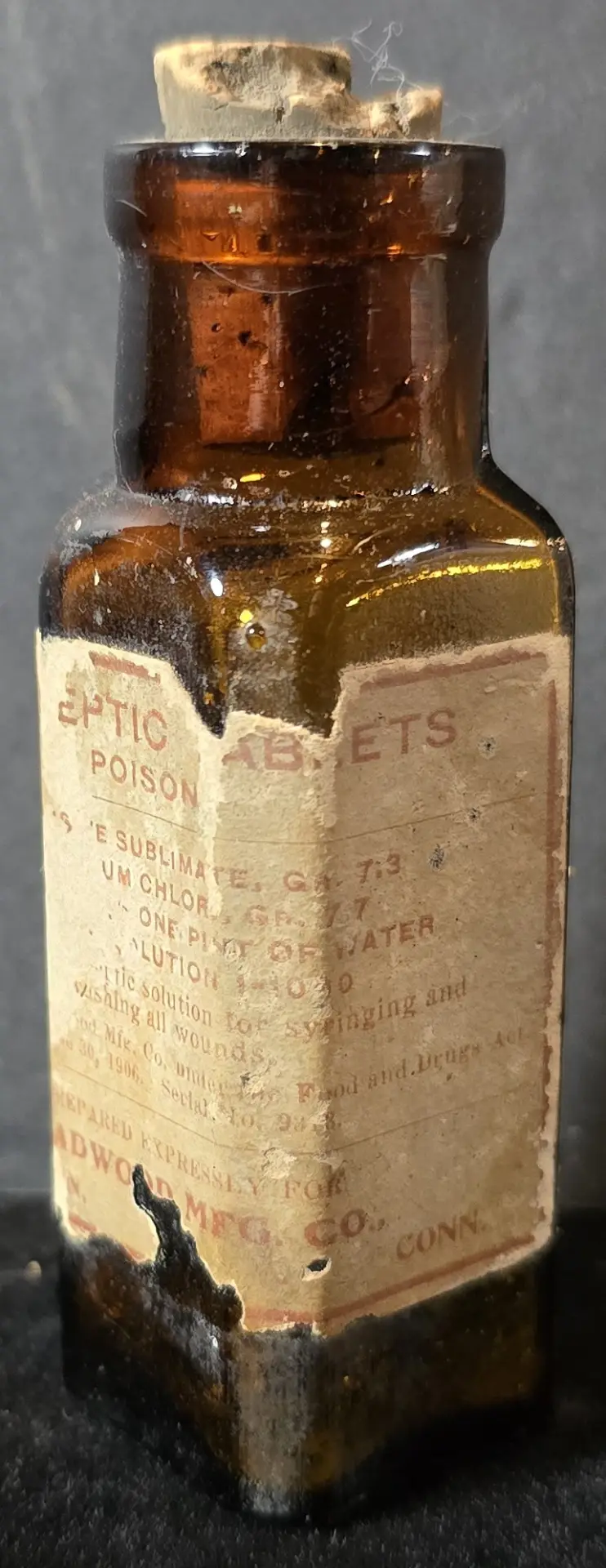
The bottle retains its original cork stopper and visible internal residue, indicating it was never fully emptied. Despite significant label wear and staining, critical warning text remains legible, including the explicit poison designation. The manufacturer, Bradwood Manufacturing Co. of New Haven, Connecticut, is printed at the base of the label, with references consistent with early-1900s pharmaceutical production.
This object reflects a period when antisepsis was advancing rapidly, but toxicity risks were accepted as a necessary tradeoff for infection control.
Condition
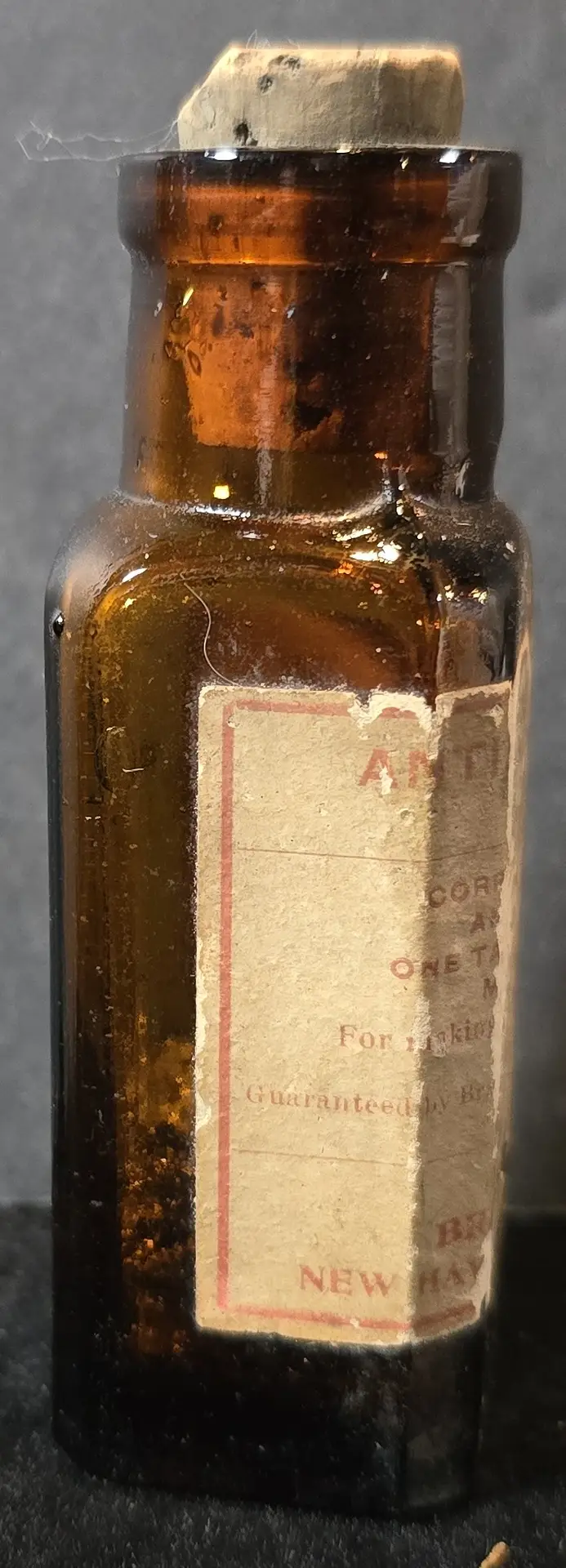
Original amber glass bottle with surface wear, internal residue, and intact cork stopper. Label exhibits heavy wear, staining, edge loss, and fading but remains partially legible, including the “POISON” warning and product identification. No cracks observed in the glass. Condition consistent with early 20th-century clinical use and storage.
Gallery
Historical context
Corrosive sublimate (mercuric chloride) was one of the most effective antiseptics available before the widespread adoption of safer alternatives. In the decades surrounding the 1906 Pure Food and Drug Act, it was commonly used for wound care, surgical disinfection, and surface sterilization, despite its narrow margin between therapeutic and toxic doses.
The presence of bold poison labeling reflects growing awareness of chemical risk, even as mercury compounds remained routine in medical practice. This bottle dates to a transitional era when antiseptic science was advancing faster than safety regulation.
Curious Facts, Ephemera, and Trivia
Corrosive sublimate was effective against bacteria and human tissue, which did not particularly matter to early formulators.
Mercury-based antiseptics were gradually phased out as reports of systemic toxicity accumulated.
The explicit “POISON” label predates standardized skull-and-crossbones iconography.
Bottles like this were often stored in household medicine cabinets, not locked dispensaries.
Excerpt
“Antiseptic — Poison.”
Sometimes the label told the whole story.
Why it is in the Cabinet
This bottle captures the uncomfortable overlap between treatment and hazard that defined early antiseptic medicine. It is a physical reminder that progress in infection control often came at real human cost. The surviving poison warning, original cork, and visible residue make this an unusually honest artifact—one that explains why modern safety standards exist without needing commentary.
Support Dr. Bebout’s Cabinet of Medical Curiosities
If you enjoy the history, the oddities, and the effort, help keep this cabinet open. Every little bit helps preserve and share the strange wonders of medicine's past.
Buy Me a Ko-fi ☕ Buy Me a Coffee ☕ Tip via PayPal 💵