
Title
Antique Bedpans – Porcelain and Enamel Variants
Image
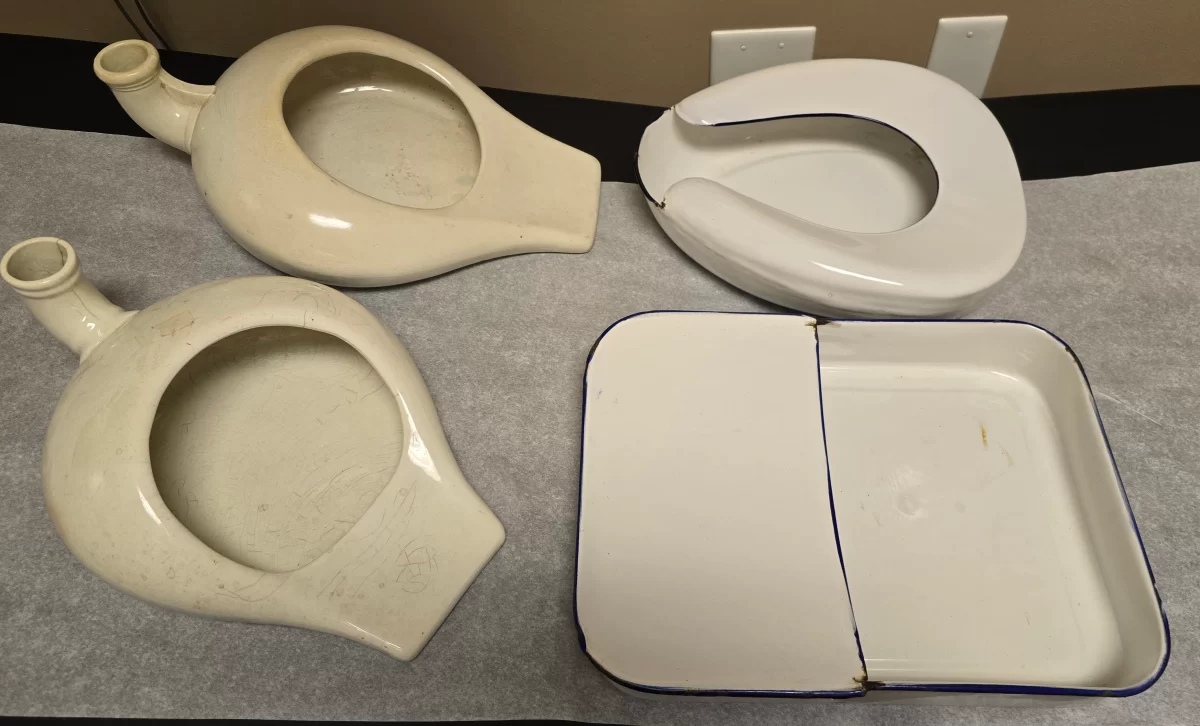
Description
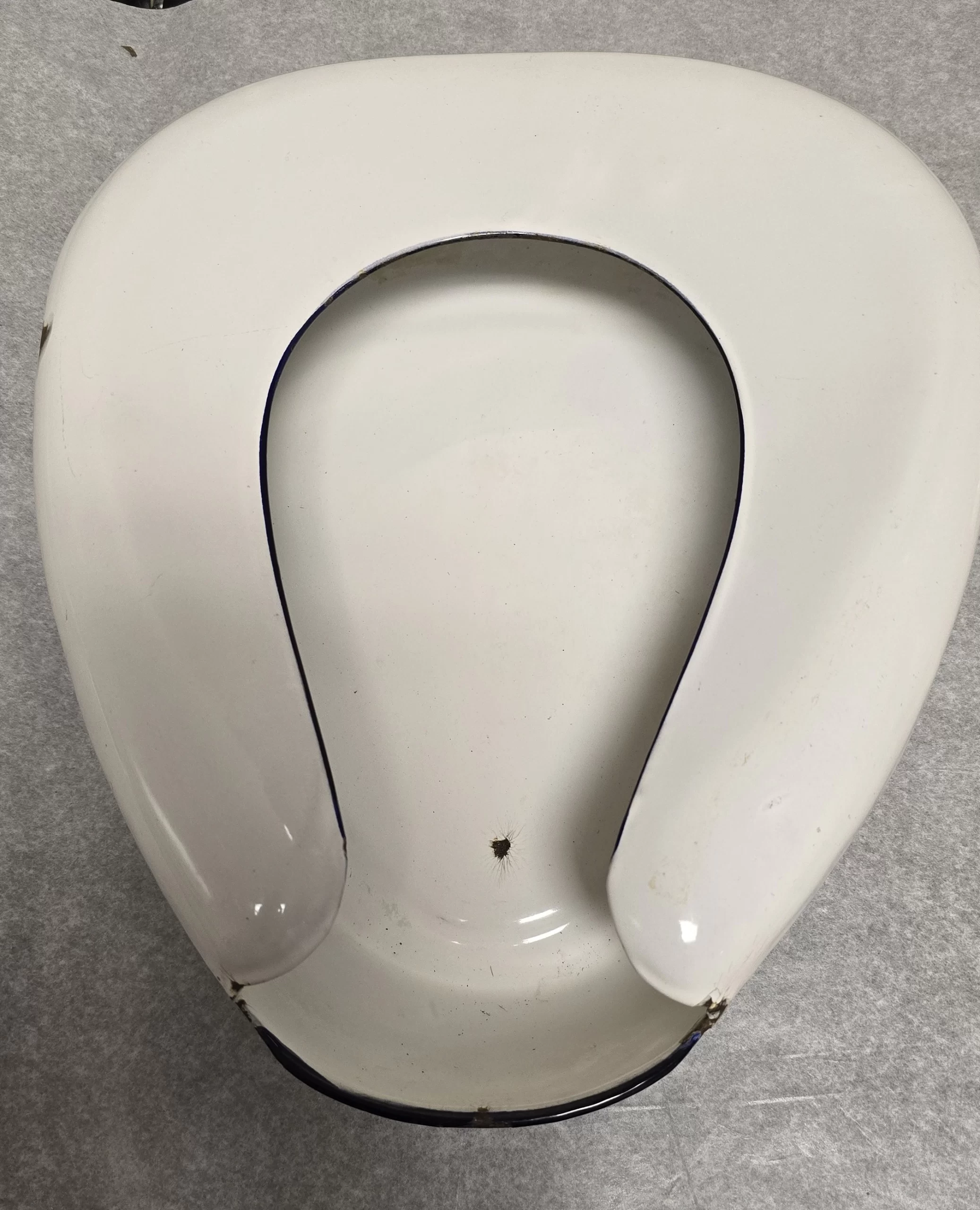
This collection of antique bedpans showcases a range of materials and designs used in bedside care throughout the late 19th and early 20th centuries. The group includes both enameled metal and porcelain examples, each intended to aid patients with limited mobility in hospital, battlefield, or home settings.
Condition
Each piece shows clear signs of historical use and aging:
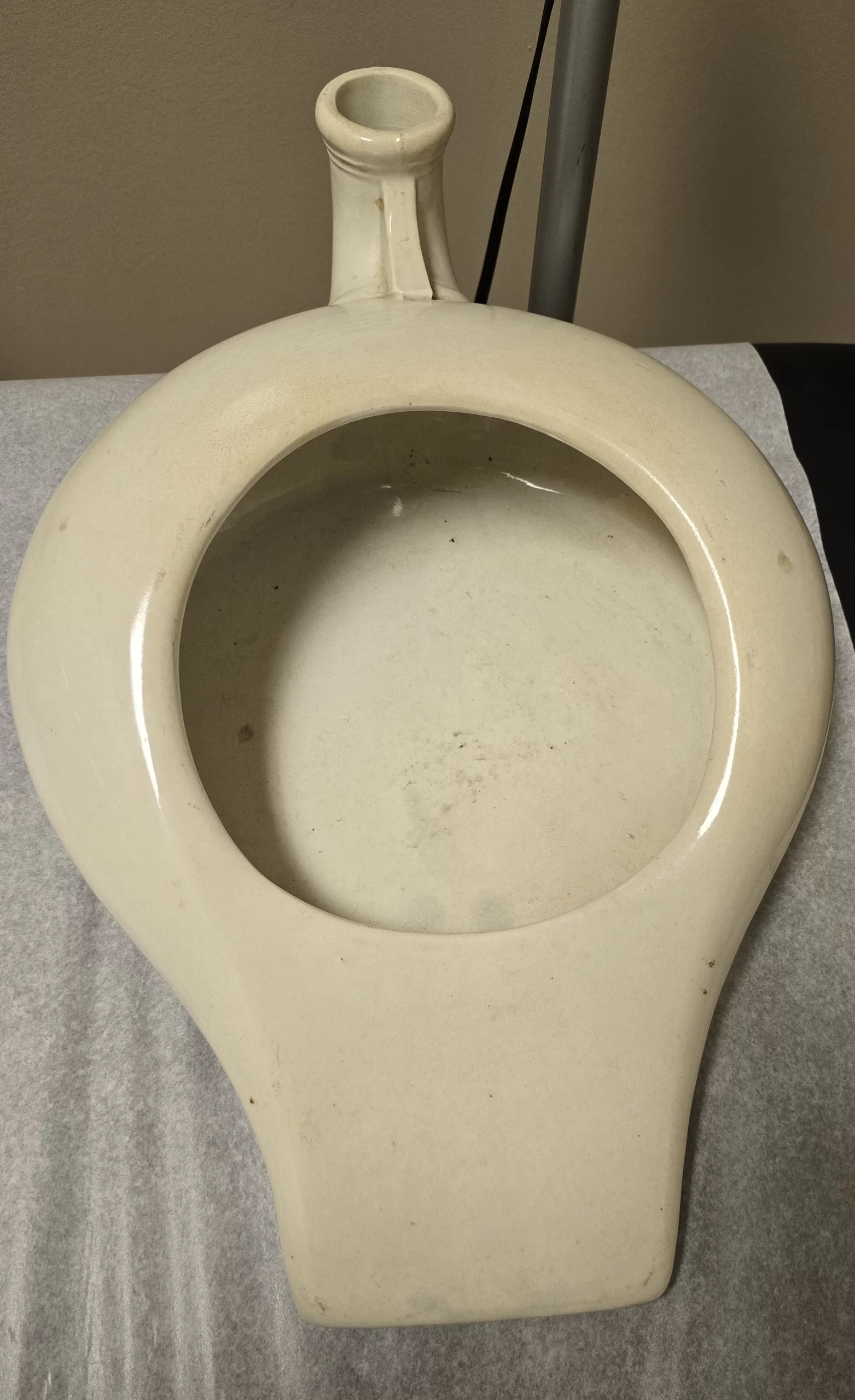
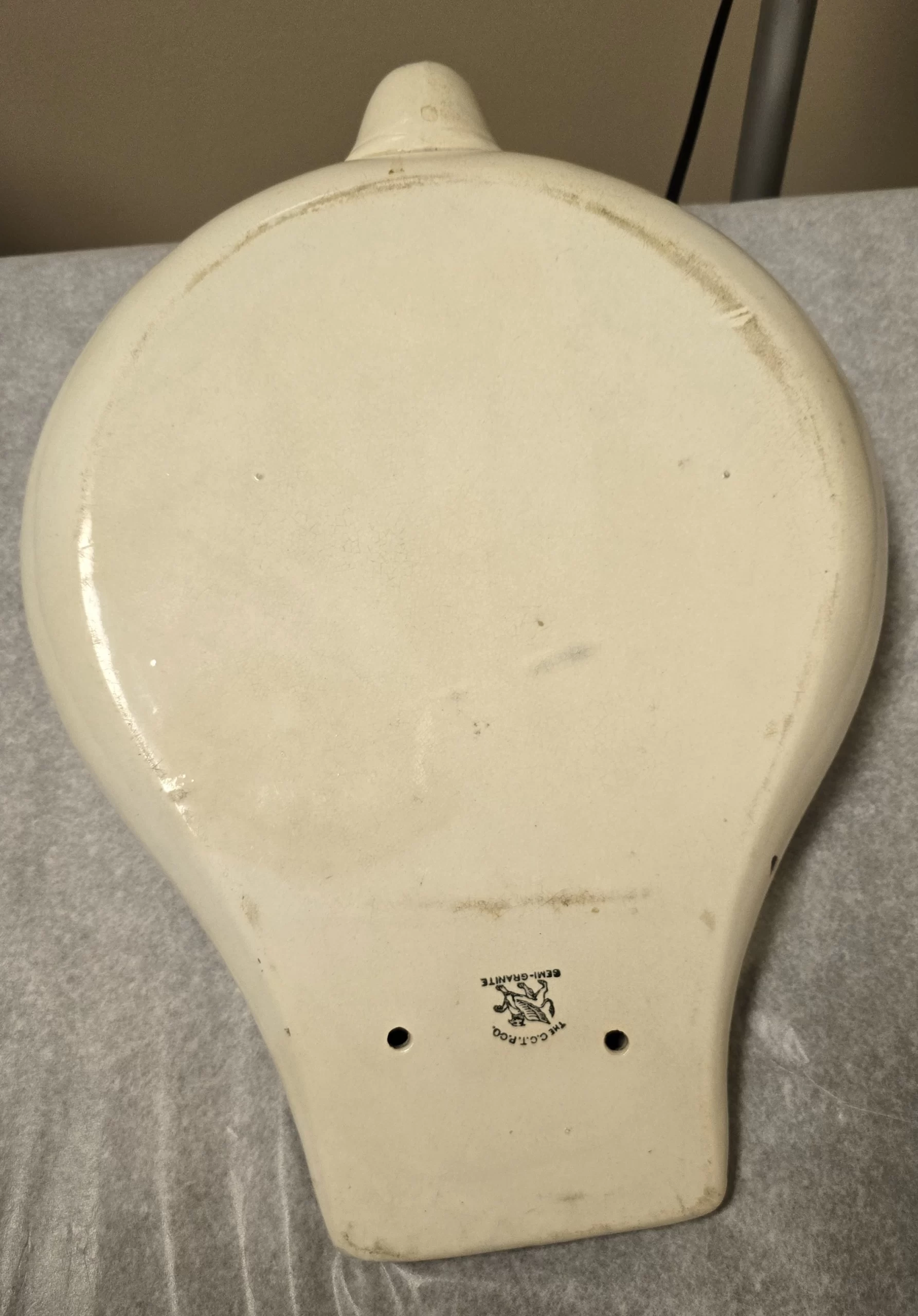
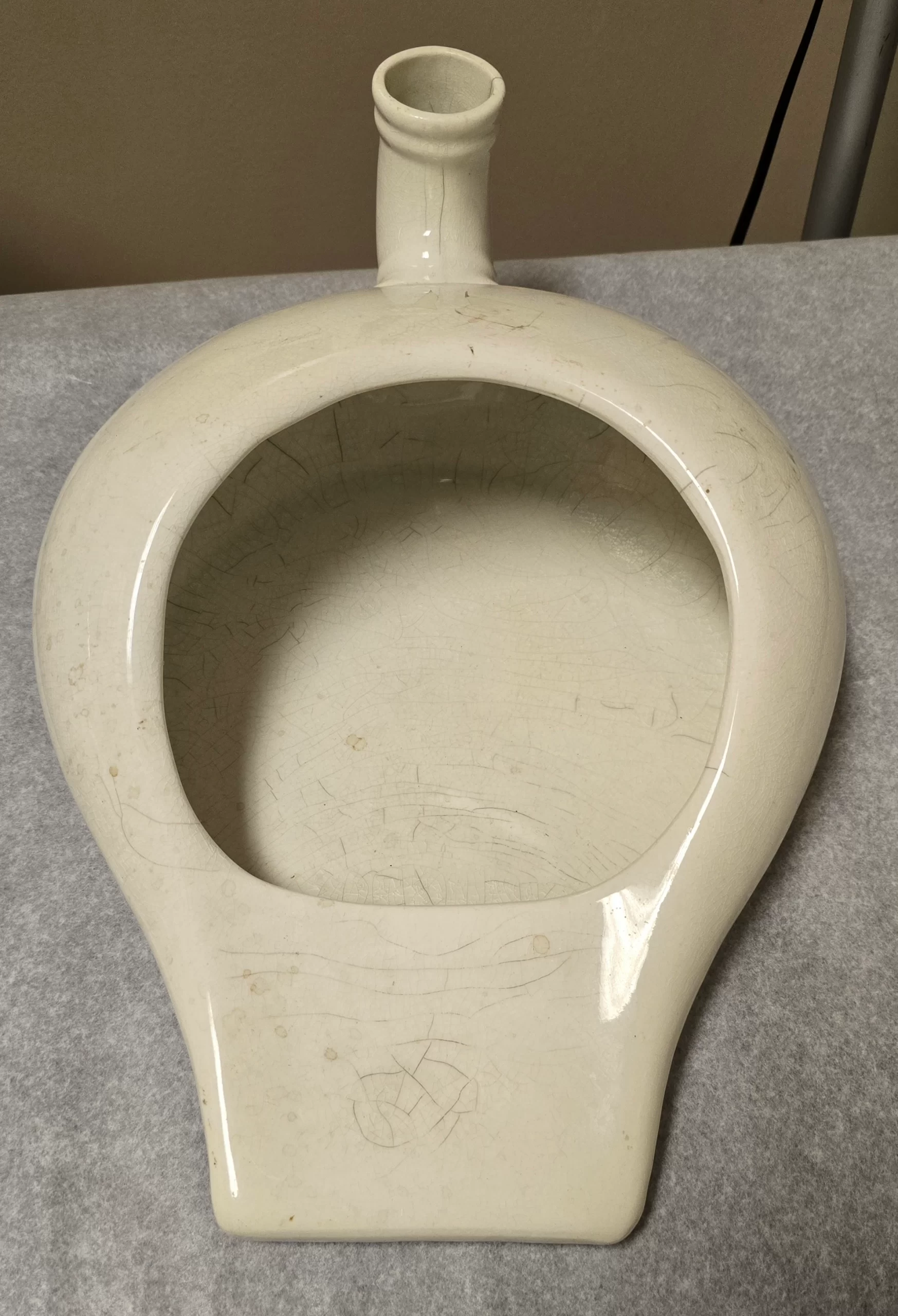
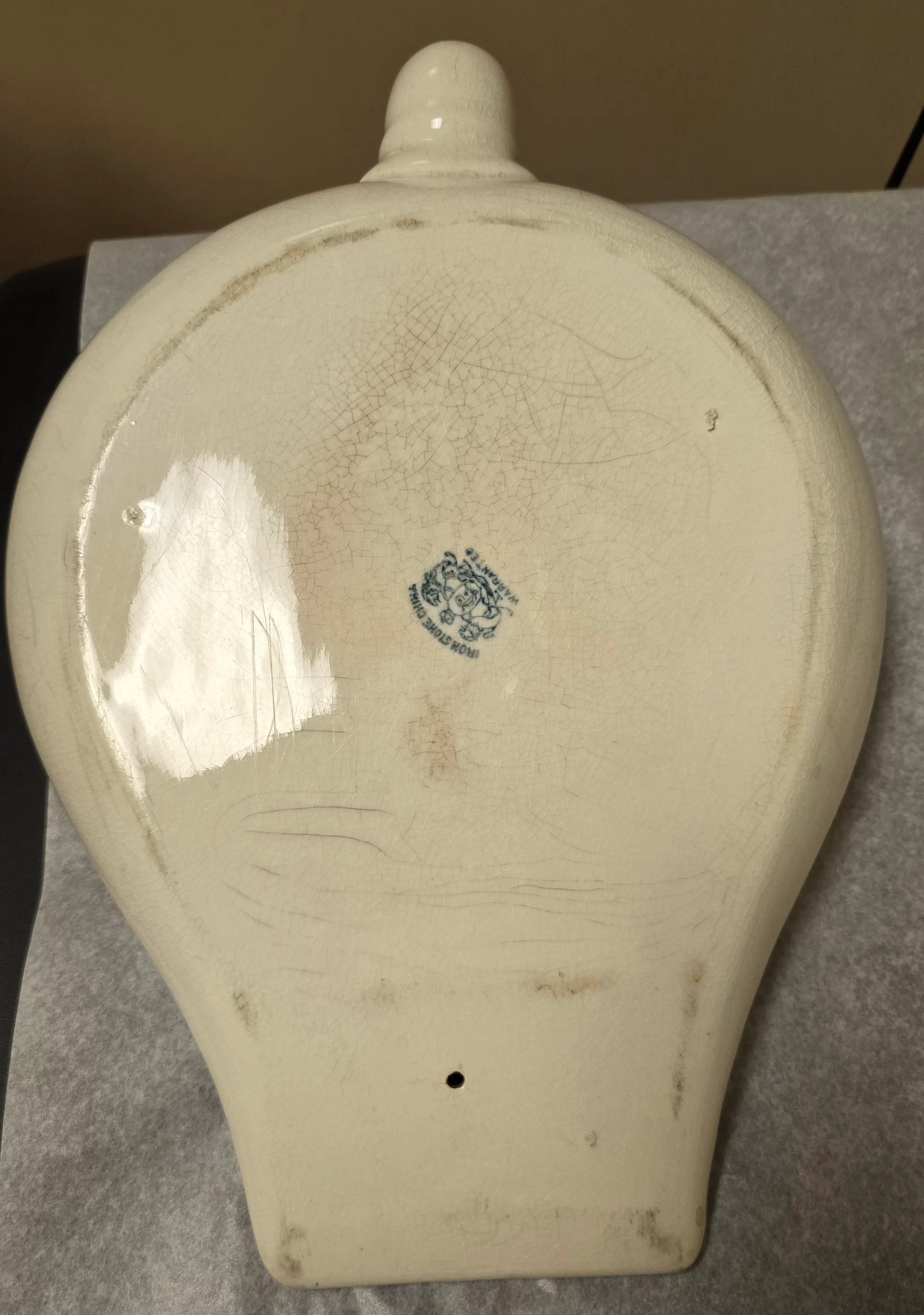
The porcelain bedpans exhibit crazing, minor discoloration, and worn manufacturer stamps.
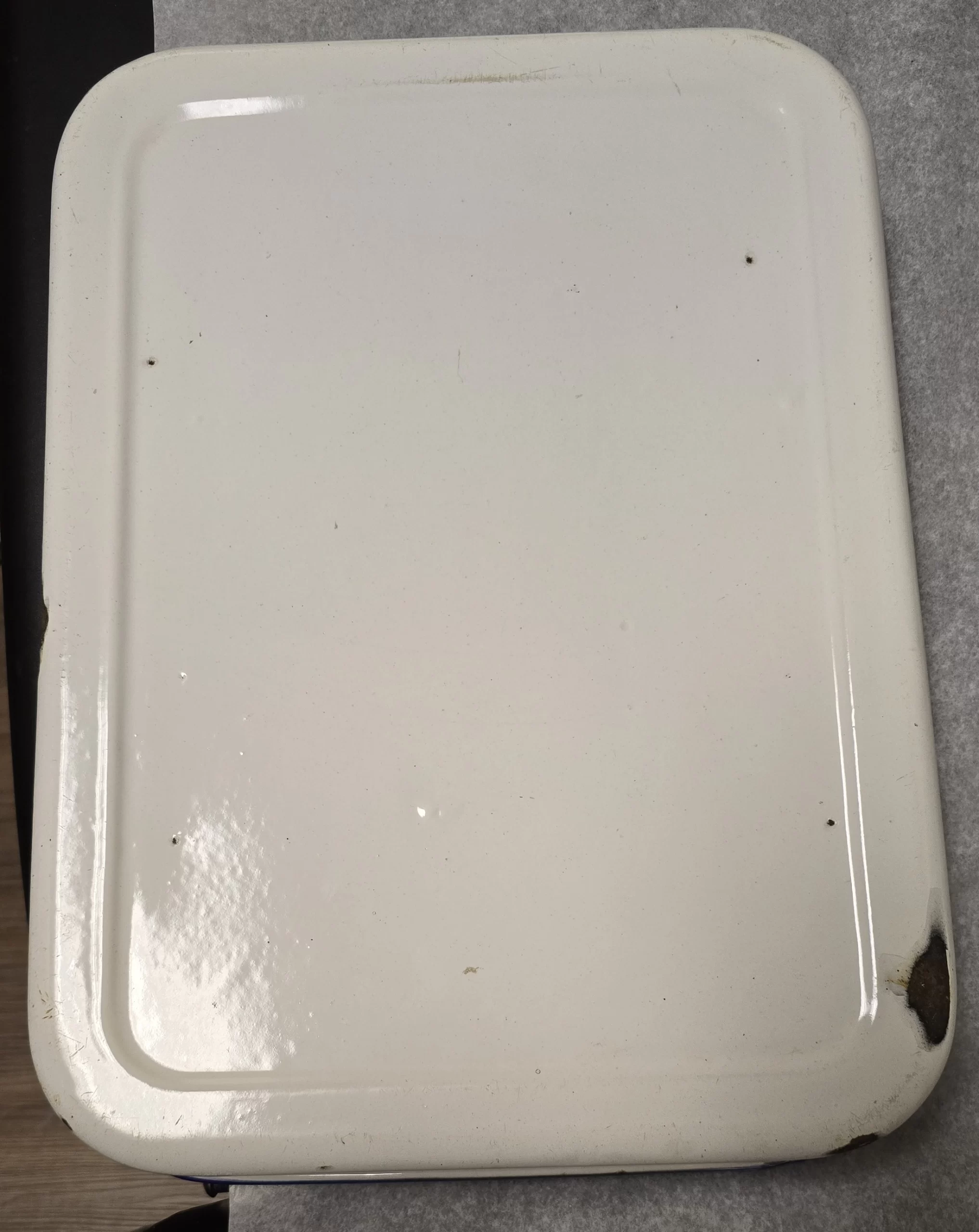
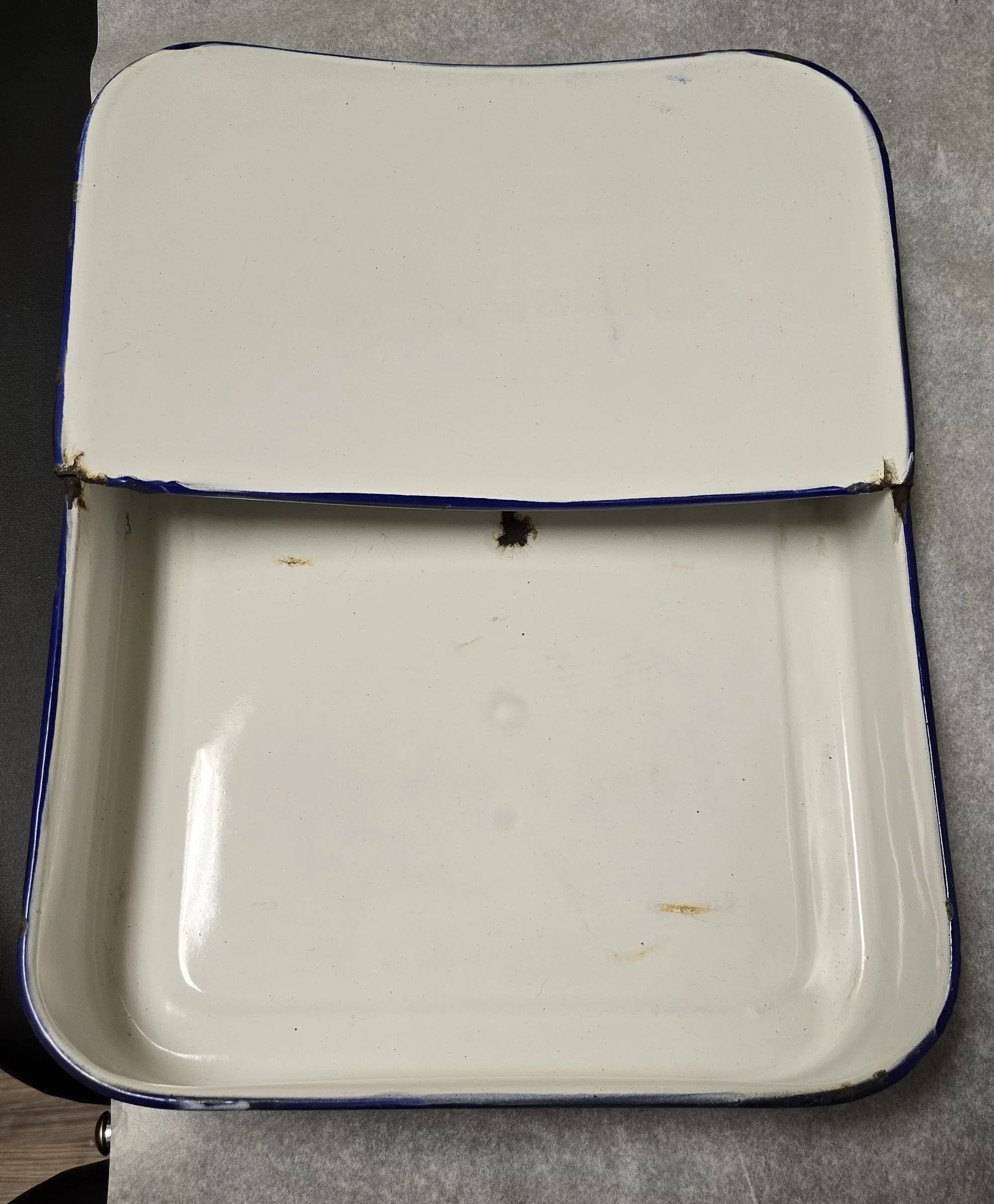
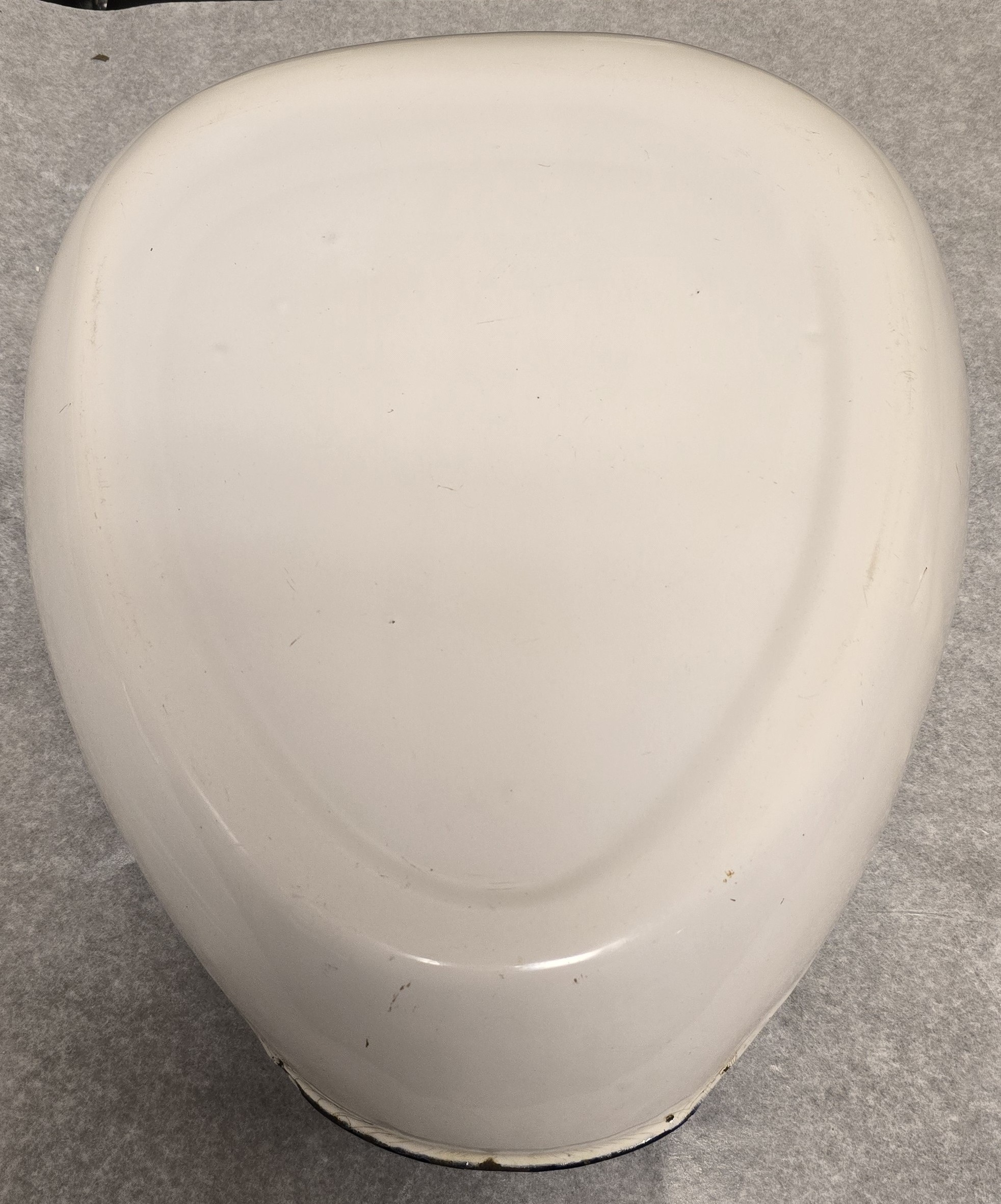
The enamel pans show chipping, wear at the seams, and areas of exposed metal — common in vintage enamelware that saw repeated sterilization and handling.
Gallery
Historical context
The use of bedpans has been documented as far back as the Roman era, but industrialization brought standardization in design and manufacturing. By the late 1800s, porcelain and enameled steel had become the materials of choice for their durability, heat resistance, and ease of cleaning.
The two porcelain pans in this collection are particularly notable for their manufacturer markings. One is labeled “The C.C.T.P. Co. – Semi-Granite”, with a griffin emblem — likely produced around the turn of the 20th century in the U.S. The other is marked “Ironstone China – Warranted”, a designation commonly used by English and American potteries to signal a vitrified, durable ceramic.
The enamelware examples are general-purpose designs, including one rectangular style and one elongated male-style pan. Though lighter than porcelain, enamel bedpans were prone to chipping and rust — yet they remained in widespread use well into the 20th century.
Curious Facts, Ephemera, and Trivia
Porcelain vs. Enamel: Know Your Throne
Porcelain bedpans were heavier but easier to boil for sterilization. Enameled metal pans, while lighter and more affordable, chipped easily — and chipped enamel plus human waste? A one-way ticket to tetanus town. Hospitals had to walk a fine line between sanitation and durability.
Bedpan Fires: Yes, That Was a Thing
Before autoclaves, metal bedpans were sterilized on stovetops or over open flames. A nurse leaving one unattended could set the linens, the mattress, or the whole damn ward on fire. Cleanliness might be next to godliness, but sometimes it was also right next to combustion.
Ironstone China – Built to Last
“Ironstone China” wasn’t specific to bathroom items — it referred to a type of vitrified, durable ceramic that was used for everything from teacups to toilets. Its use in medical equipment highlights just how much overlap there was between household and hospital manufacturing in the 1800s.
Why It’s in the Cabinet
These bedpans represent more than just utilitarian hospital gear — they reflect the blunt reality of medical care before modern convenience. They were used daily, scrubbed aggressively, and discarded only when cracked or burned through. Their survival to the present day is a testament to the durability of 19th- and 20th-century craftsmanship — and the indignities of early patient care.
Support Dr. Bebout’s Cabinet of Medical Curiosities
If you enjoy the history, the oddities, and the effort, help keep this cabinet open. Every little bit helps preserve and share the strange wonders of medicine's past.
Buy Me a Ko-fi ☕ Buy Me a Coffee ☕ Tip via PayPal 💵