
Title
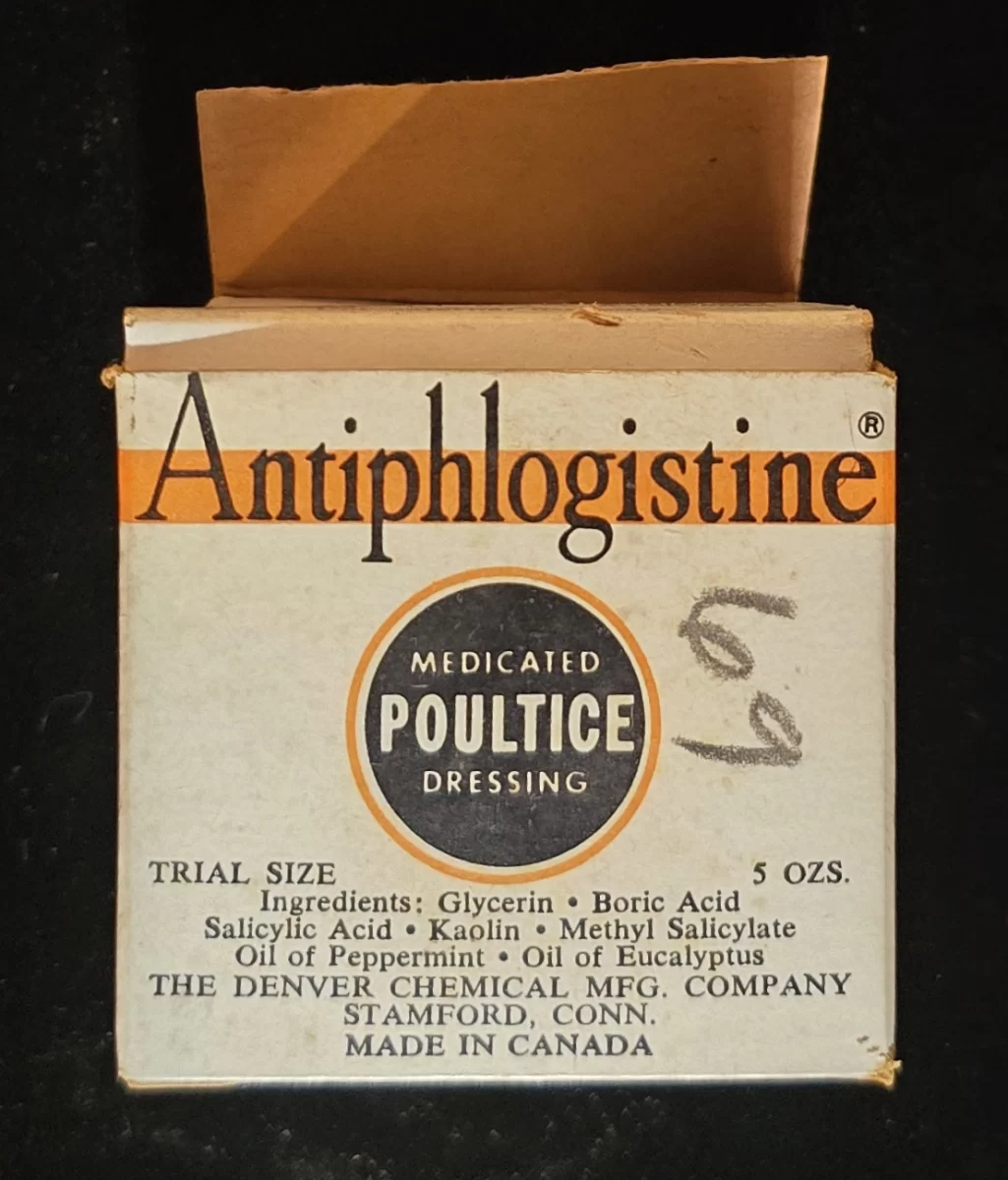
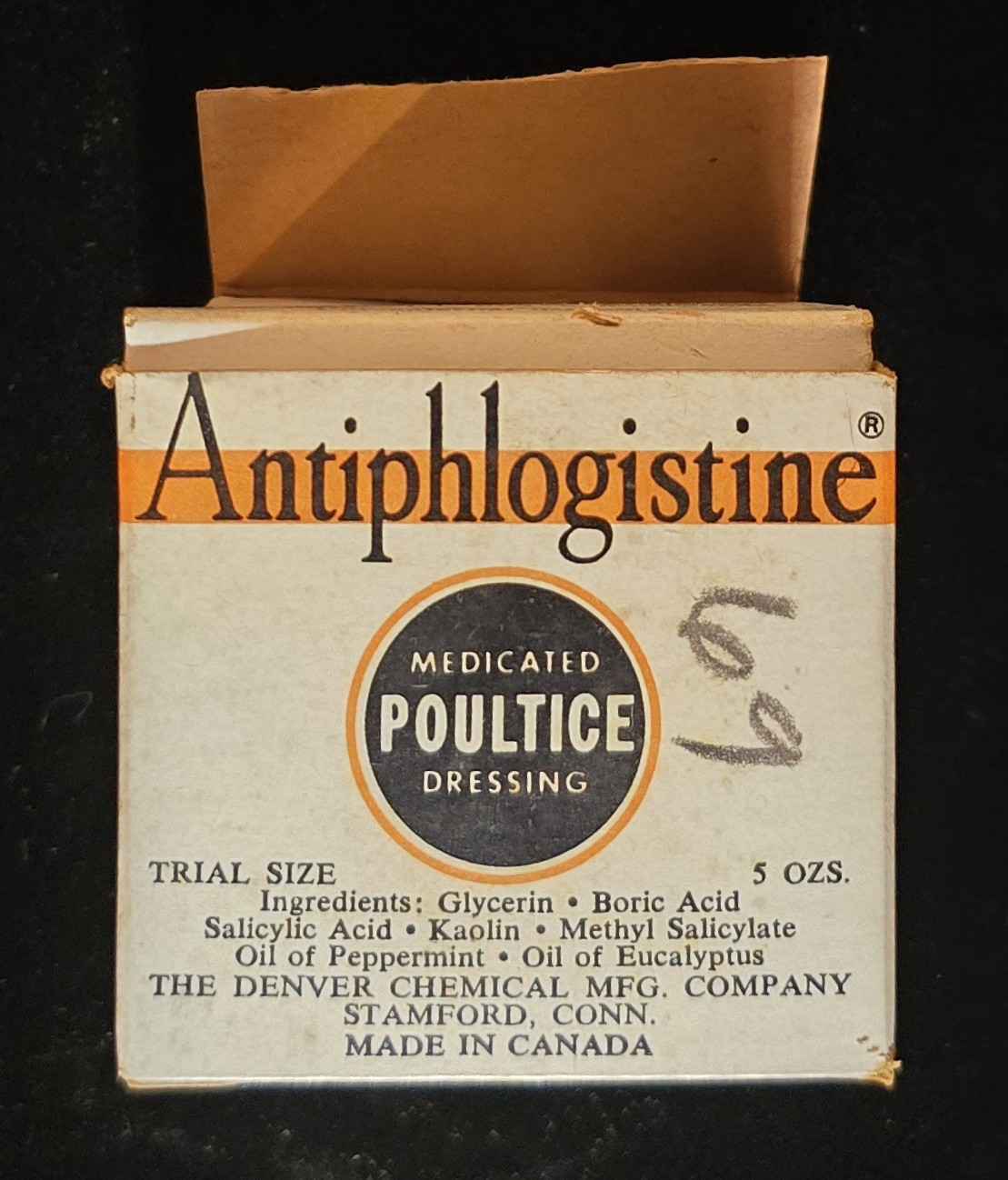
Antiphlogistine Medicated Poultice Dressing (Trial Size)
Author
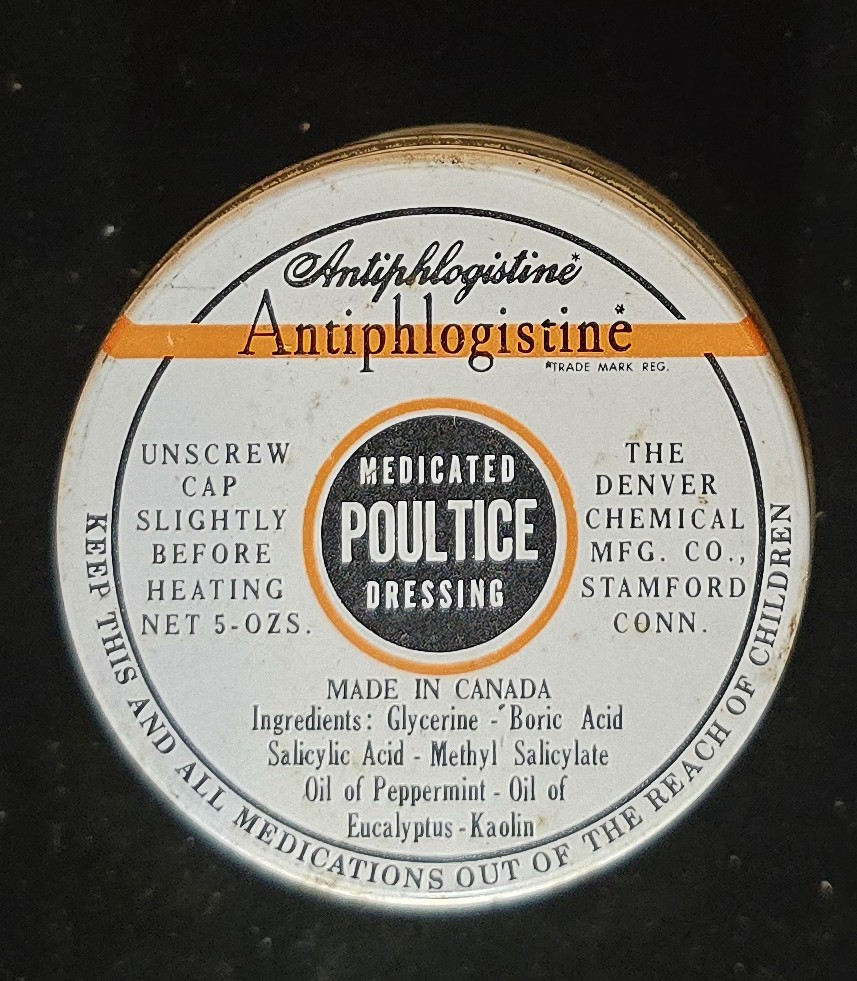
The Denver Chemical Manufacturing Company, Stamford, Connecticut
(Made in Canada)
Image
Description
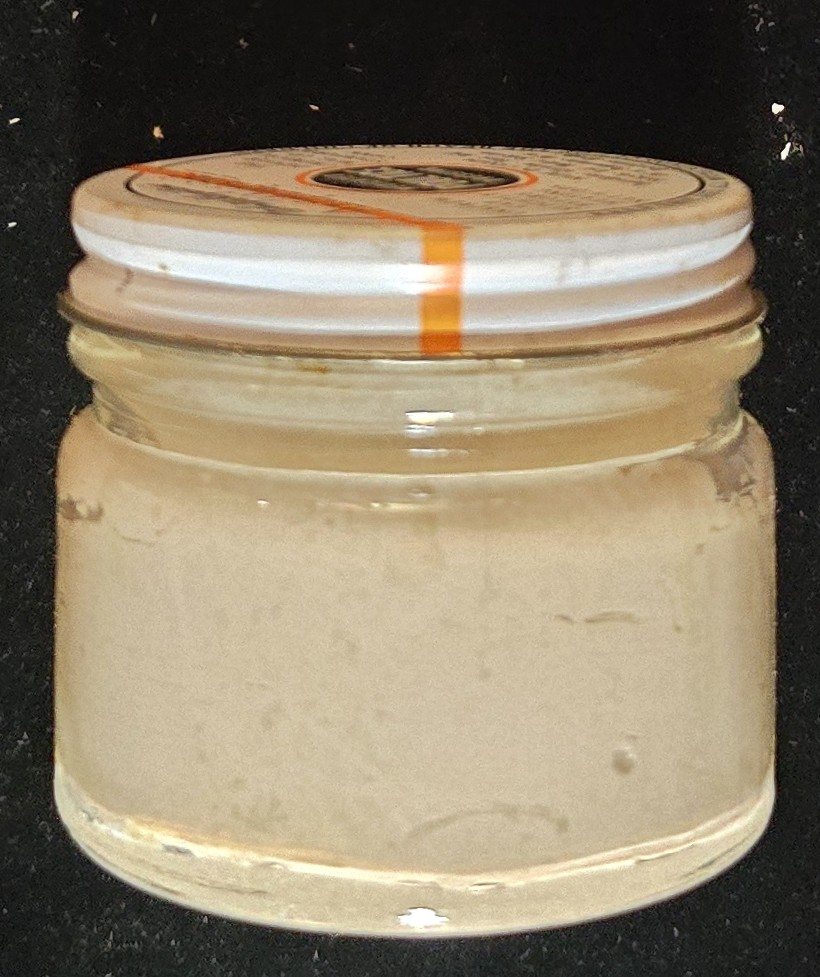
This 5-ounce trial-size jar of Antiphlogistine is a relic of early 20th-century topical therapy—a medicated poultice designed to treat inflammation, soreness, and pain. The product consists of a tan clay-like mixture combining glycerin, kaolin, salicylic acid, boric acid, and methyl salicylate, with essential oils of peppermint and eucalyptus.
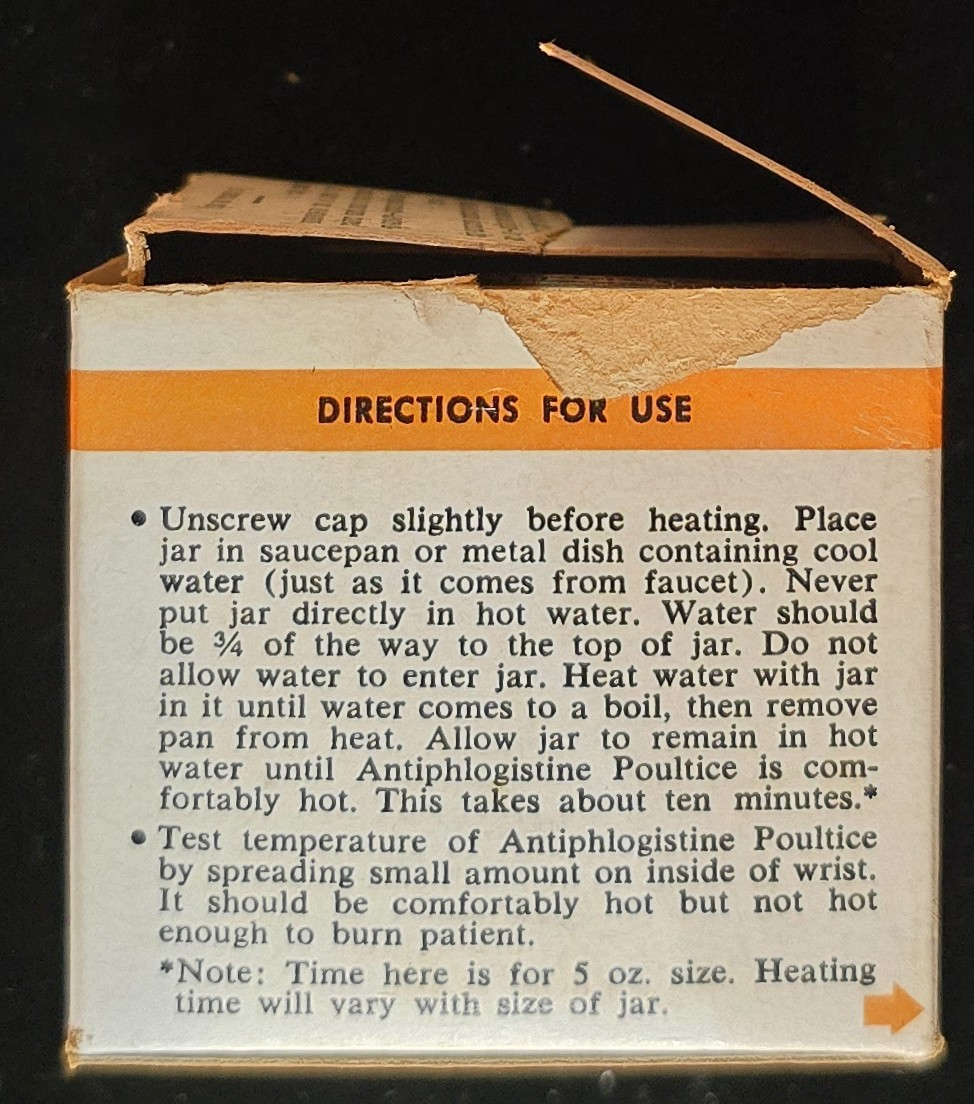
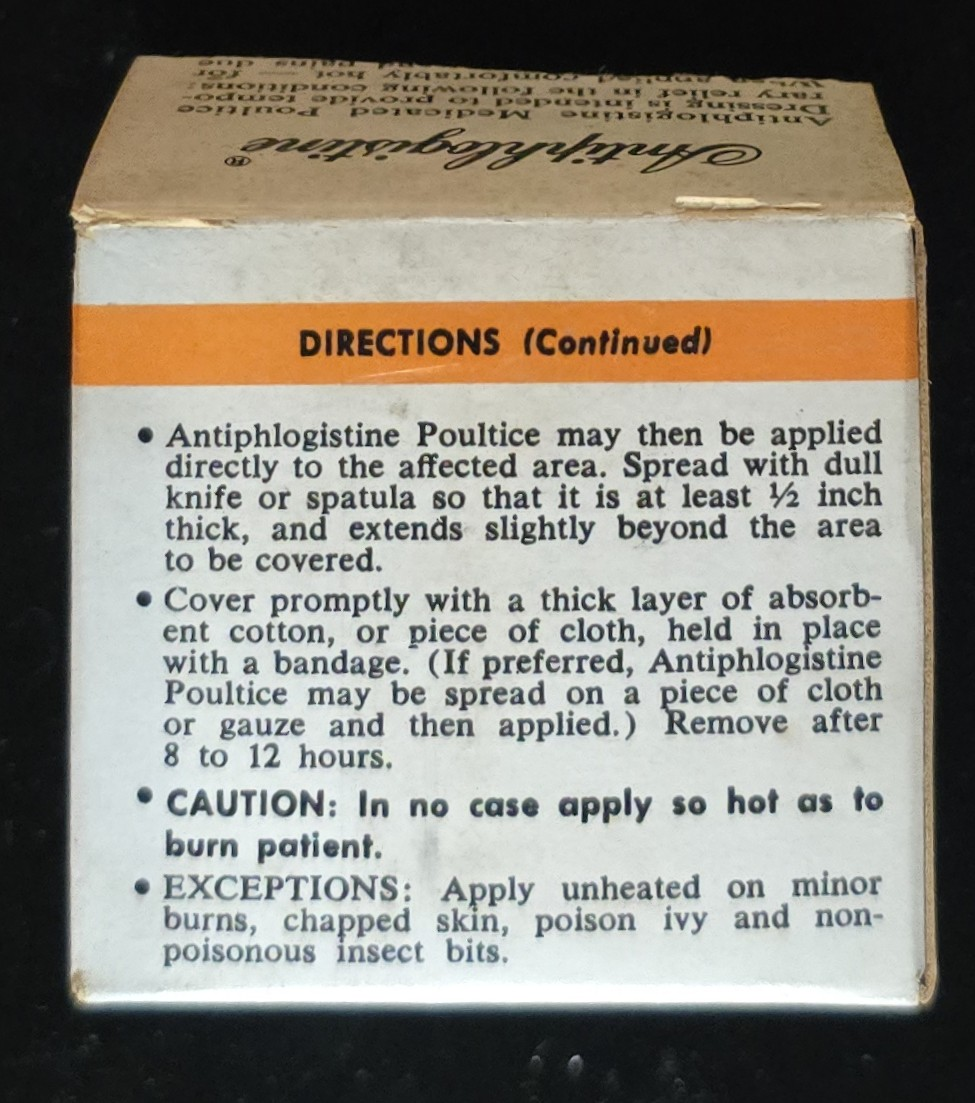
Originally packaged in a labeled glass jar with metal lid and instructional box, this poultice was heated in hot water and applied warm to sore muscles, sprains, and various inflammatory conditions. The box emphasizes not to “apply so hot as to burn patient”—an ongoing risk in the era of folk heat-based remedies.
Condition
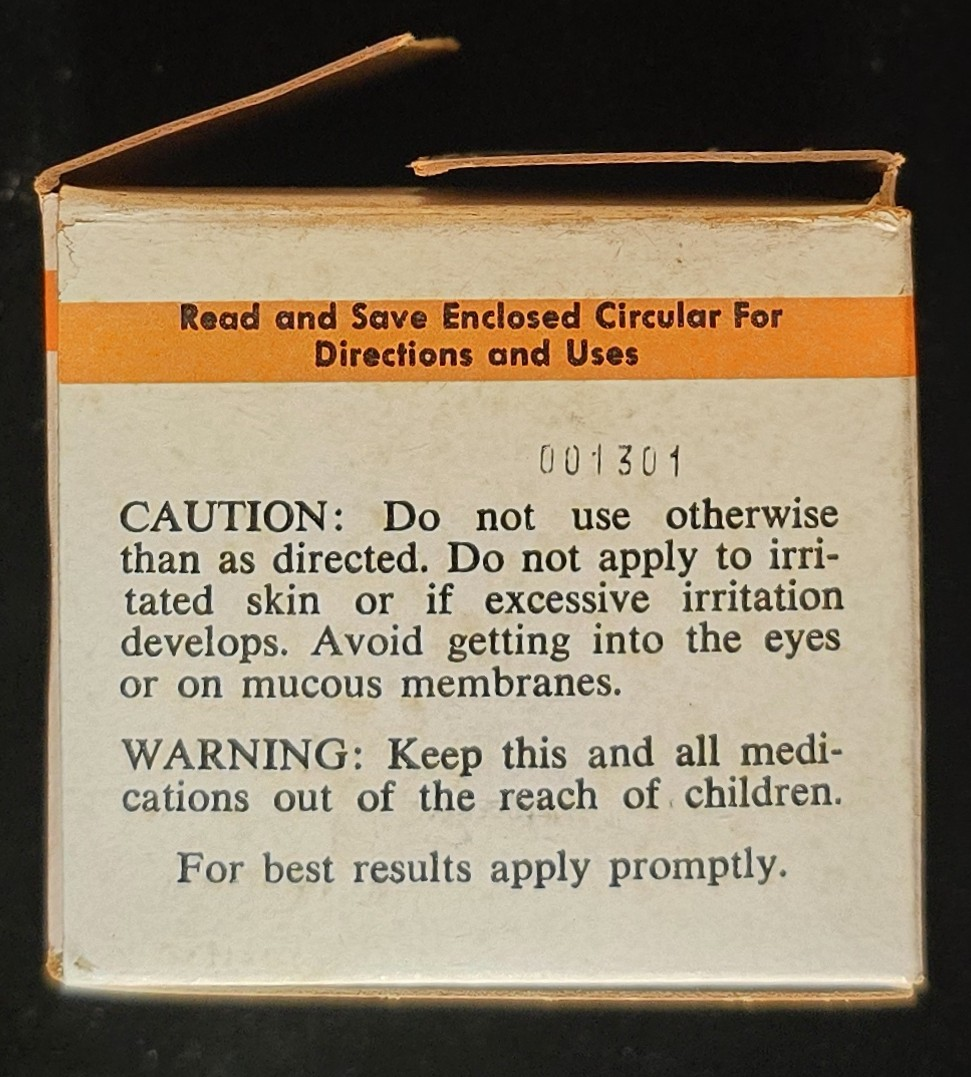
Box shows edge wear, some discoloration, and a missing corner tab. Glass jar and label are intact, with full contents remaining. Lid shows light oxidation. Exceptionally well-preserved for a product over 70 years old.
Gallery
Historical context
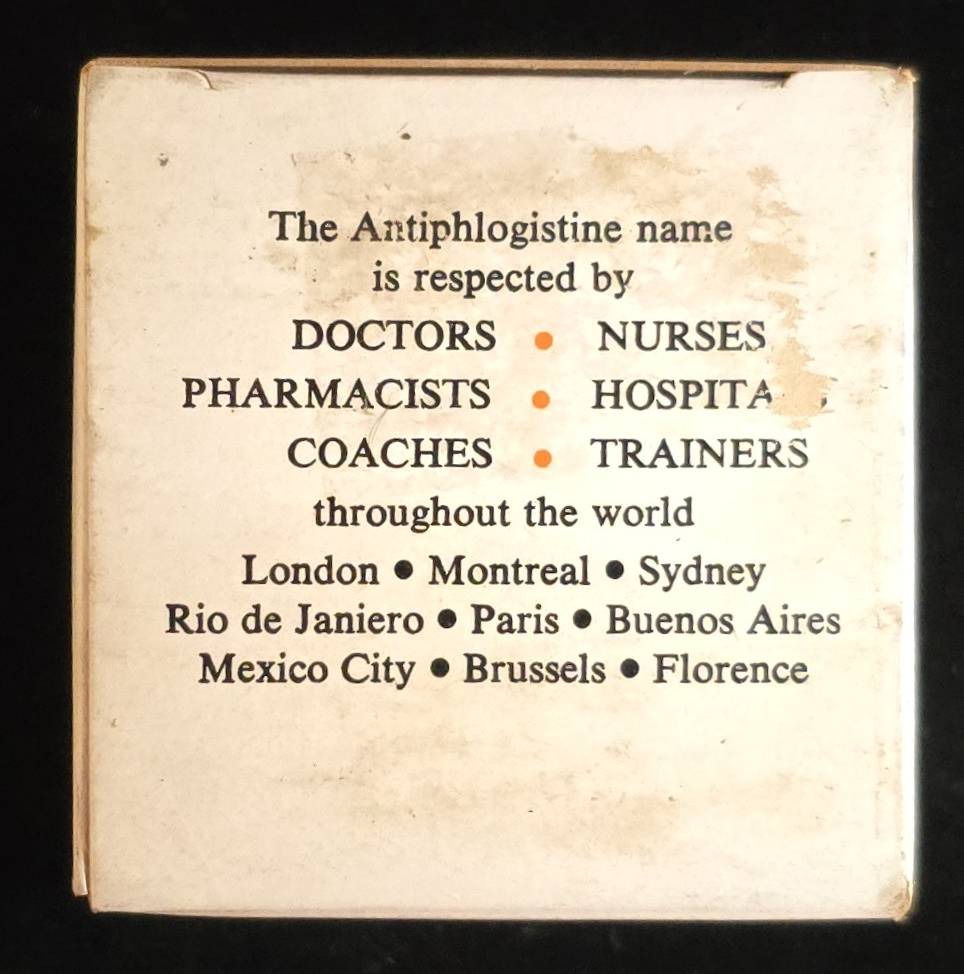
Antiphlogistine was first developed in the late 1800s and became a household name well into the 1940s–50s. Before modern NSAIDs, poultices like this were used to draw out “congestion” or “inflammatory toxins.” Its maker, The Denver Chemical Mfg. Co., marketed it to doctors, nurses, pharmacists, hospitals, coaches, and trainers—a wide audience in both professional and home medical settings.
Kaolin, a clay-like mineral, helped deliver sustained warmth and absorption, while ingredients like methyl salicylate (wintergreen oil) acted as counterirritants.
Curious Facts, Ephemera, and Trivia
The word Antiphlogistine literally means “against inflammation.”
Directions include testing the poultice on your wrist before application—just like baby formula.
Cities proudly listed on the box include London, Rio de Janeiro, Brussels, and Florence, as if to declare global medical dominance.
Excerpt
“CAUTION: In no case apply so hot as to burn patient.”
“Apply unheated on minor burns, chapped skin, poison ivy and non-poisonous insect bites.”
Why it is in the Cabinet
This poultice captures a fascinating moment in medical history when treatments were equal parts chemistry, folklore, and hope. It’s a product of its time—before muscle rubs came in tubes, and before inflammation had its own pharmaceutical aisle. The branding, instructions, and persistent belief in warmth-based healing earn it a rightful place in the Cabinet.
Support Dr. Bebout’s Cabinet of Medical Curiosities
If you enjoy the history, the oddities, and the effort, help keep this cabinet open. Every little bit helps preserve and share the strange wonders of medicine's past.
Buy Me a Ko-fi ☕ Buy Me a Coffee ☕ Tip via PayPal 💵