
Title
Antikamnia “Beatrice” Advertising Card and 1910 Calendar
Author
The Antikamnia Chemical Company, St. Louis, Missouri
Image
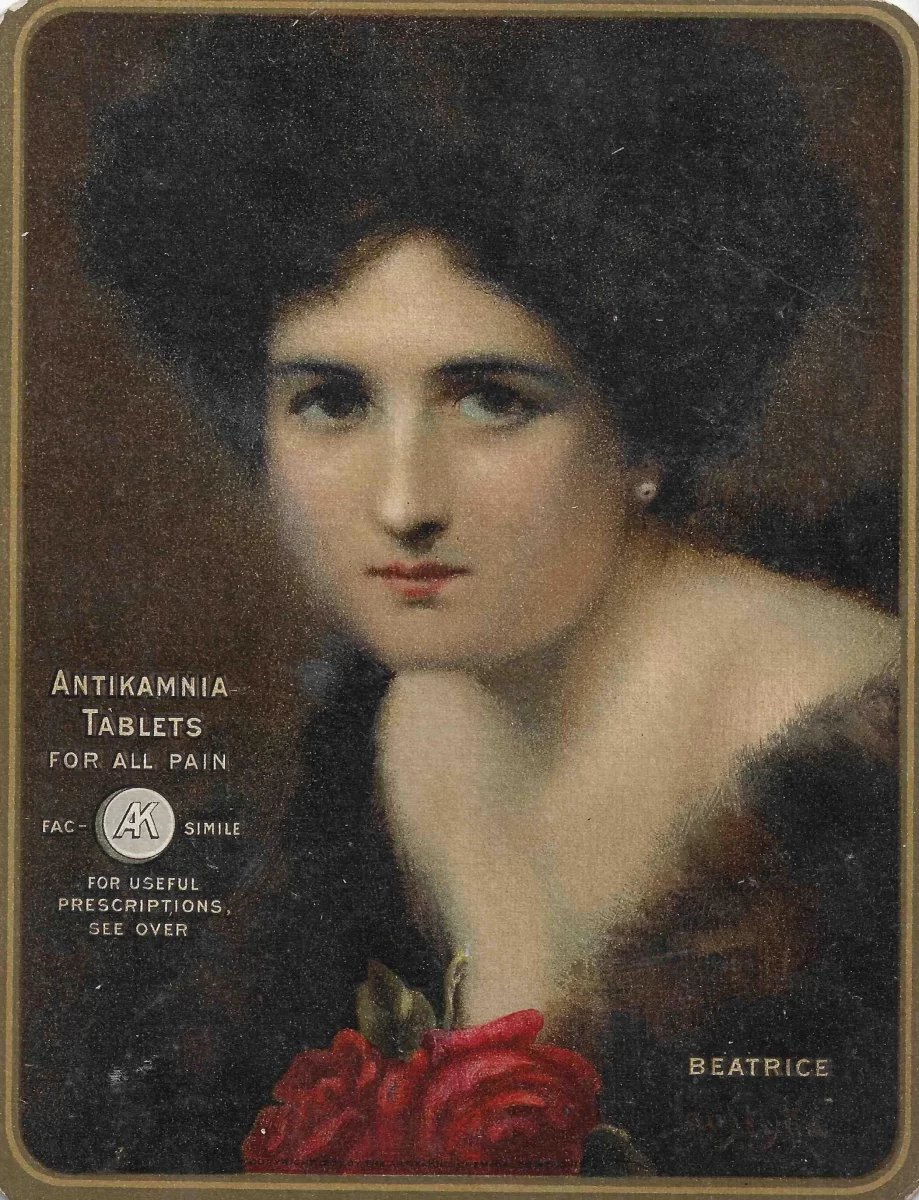
Description
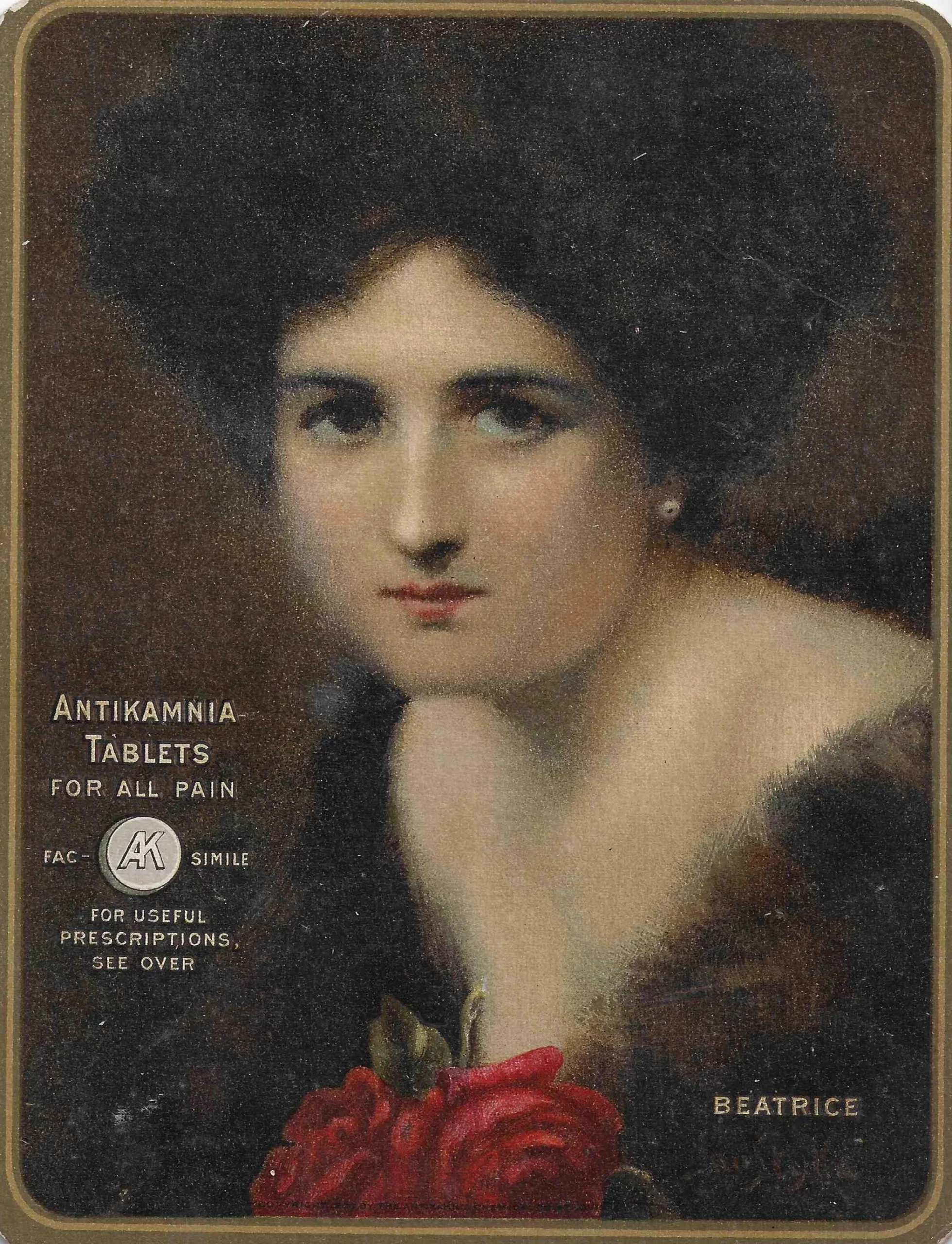
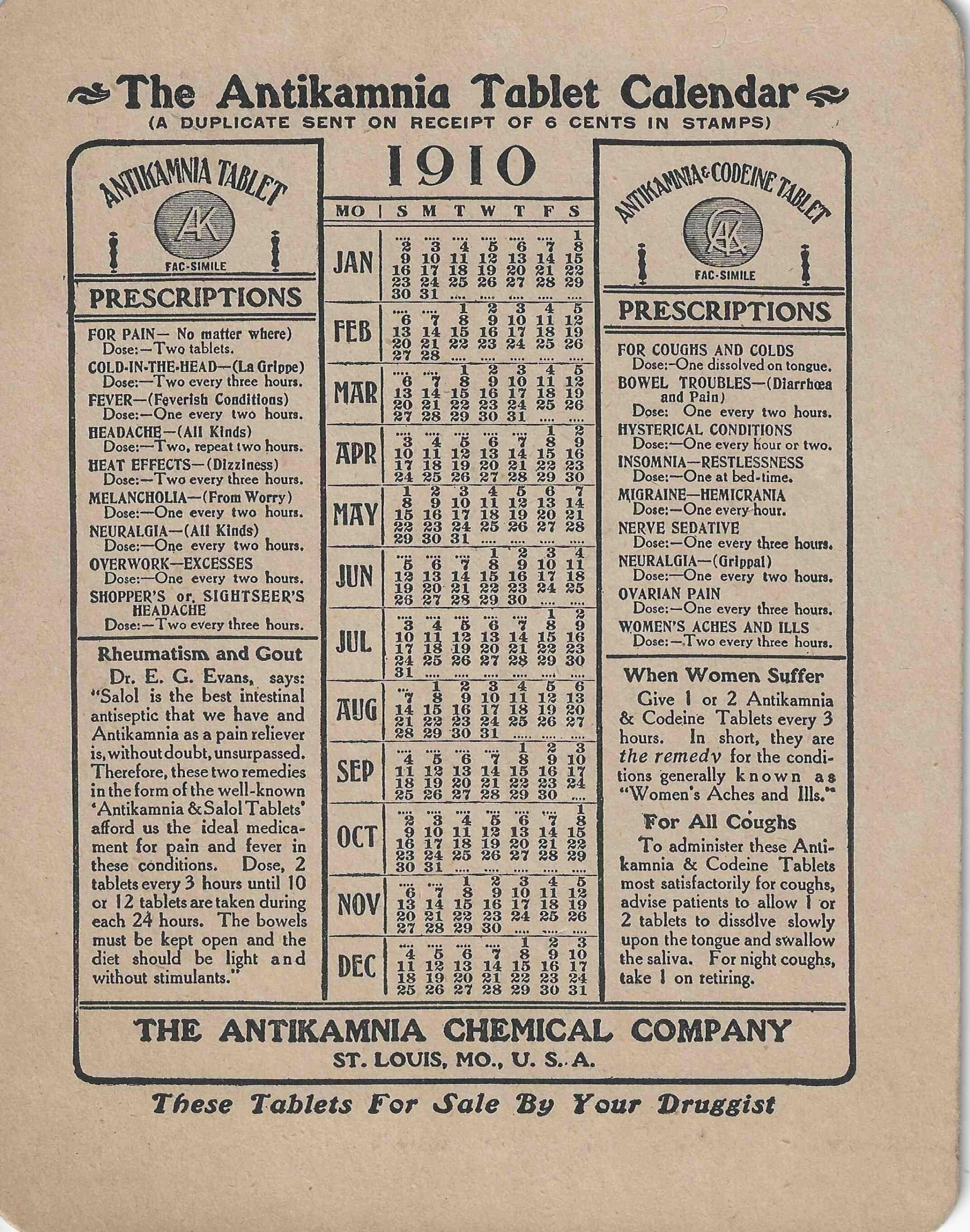
This advertising card, titled “Beatrice,” was produced by the Antikamnia Chemical Company as part of their well-known promotional calendar series. The front features a richly colored lithograph of a woman holding roses, a work of art designed to appeal to physicians and the general public alike. The reverse side contains the 1910 Antikamnia Tablet calendar, along with suggested prescriptions for a wide variety of ailments—from “cold-in-the-head” and “melancholia” to “shopper’s or sightseer’s headache.”
Condition
The card shows light wear at the corners and some surface rubbing consistent with age, but the lithographic portrait remains vivid and well preserved. Calendar text on the reverse is clear and legible.
Gallery
Historical context
Antikamnia—meaning “opposed to pain”—was marketed aggressively from the 1890s into the early 20th century. The tablets originally contained acetanilid, a coal tar derivative that was later discovered to be toxic to the liver and blood. Antikamnia became infamous as one of the most prominent “patent medicines” of its era, heavily advertised through eye-catching trade cards and calendars distributed to physicians’ offices and pharmacies.
By 1910, the company was promoting not only Antikamnia Tablets but also combinations with codeine, further blurring the line between legitimate medicine and narcotic-laced nostrums.
Curious Facts, Ephemera, and Trivia
The Antikamnia calendars are now highly collectible, both for their striking artwork and as examples of early 20th-century medical advertising.
Each year featured a new portrait or theme, making them desirable keepsakes in homes and doctors’ offices.
“Beatrice” is one of several named female portraits used by the company to lend a refined and elegant air to their promotions.
Instructions on the back boldly recommended Antikamnia for “women’s aches and ills,” as well as for “shopper’s headaches,” highlighting both gendered marketing and the era’s looser medical claims.
Excerpt
“For pain—no matter where: Dose, two tablets.”
– Antikamnia Tablet Calendar, 1910
Why it is in the Cabinet
This piece represents the intersection of art, commerce, and questionable medical practice. Antikamnia’s elegant advertising disguised the dangers of its active ingredients, making it a quintessential example of quack pharmaceutical history. The “Beatrice” calendar card not only preserves a vivid piece of early 20th-century ephemera but also illustrates how medicine was marketed as both science and spectacle.
Support Dr. Bebout’s Cabinet of Medical Curiosities
If you enjoy the history, the oddities, and the effort, help keep this cabinet open. Every little bit helps preserve and share the strange wonders of medicine's past.
Buy Me a Ko-fi ☕ Buy Me a Coffee ☕ Tip via PayPal 💵