
Title
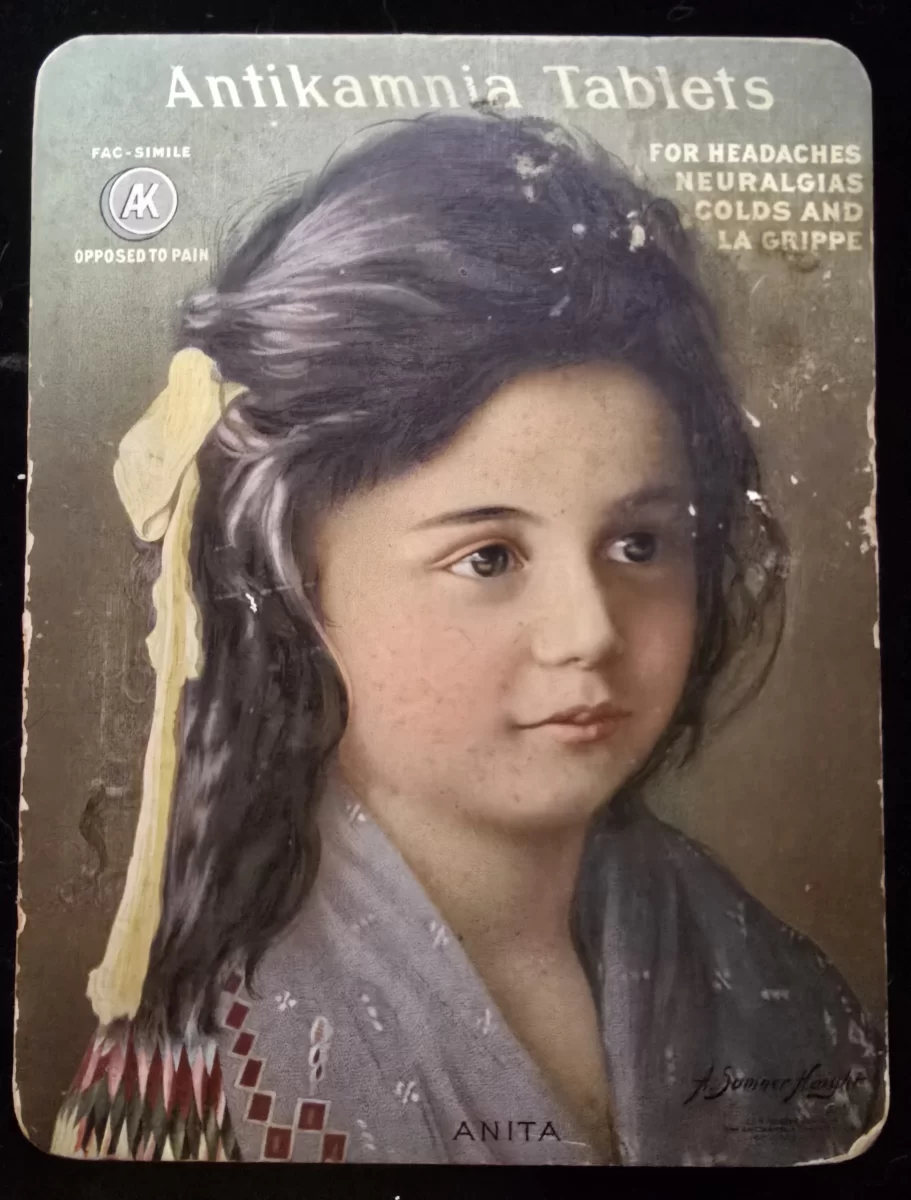
Antikamnia Advertising Calendar Card – 1912 (“Anita” by A. S. Wanner)
Author
A. S. Wanner
Image
Description
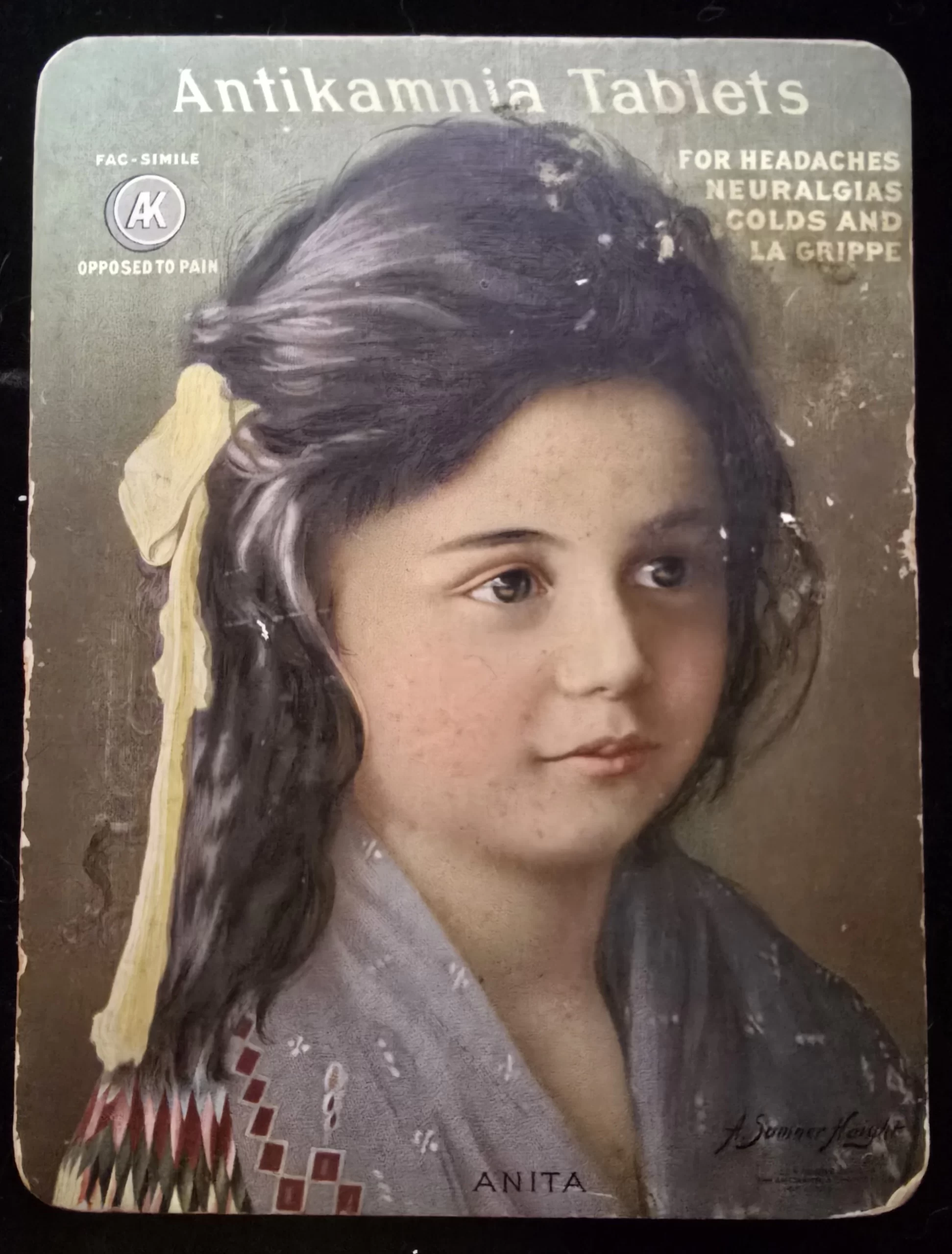
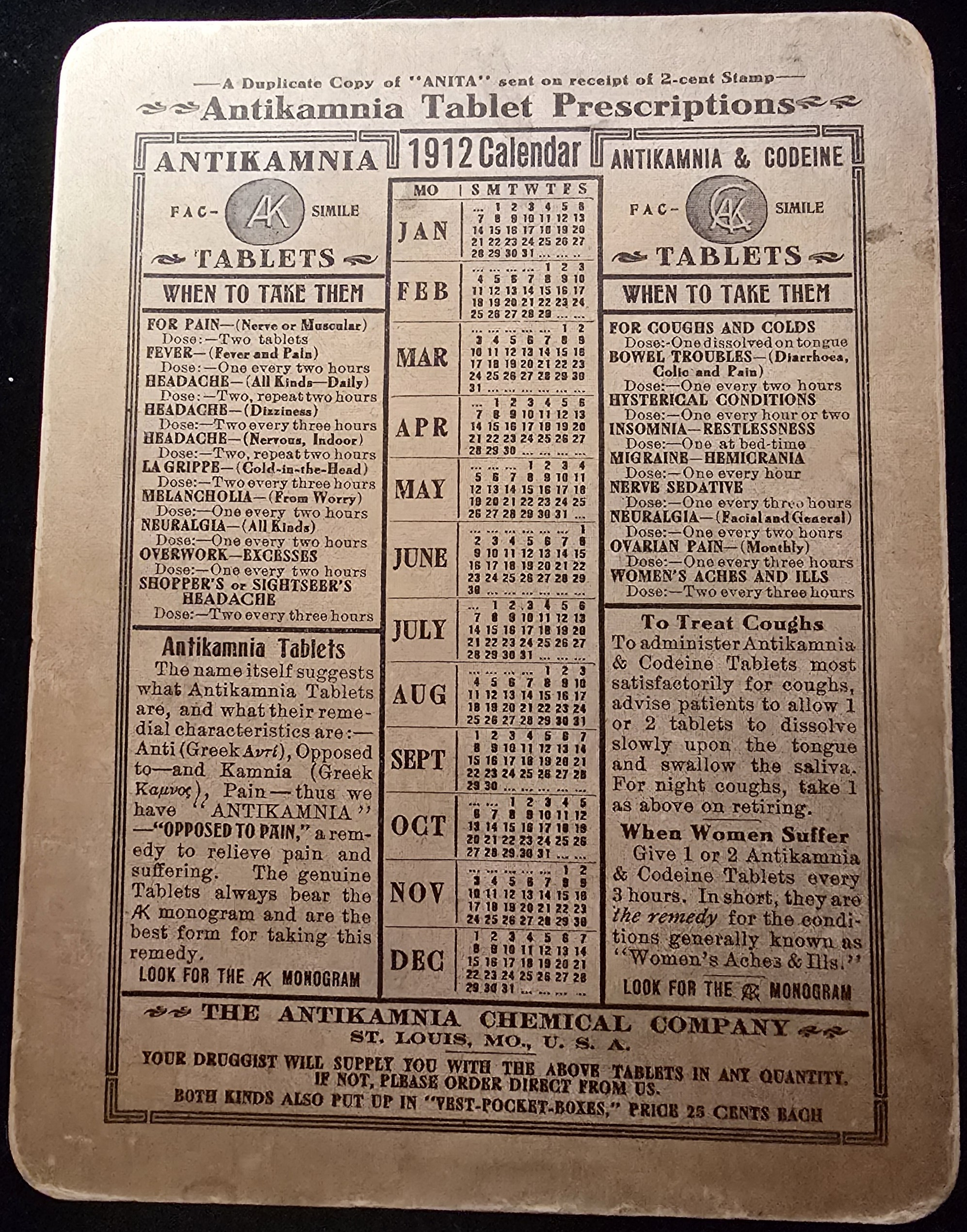
This 1912 advertising card was issued by the Antikamnia Chemical Company of St. Louis, Missouri, featuring the portrait “Anita” by A. S. Wanner. Antikamnia (Greek for “opposed to pain”) was marketed as a cure for headaches, neuralgia, colds, la grippe, and other conditions. The reverse side of the card includes a full 1912 calendar and prescribing guide for Antikamnia Tablets and Antikamnia & Codeine Tablets.
Condition
Good vintage condition with minor wear consistent with age. Printing remains clear, calendar intact.
Gallery
Historical context
Antikamnia was a widely used patent medicine in the late 19th and early 20th centuries. Its main ingredient, acetanilide, provided pain relief but was also toxic, causing dangerous blood changes such as methemoglobinemia. Despite this, Antikamnia enjoyed success through aggressive advertising, particularly through collectible calendars, art prints, and ephemera.
Antikamnia was not alone in its use of acetanilide. Other popular brands of the early 20th century, such as Miles’ Pain Pills, also relied on the drug before its toxic side effects were widely recognized. Like Antikamnia, Miles marketed acetanilide as a safe remedy for headaches, colds, and general pain — though both would eventually be linked to cases of methemoglobinemia and serious poisoning.
Curious Facts, Ephemera, and Trivia
The Antikamnia Company’s slogan was “Opposed to Pain.”
Later formulations combined acetanilide with codeine, appealing to physicians as a professional remedy.
The U.S. government eventually forced the company to reformulate due to toxicity and false advertising claims.
Today, Antikamnia ephemera is highly collectible, with many pieces valued for their art as much as their pharmaceutical history.
Excerpt
“For Headaches, Neuralgias, Colds and La Grippe… Especially valuable in melancholia, hysteria, and when women suffer.”
Why it is in the Cabinet
This calendar card represents the intersection of toxic pharmacology, aggressive marketing, and collectible art. It illustrates how dangerous products were normalized and even glamorized through advertising in the early 1900s.
Support Dr. Bebout’s Cabinet of Medical Curiosities
If you enjoy the history, the oddities, and the effort, help keep this cabinet open. Every little bit helps preserve and share the strange wonders of medicine's past.
Buy Me a Ko-fi ☕ Buy Me a Coffee ☕ Tip via PayPal 💵