
Title
American White Cross Waterproof Adhesive Bandages Tin
Author
N/A
Image
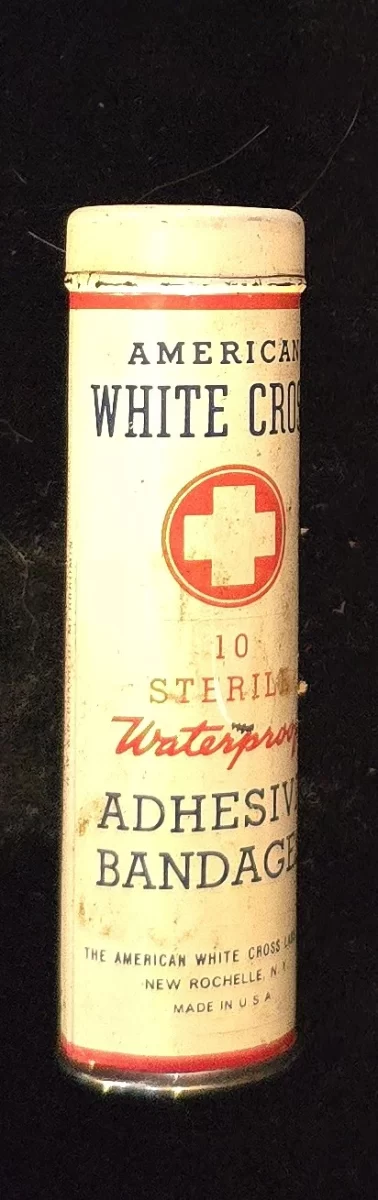
Description
This small vintage tin once held American White Cross Waterproof Adhesive Bandages, complete with a mercurochrome medicated pad. Produced in New Rochelle, New York, the tin reflects the mid-20th century shift toward convenient, portable first aid products that combined antiseptic treatment with wound covering. The White Cross logo and bold lettering were designed to compete with Johnson & Johnson’s popular Band-Aid brand, while emphasizing waterproof durability and antiseptic protection.
Condition
Tin shows light surface wear and scuffing consistent with age and storage. Hinged lid remains functional, graphics are legible, and overall preservation is good for display as medical advertising ephemera.
Gallery

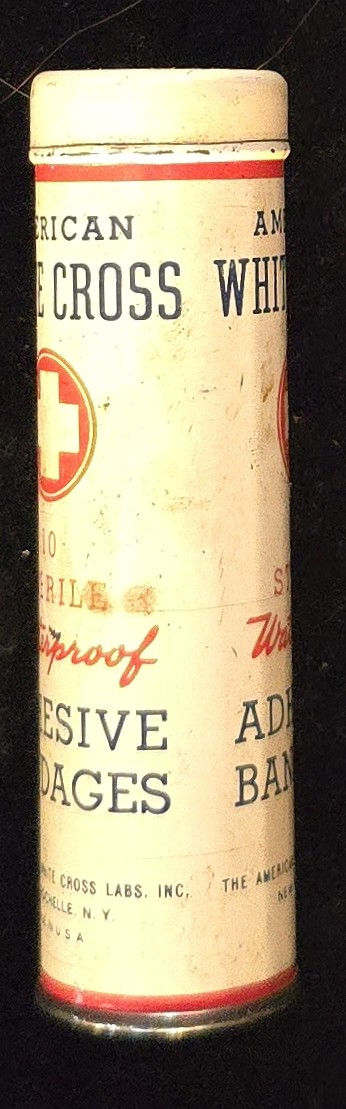
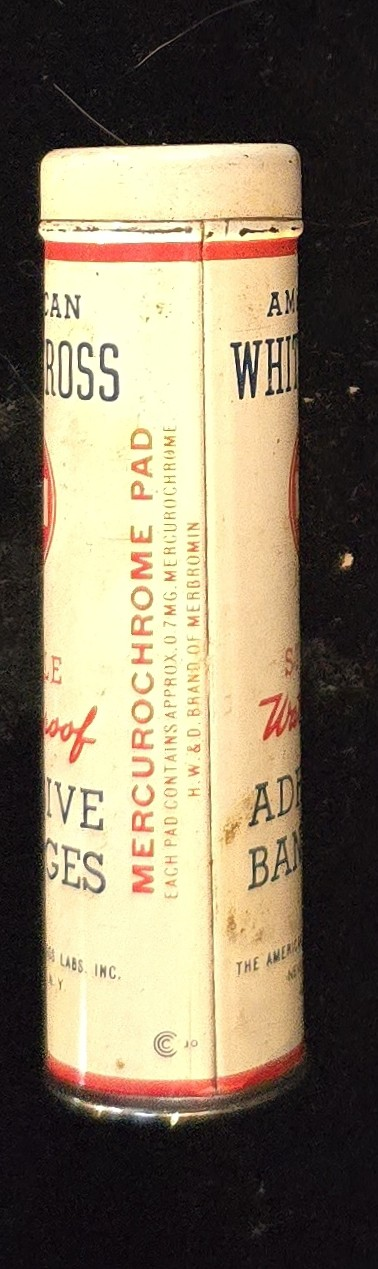
Historical context
The American White Cross Laboratories was founded in the early 1900s and became best known for its line of adhesive bandages, antiseptics, and first aid kits. By the mid-20th century, they marketed themselves as a competitor to larger brands like Johnson & Johnson and Bauer & Black. Their packaging often highlighted “medicated” pads soaked in mercurochrome — a mercury-based antiseptic that was widely used at the time but later abandoned for safety reasons.
Curious Facts, Ephemera, and Trivia
“Mercurochrome” was once a household staple for cuts and scrapes, leaving a telltale bright red stain on the skin.
American White Cross also produced cotton, gauze, and iodine swabs, distributing their goods in pharmacies nationwide.
Collectors prize these tins for their bold graphics, which echo the design trends of mid-century advertising.
Excerpt
“Waterproof adhesive bandages with mercurochrome pad — antiseptic protection you can trust.” (as featured on the original tin packaging)
Why it is in the Cabinet
This tin represents the evolution of first aid packaging in the 20th century and the public’s reliance on now-abandoned antiseptics like mercurochrome. Its survival in good condition makes it a valuable artifact of medical advertising history and a colorful addition to the Cabinet.
Support Dr. Bebout’s Cabinet of Medical Curiosities
If you enjoy the history, the oddities, and the effort, help keep this cabinet open. Every little bit helps preserve and share the strange wonders of medicine's past.
Buy Me a Ko-fi ☕ Buy Me a Coffee ☕ Tip via PayPal 💵