
Title
Acetonum (Sharp & Dohme, ca. 1930s–1950s)
Author
Manufacturer: Sharp & Dohme, Inc.
Location: Baltimore, Maryland / Philadelphia, Pennsylvania
Contents: Acetonum (Acetone)
Volume: 2 ounces (price marked 59¢; larger sizes up to 16 oz listed)
Image
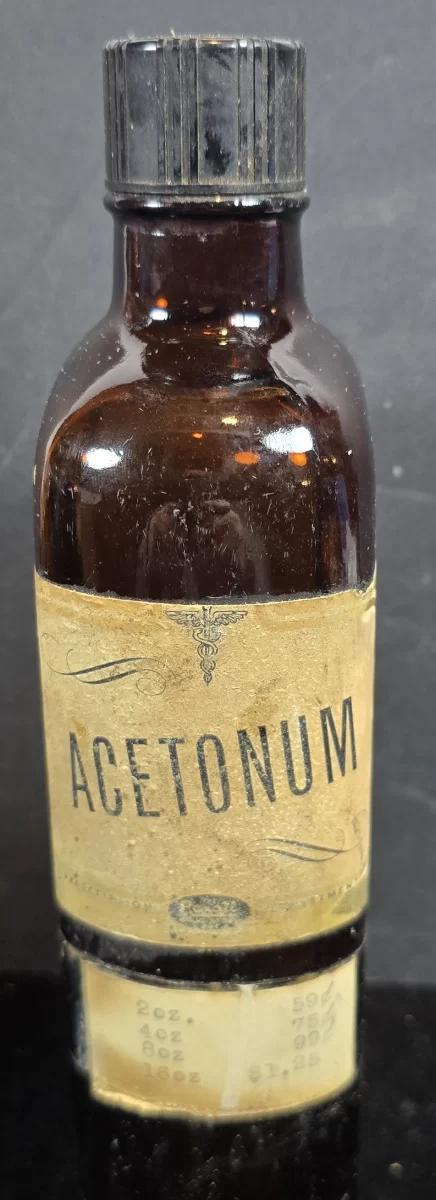
Description
This small amber glass bottle labeled “Acetonum” was produced by Sharp & Dohme, a major American pharmaceutical and chemical manufacturer active before its 1953 merger with Merck & Co. “Acetonum” is the Latinized form of acetone, a volatile solvent used extensively in medical and laboratory settings throughout the early 20th century.
Acetone was a staple of medical practice—employed as a cleaning agent for surgical instruments, a solvent for pharmaceutical preparations, and occasionally as an external antiseptic or drying agent. Its Latin label reflects the persistence of classical medical terminology in commercial pharmaceutical labeling well into the mid-20th century.
Condition
Excellent example with intact paper label showing minimal foxing and strong typography. Light surface wear to glass and cap consistent with age. Price schedule remains clearly legible: 2 oz – 59¢, 4 oz – 75¢, 8 oz – 99¢, 16 oz – $1.25.
Gallery
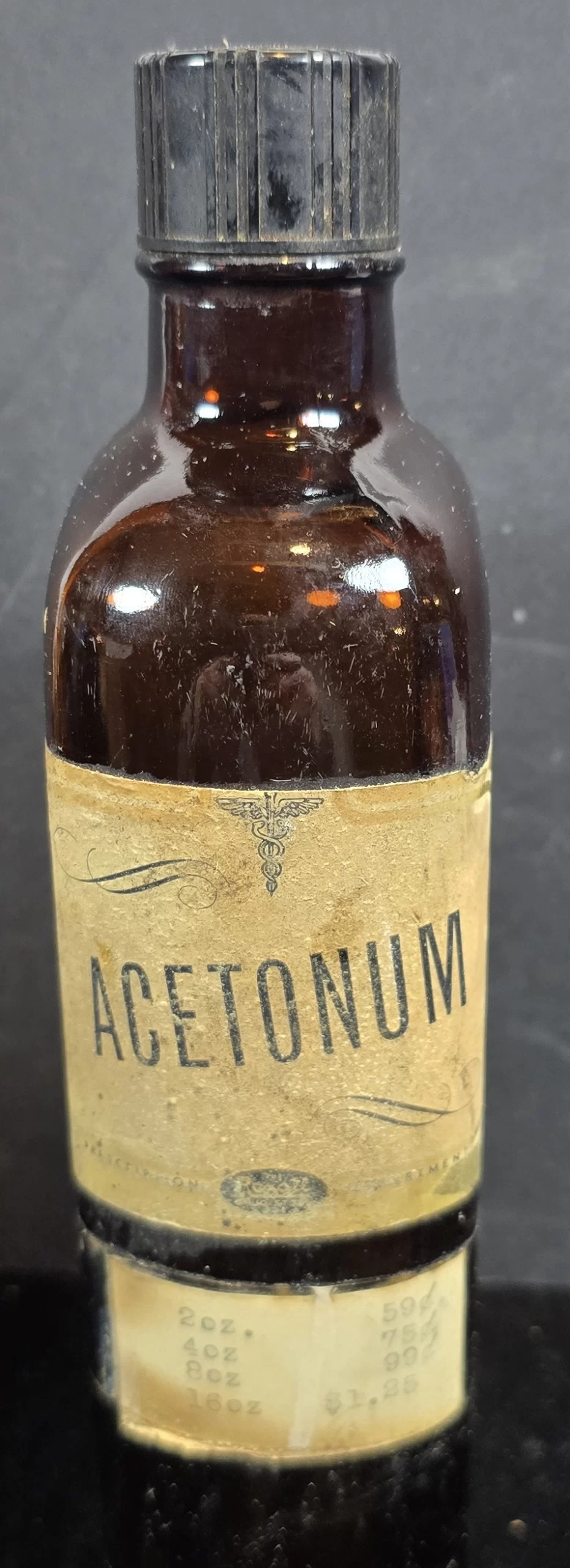
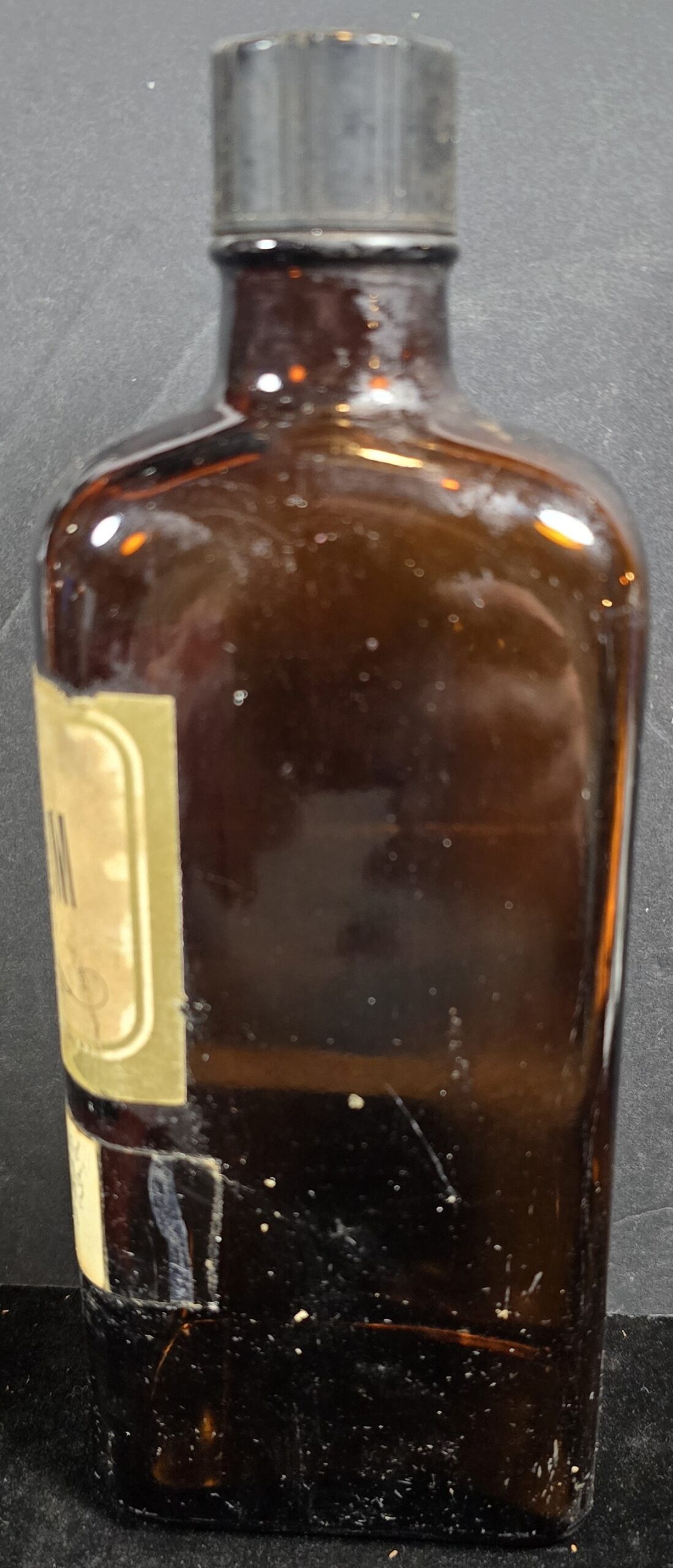
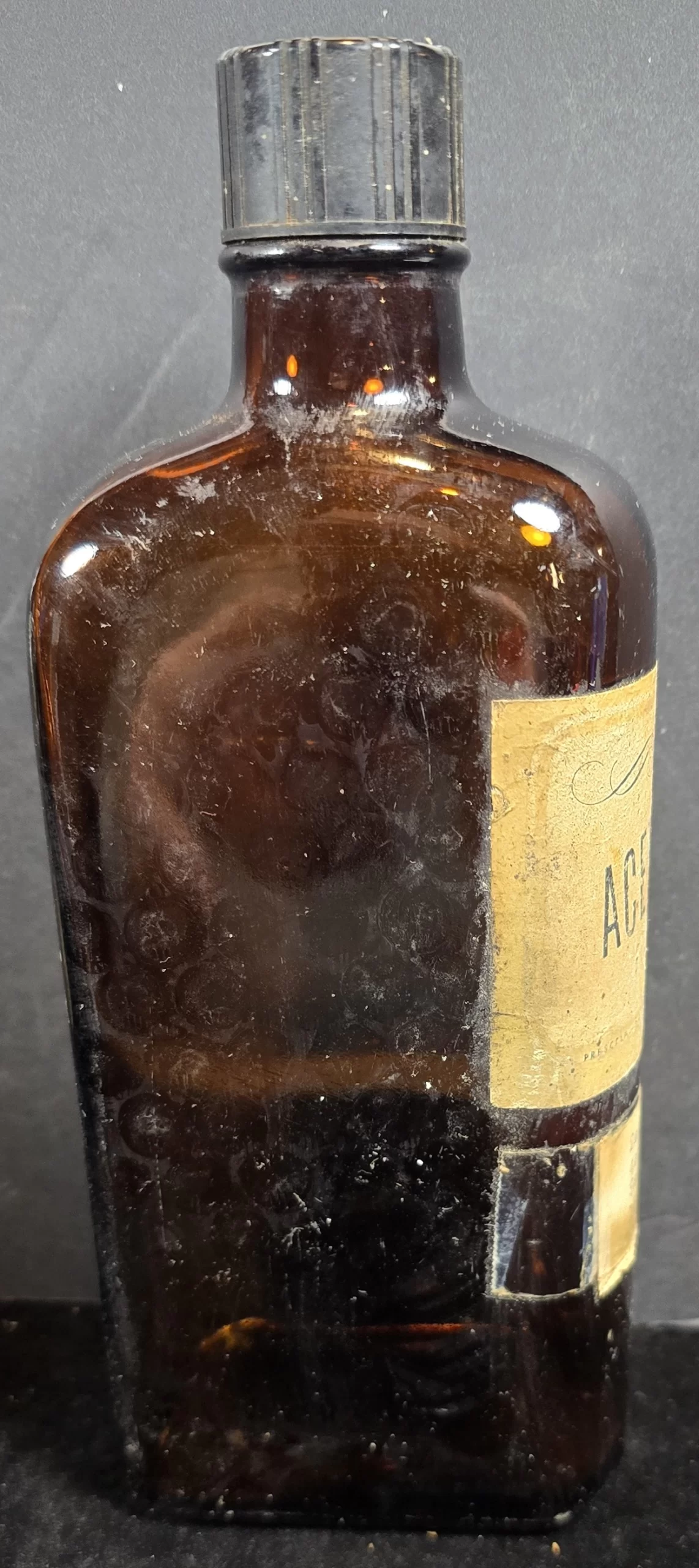
Historical context
Sharp & Dohme originated in Baltimore in 1845 and became one of the country’s most respected pharmaceutical firms. By the 1930s, the company produced hundreds of chemicals, reagents, and proprietary medicines used in both hospitals and physicians’ offices.
Acetone itself played a key role in the development of antisepsis and laboratory chemistry—used for sterilization, glassware cleaning, and in the preparation of collodion dressings and early plastics. During World War I, it was also a critical ingredient in the production of cordite propellant, famously mass-produced under the direction of Chaim Weizmann.
By the 1940s, Sharp & Dohme’s labeling reflected a more clinical and standardized approach, with simple typography and minimal ornamentation—precisely the aesthetic seen on this bottle.
Curious Facts, Ephemera, and Trivia
“Acetonum” labeling persisted long after Latin was dropped from prescription writing, a nod to professional tradition.
Sharp & Dohme bottles were often sold to both physicians and pharmacies for compounding and sterilization purposes.
The company’s reagent line included similar Latin-labeled bottles for Aether Sulphuricus, Spiritus Ammoniae, and Alcoholis.
After merging with Merck & Co. in 1953, the Sharp & Dohme name appeared briefly as Merck Sharp & Dohme, still in use internationally today.
Acetone remains a critical compound in modern laboratories—though no longer supplied in charming 59¢ brown bottles.
Excerpt
“Acetonum… a clear, colorless, highly volatile liquid with a characteristic odor. Used as a solvent and antiseptic, especially in external preparations and cleaning of instruments.”
— U.S. Dispensatory, 23rd Edition (1943)
Why it is in the Cabinet
This bottle captures the transitional period of 20th-century medical supply production—bridging the ornate pharmacy labeling of the early 1900s and the minimalist industrial design that followed. It represents the utilitarian backbone of medicine: the laboratory solvent, humble yet essential to every sterilized procedure and every compounding bench.
Support Dr. Bebout’s Cabinet of Medical Curiosities
If you enjoy the history, the oddities, and the effort, help keep this cabinet open. Every little bit helps preserve and share the strange wonders of medicine's past.
Buy Me a Ko-fi ☕ Buy Me a Coffee ☕ Tip via PayPal 💵