
Title
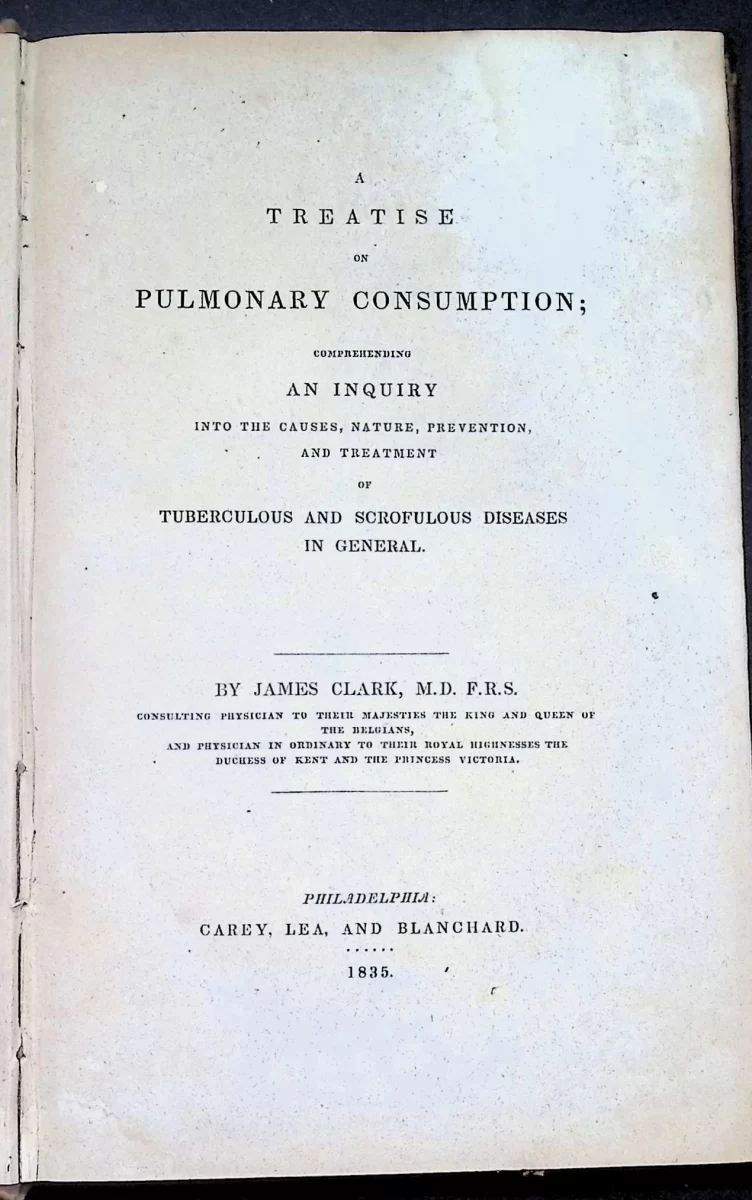
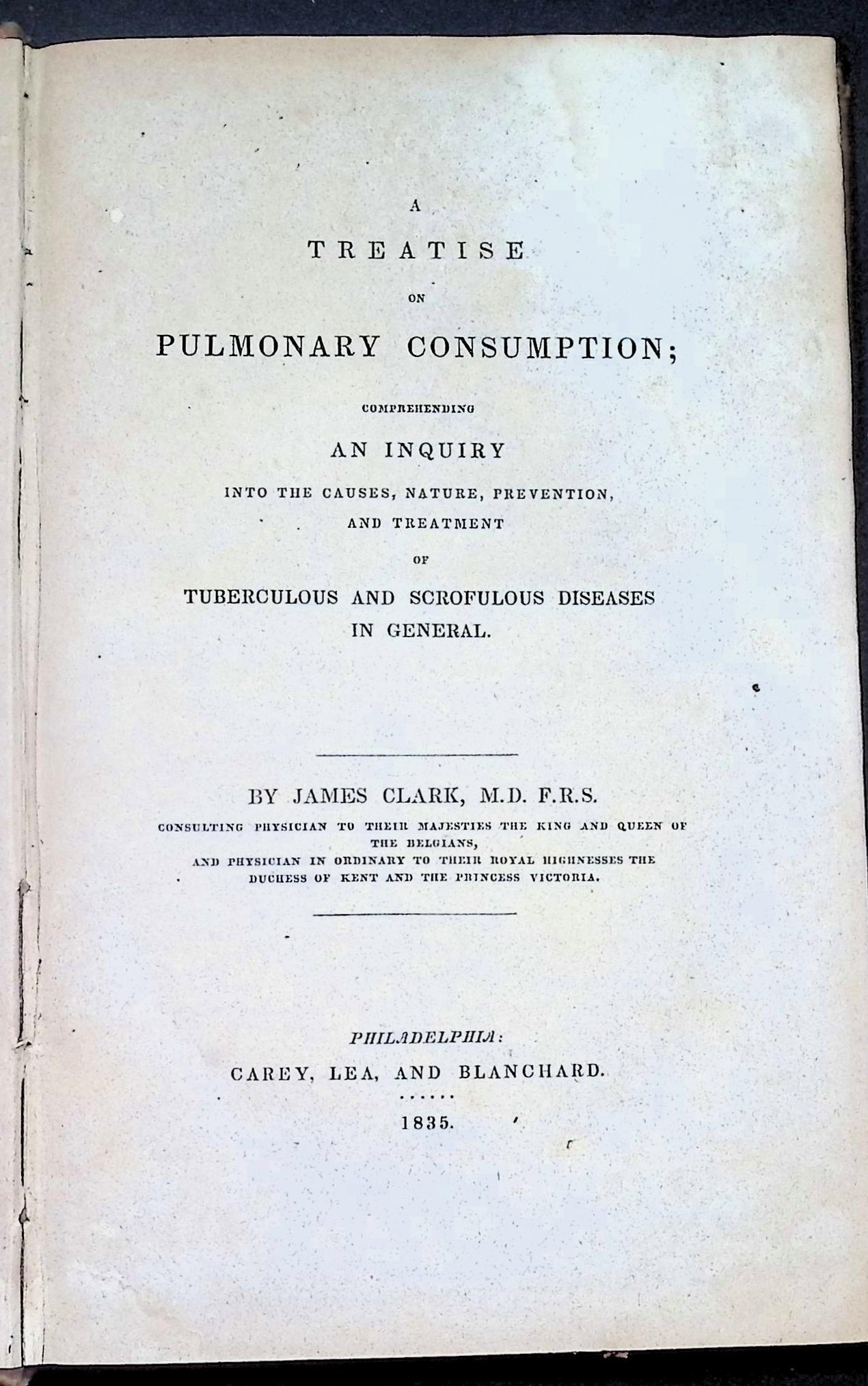
A Treatise on Pulmonary Consumption; Comprehending an Inquiry into the Causes, Nature, Prevention, and Treatment of Tuberculous and Scrofulous Diseases in General
Author
James Clark, M.D., F.R.S.
Image
Description
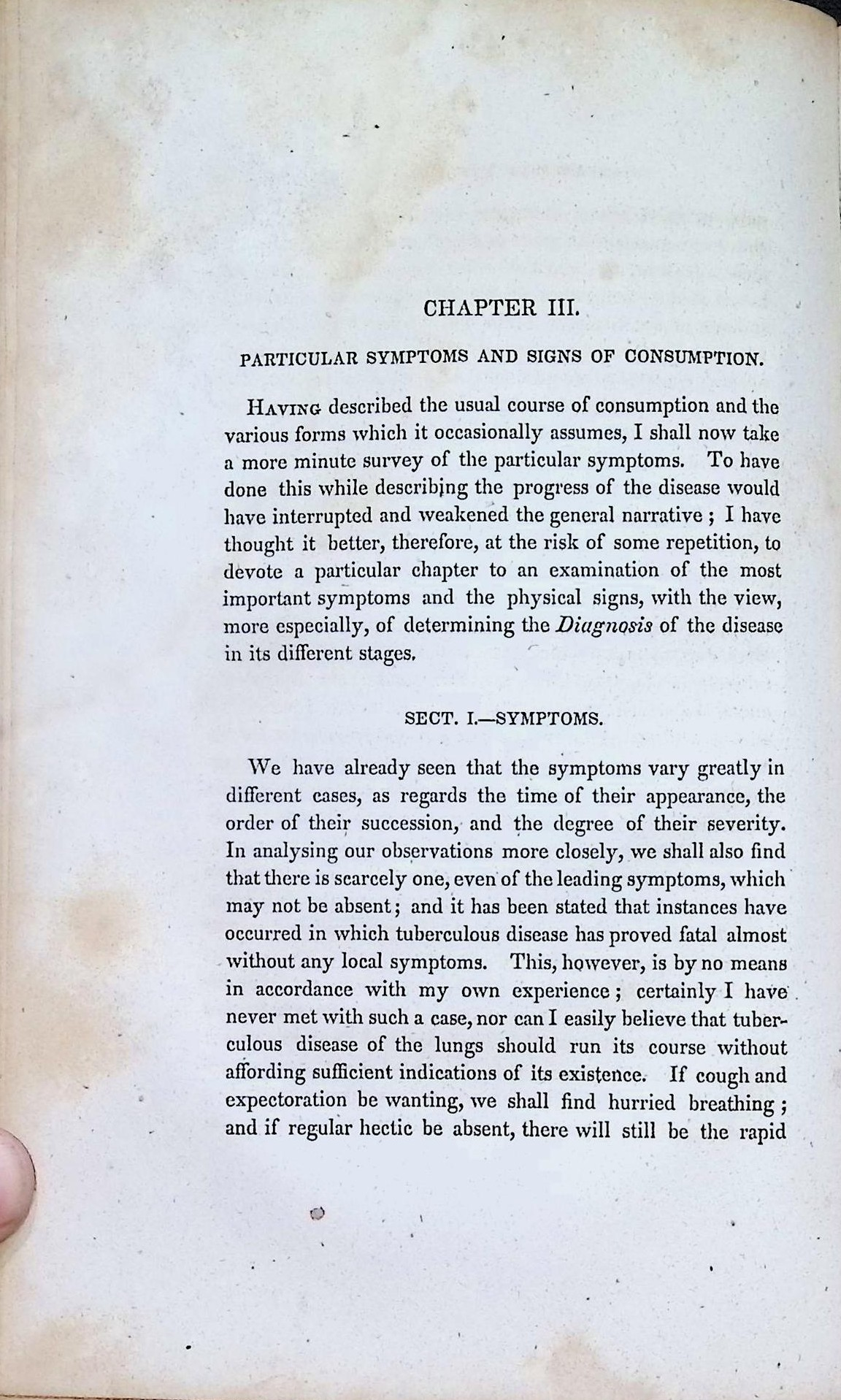
This 1835 medical treatise by James Clark, M.D., F.R.S., presents a comprehensive clinical examination of pulmonary consumption—now recognized as tuberculosis—at a time when its infectious nature had not yet been established. The work systematically addresses symptom progression, diagnostic challenges, animal pathology, and therapeutic approaches grounded in 19th-century medical reasoning.
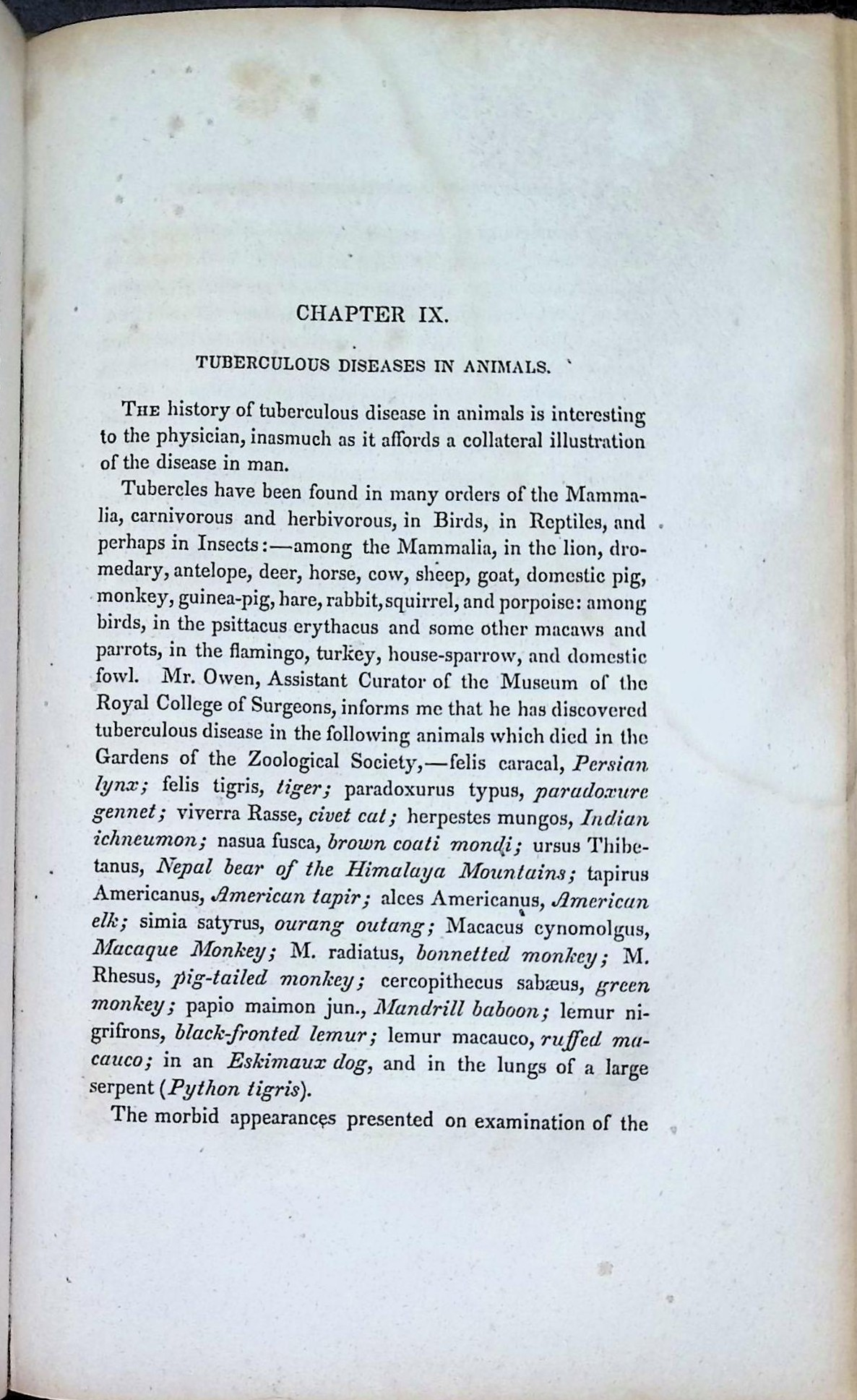
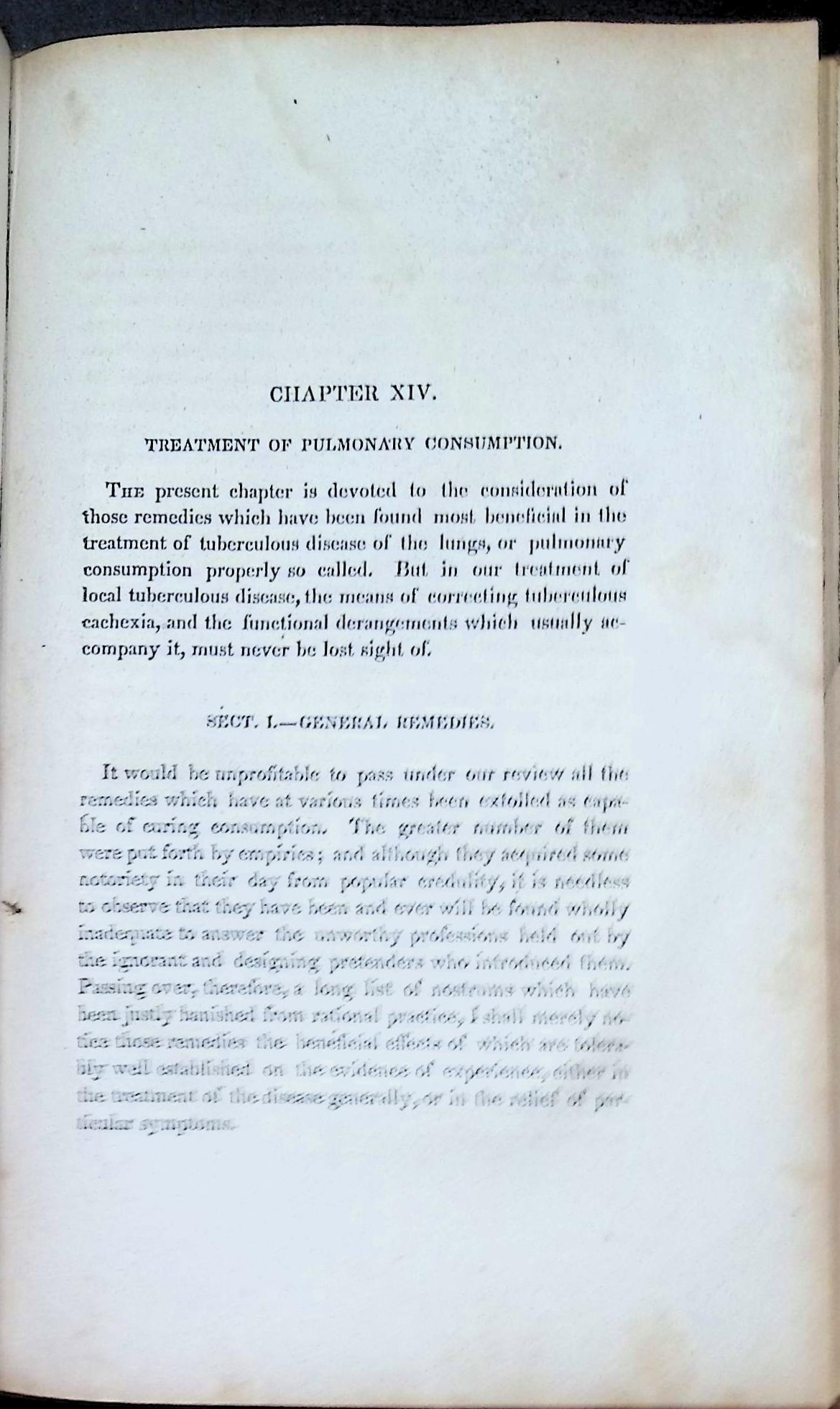
Clark draws upon extensive clinical observation, emphasizing constitutional weakness, environmental factors, and hereditary predisposition. Notably, the text includes chapters on tuberculous disease in animals, reflecting early comparative pathology, and devotes significant attention to treatment strategies while openly acknowledging the limits of curative medicine in advanced disease.
Condition
Original 1835 edition with expected age-related toning and scattered foxing throughout. Pages remain structurally intact and legible. Binding shows wear consistent with use but remains stable. No modern repairs noted.
Gallery
Historical context
Pulmonary consumption was the leading cause of death in Europe and North America during the early 19th century. This work predates germ theory and Robert Koch’s identification of Mycobacterium tuberculosis by nearly fifty years. Clark’s emphasis on clinical observation, disease staging, and preventive measures represents mainstream academic medicine of the period, contrasting sharply with contemporary patent-medicine approaches.
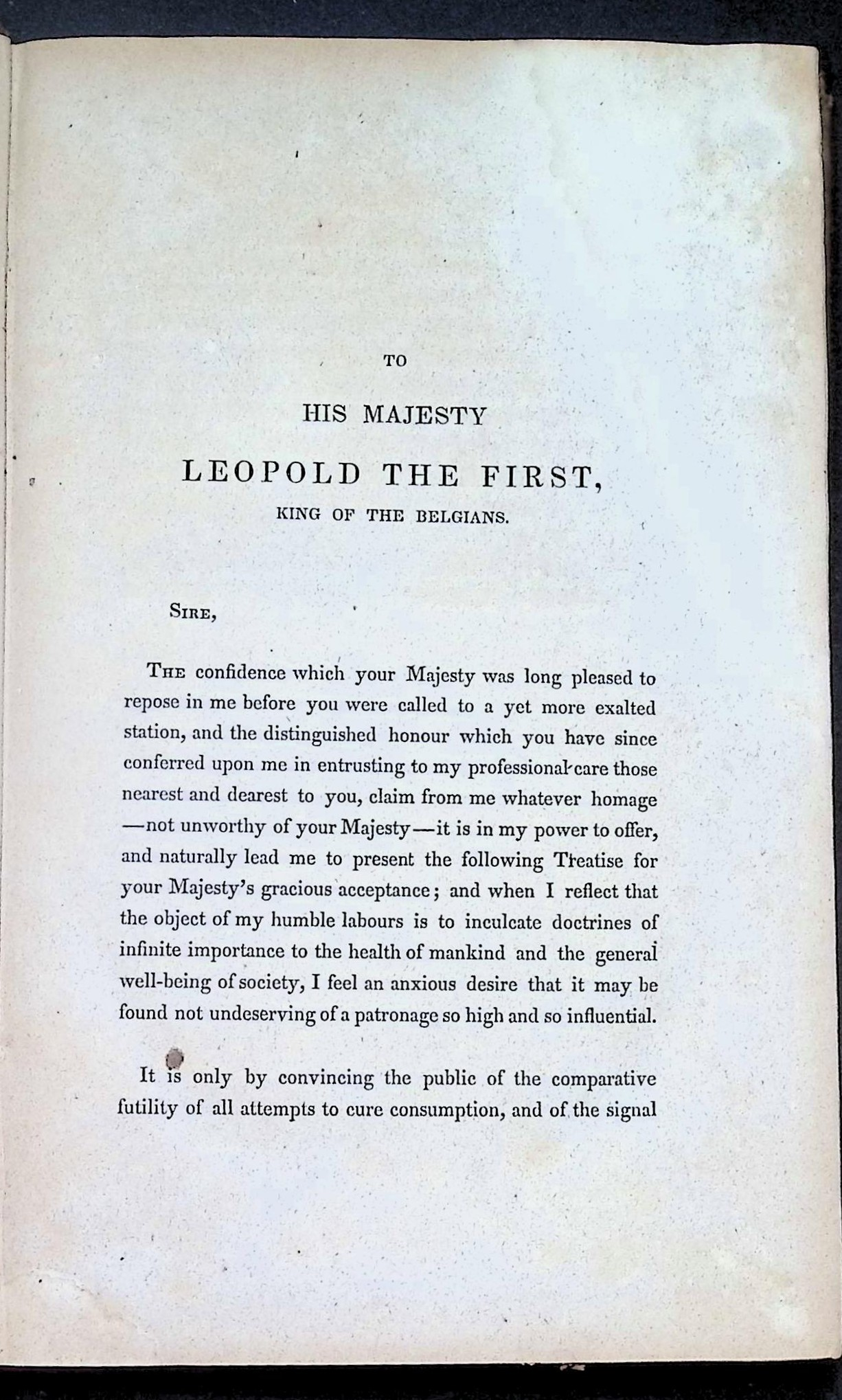
The dedication to King Leopold I underscores the close relationship between elite medical practitioners and European royalty, as well as the perceived importance of consumption as a public health threat.
Curious Facts, Ephemera, and Trivia
Includes documented tuberculosis in a wide range of animals, from cattle to primates to reptiles.
Explicitly argues against many popular “cures” for consumption, calling them ineffective or misleading.
Positions prevention and early recognition as more realistic goals than cure.
Reflects early public-health thinking before bacteriology reshaped medicine.
Excerpt
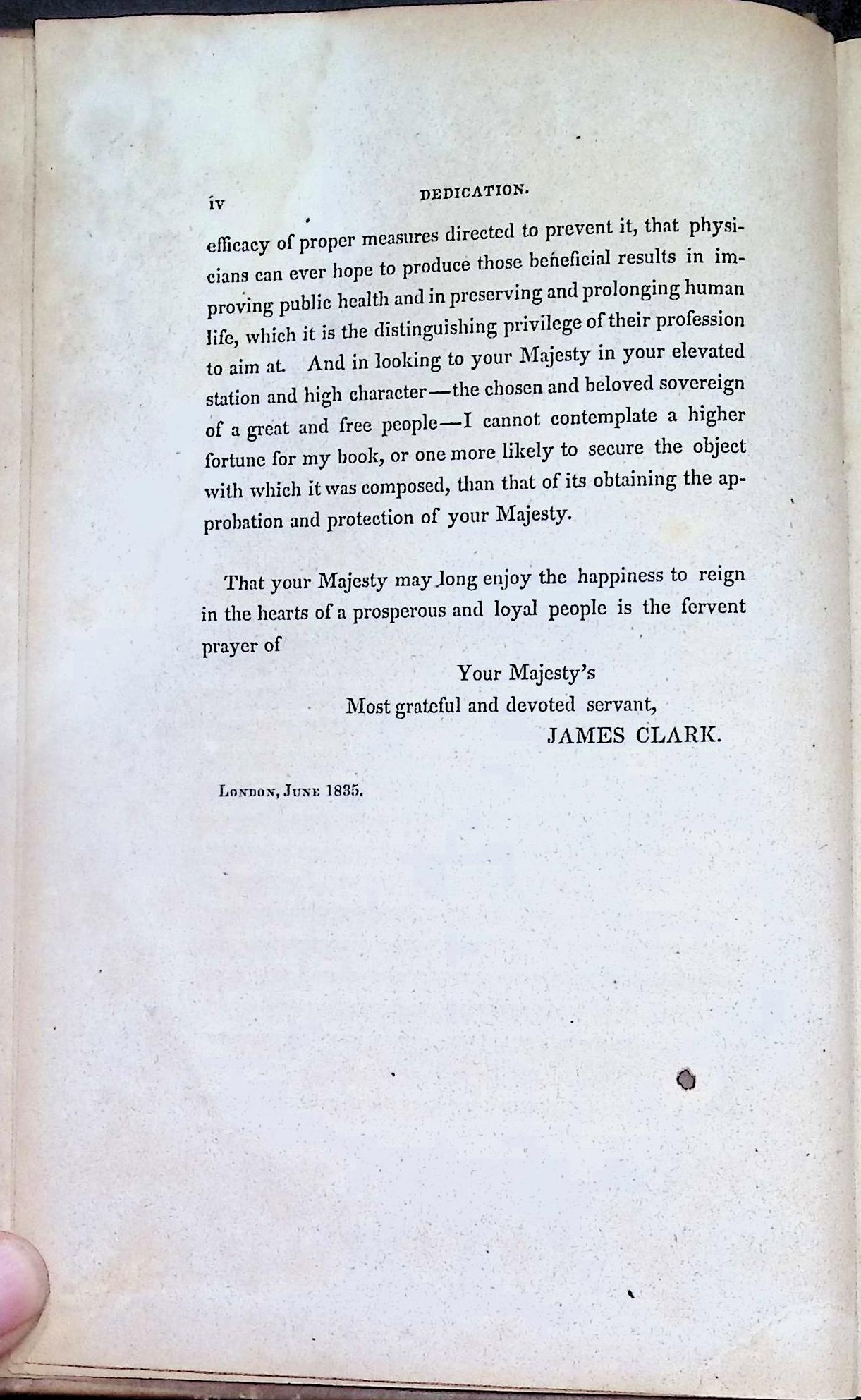
“It is only by convincing the public of the comparative futility of all attempts to cure consumption… that physicians can ever hope to produce those beneficial results in improving public health and in preserving and prolonging human life.”
Why it is in the Cabinet
This volume captures medicine at a transitional moment—rigorous, observational, and increasingly skeptical of miracle cures, yet still operating without microbiology. It documents how physicians understood tuberculosis before antibiotics, X-rays, or germ theory, making it essential for understanding both the evolution of pulmonary medicine and the historical roots of public health.
Digital Copy
A complete, scanned copy of the 1835 Philadelphia edition is available here:
Support Dr. Bebout’s Cabinet of Medical Curiosities
If you enjoy the history, the oddities, and the effort, help keep this cabinet open. Every little bit helps preserve and share the strange wonders of medicine's past.
Buy Me a Ko-fi ☕ Buy Me a Coffee ☕ Tip via PayPal 💵