
Title
A Text-Book of Special Pathology
Author
J. Martin Beattie & W. E. Carnegie Dickson
Image
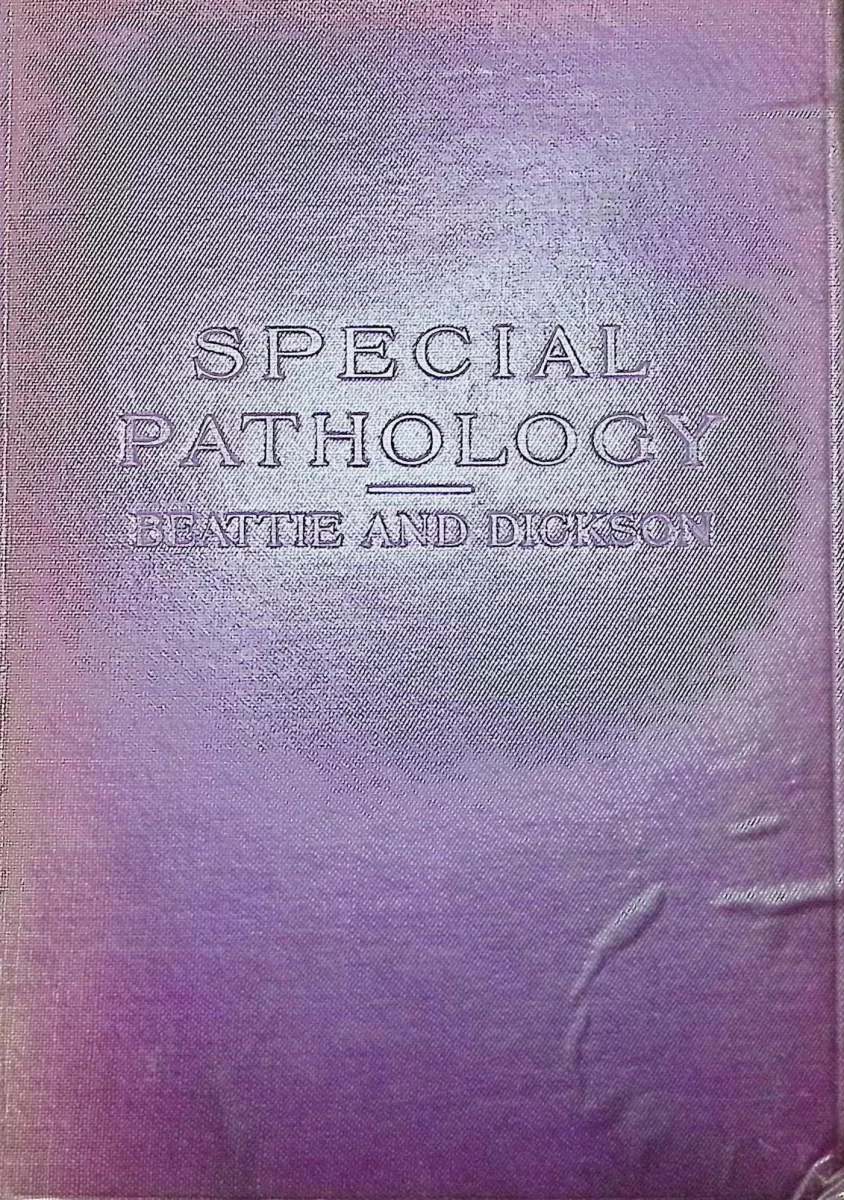
Description
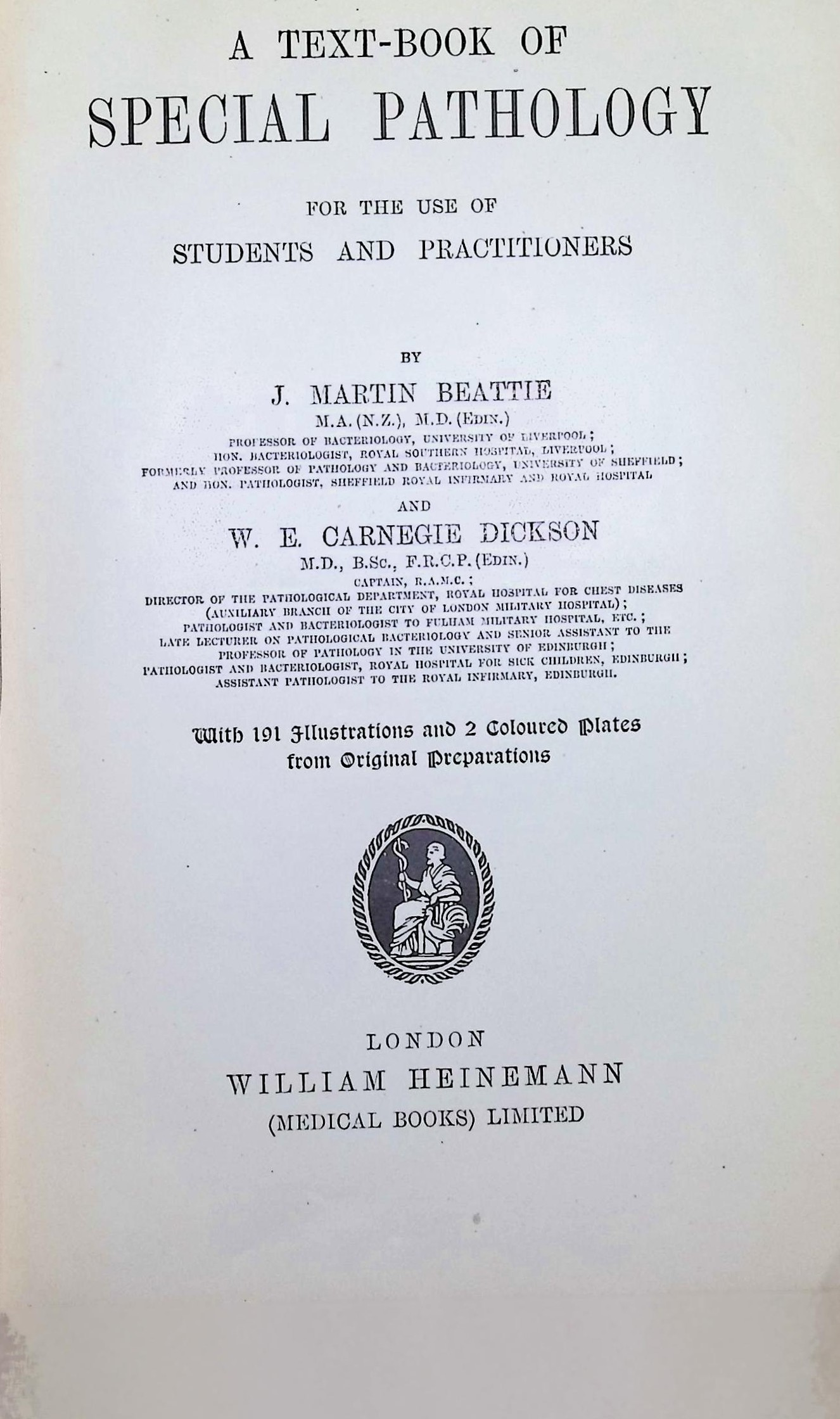
A Text-Book of Special Pathology (London: William Heinemann, 1909; reprints through 1918) was written for students and practitioners, presenting systemic pathology in detail. This volume explores diseases of the blood, respiratory tract, digestive organs, genitourinary system, and more, illustrated with 191 figures and 2 colored plates from original preparations. Beattie and Dickson combined academic pathology with practical clinical examples, making the book a comprehensive reference for early 20th-century medical education.
Condition
Bound in purple cloth with gilt lettering. Spine faded and frayed at the top and bottom. Pages remain intact, though showing age toning. Illustrations, including pathology plates, are clear and legible.
Gallery
Historical context
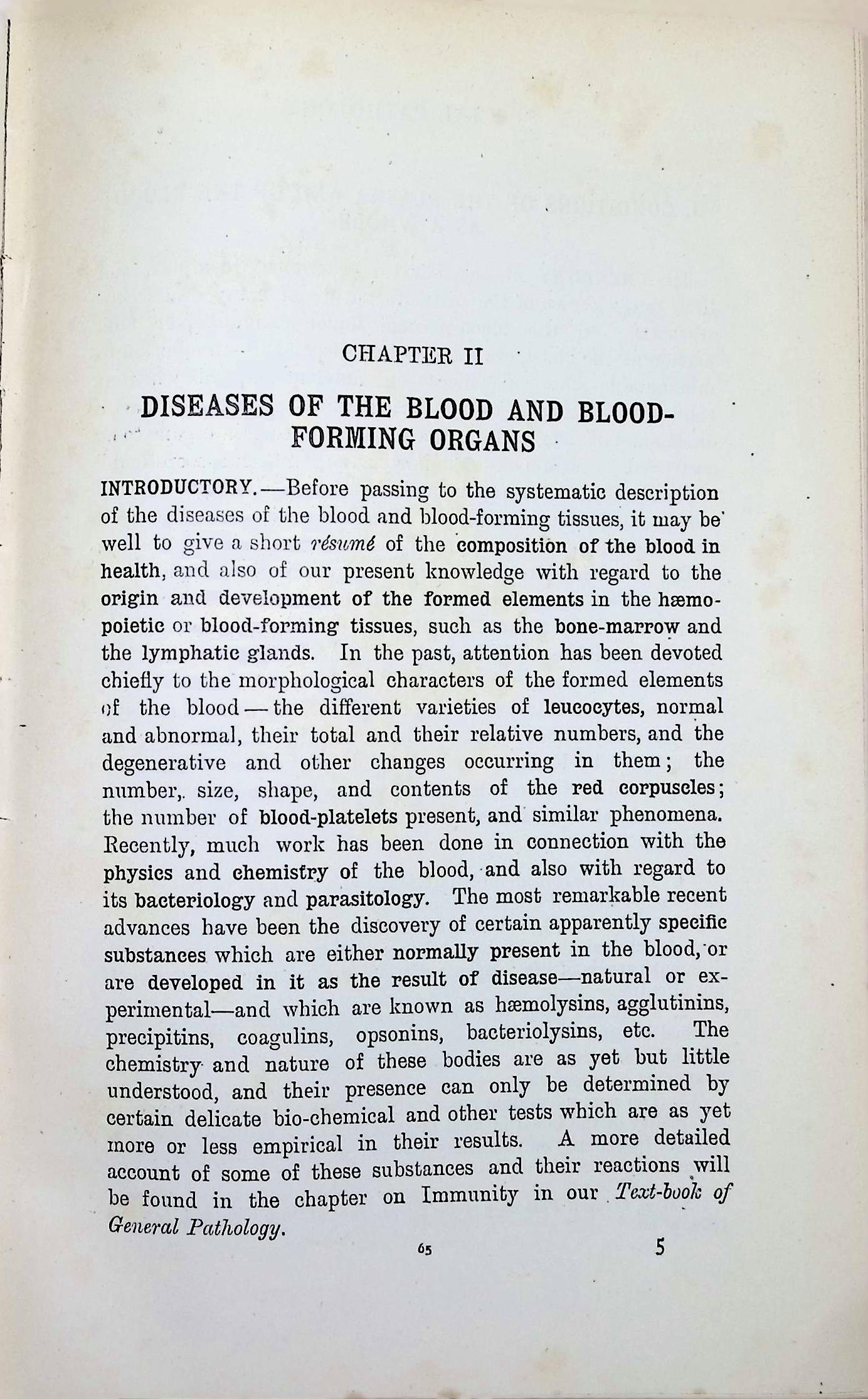
Published in the early 1900s, this textbook reflects the shift from purely descriptive pathology toward experimental and laboratory-based approaches. The emphasis on bacteriology, blood chemistry, and parasitology illustrates medicine’s move into the bacteriological era, just after Koch and Pasteur had laid the foundations of germ theory.
Curious Facts, Ephemera, and Trivia
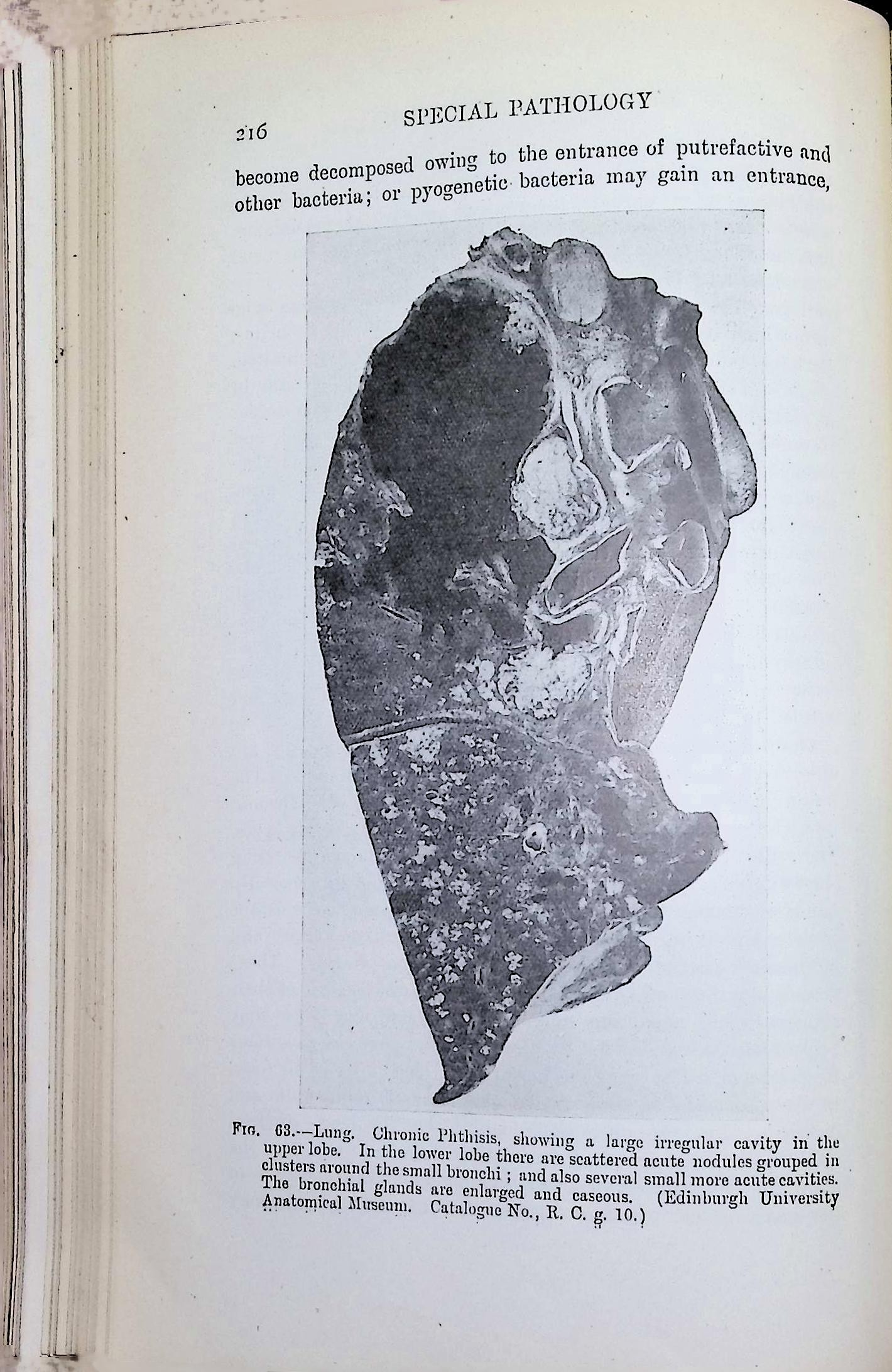
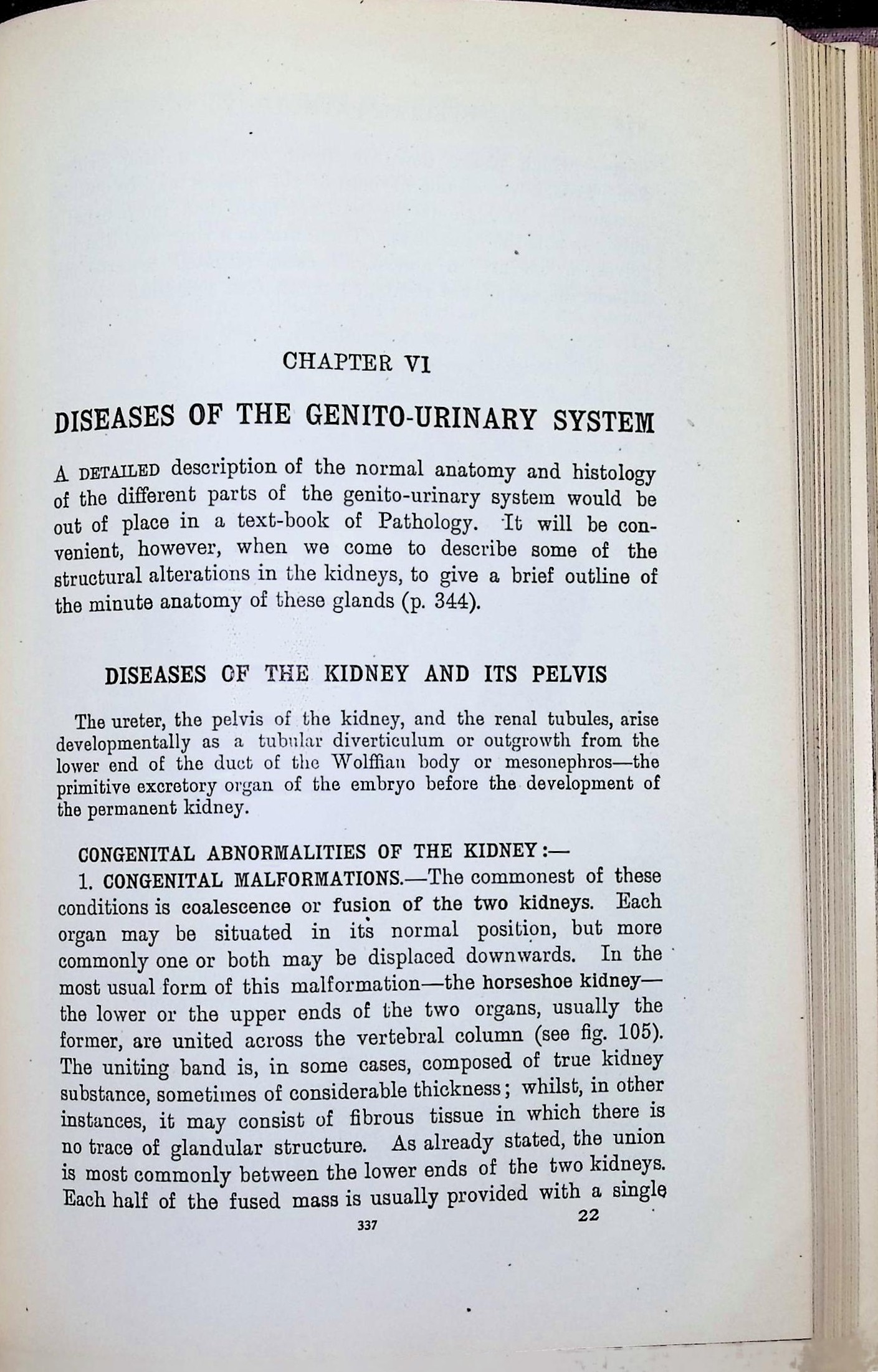
The book contains references to “phthisis” (tuberculosis) and “horseshoe kidney,” highlighting terminology and congenital anomalies recognized at the time.
The illustrations were largely prepared from actual museum specimens, particularly from Edinburgh University’s Anatomical Museum.
Reprinted multiple times during World War I, reflecting its continued demand in medical schools and possibly military medical use.
Excerpt
From Chapter II:
“The most remarkable recent advances have been the discovery of certain apparently specific substances which are either normally present in the blood, or are developed in it as the result of disease … known as hæmolysins, agglutinins, precipitins, coagulins, opsonins, bacteriolysins, etc.”
Why it is in the Cabinet
This textbook exemplifies the state of pathology instruction in the early 20th century and complements the Cabinet’s growing library of foundational medical works. Its detailed disease descriptions and preserved specimen illustrations make it a valuable teaching tool as well as a historical artifact.
Support Dr. Bebout’s Cabinet of Medical Curiosities
If you enjoy the history, the oddities, and the effort, help keep this cabinet open. Every little bit helps preserve and share the strange wonders of medicine's past.
Buy Me a Ko-fi ☕ Buy Me a Coffee ☕ Tip via PayPal 💵