
Title
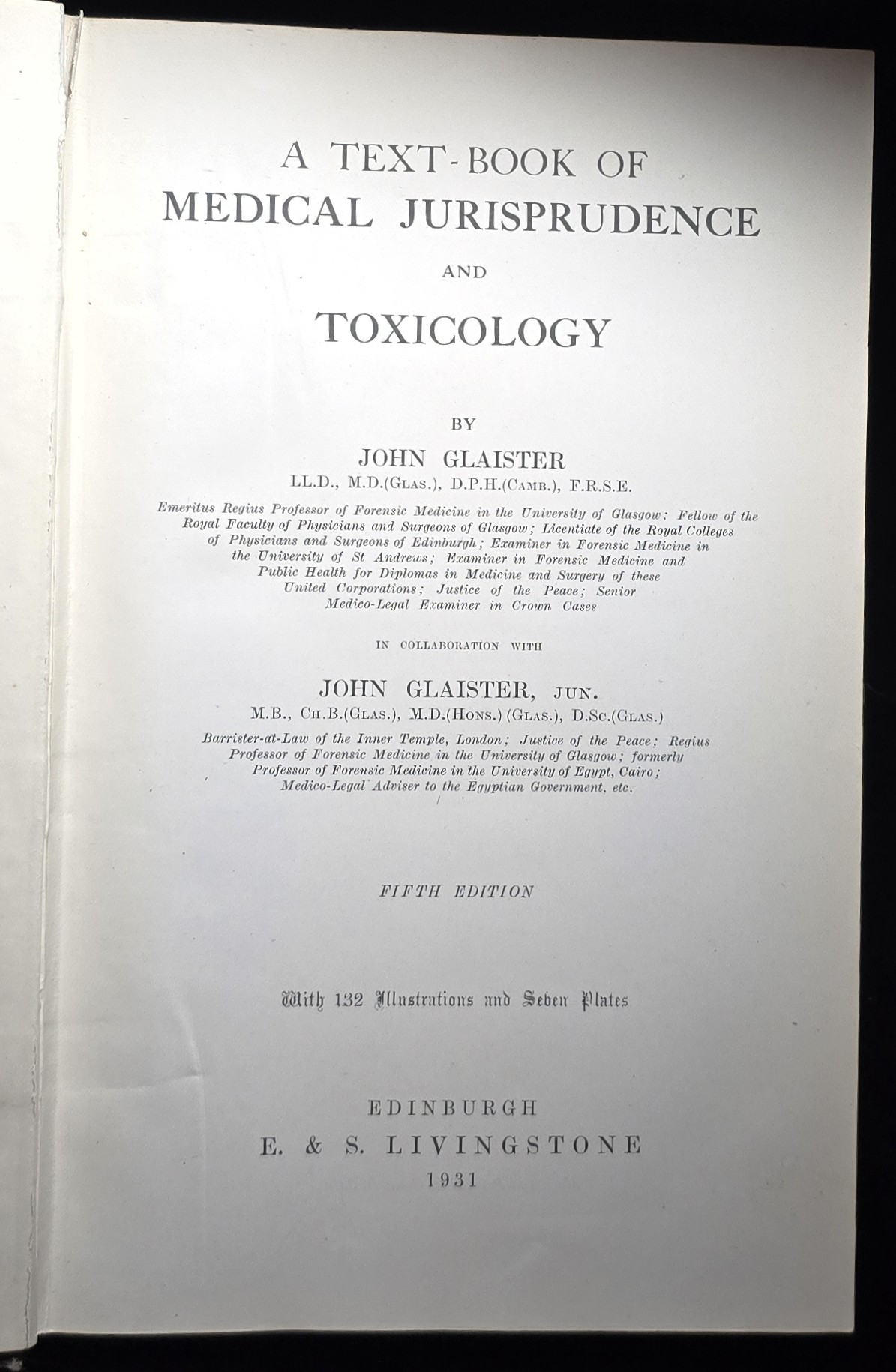
A Text-Book of Medical Jurisprudence and Toxicology (Fifth Edition, 1931)
Author
Professor John Glaister, LL.D., M.D. (Glas.), D.P.H. (Camb.), F.R.S.E.
In collaboration with:
John Glaister, Jun., M.B., M.D., D.Sc.
Image
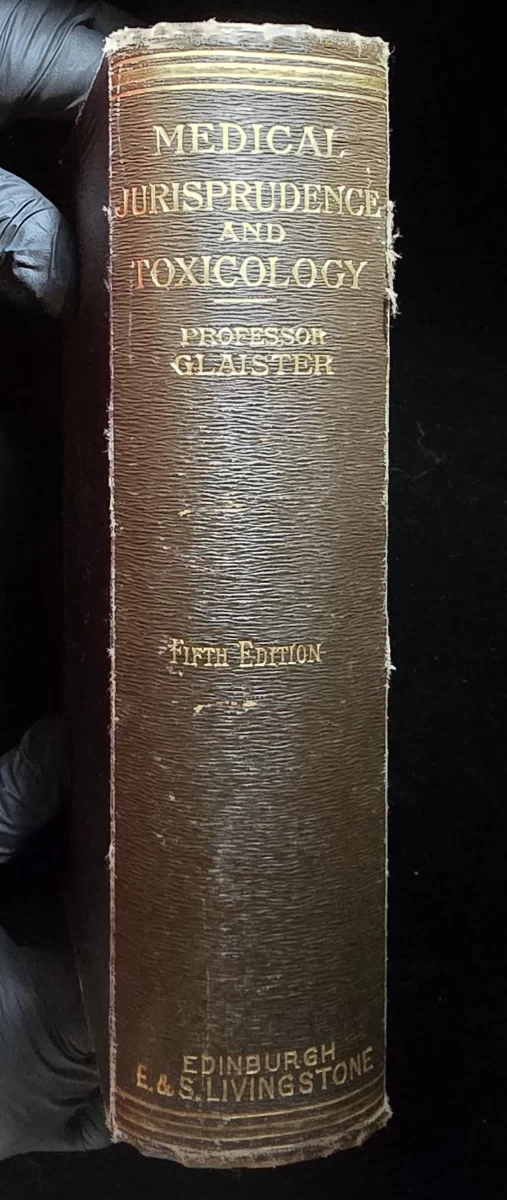
Description
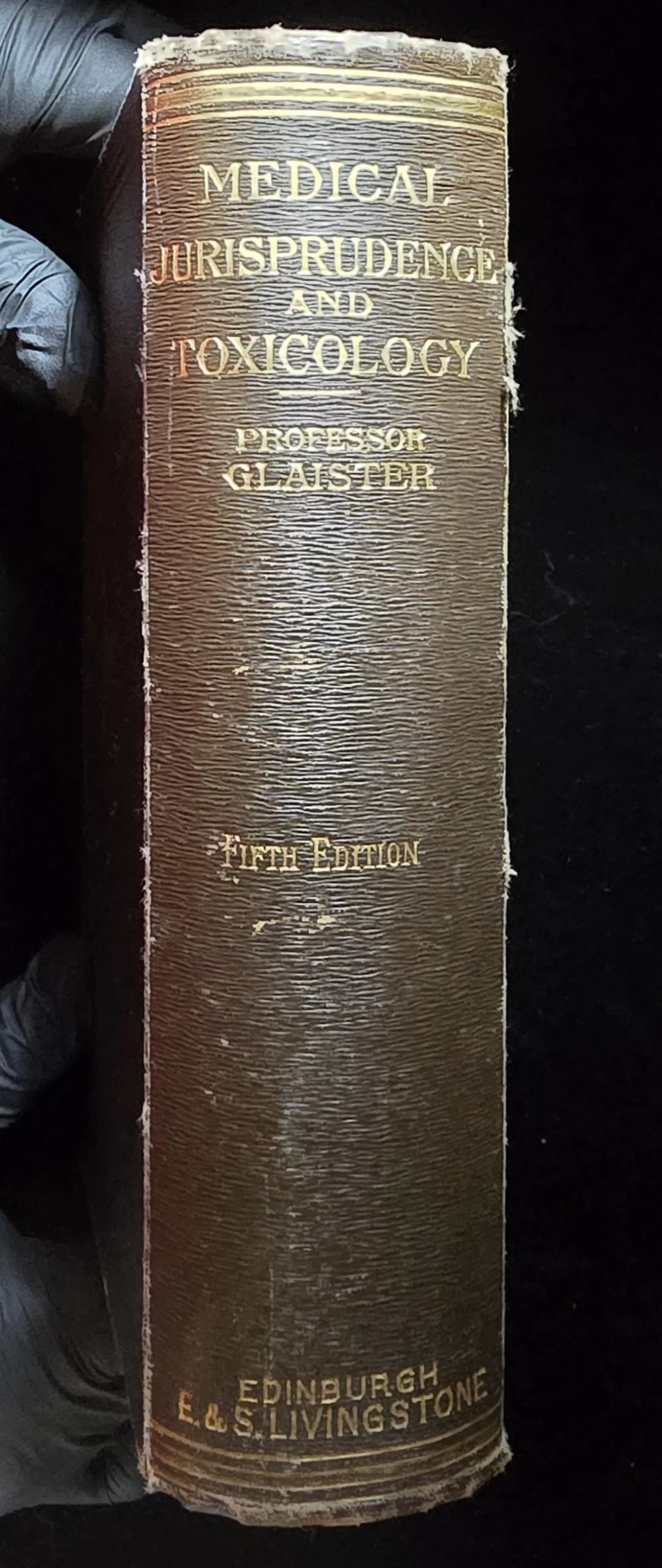
This is the 1931 fifth edition of A Text-Book of Medical Jurisprudence and Toxicology, a seminal forensic reference co-authored by legendary Scottish medico-legal expert Professor John Glaister and his son. This richly illustrated volume features 132 illustrations and seven plates, covering wounds, poisons, death by hanging, sexual crimes, infanticide, and much more—with clinical detachment and macabre clarity.
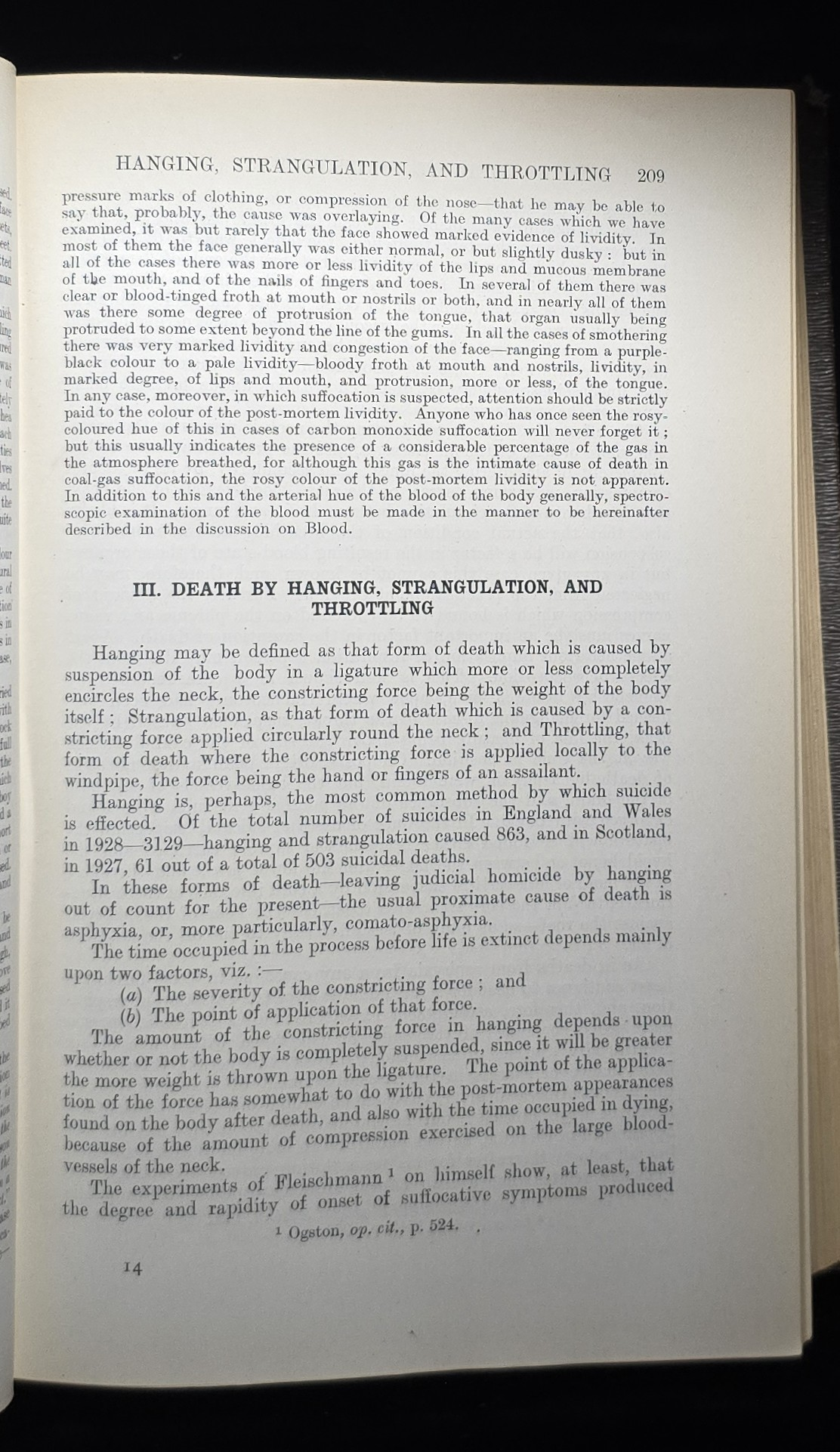
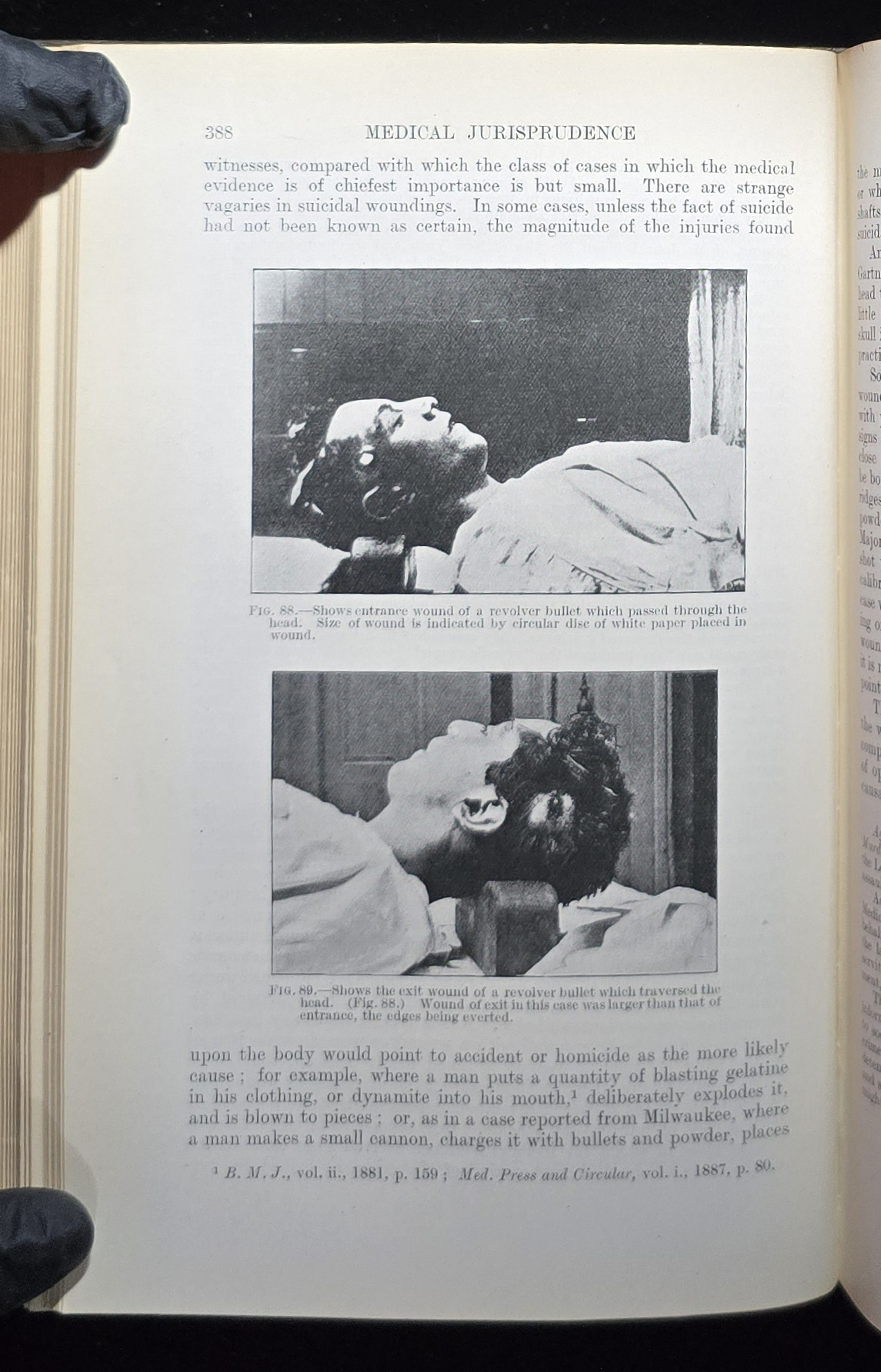
Of special note are the photographic plates depicting forensic pathology. Among them: a detailed case study of a gunshot wound to the head showing both entrance and exit sites, with a white disc used to highlight the point of entry. Another section details postmortem signs of hanging, strangulation, and throttling with methodical precision.
This book served as a core reference for coroners, police surgeons, and forensic pathologists throughout the British Empire.
Condition
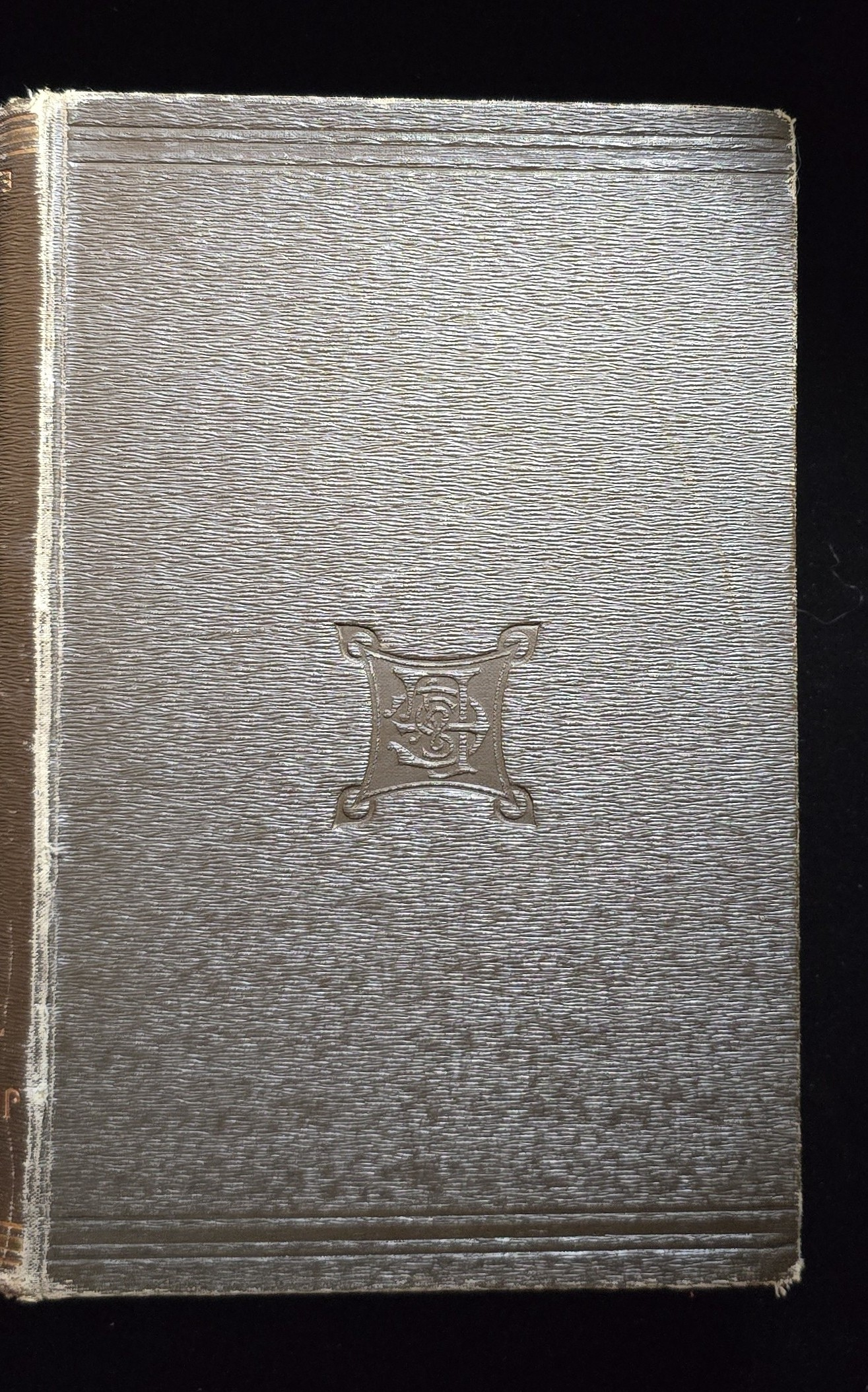
Very good for its age. The spine shows minor rubbing and edge wear but retains bright gilt lettering. Hinges are intact and textblock is tight. Pages are clean with only mild toning. Illustrations remain clear and striking. Back cover bears the embossed E. & S. Livingstone device.
Gallery
Historical context
John Glaister (1856–1932) was one of the most prominent figures in early forensic medicine. As professor at the University of Glasgow and examiner for numerous institutions, his work defined forensic standards in Britain and abroad. His son, Glaister Jr., followed in his footsteps, holding posts in London, Glasgow, and even Cairo as medico-legal adviser to the Egyptian government.
This textbook was used widely across the British Empire and was prized for its clarity, photographic evidence, and systematic approach to death investigation. By the 1930s, it had become the go-to reference for suspicious deaths, toxic exposures, and courtroom testimony.
Curious Facts, Ephemera, and Trivia
Glaister was known for his courtroom appearances, often dominating cross-examinations with cold authority.
This edition predates DNA analysis but demonstrates remarkable observational precision in death diagnostics.
The plate showing a paper disc in a bullet wound was one of the earliest photographic teaching aids for wound classification.
Glaister’s work heavily influenced later forensic luminaries like Keith Simpson and Bernard Spilsbury.
Excerpt
“There are strange vagaries in suicidal woundings. In some cases, unless the fact of suicide had not been known as certain, the magnitude of the injuries found upon the body would point to accident or homicide…”
Why it is in the Cabinet
This forensic manual exemplifies the cold rationality of 20th-century medico-legal science. It merges clinical detachment with graphic reality, teaching investigators to decode violence with anatomical logic. From gunshot wounds to hanging deaths, it reveals the historical evolution of death investigation—and reflects the eerie calm of the forensic examiner’s world.
Support Dr. Bebout’s Cabinet of Medical Curiosities
If you enjoy the history, the oddities, and the effort, help keep this cabinet open. Every little bit helps preserve and share the strange wonders of medicine's past.
Buy Me a Ko-fi ☕ Buy Me a Coffee ☕ Tip via PayPal 💵