
Title
Eli Lilly Tincture No. 36 Digitalis, N.F.
Author
Eli Lilly & Company, Indianapolis, U.S.A.
Image
Description
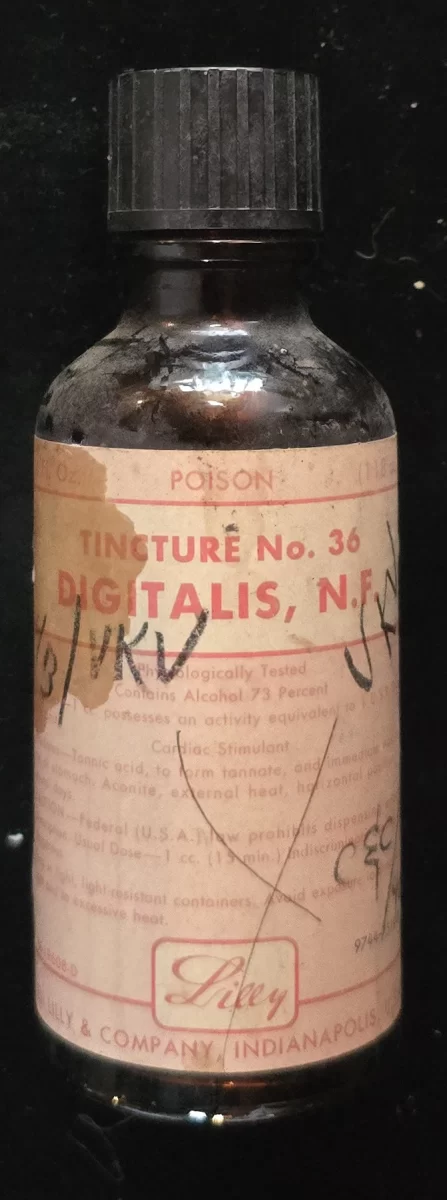
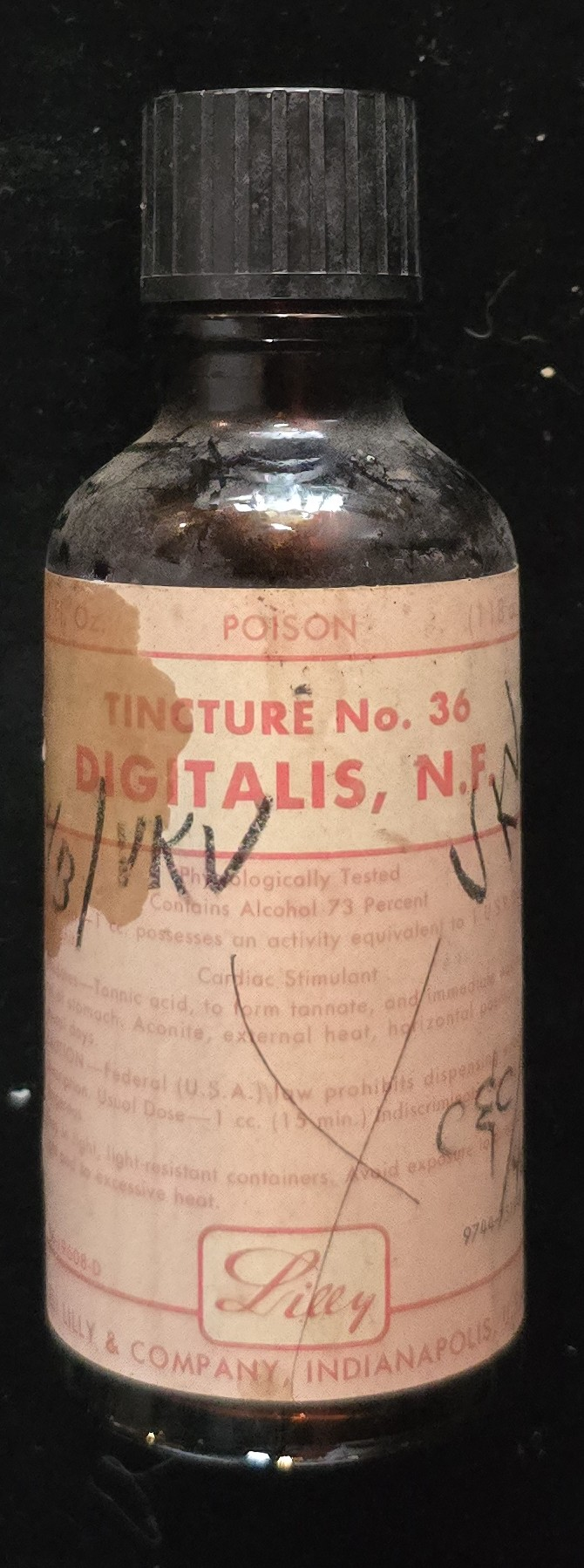
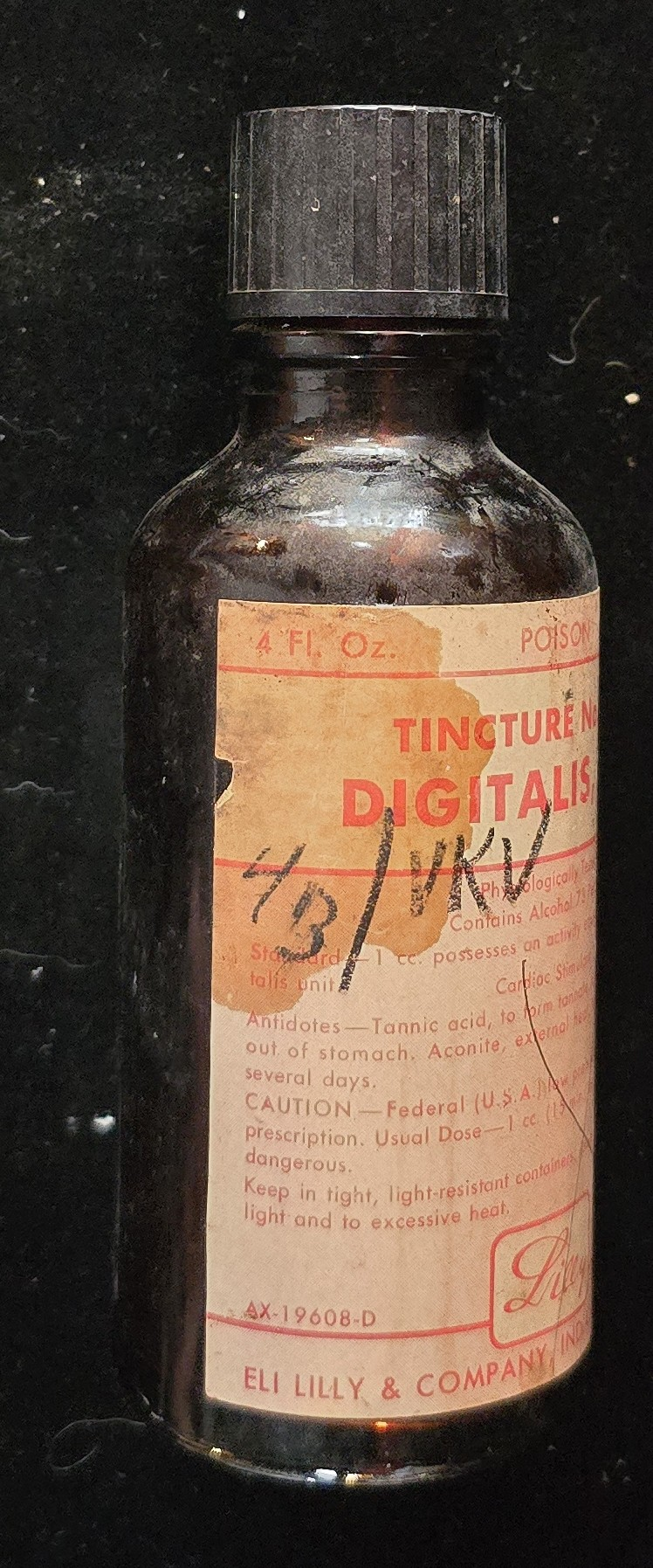
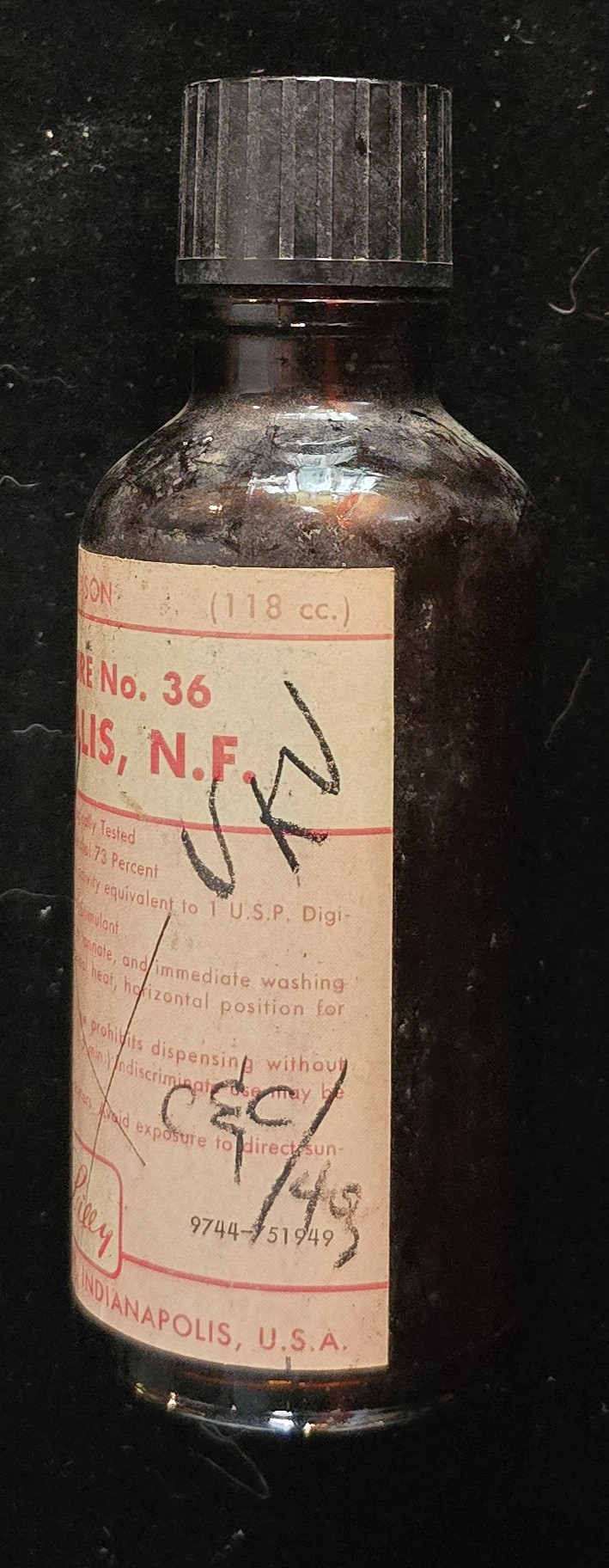
This four-ounce amber glass bottle once contained Tincture No. 36 Digitalis, N.F., a potent cardiac stimulant produced by Eli Lilly & Company of Indianapolis. The label, printed in red and tan with the bold “POISON” warning across the top, identifies it as containing Digitalis purpurea extract in 73 percent alcohol—a preparation standardized for cardiac activity.
Digitalis was used to strengthen and slow the heartbeat in conditions such as congestive heart failure and atrial fibrillation. Its narrow therapeutic range made accurate dosing critical; overdoses could lead to nausea, visual halos, arrhythmias, and death.
This bottle carries the Lilly script logo and early product code AX-19608-D, consistent with mid-20th-century pharmaceutical packaging. Handwritten initials and dates suggest it was used in a clinical or dispensary setting, likely before tighter federal controls limited such formulations to hospital pharmacies.
Condition
Amber glass bottle in fair condition. Original paper label is mostly intact with edge loss and handwriting in ink. Cap shows oxidation and residue; contents absent. Label legible enough for full identification.
Gallery
Historical context
Digitalis preparations trace back to William Withering’s 1785 description of the foxglove plant’s cardiac effects. Eli Lilly began manufacturing standardized tinctures by the late 1800s, ensuring predictable potency in an era when herbal variability posed serious risk. By the 1950s, synthetic and purified digitalis glycosides—chiefly digoxin—replaced tinctures like this one.
Curious Facts, Ephemera, and Trivia
The label lists Tannic acid as an antidote—reflecting early pharmacologic misconceptions about neutralizing alkaloids.
“N.F.” stands for National Formulary, indicating official recognition under U.S. pharmaceutical standards.
The red “Poison” banner was a legal requirement of the 1938 Federal Food, Drug, and Cosmetic Act for preparations containing potent cardiac glycosides.
Excerpt
“Antidotes — Tannic acid, to form tannate, and immediate washing out of stomach. Aconite, external heat, horizontal positioning for several days…” — text from the bottle label, warning of both internal and external hazards.
Why it is in the Cabinet
This bottle represents a turning point in medical standardization—when plant-based remedies were refined into precise pharmaceutical dosages, yet still bore the aesthetic of dangerous tinctures. It stands as both a symbol of therapeutic progress and the thin line between medicine and poison.
Support Dr. Bebout’s Cabinet of Medical Curiosities
If you enjoy the history, the oddities, and the effort, help keep this cabinet open. Every little bit helps preserve and share the strange wonders of medicine's past.
Buy Me a Ko-fi ☕ Buy Me a Coffee ☕ Tip via PayPal 💵