
Title
Sinapis Nig. Apothecary Jar
Author
N/A
Image
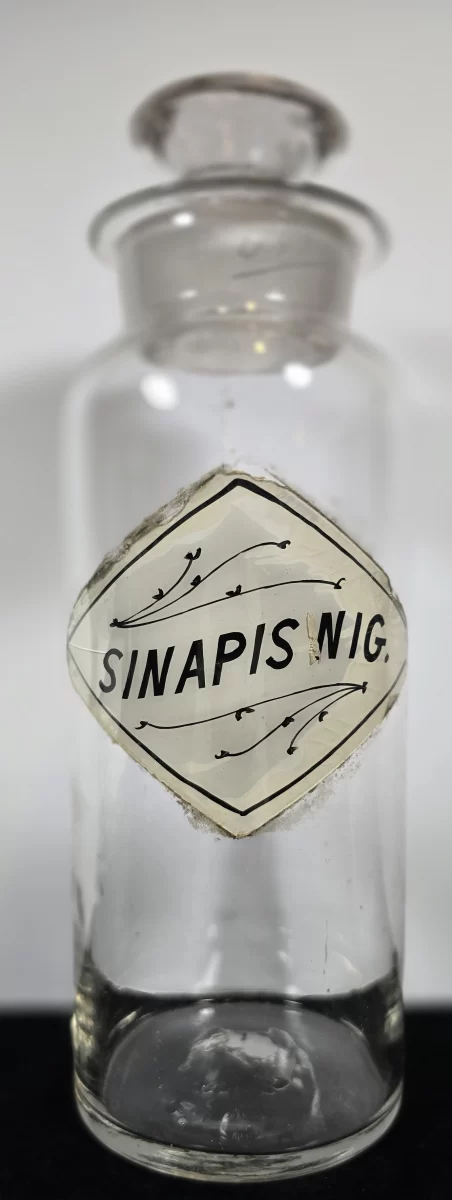
Description
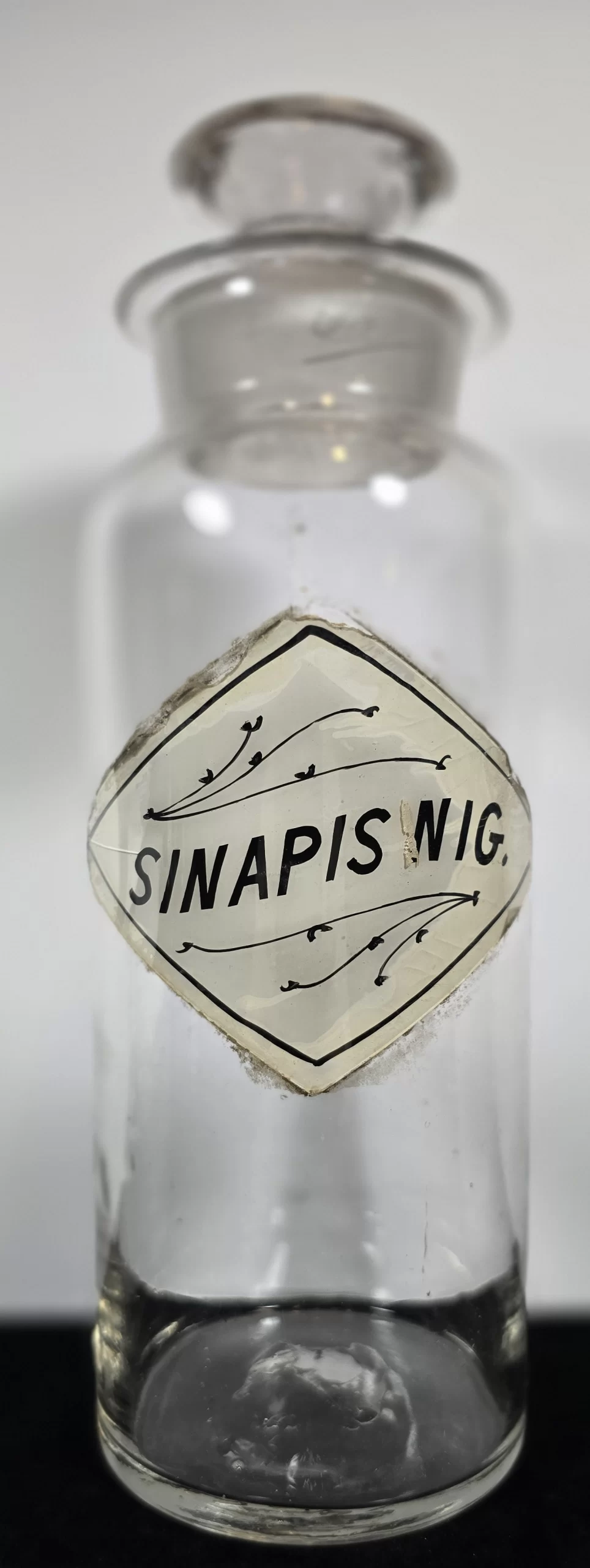
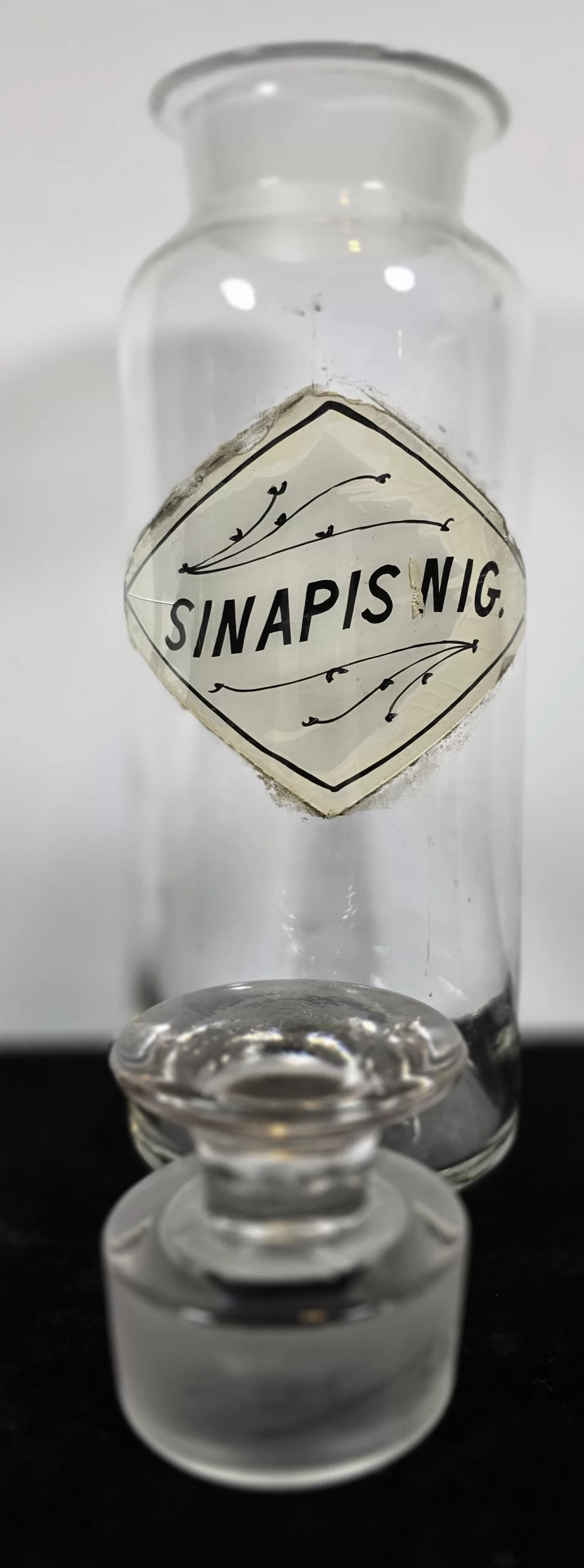
This is a clear glass apothecary jar with a ground glass stopper and a diamond-shaped enameled label reading “SINAPIS NIG.” The Latin name stands for Sinapis nigra, or black mustard seed. Apothecary jars like this were used throughout the 19th and early 20th centuries to store dried botanicals, powders, or seeds. The jar’s label features simple black decorative lines with period typography, a style commonly associated with European pharmacy containers.
Condition
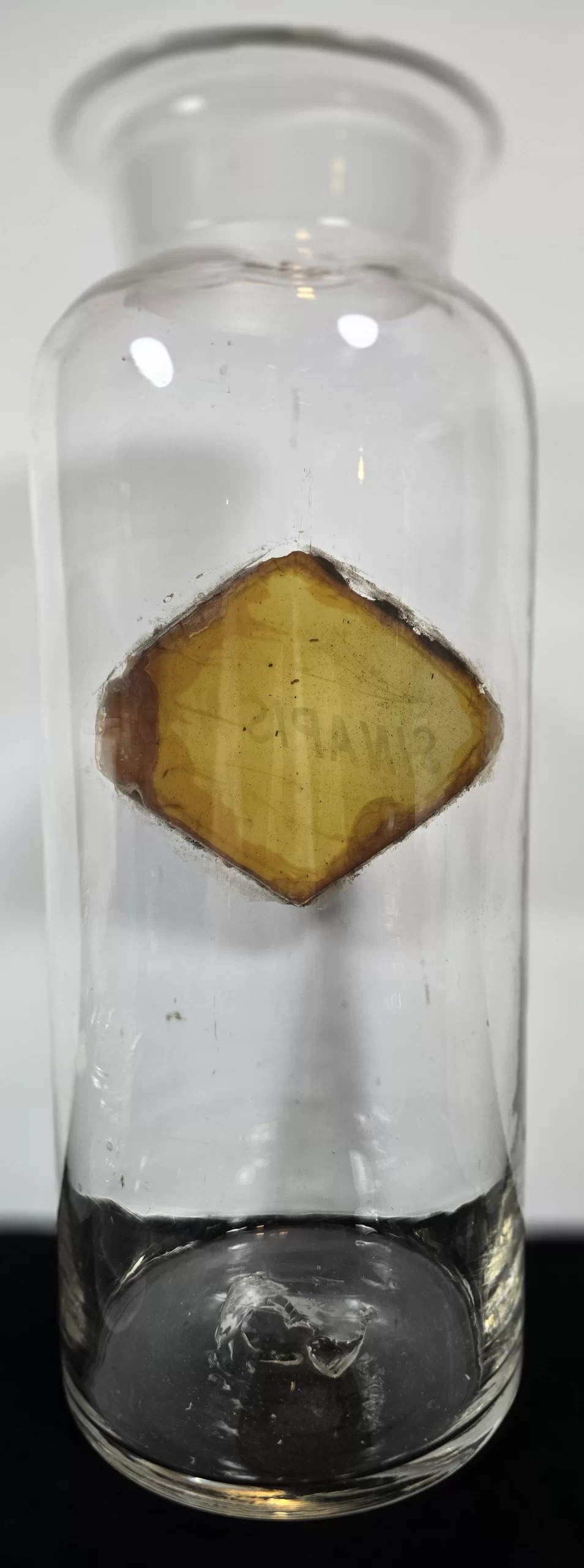
Excellent overall with original glass stopper intact. The enamel label shows some chipping and wear but remains legible. Glass is clear with light base wear and no significant cracks or chips.
Gallery
Historical context
Sinapis nigra (black mustard) was a staple in both culinary and medicinal use. In medicine, mustard was valued as a stimulant and rubefacient (a substance that reddens the skin by increasing blood flow). It was often ground into mustard poultices or plasters for the treatment of chest congestion, rheumatism, and other inflammatory conditions. Apothecaries kept jars like this to store whole mustard seeds or powdered preparations.
Curious Facts, Ephemera, and Trivia
Mustard plasters were once a common household remedy, applied to the chest or back for lung ailments.
The irritant oils in mustard seeds could cause blistering if left on too long.
In the 19th century, black mustard was also prescribed internally as a mild stimulant for digestion.
Apothecary jars with Latin labels followed strict naming conventions to maintain consistency across European and American pharmacies.
Excerpt
From The Dispensatory of the United States of America (19th century edition):
“Sinapis nigra is an active stimulant. Externally applied, it produces heat and redness, and if long continued, vesication. Internally, it acts as an excitant to the stomach and promotes appetite.”
Why it is in the Cabinet
This jar exemplifies the traditional apothecary storage system and reflects the importance of botanical medicines in historical practice. Its labeled preservation of Sinapis nigra connects directly to the long history of mustard as both a kitchen spice and a medical treatment.
Support Dr. Bebout’s Cabinet of Medical Curiosities
If you enjoy the history, the oddities, and the effort, help keep this cabinet open. Every little bit helps preserve and share the strange wonders of medicine's past.
Buy Me a Ko-fi ☕ Buy Me a Coffee ☕ Tip via PayPal 💵